
The Ballad of Davy Crockett (Davy Crockett) Lyrics
The Ballad of Davy Crockett (Davy Crockett)
Born on a mountain top in Tennessee, greenest state in the land of the freeRaised in the woods so's he knew ev'ry tree, kilt him a b'ar when he was only three
Davy, Davy Crockett, king of the wild frontier!
In eighteen thirteen the Creeks uprose, addin' redskin arrows to the country's woes
Now, Injun fightin' is somethin' he knows, so he shoulders his rifle an' off he goes
Davy, Davy Crockett, the man who don't know fear!
Off through the woods he's a marchin' along, makin' up yarns an' a singin' a song
Itchin' fer fightin' an' rightin' a wrong, he's ringy as a b'ar an' twic't as strong
Davy, Davy Crockett, the buckskin buccaneer!
Andy Jackson is our gen'ral's name, his reg'lar soldiers we'll put to shame
Them redskin varmints us Volunteers'll tame, 'cause we got the guns with the sure-fire aim
Davy, Davy Crockett, the champion of us all!
Headed back to war from the ol' home place, but Red Stick was leadin' a merry chase
Fightin' an' burnin' at a devil's pace, south to the swamps on the Florida Trace
Davy, Davy Crockett, trackin' the redskins down!
Fought single-handed through the Injun War, till the Creeks was whipped an' peace was in store
An' while he was handlin' this risky chore, made hisself a legend for evermore
Davy, Davy Crockett, king of the wild frontier!
He give his word an' he give his hand, that his Injun friends could keep their land
An' the rest of his life he took the stand, that justice was due every redskin band
Davy, Davy Crockett, holdin' his promise dear!
Home fer the winter with his family, happy as squirrels in the ol' gum tree
Bein' the father he wanted to be, close to his boys as the pod an' the pea
Davy, Davy Crockett, holdin' his young'uns dear!
But the ice went out an' the warm winds came, an' the meltin' snow showed tracks of game
An' the flowers of Spring filled the woods with flame, an' all of a sudden life got too tame
Davy, Davy Crockett, headin' on West again!
Off through the woods we're ridin' along, makin' up yarns an' singin' a song
He's ringy as a b'ar an' twict as strong, an' knows he's right 'cause he ain' often wrong
Davy, Davy Crockett, the man who don't know fear!
Lookin' fer a place where the air smells clean, where the trees is tall an' the grass is green
Where the fish is fat in an untouched stream, an' the teemin' woods is a hunter's dream
Davy, Davy Crockett, lookin' fer Paradise!
Now he's lost his love an' his grief was gall, in his heart he wanted to leave it all
An' lose himself in the forests tall, but he answered instead his country's call
Davy, Davy Crockett, beginnin' his campaign!
Needin' his help they didn't vote blind, They put in Davy 'cause he was their kind
Sent up to Nashville the best they could find, a fightin' spirit an' a thinkin' mind
Davy, Davy Crockett, choice of the whole frontier!
The votes were counted an' he won hands down, so they sent him off to Washin'ton town
With his best dress suit still his buckskins brown, a livin' legend of growin' renown
Davy, Davy Crockett, the Canebrake Congressman!
He went off to Congress an' served a spell, fixin' up the Govern'ments an' laws as well
Took over Washin'ton so we heered tell, an' patched up the crack in the Liberty Bell
Davy, Davy Crockett, seein' his duty clear!
Him an' his jokes travelled all through the land, an' his speeches made him friends to beat the band
His politickin' was their favorite brand, an' everyone wanted to shake his hand
Davy, Davy Crockett, helpin' his legend grow!
He knew when he spoke he sounded the knell, of his hopes for White House an' fame as well
But he spoke out strong so hist'ry books tell, an' patched up the crack in the Liberty Bell
Davy, Davy Crockett, seein' his duty clear!
When he come home his politickin' done, the western march had just begun
So he packed his gear an' his trusty gun, an' lit out grinnin' to follow the sun
Davy, Davy Crockett, leadin' the pioneer!
He heard of Houston an' Austin so, to the Texas plains he jest had to go
Where freedom was fightin' another foe, an' they needed him at the Alamo
Davy, Davy Crockett, the man who don't know fear!
His land is biggest an' his land is best, from grassy plains to the mountain crest
He's ahead of us all meetin' the test, followin' his legend into the West
Davy, Davy Crockett, king of the wild frontier!
Song Overview
Review and Highlights
Quick summary
- Work and era: A Disney television theme that jumped to the pop marketplace in 1955.
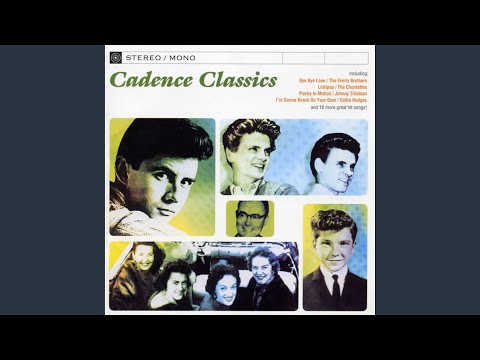
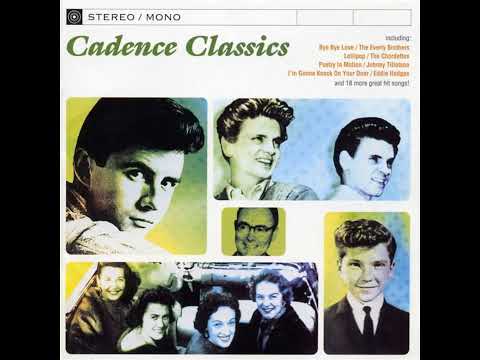
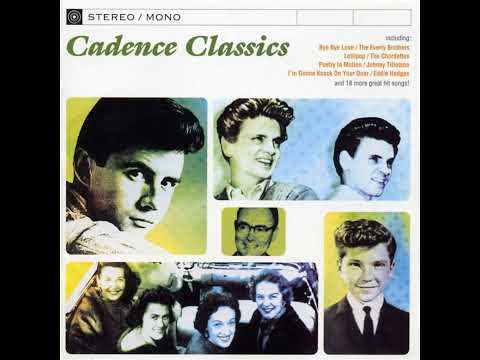
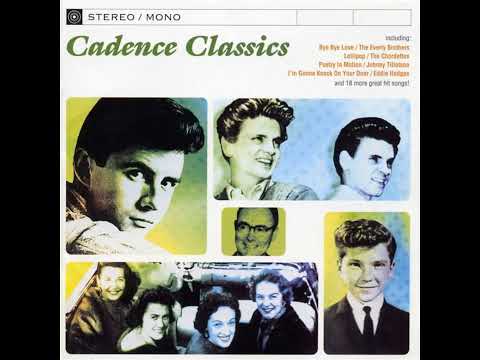
- Signature hit version: Bill Hayes on Cadence, recorded December 16, 1954, released February 1955.
- Where it appears on screen: Introduced on the Disneyland TV premiere (October 27, 1954), then tied to the Davy Crockett serial that kicked off December 15, 1954.
- Why it worked: A marching-lean folk ballad with a chant-like hook built for playgrounds, radio, and living rooms.
- How the craze looked in real time: Multiple competing recordings charted in the same season, turning one melody into a mini economy.
Disneyland (TV anthology, 1954) - television - non-diegetic theme function. The song first lands as part of Disney's early television identity, attached to a frontier story and presented with the confidence of something meant to travel.
Davy Crockett (Frontierland serial, beginning December 15, 1954) - television - non-diegetic theme function. This is where the tune stops being a clever piece of programming and becomes a weekly ritual. As stated in D23, the theme took on a life beyond the episode, with households singing the refrain like it had always been there.
The musical trick is blunt and brilliant: write a ballad that moves like a parade, then give it a hook you cannot avoid. The verses are storybook Americana, but the refrain is the real engine. It is less a line than a rallying cry, and that is why the tune could leap from television to record shops with almost no translation required.
Bill Hayes brings a clean, present-tense tone that reads as friendly authority. No winks, no fancy phrasing, just forward motion. That steadiness mattered. A frontier hero myth needs a straight face, and Hayes delivers it with the kind of vocal posture that used to sell everything from hymns to campaign jingles.
Creation History
The song was written by composer George Bruns and lyricist Thomas W. Blackburn for Disney's television push into Frontierland storytelling, first heard on Disneyland's premiere broadcast in late October 1954. The best-known pop single arrived when Cadence head Archie Bleyer moved quickly after the TV exposure: Hayes has described being called in New York and cutting the track the next day, on December 16, 1954. The release followed in February 1955, and the tune immediately became a template for how TV could manufacture a national sing-along.
Song Meaning and Annotations
Plot
The lyric races through a compressed legend: childhood bravado, wilderness feats, military service, politics, and the final march to Texas. It is not trying to document. It is trying to build a folk statue in three minutes, the kind that fits neatly between commercial breaks. The character is shaped as a larger-than-life problem solver who keeps moving west when the map runs out.
Song Meaning
At heart, the song is a national bedtime story. It sells courage as a brand and turns biography into a set of reusable slogans. The chorus functions like a stamp of approval: say the name, declare the title, and the audience does the rest. According to Time magazine, several headline claims in the lyric are exaggerations or outright myth, which is part of the point. The song is less about a historical figure than about what mid-century America wanted frontier virtue to sound like on television.
Annotations
Born on a mountaintop in Tennessee
It opens with the kind of claim that sounds good even if it is shaky. Time magazine notes the real birthplace does not match the lyric, and that mismatch is a key to the whole project: myth first, footnotes never.
Killed him a bear when he was only three
This is tall-tale logic, delivered with a straight face. The line is not meant to be believed so much as repeated, like a campfire boast that gets funnier each time it is retold.
King of the wild frontier
The title is the chorus, the slogan, and the merchandise label all at once. It is also why the tune survived. Once a phrase is built for chanting, it becomes portable.
Style fusion and driving rhythm
Musically, it sits between folk ballad and marching song, with a squared-off pulse that invites clapping. The melody favors steps and small leaps, making it easy for non-singers to join. The arrangement does not hide the beat. It underlines it, because the goal is momentum, not mystery.
Symbols and cultural touchpoints
Coonskin-cap imagery, frontier swagger, and a simplified arc from wilderness to politics to the Alamo create a clean patriotic staircase. The song is also a snapshot of television learning to steer popular music. It is not subtle persuasion. It is mass repetition, warmly packaged.
Technical Information
- Artist: Bill Hayes
- Featured: Orchestra (studio backing credited on period releases)
- Composer: George Bruns
- Lyricist: Thomas W. Blackburn
- Producer: Archie Bleyer (Cadence session leadership and label oversight)
- Release Date: February 1955
- Recorded: December 16, 1954
- Genre: Folk; pop ballad
- Instruments: Lead vocal; rhythm section emphasis; orchestral support
- Label: Cadence
- Mood: Brisk; confident; celebratory
- Language: English
- Album (key appearances): Connected to Disney television and later soundtrack-style compilations
- Music style: March-like folk narrative with chant refrain
- Poetic meter: Accent-heavy lines built for clear stresses and easy memorization
Questions and Answers
- Who wrote the song?
- George Bruns composed it and Thomas W. Blackburn wrote the lyric for Disney's television frontier programming.
- Why did the tune move so fast from TV to record stores?
- It was built like a jingle-sized folk epic: a narrative verse plus a chorus that works as a chant. Once audiences heard it weekly, demand was already primed.
- What is the difference between the screen origin and the pop hit?
- The television context used the song as a thematic banner, while the hit single tightened the experience into a radio-ready performance and gave it a clear commercial identity.
- Which recording is most associated with the number-one run in the United States?
- Bill Hayes' Cadence single is the version most often linked to the top pop chart stretch in spring 1955.
- Were other versions charting at the same time?
- Yes. Fess Parker and Tennessee Ernie Ford both released competing versions quickly, and multiple takes appeared on Billboard charts during the craze.
- Is the lyric historically accurate?
- Not consistently. According to Time magazine, several famous lines are exaggerations or myths compared to the historical record.
- Did the song cross into the United Kingdom charts?
- It did. Official Charts Company data shows Bill Hayes reached a peak of number 2 in early 1956 and stayed on the chart for nine weeks.
- Are there notable non-English adaptations?
- Yes. SecondHandSongs documents a French-language adaptation titled "Ballade de Davy Crockett" credited to Francis Blanche alongside the original writers.
- Why does the chorus stick so hard?
- It repeats a name and a title with minimal melodic clutter. That simplicity invites group singing, which is the fastest way to lock a hook into culture.
- What is the song really selling: history or identity?
- Identity. It offers a clean, heroic frontier archetype, tuned to mid-century television storytelling and nostalgia.
- Is it more of a march or a ballad?
- Both, and that hybrid is the secret. The verse narrates like a ballad, while the refrain functions like a march chant.
Awards and Chart Positions
The commercial story is the headline: a television theme that behaves like a pop standard for a season. Wikipedia's chart summary notes Bill Hayes at number 1 on a major Billboard pop chart for five weeks starting March 26, 1955, with additional charting versions by Fess Parker and Tennessee Ernie Ford. Billboard's year-end retail sales list for 1955 also places the Hayes single at number 6, a remarkable finish for a song born in a TV episode.
| Territory | Chart | Peak | Notes |
|---|---|---|---|
| United States | Billboard (pre-Hot 100 era pop charting) | 1 | Five-week run beginning March 26, 1955 reported in reference summaries. |
| United States | Billboard year-end top singles (retail sales) | 6 | Year-end 1955 placement for Bill Hayes. |
| United Kingdom | Official Singles Chart | 2 | First chart date January 12, 1956; nine weeks on chart (Official Charts Company). |
How to Sing The Ballad of Davy Crockett
For singers, this one is less about fireworks and more about stamina and diction. Common streaming metadata lists the Bill Hayes track around 139 BPM in E major. Vocal-range tools often cite a modest span around C3 to D4 for a closely associated recorded version, which means the job is phrasing, not altitude.
- Tempo: Start at 120 BPM, then move toward 139 BPM once the words sit comfortably. The chorus must feel like a march without turning breathless.
- Diction: Snap the consonants on story details, then round vowels on the refrain so the chant stays smooth.
- Breathing: Mark breaths at the ends of narrative lines. Do not steal air mid-phrase in the chorus, or the hook loses authority.
- Flow and rhythm: Keep the verse conversational, almost spoken on pitch. Save the biggest energy for the refrain, not by shouting, but by leaning into the beat.
- Accents: Stress the name and title words, but avoid over-punching every syllable. The groove needs space to swing forward.
- Ensemble habits: If you sing it with a group, designate one lead for the verse and let the chorus turn communal. That division is how the song was built to spread.
- Mic technique: Back off slightly on the loudest chorus hits to avoid overload, then come closer for the narrative verse to keep intimacy.
- Pitfalls: Rushing the lyric. The story must be understandable. If the words blur, the song becomes noise with a slogan attached.
Additional Info
The song has an afterlife that keeps revealing what it really was: a mass-media machine disguised as folklore. The cover trail documented by SecondHandSongs shows how quickly artists across styles grabbed it, from early 1955 competitors to later novelty, country, and jazz angles. There is even a French adaptation, "Ballade de Davy Crockett," which shows the refrain was exportable even when the frontier references were not.
One of the most revealing modern readings comes from outside music history books. Time magazine's fact-check of the lyric is a reminder that this tune functions like a folk myth printed on glossy TV paper. It is not asking to be graded. It is asking to be sung.
Sources: D23 Disney A to Z, D23 This Day in Disney History, Wikipedia (The Ballad of Davy Crockett), Official Charts Company, Billboard year-end singles list (via Wikipedia), TuneBat track metadata, SecondHandSongs cover database, Time magazine history fact-check feature, The MacGyver Project interview
Key Contributors
| Entity | Type | Statement (S-V-O) |
|---|---|---|
| George Bruns | Person | George Bruns composed the music for the song. |
| Thomas W. Blackburn | Person | Thomas W. Blackburn wrote the lyric for the song. |
| Bill Hayes | Person | Bill Hayes recorded the best-known pop single version for Cadence in 1954-1955. |
| Archie Bleyer | Person | Archie Bleyer brought the song to Cadence and produced the commercial recording push. |
| Disneyland (TV series) | Work | Disneyland introduced the tune on its premiere broadcast in October 1954. |
| Davy Crockett (TV serial) | Work | The Davy Crockett serial used the tune as a theme and amplified the national craze starting December 1954. |
| Fess Parker | Person | Fess Parker embodied Crockett on television and released a competing recorded version. |
| The Mellomen | MusicGroup | The Mellomen performed a television-associated vocal version tied to the serial. |
| Official Charts Company | Organization | Official Charts Company documents the UK chart run and peak for Bill Hayes. |
| Time magazine | Organization | Time magazine published a fact-check comparing key lyric claims to historical record. |