
One Last Hope (Hercules) Lyrics
One Last Hope (Hercules)
So, ya wanna be a hero, kid?Well, whoop-de-do!
I have been around the block before
With blockheads just like you
Each and ev'ryone a disappointment
Pain for which there ain't no ointment
So much for excuses
Though a kid of Zeus is
Asking me to jump into the fray
My answer is two words -
O.K.
You win
Oh gods
Oy vay!
I'd given up hope that someone would come along
A fellow who'd ring the bell for once
Not the gong
The kind who wins trophies
Won't settle for low fees
At least semi-pro fees
But no - I get the greenhorn
I've been out to pasture pal, my ambition gone
Content to spend lazy days and to graze my lawn
But you need an advisor
A satyr, but wiser
A good merchandiser
And oohh!
There goes my ulcer!
I'm down to one last hope
And I hope it's you
Though, kid, you're not exactly
A dream come true
I've trained enough turkeys
Who never came through
You're my one last hope
So you'll have to do
Demigods have faced the odds
And ended up a mockery
Don't believe the stories
That you read on all the crockery
To be a true hero, kid, is a dying art
Like painting a masterpiece, it's a work of heart
It takes more than sinew
Comes down to what's in you
You have to continue to grow
Now that's more like it!
I'm down to one last shoot
And my last high note
Before that blasted Underworld
Gets my goat
My dreams are on you, kid
Go make 'em come true
Climb that uphil slope
Keep pushing that envelope
You're my one last hope
And, kid, it's up to you
Song Overview
Review and Highlights
Quick summary
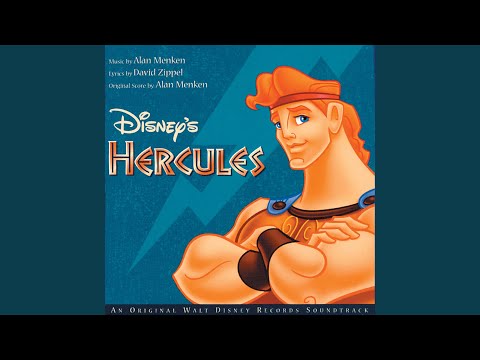
- Appears in Hercules (1997) as Phil's training montage pep talk, played for laughs but built on real pressure.
- Written by Alan Menken (music) and David Zippel (lyrics), performed in-film by Danny DeVito as Phil.
- Its signature move is talk-singing that snaps into a refrain like a coach whistle, then back to grumbling charm.
- In the stage-world, the London cast recording (2025) keeps the number, expanding it into a shared moment for Phil and Hercules.
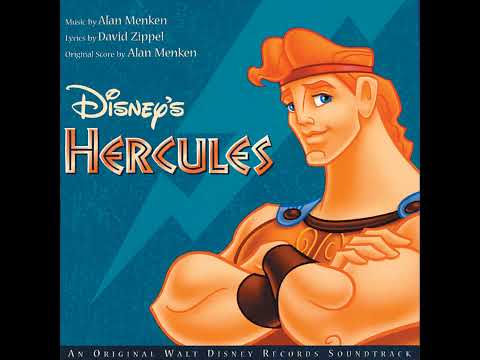
Hercules (1997) - animated film sequence - diegetic. Phil sings while drilling Hercules through a rapid-fire montage of workouts, tough-love insults, and small wins that stack into momentum. The joke is that the trainer never stops complaining, but the craft is that the music never stops steering: it turns a pile of gags into one forward push, like a reel of jump cuts glued together by rhythm.
Disney's Hercules (stage) - Original London Cast Recording (2025) - diegetic. On the London cast album, the track list credits the moment to Phil and Hercules, which shifts the scene from a solo rant into a two-person relay. According to Playbill, the London cast recording was released in parts and then as a full album in October 2025.
Key takeaways
- Comedy with a stopwatch: punch lines land because the phrases are clipped, timed, and repeatedly reset.
- Talk-singing as character ink: the performance keeps Phil sounding like Phil, even when the melody begs for a cleaner belter.
- Montage architecture: short sections function like scene cards, letting animation edits feel musical rather than random.
- Refrain as a dare: the hook is not just catchy, it is a challenge that makes the trainee try again.
Creation History
The song sits inside Hercules: An Original Walt Disney Records Soundtrack, released May 27, 1997, with Phil's performance listed as a core track on the album. In later commentary about the film-to-stage evolution, Menken has been quoted discussing why the speak-sing approach fit DeVito: when Phil went too "properly sung," some of the comedic identity slipped away. The result is a number that feels like a rehearsal room in motion, half coaching session, half vaudeville bit, all propulsion.
Song Meaning and Annotations
Plot
Hercules is strong, but not yet skilled, and strength alone is not heroism in this universe. Phil takes him on, reluctantly, because the kid represents a last shot at proving Phil's own legacy. The montage compresses time: in a few minutes you see drills, injuries, lessons, and that first glimmer of competence that turns effort into belief.
Song Meaning
The surface message is classic training talk: stop dreaming, start sweating. Underneath, it is Phil confessing without meaning to. This is not only about Hercules earning a title, it is Phil trying to rewrite his own story, to turn past failure into a footnote. The number keeps its warmth hidden behind jokes, which is exactly how that kind of mentor character survives. You laugh, you move on, then later you realize the mentor was also singing about himself.
Annotations
"So ya wanna be a hero, kid?"
It opens like a heckle, not a welcome. That matters: the scene is built on resistance, so every small encouragement feels earned instead of handed out.
"I been around the block before"
Phil frames experience as a bruise, not a badge. The lyric sells credibility in a streetwise tone, a deliberate contrast to the film's gospel grandeur elsewhere.
"One last hope"
The title phrase is a pivot. It sounds like a motivational poster, but it lands as a private admission: the coach is the one hanging everything on this attempt.
Genre and rhythm fusion
Hercules as a score loves gospel energy and pop clarity, but this track cuts in with something closer to a Broadway character patter number. It is talk-forward, rhythm-locked, and designed to keep images moving. That contrast is the point: while the Muses lift the myth into spectacle, Phil drags it back to the gym floor.
Emotional arc
The arc runs from dismissal to investment. First Phil mocks the idea of heroism, then he starts coaching in spite of himself, then the refrain reveals the stake: he needs this to work. The scene never asks you to cry for Phil, it asks you to notice him, which is a more interesting trick.
Production and instrumentation
The backing keeps things lean so the phrasing can drive the comedy. You hear a steady pulse that behaves like footwork, with accents that match physical beats in the montage. When the refrain arrives, the arrangement briefly opens up, giving the listener a wider frame, then it snaps back into Phil's gruff cadence.
Technical Information
- Artist: Danny DeVito
- Featured: None credited
- Composer: Alan Menken
- Producer: Not consistently standardized across public listings
- Release Date: May 27, 1997
- Genre: Film soundtrack; character song; montage number
- Instruments: Vocal; orchestral-pop backing (edition dependent)
- Label: Walt Disney Records
- Mood: Tough-love comic drive
- Length: 3:00 (common soundtrack listing)
- Track #: 8 (common soundtrack track list)
- Language: English
- Album (if any): Hercules (Original Motion Picture Soundtrack)
- Music style: Speak-sing patter into refrain, built for montage edits
- Poetic meter: Accent-driven, patter-heavy, with a refrain built on regular stresses
Questions and Answers
- Why does the song feel like it is talking at you?
- Because it is written as coaching. The rhythm is the message, and the melody appears in bursts, like a whistle cutting through noise.
- What makes Phil's vocal approach work, even if it is not "pretty"?
- It keeps the character intact. The speak-sing style preserves DeVito's comedic timing and makes the advice feel like it is being invented on the spot.
- Is it diegetic in the film?
- Yes. Phil performs it while training Hercules, and the montage treats the singing as part of his instruction.
- What is the real subject of the title phrase?
- Phil's reputation. Hercules is the trainee, but Phil is the one who needs proof that his mentoring can still produce a hero.
- Why is it placed in a montage instead of a full scene?
- Because montage is efficient. The music can cover time, gags, and progress without interrupting the film with long exposition.
- How does it contrast with the Muses material?
- The Muses bring gospel-scale spectacle. Phil brings gym-floor sarcasm. Together, they give the movie its tonal zigzag.
- Does the stage version change the function of the number?
- On the London cast recording, the crediting suggests a shared moment, which can make it feel less like a solo rant and more like a relationship turning point.
- Why do listeners remember it so strongly?
- It is unusually quotable and rhythm-first. Even fragments stick because the phrasing is built like comedy dialogue.
- Where else did Disney reuse the track?
- It appeared in Disney Sing-Along Songs releases tied to Hercules and the broader modern-classics compilation lineup.
Awards and Chart Positions
This track was not promoted as a standalone pop single in the way some Disney end-credit songs were, so its "chart story" is mostly the soundtrack's story. As stated in Official Charts, the Hercules soundtrack reached the UK Official Compilations Chart, and U.S. listings place it on the Billboard 200 in the summer of 1997. The film's awards attention focused on "Go the Distance," which drew major nominations, but the comedic montage number remains one of the soundtrack's most quoted character pieces.
| Category | Market | Result | Date |
|---|---|---|---|
| Soundtrack album chart peak | US | Billboard 200 peak - 37 | July 26, 1997 (chart date) |
| Soundtrack album chart peak | UK | Official Compilations Chart peak - 31 | First chart date October 18, 1997 |
| Major song nominations from the film | International | "Go the Distance" nominated for Academy Award and Golden Globe (song) | 1998 awards season |
How to Sing One Last Hope (Hercules)
You do not sing this like a pristine studio ballad. You sing it like you are pacing a gym, pointing at a kid who is not listening, then suddenly deciding you care. Track-metadata listings commonly put it near 100 BPM and in C major, with some databases describing the same feel as double-time around 200 BPM. Treat that as a practical truth: the groove can be counted two ways, but the attitude should stay sharp.
- Tempo: about 100 BPM (often described as double-time near 200 BPM)
- Key: commonly listed as C major in streaming metadata tools
- Vocal approach: talk-singing into short sung bursts, with a refrain that benefits from light belt energy
- Common issues: rushing the patter, swallowing consonants, and forcing the voice on the refrain instead of using rhythm and breath
- Count it like a coach. Set a metronome near 100 BPM and speak the lines in time, as if you are giving instructions while walking.
- Make consonants do the work. Crisp T, K, and P sounds create the comedic bite. If the words blur, the jokes evaporate.
- Separate patter and refrain. Keep the patter light and forward, then let the refrain open up slightly, like you finally admit what is at stake.
- Breath in quick sips. Plan small inhales between phrases. Big theatrical breaths will slow the delivery and dull the timing.
- Use belt as flavor, not force. When the hook arrives, aim for a brighter resonance rather than pushing volume. You want urgency, not strain.
- Lock to the montage pulse. Even when you stretch a word for attitude, land the next beat cleanly. The groove is the scene partner.
- Mic technique. If amplified, back off slightly on the loudest syllables and lean in on patter details, so the narrative stays intelligible.
- Pitfalls. Over-singing the comedy, adding heavy vibrato, or turning every line into a shout flattens the dynamics that make the song entertaining.
Additional Info
The song has a surprisingly long utility life for something so tied to a cartoon montage. Disney repackaged it into Sing-Along Songs releases, which makes sense: it is dialogue-like, easy to follow, and full of punchy cues that guide a viewer through the scene. It also reads well on streaming, where a lot of film numbers feel stranded without their images. This one still sounds like a character in a room.
In 2025, the stage conversation gave the number new angles. BroadwayWorld's Menken-focused stage-evolution reporting highlighted the decision to keep the DeVito-like speak-sing tone at the center of Phil's material, a reminder that character songs live or die on voice, not just melody. On the London cast recording, the shared credit for the track adds another layer: the mentor and the student can both occupy the hook, which subtly changes who owns the "hope."
Key Contributors
| Entity | Type | Relationship (S-V-O) |
|---|---|---|
| Alan Menken | Person | Alan Menken composed the music for the song. |
| David Zippel | Person | David Zippel wrote the lyrics for the song. |
| Danny DeVito | Person | Danny DeVito performed the song as Phil in the film recording. |
| Hercules (1997) | Work (Film) | The film uses the song as a training montage led by Phil. |
| Walt Disney Records | Organization | Walt Disney Records released the soundtrack album that includes the track. |
| Disney's Hercules (Original London Cast Recording) | Work (Cast Album) | The cast album includes a version credited to Phil and Hercules. |
| Playbill | Organization | Playbill reported the release schedule for the London cast recording. |
Sources: Hercules (soundtrack) (Wikipedia), Hercules (Original Motion Picture Soundtrack) (Apple Music), Hercules soundtrack UK chart page (Official Charts), One Last Hope (Disney Wiki), Hercules soundtrack track list (MovieMusic), Key and BPM listing (Tunebat), Tempo listing (SongBPM), London cast recording release dates (Playbill), Menken stage-evolution interview coverage (BroadwayWorld), One Last Hope official audio upload (YouTube)