
Can You Feel the Love Tonight (The Lion King) Lyrics
Elton JohnCan You Feel the Love Tonight (The Lion King)
There's a calm surrender to the rush of dayWhen the heat of the rolling world can be turned away
An enchanted moment, and it sees me through
It's enough for this restless warrior just to be with you
And can you feel the love tonight
It is where we are
It's enough for this wide-eyed wanderer
That we got this far
And can you feel the love tonight
How it's laid to rest
It's enough to make kings and vagabonds
Believe the very best
There's a time for everyone if they only learn
That the twisting kaleidoscope moves us all in turn
There's a rhyme and reason to the wild outdoors
When the heart of this star-crossed voyager beats in time with yours
Song Overview
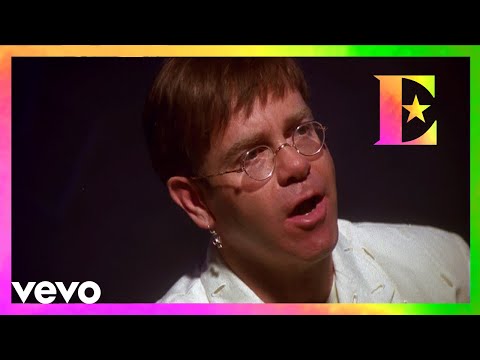
Review and Highlights
Quick summary
- 1994 film ballad written by Elton John and Tim Rice; heard in-scene and as an end-credits pop single.
- The in-film performance is shared between Simba and Nala voices plus Timon and Pumbaa lines, with an off-screen lead shaping the romantic core.
- The end-title single leans into radio polish: piano-led, string-swept, and built for a wide adult contemporary audience.
- In the story, it lands at the exact moment play turns into responsibility - a love scene that also foreshadows a reckoning.
- Later re-recordings and covers (including a 2019 remake performance and a 2024 pop-punk reinterpretation) prove how elastic the melody is.
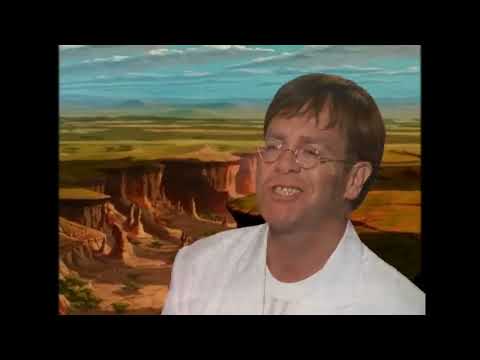
The Lion King (1994) - soundtrack - not diegetic. Simba and Nala drift into a twilight reunion while Timon and Pumbaa provide commentary, then the music takes the wheel as the camera widens to the savanna. Approx placement: the main chorus begins around 00:58:38, with the sequence running through roughly 01:00:51. The song is doing two jobs at once: selling romance and quietly warning that comfort has an expiration date.
There are Disney love songs that feel like a curtain call, and there are love songs that feel like a hinge in the plot. This one is the hinge. The harmonic language stays simple on purpose, letting the vocal lines carry the shift from teasing to surrender. The chorus rises like a slow inhale, and then it chooses calm instead of fireworks. That restraint is the trick: it invites the listener to lean in.
Part of the charm is the split personality. You can hear the film DNA in the way the melody accepts dialogue-like phrasing, but the end-title single tightens everything for radio: a cleaner arc, steadier momentum, and a pop finish that does not need the picture to work. According to Billboard magazine, the single was praised for how Elton John's vocal cut through the orchestral setting without losing warmth.
Key Takeaways
- Melodic design: a broad, singable chorus that moves like a slow waltz, giving the romance a floating quality.
- Story function: love as both refuge and trigger - it opens Simba up, which means his past can finally catch him.
- Arrangement: piano and strings support the vocal, with the mix leaving space for long phrases and soft consonants.
- Character framing: comedy at the edges, sincerity in the center - the song literally pushes the jokesters aside.
Creation History
The song was written for Disney's 1994 animated film, with music by Elton John and lyrics by Tim Rice, and it ultimately became the romantic centerpiece after early ideas leaned harder into comic delivery. The radio-facing single, produced by Chris Thomas, arrived in May 1994 and was supported by a music video built around Elton John performances intercut with film imagery, directed by Matthew Amos. The end result is a rare Disney ballad that operates like a mainstream pop single while still sounding welded to the movie's emotional timeline.
Song Meaning and Annotations
Plot
In the film, Simba has built a new life where the past is politely ignored. Nala arrives and disrupts that truce. Their reconnection turns from banter into something more serious, and the song frames the moment when Simba feels safe enough to be seen - right before the story forces him to face what he has been avoiding. Timon and Pumbaa act like a skeptical chorus, narrating the danger to their comfortable routine.
Song Meaning
The core message is not just "love happens." It is "love reveals." The lyric keeps circling peace, harmony, and nighttime uncertainty, which is a gentle way of describing a scary truth: intimacy makes denial harder to maintain. The romance is real, but so is the cost - once Simba accepts connection, he cannot keep pretending he is only a drifting outsider. The mood is tender, but the subtext is pressure.
Annotations
There's a calm surrender
That phrase is a mission statement. The song treats love as yielding, not winning. Musically, it matches the way the chorus settles rather than punches, letting the listener feel release instead of conquest.
disaster's in the air
The best joke in the lyric is also the sharpest point. Comedy characters say it, but the plot agrees. The romance is the spark that will light the return-to-home storyline.
the night's uncertainties
A soft image for a hard idea. Night is where doubt lives, and the melody stretches here as if the singer is testing how much truth can be said without breaking the spell.
Genre and rhythmic feel
It sits at the crossroads of pop ballad and musical-theatre storytelling: a radio-ready hook with a scene-by-scene sense of pacing. Many listeners experience it as a waltz-like glide - the kind of pulse that makes a landscape shot feel wider. Some modern databases count a faster double-time tempo, but the lived experience of the performance is slow-breath phrasing, with the beat serving the line rather than the other way around.
Emotional arc
The opening is skeptical and comedic, then the song gradually hands control to sincerity. That handoff matters: it mirrors Simba shifting from hiding to risking vulnerability. The chorus is not an explosion, it is acceptance - the emotional temperature rises, then steadies into something dependable.
Symbols and images
Twilight and harmony are doing heavy lifting. Twilight suggests a threshold: not day, not night, not childhood, not adulthood. Harmony is both romance and kingdom politics in miniature - the story is obsessed with balance, and the lyric sneaks that theme into a love song without sounding like homework.
Technical Information
- Artist: Elton John
- Featured: Film cast vocal version (Joseph Williams, Sally Dworsky, Nathan Lane, Ernie Sabella, Kristle Edwards) plus an end-title single led by Elton John
- Composer: Elton John
- Producer: Chris Thomas (single version)
- Release Date: May 2, 1994 (single)
- Genre: Pop ballad, film soundtrack
- Instruments: Piano, strings, guitar, bass, keyboards, drums
- Label: Hollywood, Walt Disney, Mercury
- Mood: Warm, reflective, romantic tension
- Length: 4:01 (end-title single); 2:57 (film soundtrack track)
- Track #: End-title track on the 1994 soundtrack; also appears as an in-film sequence track
- Language: English
- Album (if any): The Lion King: Original Motion Picture Soundtrack
- Music style: Orchestral pop with musical-theatre pacing
- Poetic meter: Mostly iambic tendencies with flexible pop phrasing
- Disney film ballad built as both scene music and a radio single.
- Theme: love as peace that forces truth into the open.
- Signature sound: piano-led pop with sweeping strings and a waltz-like drift.
Questions and Answers
- Why does the song begin with comedic commentary?
- It frames romance as disruptive. The joke sets up the idea that love will change the characters' easy routine, and the plot backs that up.
- What is the emotional hinge of the lyric?
- The chorus treats love as a quiet surrender rather than a victory lap. That choice fits Simba: he is not trying to conquer, he is trying to stop running.
- Why does the melody feel so "classic" for Disney?
- It has a long-lined chorus with clear steps upward, the kind of writing that rewards big breath support and cinematic orchestration.
- Is the song strictly a love song?
- It is also a truth song. The romantic scene is inseparable from the story's question of identity and responsibility.
- What makes the end-title single different from the in-film version?
- The pop single is structured for radio flow and a single lead voice, while the film version shares lines across characters and plays like scene narration.
- Why does night appear so often in the imagery?
- Night functions as a metaphor for uncertainty: feelings are clearer, consequences are not. The lyric keeps both in play.
- How did the song become such a standard for covers?
- The chorus is adaptable: it works as a straight ballad, an a cappella showcase, or even a punk-pop reframing without losing its contour.
- What is the "secret villain" in the song?
- Denial. The more beautiful the moment becomes, the harder it is for Simba to keep hiding from his past.
- Why do the strings matter so much?
- They stretch the emotional space around the vocal, turning simple chord changes into something that feels panoramic and inevitable.
Awards and Chart Positions
The song collected major industry recognition across film and music awards, becoming one of the defining crossover moments of 1990s Disney. It won the Academy Award for Original Song, and it also won a Grammy in a pop vocal category. On the charts, the single performed strongly across both pop and adult formats.
| Category | Result | Notes |
|---|---|---|
| Academy Awards | Winner - Original Song | 67th ceremony (1995) |
| Golden Globe Awards | Winner - Best Original Song (Motion Picture) | 52nd ceremony (1995) |
| Grammy Awards | Winner - Best Male Pop Vocal Performance | 37th ceremony (1995) |
| Territory / Chart | Peak | Detail |
|---|---|---|
| US - Billboard Hot 100 | 4 | Pop peak in 1994 |
| UK - Official Singles Chart | 14 | First chart date July 9, 1994 |
| US - RIAA Database | Certified (date listed) | Certification date shown as April 26, 2018 |
How to Sing Can You Feel the Love Tonight
For the end-title single, many listings place it in or around Bb major, and the pacing is frequently felt as a slow 3-beat ballad around 90 BPM. If your reference track feels faster, you may be hearing a double-time count in a database rather than how singers phrase it. For vocalists, the practical question is not speed, it is breath: those chorus lines want long air and steady support.
- Estimated key center: Bb major (common listing for the single)
- Tempo feel: about 90 BPM with a 3-beat ballad drift (some databases report faster double-time values)
- Typical trouble spots: sustaining long phrases, keeping pitch stable on soft entries, avoiding scoops on repeated chorus notes
- Reference vocal range (varies by arrangement): many simplified arrangements sit roughly F3 to G4
- Tempo first: Practice the chorus on a light syllable at a comfortable slow count. Aim for even tone rather than volume.
- Diction: Keep consonants crisp but small. Let vowels carry the line, especially on the chorus hook.
- Breathing: Mark where you will refill before long phrases. Silent, quick inhales help keep the mood unbroken.
- Flow and phrasing: Think "one long sentence." Avoid chopping the chorus into short chunks.
- Accents: Let the natural lyric stresses do the work. Over-accenting can turn tenderness into theatre.
- Doubles and harmony: If you add a harmony, keep it simple: thirds are your friend here, and too much movement can cloud the hook.
- Mic technique: Work closer on soft lines, back off slightly on the chorus peak. This is a control song, not a shout song.
- Pitfalls: Pushing for power too early, widening vowels on high notes, and letting vibrato wobble the pitch.
- Practice material: Hum the melody on "mm" to lock pitch, then sing on a single vowel, then add words.
Additional Info
One reason the song keeps resurfacing is its built-in adaptability. In 2019, the remake soundtrack brought a new cast performance into the mainstream conversation again, and the same melody proved it could survive modern production and celebrity spotlight. In 2024, Disney's A Whole New Sound project went further, letting a pop-punk band tug the tune into a brighter, guitar-forward world. Different clothes, same silhouette.
Even the behind-the-scenes debates have become part of the lore. According to Entertainment Weekly, early versions leaned toward having the comic duo carry more of the number, but the final structure protected the song's romantic center by limiting the jokesters to framing lines.
Key Contributors
| Entity | Type | Relationship |
|---|---|---|
| Elton John | Person | Composed music and performed the end-title single. |
| Tim Rice | Person | Wrote lyrics for the film song. |
| Chris Thomas | Person | Produced the single version. |
| Walt Disney Records | Organization | Released the soundtrack album. |
| Hollywood Records | Organization | Issued the single in the US market. |
| Matthew Amos | Person | Directed the music video montage version for the single. |
| The Lion King | Work | Film context that anchors the song's narrative function. |
Sources: Academy Awards database, Recording Academy website, Official Charts Company, Billboard, RIAA Gold and Platinum database, The Walt Disney Company newsroom, Entertainment Weekly, SubtitleCat, Apple Music catalog