
Love Is a Song (Bembi) Lyrics
Love Is a Song (Bembi)
Love is a song that never endsLife may be swift and fleeting
Hope may die, yet love's beautiful music
comes each day like the dawn.
Love is a song that never ends;
one simple theme repeating.
Like the voice of a heavenly choir
Love's sweet music flows on
Song Overview
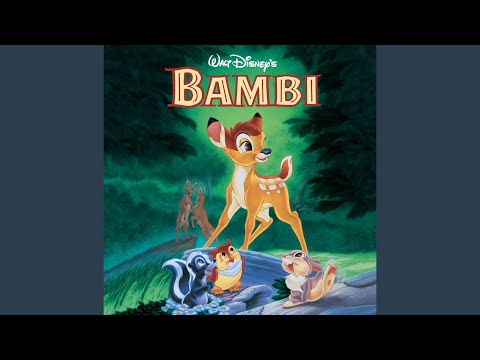
Review and Highlights
Quick summary
- Opening-theme ballad for Disney's Bambi (1942), sung by Donald Novis with the Disney Studio Chorus.
- Written by Frank Churchill (music) and Larry Morey (lyrics), and nominated for an Academy Award in the Music (Song) category.
- Built like a gentle studio-era waltz: soft crooner lead, chorus halo, and orchestration that suggests a forest at dawn.
- Functions as a framing device in the film, returning at the end as a reprise that closes the circle of the story.
- Its melody also feeds the score as a recurring idea, a theme that can turn bright or shadowed depending on the scene.
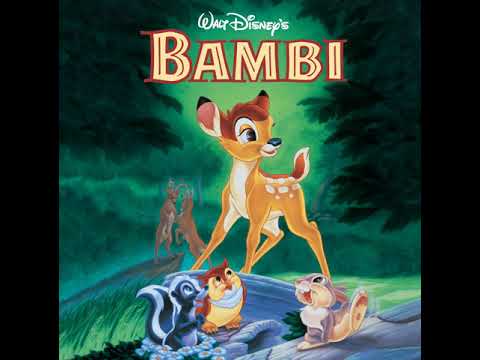
Bambi (1942) - film theme song - not diegetic. Placement: opening titles (a camera glide through the forest) and a closing reprise that mirrors the beginning. Why it matters: the song is a mission statement. Before the plot turns harsh, it tells you what kind of movie this wants to be - lyrical, seasonal, and alert to nature's cycles.
This is not a showstopper. It is a curtain-raiser that behaves like a lullaby with posture. The melody steps carefully, almost refusing to hurry, while the harmony stays warm enough to make the line sound inevitable. That pacing matters: Bambi is a film about time, and the tune starts the clock with a calm hand.
Donald Novis delivers the lead the way studio crooners did when microphones became the real stage. He sings close, steady, and unflashy, letting the chorus do the glowing. When the choir arrives, it does not compete - it lifts the melody like a breeze catching a leaf.
Creation History
The piece was created for Bambi by composer Frank Churchill and lyricist Larry Morey, a pairing that helped define Disney's early feature-sound. As stated in the D23 Disney A to Z entry for the song, it was nominated for an Academy Award. The recording has lived many lives since 1942, resurfacing on Walt Disney Records soundtrack editions and streaming-era catalog releases that keep the original vocal intact while presenting updated mastering and track indexing.
Song Meaning and Annotations
Plot
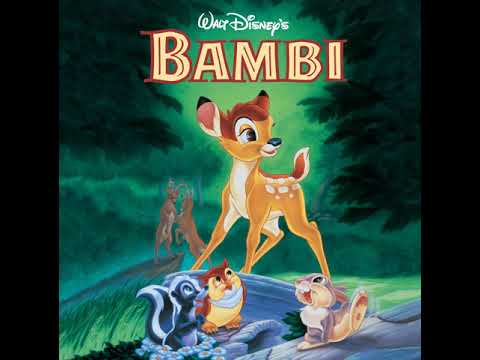
Within Bambi, the song works like an opening promise and a closing seal. It introduces the forest as a living place, then returns at the end as the story completes its generational loop. Between those bookends, the film shifts through play, danger, loss, and renewal - the exact arc the theme implies without spelling it out.
Song Meaning
At face value, the message is simple: love is a constant force that returns like morning light. But the more interesting layer is how Disney places that optimism beside a story that does not flinch. The theme is not naive; it is aspirational. It says: the world can break your heart, and you still wake up to birdsong.
Annotations
-
"Hope may die"
That line is the song's quiet gamble. It acknowledges loss up front, which makes the later promise feel earned rather than sugary. TIME magazine singled out this tension when ranking the tune among its top Disney songs.
-
"comes each day like the dawn"
Nature is not backdrop here - it is the song's logic. The lyric uses sunrise as proof, and the film answers with a literal dawn-glide through the woods.
-
"never ends"
It reads like a vow, but it also works as craft. A theme that can return in fragments across a score needs a title concept that can stretch. This one does, and writers on the film's music have noted how Churchill's motifs were built and adapted across the soundtrack.
-
"in your heart"
The phrase turns the idea inward. Even when the film turns outward to hunters and fire, the theme keeps insisting that what matters is what survives inside the characters, not what happens to them.
Rhythm, color, and the emotional arc
The rhythm leans toward a waltz feel - not a ballroom spin, more a slow sway. That sway matches the film's early pacing, where discovery comes in small steps: a new sound, a new friend, a new season. The orchestration stays translucent, letting the vocal sit on top like a story told at the edge of sleep.
Cultural touchpoints
Bambi premiered in 1942, and its music belongs to a period when Hollywood ballads were written to travel outside the theater. The tune did exactly that: it became a calling card for the film and a durable catalog track. According to the Academy of Motion Picture Arts and Sciences, it competed for Best Original Song at the 15th ceremony, which places it firmly inside the era's mainstream song culture, not just animation history.
Technical Information
- Artist: Donald Novis
- Featured: Disney Studio Chorus
- Composer: Frank Churchill
- Producer: Walt Disney Productions (film music production context)
- Release Date: August 13, 1942
- Genre: Film song; classic pop ballad
- Instruments: Lead vocal, choir, orchestra
- Label: Walt Disney Records (modern catalog editions)
- Mood: Tender, pastoral, steady
- Length: 2:55 (common soundtrack listing)
- Track #: Varies by edition (often the opening track)
- Language: English
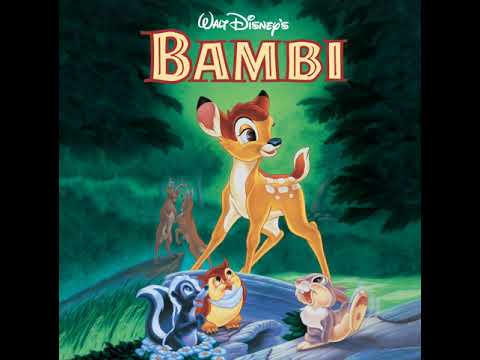
- Album (if any): Bambi (Original Motion Picture Soundtrack)
- Music style: Crooner-led chorus ballad with waltz-like sway
- Poetic meter: Accentual lyric lines shaped for long vowels and gentle cadences
Questions and Answers
- Who sings the original film version?
- Donald Novis is credited as the lead singer, supported by the Disney Studio Chorus on common soundtrack listings.
- Who wrote it?
- Frank Churchill composed the music and Larry Morey wrote the lyric.
- Where does it appear in Bambi?
- It opens the film over the titles and returns at the end as a reprise that frames the story.
- Was it nominated for an Oscar?
- Yes. The Academy of Motion Picture Arts and Sciences lists it as a nominee in the Music (Song) category at the 15th ceremony.
- Is it a lullaby or a pop standard?
- Both, in a way. Its tempo and soft delivery suggest lullaby comfort, but its structure and crooner style are classic pop craft.
- Why does the chorus matter so much?
- The choir turns a private statement into a community vow, making the theme sound bigger than a single character's point of view.
- Does the melody return in the score?
- Music writing on the film notes that Churchill built themes and motifs that were adapted into the final score, and this theme is one of the key building blocks.
- What lyric idea defines the song?
- It argues that love renews itself like morning light, a nature-based promise that matches the film's seasonal storytelling.
- Is it difficult to sing well?
- It is harder than it sounds: the line needs breath control and even tone, because the drama is carried by steadiness, not power.
- Has it stayed visible in modern Disney culture?
- Yes. It still appears on soundtrack reissues and streaming catalog releases, and it is frequently cited in Disney song roundups.
Awards and Chart Positions
The awards story is clean and specific: an Oscar nomination rather than a win. In modern commentary, it also shows up on legacy lists, including a 2024 TIME magazine ranking that places it among the most celebrated Disney songs.
| Year | Honor or list | Result | Notes |
|---|---|---|---|
| 1943 | Academy Awards (15th ceremony) - Music (Song) | Nominee | Music by Frank Churchill; lyrics by Larry Morey. |
| 2024 | TIME - The 50 Best Disney Songs, Ranked | Ranked | Listed at #11 in the feature, praised for hope within a darker film. |
How to Sing Love Is a Song
Vocal profile
- Tempo: Often estimated around 131 BPM in some audio-analysis listings, with higher readings on other services depending on how the beat is counted.
- Pulse feel: A waltz-like sway, best approached as three beats per bar rather than straight pop four.
- Key references: Audio-analysis listings commonly tag it in F major, while published sheet-music arrangements may be transposed and can include a modulation.
- Range (reference listing): About D4 to E5 in one published estimate, but performers often adjust for comfort and edition.
- Style: Crooner legato, clean consonants, and controlled vibrato - keep it intimate.
Step-by-step HowTo
- Tempo: Start slower than the recording. Practice at a comfortable sway, then move toward the catalog tempo so the phrasing stays unforced.
- Diction: Keep the vowels long and the consonants soft. This song wants clarity, not punch.
- Breathing: Mark where the long lines really begin, then take a quiet breath earlier than you think. The goal is a smooth arc, not a last-second gulp.
- Flow and rhythm: Let beat one feel grounded, then allow beats two and three to float. If you flatten the sway, the melody loses its rocking quality.
- Dynamics: Think in gradual slopes. Avoid sudden swells unless the lyric demands it. The chorus can carry the glow; the solo voice should guide.
- Tone: Keep the sound forward and warm. Too much breath makes it wispy; too much pressure makes it theatrical.
- Ensemble and doubles: If you add a choir or backing vocals, unify vowels and keep the backing softer than the lead. The point is halo, not competition.
- Mic technique: Stay close for intimacy, but back off slightly on higher sustained notes to avoid harshness.
- Pitfalls: Rushing the sway, over-vibrato, and over-sentimentality. The film's power comes from understatement.
Additional Info
Soundtrack culture has kept this theme in circulation. The modern catalog upload credits Donald Novis with Disney Studio Chorus and ties the track to a later soundtrack edition, which is how many listeners first meet it outside the film. That reissue pathway matters: Disney's early feature songs often survive because they are continually re-packaged, not because they chase radio charts.
As for covers, the tune sits at an interesting crossroads: it is short, singable, and harmonically friendly, which makes it attractive for choirs and children's projects. SecondHandSongs documents the original performance and later reinterpretations, including spoken-story album contexts and choral arrangement activity that treats the melody like a standard.
One more modern marker: TIME magazine's 2024 ranked list places the song high among Disney classics, describing it as brief but central to what makes Bambi work. That kind of legacy mention keeps a quiet theme from becoming background noise.
Key Contributors
| Entity | Type | Relationship | Statement |
|---|---|---|---|
| Donald Novis | Person | lead vocalist | Donald Novis performed the theme on the Bambi soundtrack releases and catalog listings. |
| Disney Studio Chorus | Organization | featured ensemble | The Disney Studio Chorus supports the lead vocal and provides the song's choral glow. |
| Frank Churchill | Person | composer | Frank Churchill wrote the music and developed motifs that were adapted into the film score. |
| Larry Morey | Person | lyricist | Larry Morey wrote the lyric for the theme and is credited on film and song references. |
| Walt Disney Productions | Organization | film producer | Walt Disney Productions produced Bambi and its original music program. |
| Academy of Motion Picture Arts and Sciences | Organization | award body | The Academy lists the theme as a Music (Song) nominee at the 15th ceremony. |
| D23: The Official Disney Fan Club | Organization | reference publisher | D23 documents the song's authorship and nomination status in its A to Z entry. |
| Walt Disney Records | Organization | catalog label | Walt Disney Records issues modern soundtrack editions and digital catalog releases. |
| Randy Thornton | Person | soundtrack editor | Randy Thornton is credited as editor on a soundtrack release entry that lists the main title track. |
| Alexander Steinert | Person | conductor credit | Alexander Steinert appears as conductor credit on a soundtrack release entry connected to the main title track. |
Sources: D23 A to Z - Love Is a Song, D23 A to Z - Bambi (film), The 15th Academy Awards (Oscars.org) ceremony page, TIME - The 50 Best Disney Songs, Ranked, uDiscoverMusic - Bambi: The Music of the Immortal Disney Animated Film, YouTube catalog track listing (Provided to YouTube), Apple Music track listing for Main Title (Love Is a Song), SecondHandSongs performance entry for Donald Novis, Sheet Music Plus product listing for Bambi Main Title (Love Is a Song), SongBPM tempo and key listing, Singing Carrots range estimate page, MusicBrainz release entry for Bambi: An Original Walt Disney Records Soundtrack