Portobello Road (Bedknobs and Broomsticks) Lyrics — Disney: 60 Years of Musical Magic
Portobello Road (Bedknobs and Broomsticks) Lyrics
Street where the riches of ages are stowed.
Anything and everything a chap can unload
Is sold off the barrow in Portobello road.
You’ll find what you want in the Portobello road.
Rare alabaster? Genuine plaster!
A filigreed samovar owned by the czars.
A pen used by Shelley? A new Boticelli?
The snipper that clipped old King Edward’s cigars?
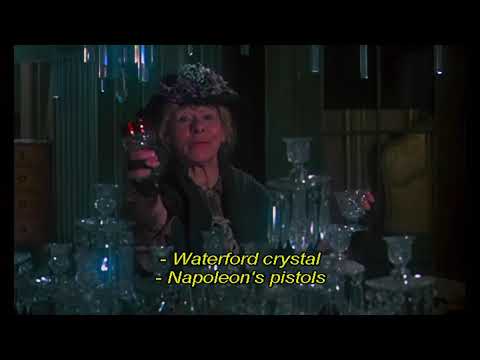
Waterford Crystals? Napoleon’s pistols?
Society heirlooms with genuine gems!
Rembrandts! El Greco’s! Toulouse-Letrec’os!
Painted last week on the banks of the Thames!
Portobello road, Portobello road!
Street where the riches of ages are stowed
Anything and everything a chap can unload
Is sold off the barrow in Portobello road.
You’ll meet all your chums in the Portobello road
There’s pure inspiration in every creation.
No cheap imitations, not here in me store.
With garments as such as was owned by a Duchess.
Just once at some royal occasion of yore.
In Portobello Road, Portobello Road
Find More lyrics at www.sweetslyrics.com
The fancies and fineries of ages are showed.
A lady will always feel dressed a la mode
In frillies she finds in the Portobello road.
“Burke’s Peerage;” “The Bride Book;” “The Fishmonger’s Guidebook;”
A Victorian novel, “The Unwanted Son;”
“The History of Potting”, “The Yearbook of Yachting,”
The leather bound “Life of Attila the Hun.”
Portobello Road, Portobello Road
Street where the riches of ages are stowed
Artifacts to glorify our regal abode
Are hidden in the flotsam in Portobello Road
You’ll find what you want in the Portobello Road
Tokens and treasures, yesterday’s pleasures
Cheap imitations of heirlooms of old
Dented and tarnished, scarred and unvarnished
In old Portobello they’re bought and they’re sold
Portobello Road, Portobello Road
Street where the riches of ages are stowed
Artifacts to glorify our regal abode
Are hidden in the flotsam in Portobello road.
You’ll find what you want in the Portobello Road
Song Overview
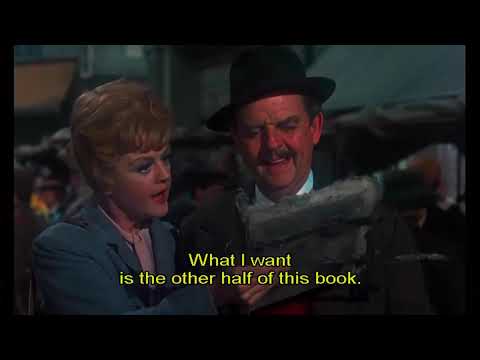
"Portobello Road" is a waltz that wears a bustle like a costume. The song turns a London street market into a moving set: stalls, bargains, tall tales, and a chorus that behaves like foot traffic. It is a showpiece inside Bedknobs and Broomsticks, the moment when the quest stops being whispered magic and becomes a public carnival.
Review and Highlights
Quick summary
- Where it appears: Bedknobs and Broomsticks (1971), in the Portobello market search sequence.
- Who carries it: David Tomlinson leads, backed by children and a vendor crowd that keeps changing shape.
- What it sounds like: A fast waltz base with a parade of stylistic detours as different groups take over the theme.
- What changed over time: The dance sequence was heavily shortened for some releases, then later rebuilt in restoration work.
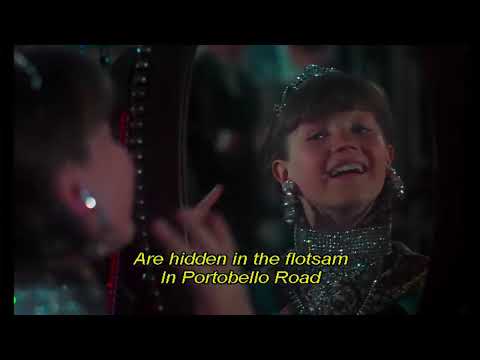
This number works because it behaves like a confidence trick in music. The lead vocal is a barker, half storyteller and half salesman, and the chorus keeps swapping costumes in sound. One minute you are in proper music-hall territory, then the street turns a corner and the same melody is being reframed by another pocket of the market. The waltz pulse is the spine, but the surface keeps changing, which is exactly what a flea market does to your eyes.
I have always liked how the song lets the scene breathe without stopping the plot. The characters are hunting for a spell, but the track insists on showing you what kind of place would hide such a thing: noisy, crowded, and full of harmless fakes that look convincing until you squint. The music makes that theme feel playful, then slightly suspicious, then playful again.
Bedknobs and Broomsticks (1971) - animated and live-action film - non-diegetic. The group travels to Portobello Road to locate missing pages of a spellbook, and the market becomes a choreographed montage of sellers and side acts.
Creation History
The song was written by Richard M. Sherman and Robert B. Sherman for Bedknobs and Broomsticks, and it is explicitly framed as a waltz set around 1940 London, with the vocal spotlight on David Tomlinson. The sequence became famous for how much of it got trimmed: the American Film Institute notes that a ten-minute dance section was later reduced to about four minutes, and later restoration efforts had to rebuild missing pieces. According to the Los Angeles Times, restoration work dug through archival elements and revived footage tied to the Portobello Road material, helping modern editions recover more of the original shape.
Song Meaning and Annotations
Plot
The heroes arrive at the market looking for a particular magical text, but the street answers with distraction: sellers calling out, oddities piled high, and a crowd that keeps splitting into little worlds. The song functions like a guided tour, introducing the market as a place where you can buy almost anything, including trouble, and where the real prize might be hidden behind performance.
Song Meaning
The meaning is simple and sly. On the surface it is a celebration of a famous street and its trade. Underneath, it is a lesson in misdirection: the market is a chorus of bargains that might be bargains, and the characters are learning that appearances can be negotiated. The waltz rhythm keeps it light on its feet, but the message is clear - in a place built on hustle, you do not get truth for free.
Annotations
"Portobello Road"
Repeating the title like a chant is not laziness, it is stagecraft. The hook is a street sign you keep passing, and each return is a cue that another section of the market is about to claim the melody.
"buy and sell"
The phrase is the engine of the scene. It frames commerce as action, not background. The song is not about objects, it is about the motion of exchange and the tiny performances people put on to make a deal happen.
"a waltz"
Calling it what it is matters: the triple meter makes the crowd feel like it is gliding, even when the screen is packed. A waltz can be elegant or rowdy; this one chooses rowdy, but it keeps the circular sway.
Style fusion and the traveling theme
One reason the number stays fresh is the way it treats a single melody as a passport. Sources describing the scene emphasize how different groups take the theme in different styles, which makes the street feel multicultural and constantly in motion. It is also why the song can feel like a cousin of classic ensemble street numbers: you are watching a neighborhood introduce itself through sound.
Character beat
The lead vocal is more than a tour guide. Emelius Browne is a performer at heart, and this is the film letting him run on instinct: charm first, details later. The market agrees with him. It is a world where talk is currency, which makes it the perfect testing ground before the story asks the characters to trust magic.
Technical Information
TL;DR
- Fast waltz built as a market montage, with the hook returning like a street sign.
- Written by the Sherman Brothers for Bedknobs and Broomsticks, led onscreen by David Tomlinson.
- The full sequence was shortened in some releases and later reconstructed in restoration editions.
- Artist: David Tomlinson and vendors ensemble
- Featured: Children and street crowd voices
- Composer: Richard M. Sherman; Robert B. Sherman
- Producer: Soundtrack released by Buena Vista Records, later expanded by Walt Disney Records
- Release Date: December 13, 1971
- Genre: Film musical, music-hall styled ensemble number
- Instruments: Orchestra with prominent dance rhythm support, ensemble vocals
- Label: Buena Vista Records (original soundtrack era); Walt Disney Records (expanded release era)
- Mood: Bustling, playful, slyly hectic
- Length: About 3:28 (soundtrack cut)
- Track #: 6 (common soundtrack sequence listings)
- Language: English
- Album: Bedknobs and Broomsticks (Original Motion Picture Soundtrack)
- Music style: Waltz base with shifting ensemble textures to mirror the crowd
- Poetic meter: Accentual phrasing riding a 3/4 dance pulse
Questions and Answers
- Who sings the lead in the film version?
- David Tomlinson, with the vendor crowd and children acting as the street around him.
- What time signature is the song built on?
- It is described as a waltz in 3/4, which is why it keeps that circular sway even when the scene is packed.
- Why does the melody keep coming back so often?
- Because the hook functions like a street sign. Each return resets the viewer in a new pocket of the market.
- Was the full sequence always available?
- No. The dance section was shortened in some releases, and later editions worked to reconstruct missing pieces from archival materials.
- Did the song come out as a single?
- Yes, it appeared on a UK 7-inch release paired with "The Beautiful Briny" in late 1971.
- How does the song help the story, beyond atmosphere?
- It teaches the characters, and us, how this world hides things: in noise, in performance, and in friendly distractions.
- What is the musical trick that makes the market feel alive?
- The theme shifts between groups and textures, so the street seems to change its accent every few bars.
- Is the stage musical connected to this number?
- The stage adaptation is built around the original film songs and adds new material, so this piece remains one of the iconic set stops on the journey.
- Why does the lead vocal feel like a salesman?
- Because the character is selling the scene as much as the goods. The phrasing is pitched outward, like he is catching passers-by mid-step.
- What should listeners pay attention to on repeat?
- How the waltz pulse stays steady while the surface keeps changing. That balance is the whole illusion.
Awards and Chart Positions
This track was not built for pop charts, but it belongs to a film with a serious awards footprint. Bedknobs and Broomsticks won the Academy Award for Special Visual Effects, and the film also earned an Academy Award nomination for Best Original Song for a different number from the score. In the end, that context matters: the soundtrack was treated as a major studio musical project, not filler between scenes.
| Category | Work | Result | Date or era |
|---|---|---|---|
| Awards | Bedknobs and Broomsticks | Academy Award win: Special Visual Effects | 1971 film, 44th Academy Awards cycle |
| Awards | Bedknobs and Broomsticks | Academy Award nomination: Best Original Song ("The Age of Not Believing") | 44th Academy Awards cycle |
| Release milestone | Soundtrack album | Soundtrack release date widely listed as December 13, 1971; expanded CD edition issued August 13, 2002 | 1971 and 2002 |
How to Sing Portobello Road
Singing this well is less about vocal fireworks and more about character timing. You are performing commerce: quick eye contact in the voice, punchy consonants, and a dance feel that never stops spinning.
- Time feel: 3/4 waltz base, often performed as a fast, propulsive dance.
- Key: Commonly notated around E-flat major and its relative C minor in published and community arrangements.
- Tempo: Some streaming-derived analytics list the soundtrack cut near 205 BPM, which reads as a brisk waltz when counted in felt beats.
- Start with the sway: Conduct yourself in three. If the body does not feel the circle, the phrasing will sound square.
- Diction is your currency: Crisp consonants sell the scene. This is a street call, not a lullaby.
- Place the voice forward: Use a speech-bright placement to keep the lines clear over ensemble movement.
- Map the breath like foot traffic: Short breaths at natural commas, never in the middle of a sales pitch.
- Let the chorus be the crowd: If you are in the ensemble, match cutoffs and vowels so the group sounds like one street.
- Act the bargains: Vary intention: some lines are persuasion, some are celebration, some are misdirection.
- Common pitfalls: Over-singing the waltz, smearing consonants, and losing the dance pulse when the words get busy.
Additional Info
The history of this number is partly a history of editing. It was staged as a long tour of the market, then shortened for practical reasons, then later reconstructed when restoration teams tried to bring back what audiences missed the first time around. That tug-of-war between spectacle and runtime is baked into how people remember it: some grew up with a quick stop, others with the full stroll.
The stage musical adaptation premiered in 2021 and is built around the original songs plus new material, which is a quiet compliment to how durable the set pieces remain. A market song that can survive editing, restoration, and a stage reinvention is doing something right.
Key Contributors
| Entity | Type | Relationship |
|---|---|---|
| Richard M. Sherman | Person | Wrote music and lyrics for the song. |
| Robert B. Sherman | Person | Wrote music and lyrics for the song. |
| David Tomlinson | Person | Performs the lead vocal in the film sequence. |
| Irwin Kostal | Person | Composed and adapted the film's musical score framework. |
| American Film Institute | Organization | Documents the post-release cutting of the Portobello dance sequence. |
| Academy of Motion Picture Arts and Sciences | Organization | Lists the film's Special Visual Effects win and the song nomination for the score. |
| Buena Vista Records | Organization | Released the original soundtrack album in 1971. |
| Walt Disney Records | Organization | Issued an expanded soundtrack edition in 2002. |
| Bedknobs and Broomsticks | Work | Film context for the song and its market montage staging. |
| Bedknobs and Broomsticks | Work | Stage musical adaptation premiered in 2021 using original songs plus new material. |
Sources: American Film Institute Catalog, Academy Awards Database, Los Angeles Times archive, Apple Music album listing, Wikipedia, TuneBat
Music video
Disney: 60 Years of Musical Magic Lyrics: Song List
- Volume One
- A Whole New World (Aladdin)
- Circle of Life (Lion King)
- Beauty and the Beast (Beauty and the Beast)
- Under the Sea (The Little Mermaid)
- Hakuna Matata (Lion King)
- Kiss the Girl (The Little Mermaid)
- I Just Can't Wait to Be King (Lion King)
- Poor Unfortunate Souls (The Little Mermaid)
- Chim Chim Cher-ee (Mary Poppins)
- Jolly Holiday (Mary Poppins)
- A Spoonful of Sugar (Mary Poppins)
- Let's Get Together (The Parent Trap)
- The Monkey's Uncle (The Monkey's Uncle)
- The Ugly Bug Ball (Summer Magic)
- The Spectrum Song (Walt Disney's Wonderful World of Color)
- Colonel Hathi's March (The Jungle Book)
- A Whale of a Tale (20,000 Leagues Under the Sea)
- You Can Fly! You Can Fly! You Can Fly! (Peter Pan)
- The Work Song (Cinderella)
- A Dream is a Wish Your Heart Makes (Cinderella)
- Zip-A-Dee-Doo-Dah (Song of the South)
- Dance of the Reed Flutes (Fantasia)
- Love Is a Song (Bembi)
- Someday My Prince Will Come (Snow White and the Seven Dwarfs)
- Minnie's Yoo Hoo! (Mickey's Follies)
- Volume Two
- Be Our Guest (Beauty & The Beast)
- Can You Feel the Love Tonight (The Lion King)
- Part of Your World (The Little Mermaid)
- One Jump Ahead (Alladin)
- Gaston (Beauty And the Beast)
- Something There (Beauty And the Beast)
- Supercalifragilisticexpialidocious (Mary Poppins)
- Candle on the Water (Pete's Dragon)
- Main Street Electrical Parade (Disneyland)
- The Age of Not Believing (Bedknobs and Broomsticks)
- The Bare Necessities (The Jungle Book)
- Feed the Birds (Mary Poppins)
- Best of Friends (The Fox and the Hound)
- Let's Go Fly a Kite (Mary Poppins)
- It's a Small World (Disneyland)
- The Tiki, Tiki, Tiki Room (Disneyland)
- Mickey Mouse Club March (Mickey Mouse Club)
- On the Front Porch (Summer Magic)
- The Second Star to the Right (Peter Pan)
- Ev'rybody Has a Laughing Place (Song of the South)
- Bibbidi-Bobbidi-Boo (Cinderella)
- So This is Love (Cinderella)
- When You Wish Upon a Star (Pinocchio)
- Heigh-Ho (Snowwhite & the 7 Dwarfs)
- Who's Afraid of the Big Bad Wolf (The 3 Little Pigs)
- Volume Three
- Colors of the Wind (Pocahontas)
- You've Got a Friend in Me (Toy Story)
- Be Prepared (The Lion King)
- Out There (The Hunchback of Notre Dame)
- Family (James & The Giant Peach)
- Les Poissons (The Little Mermaid)
- Mine, Mine, Mine (Pocahontas)
- Jack's Lament (The Nightmare Before Christmas)
- My Name Is James (Jame & The Giant Peach)
- Heffalumps and Woozles (Winnie the Pooh and the Blustery Day)
- The Mob Song (Beauty & The Beast)
- Portobello Road (Bedknobs and Broomsticks)
- Stay Awake (Mary Poppins)
- I Wan'na Be Like You (The Jungle Book)
- Oo-De-Lally (Robin Hood)
- Are We Dancing (The Happiest Millionaire)
- Once Upon a Dream (Sleeping Beauty)
- Bella Notte (Lady and the Tramp)
- Following the Leader (Peter Pan)
- Trust in Me (The Jungle Book)
- The Ballad of Davy Crockett (Davy Crockett)
- I'm Professor Ludwig Von Drake (Walt Disney's Wonderful World of Color)
- Pink Elephants on Parade (Dumbo)
- Little April Shower (Bambi)
- The Silly Song (Snow White & the 7 Dwarfs)
- Volume Four
- One Last Hope (Hercules)
- A Guy Like You (The Hunchback of Norte Dame)
- On the Open Road (A Goofy Movie)
- Just Around the Riverbend (Pocahontas)
- Home (Beauty & the Beast (Broadway Musical))
- Fantasmic! (Disneyland)
- Oogie Boogie's Song (The Nightmare Before Christmas)
- I Will Go Sailing No More (Toy Story)
- Substitutiary Locomotion (Bedknobs and Broomsticks)
- Stop, Look, and Listen/I'm No Fool (Mickey Mouse Club)
- Love (Robin Hood)
- Thomas O'Malley Cat (The Aristocats)
- That's What Friends Are For (The Jungle Book)
- Winnie the Pooh
- Femininity (Summer Magic)
- Ten Feet Off the Ground (The One and Only, Genuine, Original Family Band)
- The Siamese Cat Song (Lady and the Tramp)
- Enjoy It! (In Search of the Castaways (film))
- Give a Little Whistle (Pinocchio)
- Oh, Sing Sweet Nightingale (Cinderella)
- I Wonder (Sleeping Beauty)
- Looking for Romance / I Bring You A Song (Bambi)
- Baby Mine (Dumbo)
- I'm Wishing/One Song (Snow White & the 7 Dwarfs)
- Volume Five
- I'll Make a Man Out of You (Mulan)
- I Won't Say / I'm in Love (Hercules)
- God Help the Outcasts (The Hunchback of Notre Dame)
- If I Can't Love Her (Beauty and the Beast)
- Steady As The Beating Drum (Pocahontas)
- Belle (Beauty & the Beast)
- Strange Things (Toy Story)
- Cruella De Vil (101 Dalmatians)
- Eating the Peach (James and the Giant Peach)
- Seize the Day (Newsies)
- What's This? (The Nightmare Before Christmas)
- Lavender Blue / Dilly Dilly (So Dear to My Heart)
- The Rain Rain Rain Came Down Down Down (Winnie the Pooh and the Blustery Day)
- A Step in the Right Direction (Bedknobs and Broomsticks)
- Boo Bop Bopbop Bop (Pete's Dragon)
- Yo Ho / A Pirate's Life for Me (Disneyland)
- My Own Home (The Jungle Book)
- Ev'rybody Wants to Be a Cat (The Aristocats)
- In a World of My Own (Alice in Wonderland)
- You Belong to My Heart (The 3 Caballeros)
- Humphrey Hop (In the Bag)
- He's a Tramp (Lady and the Tramp)
- How Do You Do? (Song of the South)
- When I See an Elephant Fly (Dumbo)
- I've Got No Strings (Pinocchio)