
You Can Fly! You Can Fly! You Can Fly! (Peter Pan) Lyrics
You Can Fly! You Can Fly! You Can Fly! (Peter Pan)
Spoken:But, Peter, how do we get to Never Land?
Fly, of course!
Fly!
It's easy! All you have to do is to...is to...is to--
Huh. That's funny!
What's the matter?
Don't you know?
Oh sure, it's, it's just that I never thought about it before.
Say, that's it! You think of a wonderful thought!
Any happy little thought?
Uh-huh
Like toys at Christmas? Sleight bells? Snow?
Yep! Watch me now--here I go!
It's easier than pie!
He can fly! He can fly! He flewed!
Now, you try
I'll think of a mermaid lagoon
Oh--underneath a magic moon
I'll think I'm in a pirate's cave
I'll think I'll be an Indian brave
Now, everybody try--one, two, three!
We can fly! We can fly! We can fly!
This won't do--what's the matter with you?
All it takes is faith and trust...oh!
And something I forgot--Dust!
Dust? Dust?
Yep! Just a little bit of pixie dust
Now, think of the happiest things.
It's the same as having wings
Let's all try it, just once more
Look! We're rising off the floor
Jiminy! Oh my! We can fly!
You can fly! We can fly!
Come on, everybody, here we go!
Off to Never Land!
Think of a wonderful thought
Any merry little thought
Think of Christmas, think of snow
Think of sleigh bells - off you go!
Like a reindeer in the sky
You can fly! You can fly! You can fly!
Think of the happiest things
It's the same as having wings
Take the path that moonbeams make
If the moon is still awake
You'll see him wink his eye
You can fly! You can fly! You can fly!
Up you go with a heigh and ho
To the stars beyoond the blue
There's a Never Land waiting for you
Where all your happy dreams come true
Every dream that you dream will come true
When there's a smile in your heart
There's no better time to start
Think of all the joy you'll find
When you leave the world behind
And bid your cares good-bye
You can fly! You can fly! You can fly!
Spoken:
There it is, Wendy, second star to the right
and straight on 'til morning
Read more: http://artists.letssingit.com/disney-lyrics-you-can-fly-you-can-fly-you-can-fly-bf3k9bk#ixzz2PWOk8jWT
LetsSingIt - Your favorite Music Community
Song Overview
Review and Highlights
Quick summary
- Film song from Disney's 1953 animated feature Peter Pan, written by Sammy Cahn and Sammy Fain.
- Performed as an ensemble lift-off: child voices and chorus work like a musical gust, pushing the scene into motion.
- Diegetic-adjacent in spirit: it plays like a spell being spoken aloud, even as the camera turns the room into open sky.
- Later re-used and adapted in Disney media and stage licensing, including Disney's Peter Pan JR.
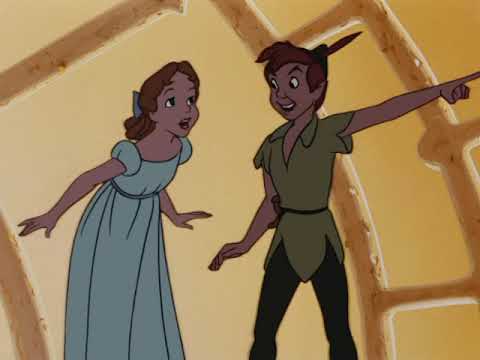
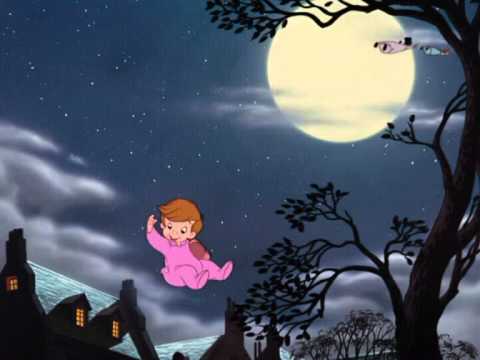
Peter Pan (1953) - film song - not strictly diegetic. It begins in the Darling nursery as faith, trust, and pixie dust become a set of rules the characters can chant, then it expands into a travel montage as London turns into a playground in the clouds. Why it matters: the number is the hinge between bedtime story and adventure, a clean gear change that sells the impossible with a steady grin.
I have heard a lot of Disney flight cues over the decades, and this one is built like a masterclass in momentum. The hook is repetitive on purpose, but the repetition is not lazy - it is aerodynamic. Each pass feels like a running start, a chorus that keeps its elbows tucked in so the scene can glide. The arrangement favors bright, clustered harmony, the sort of choir texture that reads as "group courage" rather than solo bravado.
One reason it lasts is its balance of instruction and wonder. The words hand you a recipe, while the music acts out the result. That is why it keeps resurfacing in compilations and spinoffs: it is less a plot point than a portable feeling.
Creation History
Disney assigned lyricist Sammy Cahn and composer Sammy Fain to shape the film's musical world, and this number became the story's launchpad. As stated in Disney's D23 entry, it was written for Peter Pan, and its simple verbal logic (think happy thoughts, add pixie dust, off you go) matches the studio's gift for turning fantasy into a singable rulebook.
Song Meaning and Annotations
Plot
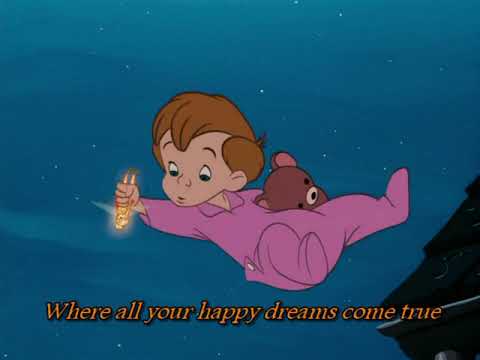
The song arrives as Peter teaches Wendy, John, and Michael how to leave the floor. The nursery becomes a rehearsal space: first the idea, then the confidence, then the powdery push. Once everyone is airborne, the music keeps pace with the scene's widening horizon, turning a domestic room into open night as the group heads toward Neverland.
Song Meaning
The meaning is less "escape" than "permission." The number frames flight as a skill you can learn when fear stops hogging the spotlight. It is also a community song: nobody flies alone here. Harmony and shared rhythm do the heavy lifting, suggesting that belief is easiest when it is social and a little noisy.
Annotations
"Think of a wonderful thought"
This line is the ignition switch. It does not ask for discipline or virtue, just imagination. In musical terms, it is a cue for the melody to brighten and for the choir sound to feel like a room full of friends leaning forward at once.
"It is the same as having wings"
A neat bit of Disney logic: metaphor treated as mechanics. The lyric compresses a big idea into a child-friendly equation, and the arrangement answers by widening the harmony, like a camera pullback in sound.
"A little bit of pixie dust"
The song hedges its own philosophy in a charming way. Belief matters, yes, but the recipe also needs a physical spark. That detail keeps the fantasy grounded: magic is tangible, visible, and shared.
Genre and style fusion
Musically, it sits between chorus-driven film scoring and the brighter end of the American songbook. The rhythm is steady enough for a montage, but the voicings carry a church-choir glow, making the lesson feel ceremonial rather than casual.
Emotional arc
It starts as coaching, turns into collective courage, and ends as celebration. The emotional climb is mapped onto the scene's literal climb, a classic Disney trick: the story rises, so the melody rises with it.
Cultural touchpoints
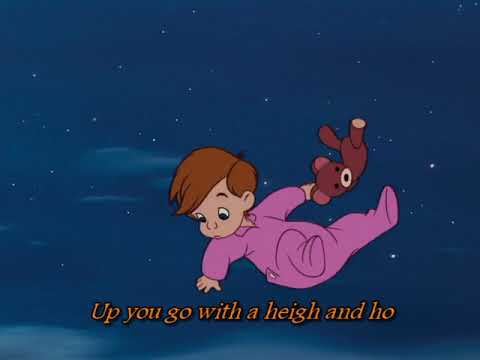
According to TIME magazine, the number has endured partly because it is tied to one of the studio's most famous set pieces: the children sailing across London landmarks in open night air. That image and this melody have been stapled together in popular memory for decades.
Technical Information
- Artist: Bobby Driscoll, Kathryn Beaumont, Paul Collins, Tommy Luske, The Jud Conlon Chorus, and The Mellomen
- Featured: Ensemble chorus performance (film cast and studio vocal groups)
- Composer: Sammy Fain
- Producer: Not consistently listed across public soundtrack metadata for the original era recordings
- Release Date: February 5, 1953
- Genre: Animated film song; ensemble chorus cue
- Instruments: Studio orchestra with choir-centered vocal arrangement
- Label: Commonly distributed via Walt Disney Records on modern catalog releases
- Mood: Buoyant, encouraging, bright
- Length: About 4:24 (some soundtrack track listings bundle the sequence as a longer suite)
- Track #: 4 (on several soundtrack editions that group the early film material)
- Language: English
- Album (if any): Disney's Greatest, Vol. 1 (catalog track listing); Classic Soundtracks: Peter Pan (1953) (album listings vary by region)
- Music style: Chorus-forward harmony with a scene-driving pulse
- Poetic meter: Mostly loose accentual meter, optimized for clear, chant-like phrasing
Questions and Answers
- Who wrote the song?
- Sammy Cahn wrote the words and Sammy Fain composed the music.
- Who performs it in the original film credits?
- Soundtrack metadata commonly credits the child voice cast alongside The Jud Conlon Chorus and The Mellomen.
- Where does it land in the movie's story?
- Right at the turning point when the Darling children shift from bedtime reality into airborne adventure.
- Why does it work so well as a travel cue?
- The repeated hook acts like a rhythmic engine. It can loop while the visuals keep changing, so the scene feels continuous rather than episodic.
- Is it a solo showcase?
- No. Its power comes from the group sound, which frames flying as something learned together.
- Did Disney reuse it outside the film?
- Yes, it appears in later Disney media such as a House of Mouse episode that builds a comic variant around the idea of learning to fly.
- How does the stage version typically treat it?
- In Disney's Peter Pan JR., it often shows up in a split or medley format, adapted for school-friendly staging and pacing.
- What is the central image in the lyric?
- Imagination as propulsion: happy thoughts become the practical trigger, with pixie dust as the visible catalyst.
- Why do listeners remember it decades later?
- Because the hook is easy to recall and it is welded to a signature sequence: the first flight across London night air.
Awards and Chart Positions
This number is not typically discussed as a chart single, but it has received modern critical placement as part of Disney's canon.
| Year | List | Publisher | Placement | Note |
|---|---|---|---|---|
| 2024 | The 50 Best Disney Songs, Ranked | TIME magazine | 43 | Praised for its harmonies and its lasting link to the London flight set piece. |
How to Sing You Can Fly! You Can Fly! You Can Fly!
Vocal profile
- Commonly listed original key: C major
- Commonly listed vocal range: B3-E5
- Tempo: Often indexed around 106 BPM in music database listings (recording and edition dependent)
- Style note: Choral blend matters more than solo power - aim for clean vowels and buoyant consonants.
Step-by-step approach
- Tempo: Set a metronome near 106 BPM and practice the hook as a steady chant before adding expression.
- Diction: Keep "t" and "k" crisp without snapping. This song needs sparkle, not grit.
- Breathing: Plan quick, quiet sips of air between repeated hook phrases. The trick is staying light while repeating a lot.
- Flow and rhythm: Let the pulse feel like a gentle trot, not a march. If it starts to pound, the scene loses lift.
- Accents: Lean slightly into the first word of each phrase, then taper. Think takeoff, not landing.
- Ensemble and doubles: Match vowels on long notes (especially "i" and "a" sounds). Blend first, then brighten.
- Mic and staging: If amplified, keep distance consistent during the hook. The repetition will expose volume swings fast.
- Pitfalls: Avoid over-singing the top of the range. A strained E5 kills the floating illusion.
Additional Info
The clever part is how the number behaves like a spell with stage directions baked in. It does not just describe flight - it instructs it. That makes it unusually adaptable: it can be staged by a school choir, re-scripted for a TV gag, or dropped into a compilation, and it still keeps its core function.
Disney's stage licensing ecosystem has treated the tune as a durable building block. Music Theatre International materials for Disney's Peter Pan JR. list it among the classic songs re-arranged for younger performers, often split into parts to match scene changes and keep the pacing nimble.
Outside narrative uses, it also lives as a cover-friendly melody. Lullaby and instrumental recordings show up in modern catalog databases, a sign that the tune reads cleanly even when you remove dialogue, sound effects, and the visual thrill ride.
Key Contributors
| Entity | Type | Relationship | Statement |
|---|---|---|---|
| Sammy Cahn | Person | Lyricist | Sammy Cahn wrote the words for the song. |
| Sammy Fain | Person | Composer | Sammy Fain composed the music. |
| The Jud Conlon Chorus | Organization | Performer | The Jud Conlon Chorus contributes the choral performance credited in multiple soundtrack listings. |
| The Mellomen | Organization | Performer | The Mellomen are credited as part of the studio vocal sound on Disney catalog releases. |
| Bobby Driscoll | Person | Voice cast | Bobby Driscoll appears in performing-artist credits on modern track listings connected to the film. |
| Kathryn Beaumont | Person | Voice cast | Kathryn Beaumont appears in performing-artist credits on modern track listings connected to the film. |
| Music Theatre International | Organization | Stage licensing | Music Theatre International distributes Disney's Peter Pan JR. materials that include adapted versions of the song. |
| TIME magazine | Organization | Critical ranking | TIME magazine ranked the song on its 2024 list of top Disney songs. |
Sources: Disney D23 A to Z entry for the song, Apple Music track listing, TIME magazine Disney songs ranking, IMDb episode page for Donald Wants to Fly, Music Theatre International Broadway Junior downloads page, Singing Carrots vocal range listing, Dave Tompkins BPM database page, Cornel1801 Disney video song reference, WhoSampled cover listing