
How Do You Do? (Song of the South) Lyrics
How Do You Do? (Song of the South)
How do you do? Mighty pleasant greetin'How do you do? Say it when you're meetin'
How do you do? With every one repeatin'
Pretty good sure as you're born.
What goes up is sure to come down.
A penny lost is a penny found.
How do you do?
And you howdy back.
A little bit of this and a little bit of that.
How do you do?
Fine, how are you?
How you come on?
Pretty good sure as you're born.
Stop jumpin' around,
You'll run out of breath!
Why don't you sit back
And calm yourself?
You can hurry on now if you must.
We'll do what we like, 'cause...
That suits us.
SOLO (by Thurl Ravenscroft):
How do you do? Mighty pleasant greetin'.
Pretty good sure as you're born.
Pretty good sure as you're born.
How do you do? Mighty pleasant greetin'
How do you do? Say it when you're meetin'
How do you do? With every one repeatin'
Pretty good sure as you're born.
Pretty good sure as you're born.
The weather is good, the fishin' is fine.
What do we do with all of our time?
Well we sit and we think and we wiggle our toes.
That's what you ask us, that's what we know!
Pretty good sure as you're born.
Pretty good sure as you're born.
How do you do? Fine, how are you?
How you come on?
Pretty good sure as you're born.
Pretty good sure as you're born.
Pretty good sure as you're born.
Brer Rabbit and Brer Terrapin:
I'm lookin' for a little more adventure,
I'm headin' for a little bit of fun now,
I'm hopin' for a little more excitement,
Time to be movin' along!
I've had enough of this ol' briar patch,
I think an adventure's about to hatch,
I'm movin' on, say goodbye to me,
Down at the Laughin' Place is where I'll be!
I'm lookin' for a little more adventure,
I'm headin' for a little bit of fun now,
I'm hopin' for a little more excitement,
Time to be movin' along!
I nailed up my door, I'll see you around,
The Laughin' Place is where I'm found!
You're headin' out and not comin' back,
But I'm comin' too, I've packed my sack!
I'm headin' for a little bit of fun now,
Time to be movin' along.
Time to be movin' along!
He's lookin' for a little more adventure.
But he's headin' for a little bit of trouble.
He's headin' for a little bit of danger.
Time to be turning around.
Time to be turning around.
Careful Brer Rabbit better mend your ways,
You're headed for trouble one of these days!
Warnin' this rabbit I'm afraid is a waste,
He's headin' for the Laughing Place.
Time to be turning around.
Time to be turning around.
He's lookin' for a little more adventure.
But he's headin' for a little bit of trouble.
He's headin' for a little bit of danger.
Time to be turning around.
Time to be turning around.
Time to be turning around.
Song Overview
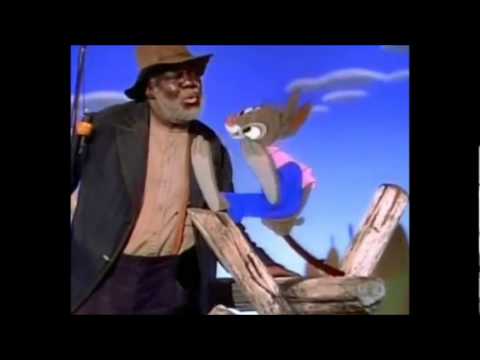
Review and Highlights
Quick summary
- Film origin: Disney's Song of the South (1946), used in the "Tar Baby" animated segment.
- Primary voices: James Baskett and Johnny Lee lead the on-screen performance, credited in multiple soundtrack references.
- Writer credit: Robert MacGimsey is widely listed as the song's writer for the picture.
- Afterlife: the tune later reappeared as part of Splash Mountain's musical palette, and it anchored a 1956 Disneyland Records soundtrack LP.
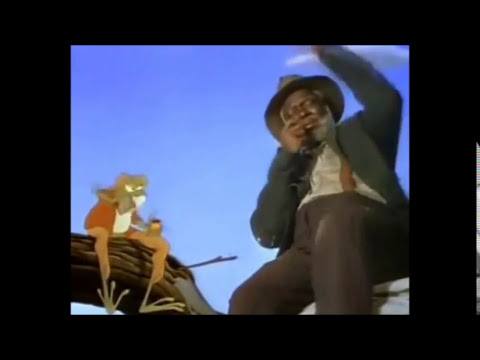
Song of the South (1946) - film - diegetic. Animated "Tar Baby" segment: a call-and-response greeting rolls out like a town square welcome, then tightens into a setup for trickery. Why it matters: it sells community and tempo in the same breath, then uses that friendliness as misdirection.
This is one of those Disney numbers that looks simple on paper and behaves like craft in performance. The melody keeps circling back on itself, like neighbors repeating the same hello until it becomes rhythm. The chorus answers are the secret sauce: they turn a solo line into a little society, and the beat does not hurry. I have heard plenty of film songs that beg for attention. This one just strolls in, tips its hat, and somehow you are already humming along.
Key takeaways
- Hook: the greeting phrase repeats until it becomes percussive.
- Structure: short prompts and replies, built for character voices and crowd texture.
- Scene function: it warms the ear before the segment turns sly.
- Longevity: the melody proved adaptable, resurfacing in park music decades later.
Creation History
The printed credits for this title have traveled through several documentation layers, but they land consistently: MacGimsey is the credited writer, and Baskett with Lee are the featured voices in the film-era soundtrack listings. According to the AFI Catalog, Song of the South carries a 1946 release date that sits right in the postwar moment when Hollywood still leaned on folk-flavored material to signal "American-ness." Later, the song moved into recorded product life: MusicBrainz notes that the 1956 Disneyland Records LP is treated as an official soundtrack release and even frames it as the label's first soundtrack, which is a tidy historical footnote for a tune that keeps popping up in Disney ephemera.
Song Meaning and Annotations
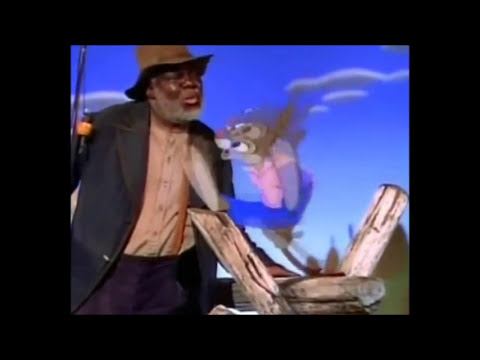
Plot
Inside the "Tar Baby" sequence, the greeting motif frames a world where animals speak, socialize, and sing as if music is the local language. The exchange feels welcoming at first: a simple hello, a cheerful reply, another hello. Then the story pivots toward the famous trap at the center of the segment. The number is not just decoration, it is the doorway into the action.
Song Meaning
On the surface, it is a musical handshake: repetition as friendliness, rhythm as reassurance. Underneath, it functions like a lesson in social choreography. Everyone knows their cue, everyone answers on time, and belonging is demonstrated by joining the pattern. The twist is that this warmth sits inside a sequence built around manipulation and consequence, which makes the smiling chorus feel a little sharper on a second listen. According to Variety magazine, the film's status has remained contentious in modern Disney distribution conversations, which adds a strange layer to any of its songs: they are familiar, but often encountered out of their original context.
Annotations
-
"How do you do?"
As a lyric, it is almost nothing. As a device, it is everything: a phrase that can be tossed between voices until it becomes rhythm, and rhythm becomes scene setting.
-
"Fine!"
The snap of the reply is the punchline and the backbeat. It keeps the exchange buoyant, like the chorus is smiling with its whole body.
-
"A friendly greetin'."
A plain statement that doubles as instruction: this is how the community presents itself. In performance, it is best delivered like you are letting the listener in on a custom.
Genre and driving rhythm
Call-and-response folk-pop, filtered through studio orchestration and cartoon timing. The repetition is not laziness, it is propulsion: every return of the greeting lands like another step in a dance. The groove is friendly, but it is also precise, which matters in animation where movement and music have to lock.
Emotional arc
It begins as hospitality and ends as momentum. The longer it repeats, the more it stops feeling like dialogue and starts feeling like a spell. That is the cleverness: a welcoming surface that still has narrative teeth.
Cultural and historical touchpoints
The film sits inside a complicated American entertainment history, and the company has treated it as such. According to Deadline, Disney leadership has publicly said the full film is not appropriate for modern streaming, which is one reason many listeners meet these songs through later recordings, compilations, or park arrangements rather than a standard domestic reissue.
Technical Information
Artist: James Baskett, Johnny Lee
Featured: ensemble chorus voices (film sequence)
Composer: Robert MacGimsey
Producer: Walt Disney Productions (film); Disneyland Records (1956 soundtrack release)
Release Date: November 20, 1946 (general release listing); November 12, 1946 (Atlanta premiere date frequently cited)
Genre: film song; call-and-response; Americana-leaning studio folk
Instruments: vocals; chorus; studio orchestra accents tailored to animation timing
Label: Disneyland Records (WDL-4001, 1956 LP release listing)
Mood: welcoming, quick-witted, lightly mischievous
Length: about 2:41 on a commonly streamed "From Song of the South" track listing; film edit varies by source
Track #: B1 on the 1956 Disneyland Records LP tracklist in MusicBrainz
Language: English
Album (if any): Walt Disney's Song of the South (Disneyland Records, 1956)
Music style: chorus-driven greetings over steady, circular melodic cells
Poetic meter: conversational, with repeated stress patterns that read as chant-like refrains
Questions and Answers
- Who performs the best-known film version?
- Soundtrack references commonly credit James Baskett and Johnny Lee as the featured voices for the main performance.
- Who wrote the song?
- Robert MacGimsey is the writer credit that appears repeatedly in film song lists and soundtrack documentation.
- Where does it appear in the movie?
- It is associated with the "Tar Baby" animated segment, functioning as a musical entry point into that sequence.
- Why does the chorus matter so much?
- The replies create a community sound. Without them, the tune would be a jingle. With them, it becomes a social ritual you can hear.
- Is it a comedic number or a story device?
- Both. The greeting is light, but it also sets the rhythm of the scene before the narrative turns toward trickery and consequence.
- How did it survive beyond the film?
- It circulated through soundtrack releases and later park arrangements, where its loop-friendly hook makes it easy to adapt.
- Was it part of an official soundtrack album?
- Yes. The 1956 Disneyland Records LP track list includes it as a named cut, and modern databases document that release.
- Why do people often hear this song outside the film?
- The film has long been treated as controversial in the United States, and major reporting has noted Disney's reluctance to distribute it widely on modern platforms.
- What is the best way to act the vocal?
- Lean into friendly speech rhythm. It works best when it sounds like banter landing on time, not like a formal recital.
- Does it connect to Splash Mountain specifically?
- Yes. Reference sources describing the attraction's soundtrack list it among the core songs used, and D23 also links the film's songs to the ride's inspiration.
Additional Info
A curious detail for collectors: the 1956 Disneyland Records album is treated in modern discographies as an official soundtrack release, and MusicBrainz includes an annotation calling it the first soundtrack ever released on the Disneyland label. That places the song at the start of a pipeline: film music not only as accompaniment, but as product.
The melody also migrated into the parks. D23 explicitly notes that the film and its songs inspired Splash Mountain, and later reference write-ups of the attraction describe new recordings of the tune made for the ride's environment. If you ever wondered why the hook feels so loop-ready, there is your answer: it was built to repeat without wearing out its welcome.
Context matters here. The film's reputation has kept it in a kind of distribution limbo, and entertainment reporting has chronicled Disney's position on not adding it to its streaming service. That has turned the song into a free-floating artifact: known, referenced, re-recorded, and often separated from the full feature that introduced it.
Key Contributors
| Entity | Type | Relation | S-V-O statement |
|---|---|---|---|
| Robert MacGimsey | Person | songwriter | Robert MacGimsey wrote the song as credited in soundtrack listings. |
| James Baskett | Person | performer | James Baskett performs the film-era version credited on soundtrack references. |
| Johnny Lee | Person | performer | Johnny Lee shares lead vocal credit on the film-era performance listings. |
| Walt Disney Productions | Organization | film producer | Walt Disney Productions produced the 1946 feature that introduced the number. |
| Disneyland Records | Organization | soundtrack label | Disneyland Records issued the 1956 LP soundtrack that lists the track by name. |
| American Film Institute | Organization | catalog reference | The AFI Catalog documents a 1946 release date for the film. |
| Song of the South | Work | source film | Song of the South contains the animated segment where the tune is performed. |
| Splash Mountain | Work | attraction use | Splash Mountain reused the film's song material as part of its music bed. |
| Atlanta Fox Theatre | Venue | premiere location | The Atlanta Fox Theatre hosted the film's premiere event date widely cited in reference summaries. |
Sources: AFI Catalog of Feature Films - Song of the South (1946); D23 A to Z - Song of the South (film); MusicBrainz release page - Walt Disney's Song of the South (Disneyland Records, 1956); VGMdb album entry - Walt Disney's Song of the South - Music From the Original Sound Track (WDL-4001); Wikipedia - Song of the South; Wikipedia - Splash Mountain; Deadline report on Disney+ decision; Variety report on Song of the South and Disney+; Smithsonian NMAAHC object record for "Walt Disney's Uncle Remus"