
Stay Awake (Mary Poppins) Lyrics
Stay Awake (Mary Poppins)
Stay awake, don't rest your headDon't lie down upon your bed
While the moon drifts in the skies
Stay awake, don't close your eyes
Though the world is fast asleep
Though your pillow's soft and deep
You're not sleepy as you seem
Stay awake, don't nod and dream
Stay awake, don't nod and dream
Song Overview
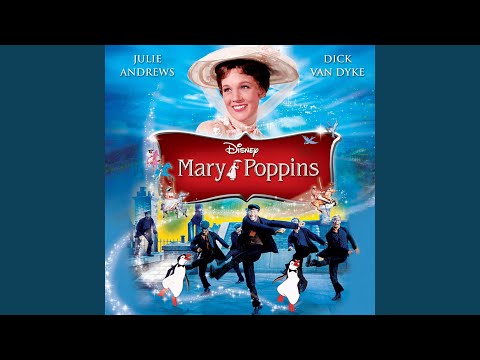
"Stay Awake" is a lullaby with a cheeky premise: Mary Poppins tells the children not to drift off, then sings them straight into it. The Sherman Brothers write the joke into the melody, too. It floats like a slow waltz, tender enough to soothe, steady enough to feel like a hand on the bedside rail.
Review and Highlights
Quick summary
- Where it appears: Mary Poppins (1964), in the bedtime scene as Mary settles Jane and Michael.
- Who performs it: Julie Andrews in-character, framed as a gentle bedside performance.
- What it does in the story: It softens the room so Mary can exit without a fuss, turning authority into comfort.
- Notable later life: Covered widely, including a Suzanne Vega version on Hal Willner's 1988 Disney tribute compilation.
What makes this number last is its restraint. No big punchline, no staircase choreography, no chorus line. Just a melody that moves like a rocking chair and a lyric that keeps politely insisting on the opposite of what everyone wants. The best lullabies do not beg for sleep; they simply make wakefulness feel less necessary. This one does it with the lightest touch, a tune that never tries to be cleverer than the moment.
The arrangement plays a quiet trick: it keeps a simple, circular motion underneath, so the vocal can speak more than it belts. Mary is not trying to impress anyone. She is managing a household, and the song is part of her toolkit - as practical, in its own way, as the tape measure in her bag.
Mary Poppins (1964) - live-action musical film - diegetic. Bedtime scene in the Banks nursery: Mary sings to Jane and Michael as they yawn, settle, and slip under. The placement matters because it marks Mary as both caretaker and magician, using calm instead of spectacle.
Creation History
Written by Richard M. Sherman and Robert B. Sherman for Walt Disney's Mary Poppins, the song entered the world with the film and its 1964 soundtrack ecosystem, then kept reappearing through reissues and reinterpretations. The official audio uploads and later album editions preserve the brief, unhurried performance that fits the scene like a lamp turned down. As stated on oscars.org, the Shermans won Academy Awards for the film's music, a reminder that even the quiet corners of this score were crafted inside an awards-level machine.
Song Meaning and Annotations
Plot
After a day of lessons and wonder, Mary Poppins guides the children toward bed. They resist the idea of sleep, as children do, and Mary meets them halfway: she sings a lullaby that pretends to take their side. The result is simple theatre - the children relax, the nursery quiets, and Mary can move on with the soft authority that defines her.
Song Meaning
The meaning sits in the contradiction. Mary tells the children to stay awake, but she is really teaching them how to let go. The song frames sleep not as surrender, but as a gentle drift while the world keeps turning. It also shows Mary's signature method: she rarely commands directly. She reroutes the room until the right outcome feels like the listener's own decision.
Annotations
"Stay awake, do not rest your head"
The opening line is a wink delivered in plain language. It sets up the gag - a lullaby that argues against itself - and it gives Mary a playful angle of authority, like she is letting the children win while steering them elsewhere.
"while the moon drifts in the skies"
The image does the heavy lifting. It makes time feel slow and safe, so the mind stops chasing the day. The drift is the point: nothing urgent remains.
"though the world is fast asleep"
This line pulls the nursery into a bigger map. The city has quieted down; you can stop holding your eyes open. It is a tiny piece of world-building, delivered like a blanket.
Rhythm and style
The track leans on a waltz feel, which is why it rocks rather than marches. That triple motion gives the vocal room to hover and resolve gently, with phrases that land like a quiet promise instead of a punchline.
Emotional arc without the big gesture
The arc is a gradual dimming: a bright premise, a softer middle, then a final hush. The brilliance is that the song never announces its turn. It just keeps getting lighter until you realize the scene has already changed.
Cultural touchpoints
Mid-century Disney often treated lullabies as narrative hinges, not decorative interludes. Here, the lullaby becomes a character tool: Mary can be stern in the afternoon, then disarmingly gentle at night. According to Billboard magazine, the Mary Poppins soundtrack did not just succeed as a film companion - it dominated album charts, which helps explain why even its shortest cues became standards for cover artists.
Technical Information
TL;DR
- A short bedside lullaby built on a rocking, waltz-like pulse.
- Performed in the film by Julie Andrews as Mary Poppins.
- Spawned notable covers, including Suzanne Vega on a 1988 Hal Willner tribute compilation.
- Artist: Julie Andrews
- Featured: None (solo vocal)
- Composer: Richard M. Sherman; Robert B. Sherman
- Producer: Jimmy Johnson (soundtrack producer credit)
- Release Date: August 27, 1964
- Genre: Film musical, lullaby
- Instruments: Orchestra accompaniment with soft strings and light woodwinds texture (edition-dependent)
- Label: Buena Vista Records (original soundtrack era); Walt Disney Records (later editions)
- Mood: Gentle, coaxing, nocturnal
- Length: 1:45
- Track #: 9 (common soundtrack listings)
- Language: English
- Album: Mary Poppins (Original Motion Picture Soundtrack)
- Music style: Lullaby phrasing over a slow 3-beat pulse
- Poetic meter: Accentual with a trochaic tilt in several lines
Questions and Answers
- Why does the lyric tell the children to do the opposite?
- It is Mary Poppins managing resistance with humor. If bedtime feels like a game, the fight drains away.
- Where does the song sit in the film's flow?
- It lands at night in the nursery, a soft pivot after the day's commotion and before Mary slips out.
- Is it a big vocal showcase?
- No, and that is the charm. The performance favors clarity, gentle line, and steady breath over volume.
- Is it used in the 2004 stage musical adaptation?
- It is commonly noted as omitted from the stage version, which reshuffles several film-only numbers.
- What is the simplest way to describe the groove?
- A slow, rocking three-count. It feels like a cradle motion rather than a march.
- Which cover is most famous outside Disney fandom?
- Suzanne Vega's take on Hal Willner's 1988 tribute compilation stands out for its intimate, modern hush.
- Did the song have a notable single release?
- Yes, there was a 7-inch single pairing it with "A Spoonful of Sugar" under Louis Prima's name.
- How does the song connect to later Mary Poppins media?
- Writers covering Mary Poppins Returns have pointed to its melodic and tonal influence when the sequel leans into quieter bedside moments.
- Why do jazz musicians keep returning to it?
- The melody is plainspoken but harmonically friendly, easy to personalize without breaking the lullaby spell.
- What is the line that carries the scene?
- The recurring insistence to stay awake functions like a mantra, until the nursery contradicts it by falling quiet.
Awards and Chart Positions
The lullaby itself was never the awards magnet, but the ecosystem around it was. As stated on oscars.org, Mary Poppins won Academy Awards for Original Score and for Original Song (for "Chim Chim Cher-ee"). The soundtrack also won Grammy categories tied to score and children's recording, and it became a blockbuster album - Billboard magazine later summarized its year-end dominance among the Billboard 200 leaders.
| Item | Metric | Result | Date or era |
|---|---|---|---|
| Mary Poppins (film) | Academy Awards | Won: Original Score; won: Original Song (for "Chim Chim Cher-ee") | 37th Academy Awards cycle |
| Mary Poppins (soundtrack) | Billboard 200 | Album hit number 1 and held the spot for multiple weeks | 1965 chart run |
| Mary Poppins (soundtrack) | Billboard year-end | Year-end number 1 album | 1965 |
| Mary Poppins (soundtrack) | Grammy Awards | Won: categories including score and children's recording | 7th Annual Grammy Awards era |
How to Sing Stay Awake
Think of this as spoken comfort set to pitch. The goal is not power. It is the kind of clarity that makes a room settle down.
- Tempo: Often analyzed around 87 BPM, with a 3-beat bar feel.
- Key: Commonly cataloged in B-flat major for the soundtrack performance.
- Approx vocal range: Often listed around B3 to A4 for the main melody (edition dependent).
- Lock the pulse: Count in three and keep it smooth. If the rhythm stiffens, the lullaby spell breaks.
- Diction, not bite: Use clear consonants without percussive attack. Let the words land softly.
- Breath planning: Take quiet breaths at commas and natural line ends. Never grab air mid-thought.
- Line shaping: Sing in gentle arcs. Do not press for volume at the top of phrases.
- Dynamic control: Start as if you are still addressing awake children, then taper as the scene calms.
- Tone color: Aim for warm, speech-forward placement. Too much vibrato reads theatrical rather than intimate.
- Pitfalls: Rushing the tempo, over-darkening vowels, and turning the final lines into a grand cadence.
Additional Info
The song has lived several parallel lives. In jazz, Duke Ellington folded it into his Mary Poppins project within months of the film's release, a sign that the melody had enough contour to survive outside the nursery. In pop and alternative circles, Hal Willner's 1988 tribute compilation turned it into a kind of late-night whisper, with Suzanne Vega taking the lullaby at face value and making it quietly modern.
It also traveled by translation. Louis Prima and Gia Maione recorded an Italian version titled "Stiamo Svegli" for their Mary Poppins-themed release, then returned to an English performance on the same album program. That is the strange durability of a good lullaby: it can be sung as a joke, as comfort, or as both at once.
When Richard Sherman died in 2024, Reuters recapped the scale of the Sherman Brothers catalog and their Mary Poppins wins, a public reminder that these songs were not just film cues. They were part of a songwriting era that treated craft as a daily job.
Key Contributors
| Entity | Type | Relationship |
|---|---|---|
| Julie Andrews | Person | Performs the song in the film and on the principal soundtrack performance. |
| Richard M. Sherman | Person | Co-writes music and lyrics. |
| Robert B. Sherman | Person | Co-writes music and lyrics. |
| Irwin Kostal | Person | Leads musical adaptation and orchestral framing across the film soundtrack. |
| Jimmy Johnson | Person | Soundtrack producer credit for the original album release. |
| Hal Willner | Person | Produces the 1988 tribute compilation that includes a Suzanne Vega cover. |
| Suzanne Vega | Person | Records a notable cover on the 1988 tribute compilation. |
| Duke Ellington | Person | Records a jazz interpretation on his Mary Poppins-themed release. |
| Buena Vista Records | Organization | Releases the original soundtrack in 1964. |
| Academy of Motion Picture Arts and Sciences | Organization | Documents the film's music wins at the 37th Academy Awards. |
| Recording Academy | Organization | Publishes the Grammy Awards coverage for the 7th Annual ceremony. |
Sources: oscars.org, Billboard, GRAMMY.com, Reuters, Apple Music, Wikipedia, Discogs, Ellingtonia