
Jack's Lament (The Nightmare Before Christmas) Lyrics
Jack's Lament (The Nightmare Before Christmas)
There are few who deny at what I do I am the bestFor my talents are reowned far and wide
When it comes to surprises in the moonlit night
I excel without ever even trying
With the slightest little effort of my ghostlike charms
I have seen grown men give out a shriek
With the wave of my hand and a well-placed moan
I have swept the very bravest off their feet
Yet year after year it's the same routine
And I grow so weary of the sound of screams
And I Jack the PUMPKIN KING!
Have grown so tired of the same old thing...
Oh somewhere deep inside of these bones
And emptiness begins to grow
There's something out there far from my home
A longing that I've never known
I'm a master of fright and a demon of light
And I'll scare you right out of your pants
To a guy in Kentucky I'm Mister Unlucky
And I'm known throughout England and France
And since I am dead I can take off my head
To recite Shakespearean quotations
No animal or man can scream like I can
With the fury of my recitations
But who here would ever understand
That the Pumpkin King with the skeleton grin
Would tire of his crown- if they only understood
He would give it all up if he only could
Oh there's an empty place in my bones
That calls out for something unknown
The fame and praise come year after year
Does nothing for these empty tears...
Song Overview
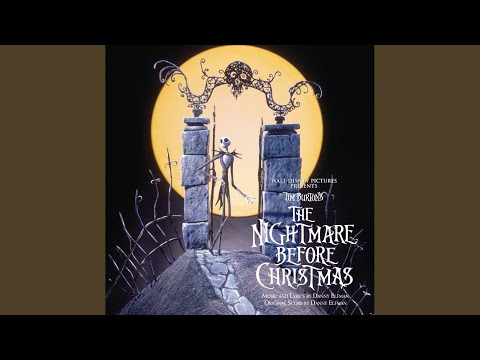
Review and Highlights
Quick summary
TL;DR: A gothic show-tune confession where Jack Skellington admits that applause is not the same as satisfaction, setting up the story pivot that follows.
- On-screen role: Jack is center stage, singing to the night as the town cheers him on, then he slips away into solitude.
- Where it appears: Early in The Nightmare Before Christmas (1993), shortly after the opening celebration, on the path toward Spiral Hill.
- Recording context: Part of the original soundtrack album (1993), later surrounded by covers on the 2006 Special Edition and the 2008 tribute album Nightmare Revisited.
- Why it sticks: It mixes Broadway-style patter with a waltz-like sway, then turns that polish into a portrait of restless ambition.
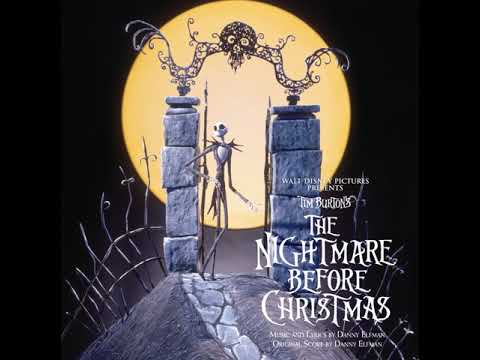
The Nightmare Before Christmas (1993) - animated film - not diegetic. Jack moves from public triumph into private doubt, circling the cemetery and arriving at Spiral Hill (approx. 6 minutes in). It matters because the plot change is not triggered by a villain or a quest, but by boredom with a crown that fits too well.
If you have spent time around theatre pits, you can hear the craft at once: the vocal line plays like spoken drama that happens to be pitched, while the orchestra behaves like a second narrator. The song builds its hook out of contradiction: the crowd calls him the best, and he agrees - yet the praise lands like confetti in an empty room. The wit is sharp, the rhyme is quick, and the mood is a slow-turning screw.
What I admire is how the music makes vanity sound reasonable. The melody leans into a waltz pulse, but it refuses to glow. Instead, it circles, it sighs, it pivots to darker chords at the exact moments Jack admits what he cannot say in daylight. According to Entertainment Weekly, the number has long been treated as one of the soundtrack's signature highlights, partly because it captures the character's hunger for a new kind of wonder without sanding down his ego.
Key Takeaways
- Character as instrument: the vocal is half-song, half-monologue, with little rhythmic nudges that feel like stage direction.
- Elegance with teeth: orchestration stays pretty enough to pass as a lullaby, then turns its harmonies just enough to unsettle.
- Plot propulsion: the lyric does the work of a screenplay beat: Jack admits dissatisfaction, and the story gains permission to wander.
Creation History
Danny Elfman wrote the music and lyrics and also performs Jack's singing voice, a rare triple-duty move that helps explain why the phrasing feels so actorly. The writing aims for a timeless stage idiom - part classic film musical, part cabaret shadow-play - while still landing in a stop-motion world of crooked fences and friendly menace. Rolling Stone magazine, reviewing the film on release, framed its appeal as a mix of fun and fright; that balance is baked into this song, which never chooses between charm and dread, and does not have to.
Song Meaning and Annotations
Plot
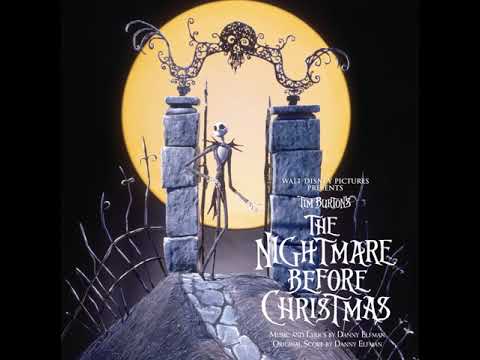
Jack starts as a local legend: the Pumpkin King, adored by a town that measures life in screams and spectacle. In this number, he steps away from the cheering, confesses that the routine no longer satisfies him, and wanders into the graveyard. The scene ends with him alone, staring at the horizon as if the world has run out of exits. That confession becomes the hinge that leads him to discover Christmas Town soon after.
Song Meaning
The meaning is not subtle, but the execution is sly: success can become a cage, especially when it is the same success, the same night, every year. Jack is not asking for a better Halloween - he is asking for a different self. The song paints ambition as a kind of polite despair: he can win every contest in town and still feel like a guest at his own party. The arc moves from bravado ("I am the best") into a quieter admission that the best can still be bored, then into a whispered wish for something unnamed.
Annotations
"There are few who deny"
He begins like a master of ceremonies, not a hero. That opening is a mask: the lyric is structured like an acceptance speech that turns into a confession.
"my talents are renowned"
This is not modesty, and that is the point. The song lets him be vain, so the later doubt feels earned rather than sentimental.
"I don't know what it is"
The key phrase is not what he wants, but that he cannot name it. The writing captures the strangest kind of dissatisfaction: the kind that survives every trophy.
"this emptiness I feel"
He is surrounded by an orchestra that can turn anything into theatre, yet the lyric keeps returning to a private silence. The scene sells the idea that a crowd can be loud, and still fail to reach you.
Style and rhythm
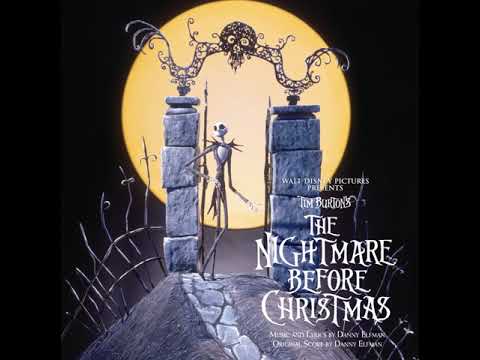
The piece lives in a show-tune tradition, but it borrows the color of gothic carnival music: a waltz sway, minor-key gravity, and orchestral gestures that feel like flickering candlelight. The rhythm acts like a slow walk through a cemetery, and the vocal line often lands just behind the beat, as if Jack is thinking faster than he can confess.
Emotional arc without soft focus
The arc runs from swagger to vulnerability and back to resolve. He never becomes small; he becomes honest. That is why the song can be funny and bleak in the same breath, like a clown who takes off the makeup and realizes he still has to go on.
Symbols and touchpoints
Spiral Hill is the visual metaphor the music deserves: the melody circles rather than marching forward, suggesting a life that keeps returning to the same point. The lyric's Shakespeare nods are not name-dropping; they signal a performer who can quote high culture and still feel stuck in a small-town loop. Put simply, Jack has mastered the script, and that mastery has become the problem.
Technical Information
- Artist: Danny Elfman
- Featured: None
- Composer: Danny Elfman
- Producer: Danny Elfman
- Release Date: October 12, 1993
- Genre: Soundtrack; show tune
- Instruments: Orchestra; strings; woodwinds; brass; percussion; bells
- Label: Walt Disney Records
- Mood: Theatrical; restless; reflective
- Length: 3:14
- Track #: 4
- Language: English
- Album (if any): The Nightmare Before Christmas (Original Motion Picture Soundtrack)
- Music style: Gothic waltz; Broadway-leaning patter
- Poetic meter: Mixed accentual-syllabic, iambic-leaning with frequent syncopation
Questions and Answers
- Who is singing in the film?
- Danny Elfman performs Jack's singing voice, while Chris Sarandon provides Jack's speaking dialogue in the movie.
- Where does the song sit in the story?
- It is the first real crack in Jack's public persona: a victory lap that turns into a confession, setting up his search for something beyond Halloween.
- Is it a villain song or a hero song?
- Neither. It is a self-portrait, closer to a stage soliloquy than a plot device, even though it ends up moving the plot.
- Why does the melody feel like it circles?
- The phrasing returns to similar shapes and cadences, mirroring Jack's complaint that his life keeps repeating the same triumph.
- What is the song's central conflict?
- Recognition versus fulfillment: he has one in abundance, and the other not at all.
- How does the orchestration help the storytelling?
- It answers his lines like a second character: supportive at the start, then darker and more spacious as he admits the truth.
- What makes the lyric sound theatrical?
- Internal rhymes, quick turns of phrase, and punchline timing that feels written for an actor's breath, not just a singer's sustain.
- Is there a well-known cover version?
- Yes. The All-American Rejects recorded a rock cover for the tribute album Nightmare Revisited, and the broader catalog includes multiple reinterpretations across anniversary editions.
- Did the song come out as a single?
- The 1993 release is primarily tied to the soundtrack album, but later digital-era releases include standalone listings and re-recorded or reissued variants credited to the original composer and collaborators.
- Why do people connect it with both Halloween and Christmas culture?
- Because it is a Halloween anthem that secretly wants to be a Christmas discovery story, and that tension is the film's whole premise in miniature.
Awards and Chart Positions
The song itself is best understood as part of a larger phenomenon: a soundtrack that never stopped coming back. The film's score received a Golden Globe nomination (Best Original Score - Motion Picture), and the album has shown long-tail chart life, including seasonal resurgences driven by streaming.
| Item | Result | Date or era | Notes |
|---|---|---|---|
| Soundtrack album - Billboard 200 peak | No. 98 | 1993 chart run | Initial chart performance for the original album release. |
| Film score - Golden Globe | Nominated | 1994 ceremony | Best Original Score - Motion Picture credit to Danny Elfman. |
| RIAA listing for the soundtrack | Certification record appears | March 10, 2025 | RIAA database entry for the title "Nightmare Before Christmas" under Soundtrack. |
| Seasonal chart lift (album) | Notable Billboard 200 jump | Halloween week 2023 | Streaming-driven movement tied to annual listening cycles. |
How to Sing Jack's Lament
Because the performance sits between singing and acting, the challenge is not only pitch - it is character control. Many vocal guides list a range that reaches into a high head-voice zone while still requiring grounded lower notes, which makes breath planning the real job.
- Suggested vocal range (common guide): A3 to F5
- Commonly cited original key (guide): B-flat minor
- Tempo note: analyses often place it around a slow triple-meter pulse, but the phrasing uses rubato, so treat tempo as flexible.
- Tempo first: Practice with a light waltz count (1-2-3) so the line does not turn into flat recitation.
- Diction like dialogue: Consonants land the jokes and the self-mythology. Over-pronounce in rehearsal, then relax it for performance.
- Breath mapping: Mark breaths before long internal-rhyme runs. If you wait until you are desperate, the character will sound panicked rather than controlled.
- Flow and rhythm: Keep the ends of phrases buoyant. The number can droop if you treat it like a ballad instead of a scene.
- Accents and bite: Punch the brag lines, soften the confession lines. The contrast is the storytelling.
- Doubles and ensemble feel: If you are layering vocals, keep doubles tight on consonants and slightly looser on vowels, so it reads as theatre, not pop stacking.
- Mic approach: Lean in for confessional lines, back off for the grand declarations. A single step can sound like a lighting cue.
- Pitfalls: Do not rush the patter, and do not swallow the vowels on the low notes. The audience must understand the words for the joke to land and the ache to register.
Practice materials: rehearse spoken-only, then sung-only, then combine. Record one take where you exaggerate the character and one take where you sing cleanly, then meet in the middle.
Additional Info
The song has become a passport stamp in Danny Elfman's own live history. Live-to-film concerts have featured him returning to the role of Jack in front of full orchestras, a reminder that this began as a composer writing for character rather than a singer chasing a hit single. In a very modern twist, the soundtrack's ecosystem expanded through curated covers: the 2006 Special Edition gathered high-profile reinterpretations, and Nightmare Revisited turned the catalog into a rock tribute record, including a reimagining of this track by The All-American Rejects.
Another detail worth savoring is how the movie separates voices: Jack speaks with one actor and sings with another, and the seam is part of the magic. When it works, it feels like an old Hollywood trick updated for stop-motion - a little artificial, proudly so, and better for it.
Key Contributors
| Entity | Type | Relationship (S-V-O) |
|---|---|---|
| Danny Elfman | Person | Danny Elfman writes and performs the song for Jack Skellington. |
| Chris Sarandon | Person | Chris Sarandon provides Jack Skellington's speaking dialogue in the film. |
| Tim Burton | Person | Tim Burton develops the story world that the song dramatizes. |
| Henry Selick | Person | Henry Selick directs the film sequence where the song appears. |
| Walt Disney Records | Organization | Walt Disney Records releases the soundtrack album that contains the track. |
| The Nightmare Before Christmas (1993) | Work | The film places the song as Jack's turning-point soliloquy. |
| The Nightmare Before Christmas (Original Motion Picture Soundtrack) | Work | The soundtrack sequences the track early, framing the narrative arc. |
| Nightmare Revisited (2008) | Work | The compilation commissions a rock cover of the song by The All-American Rejects. |
| Hollywood Bowl | Venue | Hollywood Bowl hosts live-to-film performances featuring the song in concert format. |
| OVO Arena Wembley | Venue | OVO Arena Wembley hosts live-to-film concerts with Elfman reprising Jack's role. |
Sources: IMDb soundtrack credits, Golden Globe Awards database, Billboard chart reporting, Apple Music album listing, RIAA Gold and Platinum database, Entertainment Weekly, Pitchfork