
Colonel Hathi's March (The Jungle Book) Lyrics
Colonel Hathi's March (The Jungle Book)
Hup two three fourKeep it up two three four
Hup two three four
Keep it up two three four
Company sound off!
Ho, the aim of our patrol
Is a question rather droll
For to march and drill
Over field and hill
Is a military goal!
Is a military goal!
Hup two three four
Dress it up two three four
Hup two three four
Dress it up two three four
By the ranks or single file
Over every jungle mile
Oh we stamp and crush
Through the underbrush
In a military style!
In a military style!
Hup two three four
Keep it up two three four
Song Overview
Review and Highlights
Quick summary
- A comic march number from the 1967 animated film The Jungle Book, built around drill-sergeant counting and herd harmonies.
- Written by Richard M. Sherman and Robert B. Sherman, performed on the film soundtrack by J. Pat O'Malley with the Disney Studio Chorus.
- Functions like a character sketch: Colonel Hathi is all ceremony, no self-awareness, which is the joke and the hook.
- Returns as a reprise later in the story, so the gag becomes a motif rather than a one-off.
- Its afterlife is strong in school and youth-theatre adaptations, where the march rhythm doubles as choreography instructions.
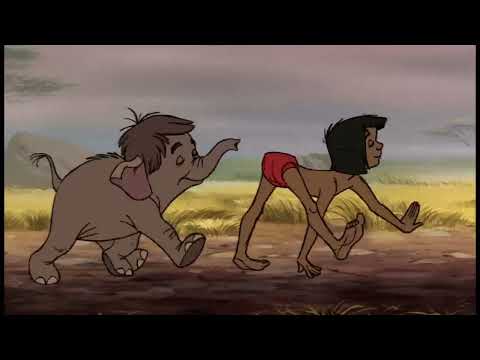
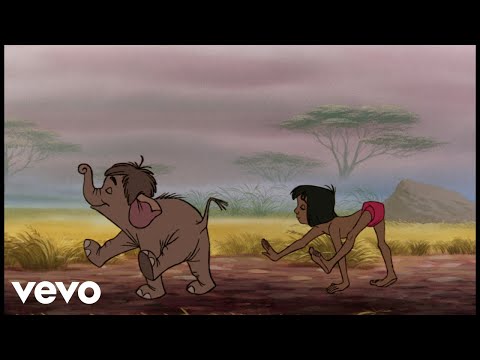
The Jungle Book (1967) - film soundtrack cue - diegetic. A regimented elephant patrol enters in formation, calling counts and barking commands, with Mowgli briefly caught in the wake of their rules. Approx placement: early in the film, just after the opening jungle introductions, then later as a reprise when the elephant unit reappears. Why it matters: it turns jungle wilderness into fake ceremony, and that contrast sets up the film's running argument between discipline and instinct.
Musically, it is a march that knows it is a march. The melody walks in straight lines, then trips itself on purpose: clipped phrases, quick call-and-response, and a chorus that sounds proud even when the lyrics admit the patrol's mission is a bit silly. I have always heard the craft here as the Sherman Brothers doing what they did best: sneaking character comedy into the scansion, so the rhythm tells you who is in charge before you catch a single word. According to the Disney Song Encyclopedia, the number is designed as a comic military set-piece for the elephant line, with the Colonel's fussiness baked into the music's stop-start swagger.
Key takeaways
- Rhythm as story: the counting chant is both beat and behavior, like a metronome that thinks it is a medal.
- Chorus as herd: the group vocals do the worldbuilding, turning a handful of syllables into a parade ground.
- Comedy in formality: the more official the tone, the funnier the jungle setting feels.
- Reprise power: repeating the idea later makes Hathi a walking motif, not just a cameo.
Creation History
The song was written for Disney's 1967 animated adaptation of The Jungle Book, with words and music credited to Richard M. Sherman and Robert B. Sherman. The soundtrack performance is commonly credited to J. Pat O'Malley with the Disney Studio Chorus, matching the film's setup of a leader voice riding over a massed, marching response. Later releases and reissues kept the cue in circulation, and the sing-along era gave it a second screen life as a self-contained clip that plays like a miniature sketch.
Song Meaning and Annotations
Plot
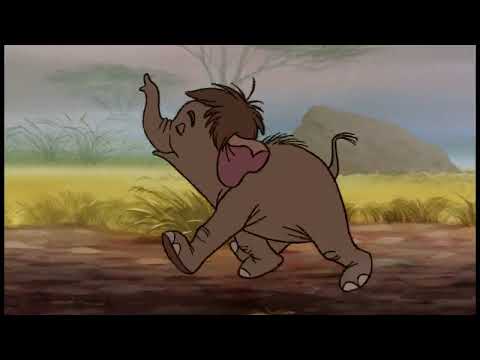
Colonel Hathi leads an elephant patrol through the jungle with drill commands, proud posture, and a mission that seems to exist mainly to justify marching. The unit appears as a parody of military order: everything is procedure, nothing is practical. In the film's flow, the cue also acts as a moving obstacle and a tone-setter, reminding us that the jungle contains its own social systems, many of them absurd.
Song Meaning
The meaning is simple, and that simplicity is the point: it is about authority performing itself. Hathi treats marching as virtue, as if rhythm equals righteousness. Under the comedy, the song sketches how groups enforce identity: synchronized steps, shared slogans, and a leader whose certainty keeps the crowd moving. The emotional arc is cheerful and bossy at once, the sound of a parade that does not notice it is being laughed at.
Annotations
-
Hup, two three four, keep it up
The chant is not just a hook, it is a control mechanism. Counted time becomes commanded time, which is why the march feels like a character trait, not background music.
-
The aim of our patrol is a question rather droll
This is the lyric wink: the song admits the patrol's purpose is fuzzy, then doubles down anyway. Comedy lands because the confidence never wavers.
-
We stamp and crush through the underbrush
Even the imagery is bureaucratic. Nature becomes an obstacle course for procedure, which flips the jungle into a parade ground, at least in Hathi's imagination.
-
In the military style
That phrase is the thesis. Style outranks substance, and the music mirrors it: crisp cadence, bright major feel, and a chorus that sounds proud of the pattern itself.
Listen closely and you can hear a genre fusion that Disney loved in that era: a traditional march frame with theatre-smart timing. The rhythm is the engine, while the melody stays friendly and square, almost as if it is saluting. The cultural touchpoint is obvious: mid-century marching culture filtered through family entertainment, where drill commands are clean enough to be funny and simple enough for kids to echo. There is also a practical staging logic here: the beat tells a chorus where to step, when to turn, when to freeze, and when to shout.
Instrumentation and feel
On soundtrack recordings and arrangements, brass-like fanfares and percussion-friendly accents are common, with chorus lines landing on the pulse like synchronized boots. The vocal writing is built for massed voices rather than solo ornamentation, which is why it adapts so well to school ensembles and youth theatre.
Technical Information
- Artist: J. Pat O'Malley and Disney Studio Chorus
- Featured: Ensemble chorus (elephant patrol)
- Composer: Richard M. Sherman; Robert B. Sherman
- Producer: Walt Disney Productions (soundtrack release credits vary by edition)
- Release Date: October 18, 1967 (soundtrack album release date commonly listed for digital catalogs)
- Genre: Film soundtrack; march; musical theatre
- Instruments: Vocal ensemble; orchestral rhythm section (march percussion feel); brass-forward orchestration in many arrangements
- Label: Disneyland Records (original era); Walt Disney Records (later reissues)
- Mood: Comic, regimented, buoyant
- Length: 2:32
- Track #: 3 (common soundtrack sequencing)
- Language: English
- Album: The Jungle Book (Original Soundtrack)
- Music style: Parade march with chorus call-and-response
- Poetic meter: Mostly trochaic, chant-like command phrasing with short anacrusis pickups
Questions and Answers
- Who performs the best-known soundtrack version?
- The film soundtrack performance is generally credited to J. Pat O'Malley with the Disney Studio Chorus, matching the on-screen setup of a leader voice over a marching ensemble.
- Is it a joke song or a serious march?
- Both. It uses the grammar of a serious march, then undercuts it with self-mocking lines about the patrol's purpose, so the seriousness becomes part of the gag.
- What is the song doing in the story?
- It introduces a social order inside the jungle: rules, rank, and pageantry. It also provides a moving set-piece that lets the film show motion and community fast.
- Why does the counting feel so memorable?
- Because it is the hook and the structure. The count locks listeners into the pulse, and the chorus reinforces it like a call drilled into a unit.
- What is the central theme?
- Authority as performance. The patrol marches because marching proves it exists, and the leader believes formality makes him right.
- How does the reprise change the effect?
- It turns a single comedic entrance into a recurring signature, so Colonel Hathi reads as a motif that can interrupt the plot whenever the film needs ceremonial chaos.
- Is it used outside the original film?
- Yes. It appears in follow-on Jungle Book media and in youth-theatre and school adaptations where the march rhythm is easy to stage and easy to sing in groups.
- What makes it so stage-friendly?
- Short phrases, clear accents, and predictable sections. Dancers and chorus members can treat it as choreography cues without losing musical shape.
- Does the lyric content matter if you only hum it?
- It still works because the rhythm communicates command. Even without the words, the phrasing sounds like orders, which keeps the character intact.
How to Sing Colonel Hathi's March
This number is often taught and staged as an ensemble march, so think less about vocal fireworks and more about precision: clean consonants, even pulse, and a confident call that can lead a group. Published teaching and audition materials frequently treat it as a limited-range, character-forward selection (commonly notated around D4 to B-flat4 in some vocal-syllabi listings). Tempo metrics in popular music databases usually land in the mid-90 BPM area for the soundtrack track, and performers often feel it in a steady two or four.
- Tempo first: set a strict pulse and do not chase the chorus. Clap the beat for a full verse before you sing.
- Diction: make the counts crisp. Keep the vowels short on command words so the rhythm stays squared off.
- Breath plan: treat each command phrase like a drill call. Quick inhale, short delivery, reset.
- Flow and rhythm: keep the chant even, then lean slightly into the ends of lines where the chorus lands together.
- Accents: punch the first beat of each bar like a footfall, but do not bark. The humor lives in self-seriousness, not volume.
- Ensemble technique: if you lead a group, cue with your consonants. A clear initial "H" and "T" is more useful than extra loudness.
- Mic and staging: for stage, deliver forward like a character monologue with rhythm. For recording, back off plosives and let the chorus fill the space.
- Pitfalls: rushing the counts, swallowing the ends of phrases, or playing it too wacky. Straight-faced authority is funnier.
Additional Info
One detail I enjoy is how the song quietly teaches its own choreography. The words describe formation, ranks, and movement while the beat provides the marching grid. That is why it keeps resurfacing in educational theatre material: a teacher can block it in minutes, and a cast can sell it with posture and timing. The same mechanical clarity also explains its parade-band afterlife, where arrangers can emphasize brass and percussion without losing the core joke.
For soundtrack collectors, the track's documentation is unusually specific: some listings even enumerate a long roster of uncredited vocal contributors alongside the chorus. And modern catalog pages often anchor the soundtrack release date in October 1967, which has become a default reference point for digital services.
Key Contributors
| Entity | Relation | Statement |
|---|---|---|
| Richard M. Sherman | composer and lyricist | Richard M. Sherman wrote the words and music for the song with his brother. |
| Robert B. Sherman | composer and lyricist | Robert B. Sherman co-wrote the words and music. |
| J. Pat O'Malley | performer and voice role | J. Pat O'Malley performs as Colonel Hathi on the soundtrack and in the film. |
| Disney Studio Chorus | ensemble performer | The Disney Studio Chorus supplies the massed elephant patrol vocals. |
| The Jungle Book (1967) | work placement | The cue appears as a diegetic march sequence, with a reprise later in the film. |
| The Jungle Book 2 (2003) | reuse | The song is listed among soundtrack credits for the sequel. |
| Disneyland Records | original label era | Disneyland Records is associated with the original soundtrack release era and related singles. |
| Walt Disney Records | reissue label | Later reissues and digital releases commonly appear under Walt Disney Records. |
| MTI (The Jungle Book KIDS) | stage adaptation | MTI's youth-theatre materials include the number as a character-led march. |
| ABRSM | performance syllabus | ABRSM listings treat the song as a manageable-range selection for musical theatre study. |
Sources: IMDb soundtrack listing for The Jungle Book (1967), Apple Music - The Jungle Book (Original Soundtrack) metadata, The Jungle Book (1967 soundtrack) track listing reference, SoundtrackCollector - The Jungle Book (1967) track and vocals listing, DisneyMusicVEVO sing-along video upload, ABRSM Singing for Musical Theatre Performance Grades syllabus, MTI - Disney's The Jungle Book KIDS show description, Disney Song Encyclopedia excerpt