
Little April Shower (Bambi) Lyrics
Little April Shower (Bambi)
Drip, drip, dropLittle April shower
Beating a tune
As you fall all around
Drip, drip, drop
Little April shower
What can compare
To your beautiful sound
Drip, drip, drop
When the sky is cloudy
Your pretty music
Can brighten the day
Drip, drip, drop
When the sun says howdy
You say goodbye right away
Drip, drip drop
Little April shower
Beating a tune
Ev'rywhere that you fall
Drip, drip drop
Little April shower
I'm getting wet
And I don't care at all
Drip, drop, drip, drop
I'll never be afraid
Of a good little
Gay little
April serenade
Song Overview

Review and Highlights
Quick summary
- Featured in Bambi (1942) as a choral sound-painting of spring rain turning into a storm.
- Credited to Frank Churchill (music) and Larry Morey (lyrics), performed in the film by Disney Studio Chorus.
- Non-diegetic by design: animals do not step forward and "perform" it, the forest does.
- Later resurfaced on the Bambi II (2006) soundtrack as a legacy track from the original film.
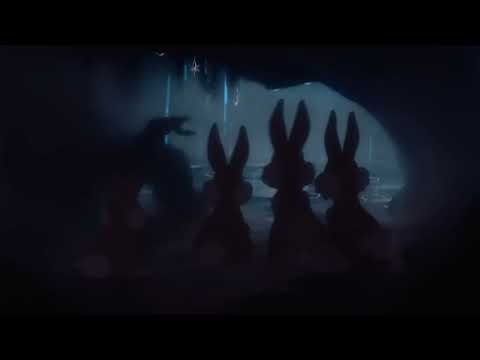
Bambi (1942) - animated film sequence - non-diegetic. The number plays during the film's spring rain passage, starting as light patter and swelling into heavier weather, with the choir acting like droplets, gusts, and distant thunder. It is a scene where plot pauses and the natural world gets the close-up: you feel time pass, you sense the forest breathe, and the film quietly shows how small its characters are inside big skies.
Key takeaways
- Chorus as weather report: syllables imitate rainfall, and the harmony stacks like clouds.
- Structure that "forecasts": it begins as gentle repetition, then keeps thickening until the storm arrives.
- Disney realism, sideways: rather than giving a deer a spotlight, the filmmakers let the soundtrack do the narration.
- A comfort song with muscle: it is soft, but it does not stay soft for long.
Creation History
Frank Churchill and Larry Morey wrote the piece for Bambi, and the film credits and later catalog listings keep that pairing intact. As stated in the IMDb soundtrack listing for Bambi, the number is credited to Churchill and Morey and appears as part of the film's set of uncredited cues, which fits the era's habit of treating songs as integrated sequences rather than standalone singles. Later releases and compilations reframed it as a track you can stream, but its original identity is inseparable from animation timing and the forest soundscape.
Song Meaning and Annotations
Plot
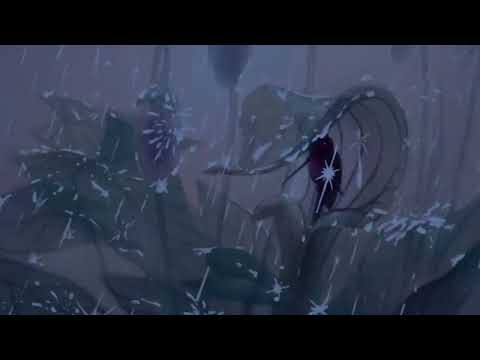
In the film, the rain sequence arrives as a seasonal turn: spring energy gives way to a quick lesson in weather. You watch the forest shift from playful drizzle to sharper gusts, then to the kind of storm that makes every leaf and branch look suddenly serious. Characters remain present, but the scene is less about dialogue than atmosphere, an animated montage built to let nature take the lead.
Song Meaning
The song works like a miniature climate story. First comes the friendly patter, the kind of rain children can giggle through. Then the music adds weight and shadow, suggesting that beauty and risk can share the same sky. According to TIME magazine's coverage of Bambi's craft and impact, the film is often discussed for how it treats the natural world as a character in itself, and this number is one of the clearest examples: the forest is not background, it is a voice.
Annotations
"Drip, drip, drop"
Three tiny words, and the choir turns into percussion. The repetition is not lazy writing, it is imitation: rain is repetitive, and so the hook has to be, too.
"Beating a tune"
This is the song's thesis line. Raindrops are treated like drumsticks, and the arrangement follows through by making rhythm the main storyteller.
"Song of the rainy day"
The phrase frames weather as a performance, but not a stage show. It is closer to field recording translated into harmony, with the chorus shaping the listener's attention like a camera pan.
Genre and rhythm fusion
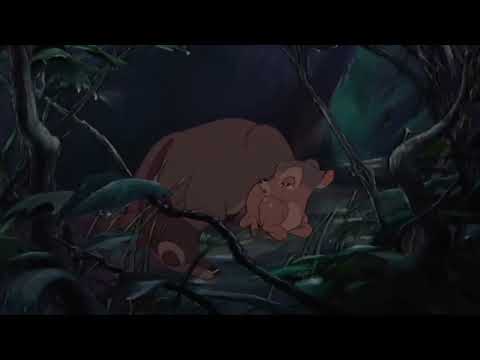
It is a soundtrack chorus number, but it behaves like onomatopoeia set to music. The groove is simple enough to feel childlike, while the choral layering hints at classical technique: parts interlock, swell, and then pull back, like gusts passing through a stand of trees.
Production and instrumentation
Most listeners remember the voices first, but the arrangement is doing quiet engineering behind them. The orchestra supports the choir with soft motion early on, then pushes the low end and dynamics as the storm builds, giving the sequence that physical sense of "weather moving in." This is not virtuoso instrumentation; it is orchestration as cinematography.
Idioms and key phrases
The lyric keeps choosing plain, singable words, then using them like sound effects. "Drip" and "drop" are not just imagery, they are rhythmic events, the kind you can place precisely against animated edits.
Technical Information
- Artist: Disney Studio Chorus
- Featured: None credited
- Composer: Frank Churchill
- Producer: Not reliably standardized across releases
- Release Date: August 13, 1942 (U.S. theatrical release context for Bambi)
- Genre: Film soundtrack; choral; novelty-chorus
- Instruments: Choir; orchestra (arrangement varies by release)
- Label: Walt Disney Records (common on later soundtrack issues)
- Mood: Bright-to-stormy, like a weather montage
- Length: Often listed at 3:54 on modern soundtrack versions
- Track #: Varies by compilation and edition
- Language: English
- Album (if any): Bambi (Original Motion Picture Soundtrack) and multiple Disney compilation series
- Music style: Choral sound-painting with orchestral swell
- Poetic meter: Mixed, chant-forward, built around repeating stress patterns
Questions and Answers
- Why does the chorus feel like it is "acting" rather than simply singing?
- The syllables are choreographed as sound effects. Repetition, quick consonants, and stacked harmony imitate droplets, wind, and swell.
- Is the number diegetic in the movie?
- No. It functions as a non-diegetic montage track, with the forest soundscape presented through choir and orchestra.
- Who wrote it?
- Music is credited to Frank Churchill and lyrics to Larry Morey in multiple catalog listings and soundtrack references.
- Why is the hook so repetitive?
- Because weather is repetitive. The refrain behaves like steady rainfall, which lets the arrangement and dynamics tell the story of escalation.
- What is the scene function inside Bambi?
- It compresses time and mood: spring turns, clouds gather, and the movie shifts from playful warmth into a brief reminder of nature's power.
- Why do many modern versions run about 3:54?
- Soundtrack and compilation editions often present a "listening" cut that plays smoothly outside the film's exact edit structure.
- Did the song show up beyond the 1942 film?
- Yes. It appears in modern Disney compilations and is listed as a legacy track on the Bambi II (2006) soundtrack lineup.
- What is the central image in the lyric?
- Raindrops as musicians. The lyric turns simple rainfall into a percussion ensemble, then lets the arrangement expand that idea into storm scale.
- Why does it still get cited by critics and fans?
- It is a rare Disney moment where atmosphere drives the scene. The number is memorable because it makes weather sing without turning the film into stage-show logic.
How to Sing Little April Shower (Bambi)
Most singers underestimate this number because it sounds simple. The trick is that it is a choir illusion: you need clean consonants, tight rhythm, and dynamic control so the "weather" reads clearly. Modern track metadata commonly lists the soundtrack version around 90 BPM in C major, while printed teaching materials often keep it in C and limit the melody range for students.
- Tempo: about 90 BPM (common soundtrack metadata)
- Key: commonly listed as C major
- Typical vocal range: often placed around B3-E5 across databases; many student editions narrow the range
- Common issues: muddy diction on repeated syllables, rushing the patter, and flattening the crescendo into a single volume
- Tempo first. Set a metronome near 90 BPM and speak the patter syllables in rhythm until you can keep them crisp without speeding up.
- Diction like percussion. Treat D, P, and T sounds as drum hits. Keep vowels short so the "drip" pattern stays buoyant.
- Breathing plan. Use quick, quiet inhales between phrases. Avoid big breaths that break the illusion of steady rainfall.
- Shape the weather arc. Start light. Add intensity in steps: slightly stronger consonants, then a fuller tone, then a bigger dynamic lift as the storm arrives.
- Blend, then separate. In ensemble, match vowels for blend, but keep consonants aligned so the rhythm stays readable.
- Accent without barking. Choose a few emphasized drops. Too many accents make it sound like marching rather than rainfall.
- Microphone approach. If amplified, back off slightly on the loudest syllables and lean in on softer lines so the texture stays even.
- Pitfalls. Over-sustaining notes, smearing consonants, and ignoring dynamic contrast are the fastest ways to lose the rain effect.
Additional Info
The tune has had a second life as a cover magnet. A widely cited reinterpretation appears inside the Hal Willner-produced Disney tribute album Stay Awake, where Natalie Merchant and Michael Stipe join Mark Bingham and The Roches as part of an opening medley. Bluegrass and choir arrangements keep popping up as well, proof that the core idea is sturdy: take a nursery-simple hook and let texture do the storytelling.
In the pop-culture conversation, it sometimes shows up as a "deep cut" favorite. TIME included it in the honorable-mention list for its ranking of Disney songs, which is the kind of placement that tells you it has not vanished, it has just become a connoisseur pick.
Key Contributors
| Entity | Type | Relationship (S-V-O) |
|---|---|---|
| Frank Churchill | Person | Frank Churchill composed the music for the song. |
| Larry Morey | Person | Larry Morey wrote the lyrics for the song. |
| Disney Studio Chorus | MusicGroup | Disney Studio Chorus performed the choral parts in the film and many catalog editions. |
| Bambi (1942) | Work (Film) | Bambi (1942) uses the number as a spring rain montage cue. |
| Walt Disney Productions | Organization | Walt Disney Productions produced the film that introduced the song. |
| Walt Disney Records | Organization | Walt Disney Records issued later soundtrack and compilation releases featuring the track. |
| Bambi II (2006) | Work (Film) | Bambi II (2006) soundtrack listings include the track as a legacy selection from the original film. |
| Natalie Merchant | Person | Natalie Merchant performed the song within the Stay Awake opening medley. |
| Michael Stipe | Person | Michael Stipe performed the song within the Stay Awake opening medley. |
| Hal Willner | Person | Hal Willner produced the Disney tribute album that features the medley. |
Sources: Bambi (Wikipedia), Bambi release info (IMDb), Bambi soundtrack listing (IMDb), Little April Shower (Disney Wiki), Little April Shower work page (SecondHandSongs), Stay Awake track listing (Wikipedia), Stay Awake release details (Discogs), Bambi II soundtrack tracklisting (MovieMusic), Little April Shower - track metadata (Tunebat), Little April Shower vocal range listing (Singing Carrots), Trinity Singing from 2023 Grade 1 reference (Chimes Music), TIME original review of Bambi (TIME), TIME best Disney songs ranking list (TIME)