
Be Prepared (The Lion King) Lyrics
Be Prepared (The Lion King)
[Scar:]I know that your powers of retention
Are as wet as a warthog's backside
But thick as you are, pay attention
My words are a matter of pride
It's clear from your vacant expressions
The lights are not all on upstairs
But we're talking kings and successions
Even you can't be caught unawares
So prepare for a chance of a lifetime
Be prepared for sensational news
A shining new era
Is tiptoeing nearer
[Shenzi:]
And where do we feature?
[Scar:]
Just listen to teacher
I know it sounds sordid
But you'll be rewarded
When at last I am given my dues
And injustice deliciously squared
Be prepared!
[Spoken]
[Banzai:] Yeah, Be prepared.
Yeah-heh... we'll be prepared, heh.
...For what?
[Scar:] For the death of the king.
[Banzai:] Why? Is he sick?
[Scar:] No, fool-- we're going to kill him. And Simba too.
[Shenzi:] Great idea! Who needs a king?
[Shenzi (and then Banzai):]
No king! No king! la--la-la--la-laa-laa!
[Scar:] Idiots! There will be a king!
[Banzai:] Hey, but you said, uh...
[Scar:] I will be king! ...Stick with me, and
you'll never go hungry again!
[Shenzi and Banzai:] Yaay! All right! Long live the king!
[All Hyenas:] Long live the king! Long live the king!
[Full song again]
[Hyenas: {In tight, crisp phrasing and diction}]
It's great that we'll soon be connected.
With a king who'll be all-time adored.
[Scar:] Of course, quid pro quo, you're expected
To take certain duties on board
The future is littered with prizes
And though I'm the main addressee
The point that I must emphasize is
You won't get a sniff without me!
So prepare for the coup of the century
(Oooh!)
Be prepared for the murkiest scam
(Oooh... La! La! La!)
Meticulous planning
(We'll have food!)
Tenacity spanning
(Lots of food)
Decades of denial
(We repeat)
Is simply why I'll
(Endless meat)
Be king undisputed
(Aaaaaaah...)
Respected, saluted
(...aaaaaaah...)
And seen for the wonder I am
(...aaaaaaah!)
Yes, my teeth and ambitions are bared
(Oo-oo-oo-oo-oo-oo-oo)
Be prepared!
[All:]
Yes, our teeth and ambitions are bared
Be prepared!
Song Overview
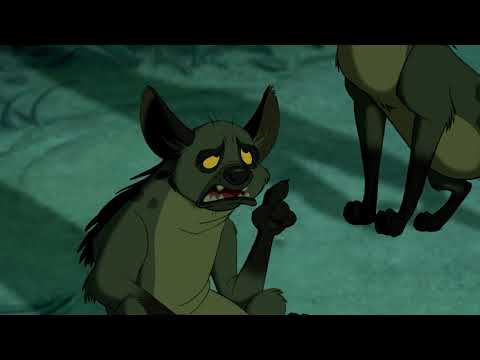
TL;DR: A villain march disguised as showbiz - Scar sells a coup like a nightclub act, and the hyenas buy the pitch because the hook is hunger. The number sits inside The Lion King (1994) as the plan-locking scene, then mutates on stage into a longer, sharper piece of political theater, and reappears in 2019 as a tightened, mostly spoken rework.
Review and Highlights
Quick summary
- Where it lives: The Lion King (1994) soundtrack cut runs about 3:40 and appears mid-film in Scar's lair, shortly after the elephant graveyard fallout (approx. 00:28-00:32).
- Who carries it: Scar leads, with the hyenas as a chorus that doubles as a voting bloc and a firing squad.
- How it plays: A minor-key, military-leaning show tune with patter, sneers, and punchline timing - a coup set to choreography.
- How versions differ: The Broadway arrangement expands the text and adds connective tissue; the 2019 film leans darker and trims into spoken-word cadence.
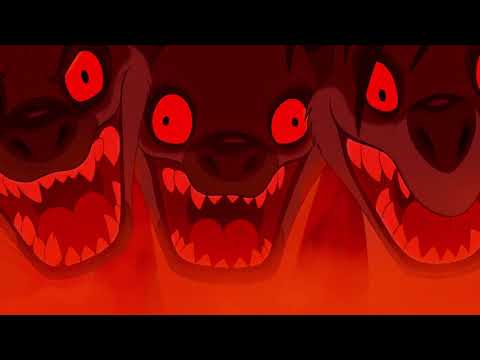
The Lion King (1994) - film soundtrack - not. Scar rallies the hyenas inside the lair, turning desperation into doctrine, then exits straight into the next trap he sets for Simba (approx. 00:28-00:32). The placement matters: it is the hinge where manipulation becomes logistics, where the villain stops hinting and starts scheduling.
What makes this number last is the double-game. On the surface, it is a classic Disney villain showcase - sharp consonants, theatrical pauses, a chorus that laughs on cue. Under the varnish, it is a recruiting speech. The words keep flipping between mockery ("vacant expressions") and reward ("you'll never go hungry again"), the oldest trick in the pamphlet: insult the crowd, then promise them a seat at the table.
Key takeaways
- Rhythm as authority: The march feel is not decoration - it is Scar building a metronome that the hyenas can fall into.
- Comedy as a leash: The jokes are control mechanisms. He laughs, they laugh, and suddenly dissent feels like bad timing.
- Chorus as mob: The backing vocals are written like a response team: short, hungry interjections that turn policy into chant.
- Visual rhetoric: The staging in the film turns the song into mass spectacle, the kind designed to look inevitable.
Creation History
Elton John and Tim Rice built the song as part of the film's core set, and early story development toyed with alternate concepts before landing on the version that survives - including a working idea and cut material that later fed stage expansions. The soundtrack recording preserves an opening soliloquy that the film trims for pacing and story clarity, while later adaptations re-extend the number and reshape its tone. In the film recording history, the lead vocal credit is famously split in practice: the widely repeated account (also summarized in reference notes for the track) is that Jim Cummings stepped in for part of Scar's sung performance when Jeremy Irons ran into vocal strain during the session.
Song Meaning and Annotations
Plot
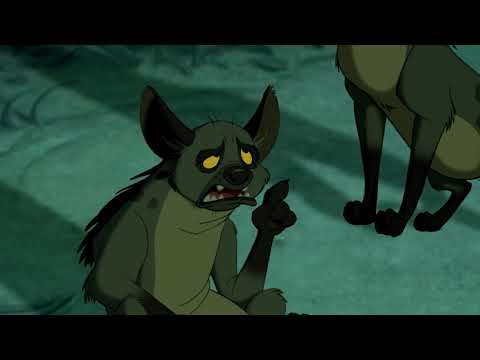
Scar has already tested the hyenas as muscle, and now he formalizes the relationship. He offers them food and status if they back his succession plot. The number escalates from persuasion to pageantry: first a private pitch, then a public rally. By the time the chorus hits its final chant, the scheme has moved from thought to infrastructure - an alliance, a chain of command, and a shared appetite aimed at the throne.
Song Meaning
The meaning is blunt, and that is the point. Scar is not confessing to the audience; he is training an audience. The song turns murder into management language: "planning," "duties," "denial." He frames violence as a rebrand for the Pride Lands, and frames complicity as a meal ticket. It is a villain number that understands politics: people rarely sign up for evil, but they will sign up for security, revenge, and a promise that their hunger will be noticed.
Annotations
Its clear from your vacant expressions, the lights are not all on upstairs.
That is Scar setting hierarchy. He humiliates the hyenas to establish intellectual distance, then immediately pivots to recruitment. The insult is part of the sales funnel: you are dumb, but useful.
So prepare for the coup of the century.
Notice the marketing language. A coup is framed like an event launch. The rhyme makes treason feel like a season premiere.
Meticulous planning, tenacity spanning, decades of denial.
This cluster (prominent in licensed stage and youth-theater materials) is Scar painting tyranny as competence. The rhythm tightens into a list because lists sound like strategy. If you have ever heard a bad boss brag about "execution," you know the vibe.
You wont get a sniff without me.
Here is the real contract: Scar offers bounty, but only through dependence. The line is petty, funny, and terrifying - a leash with a grin on it.
Genre and rhythm fusion
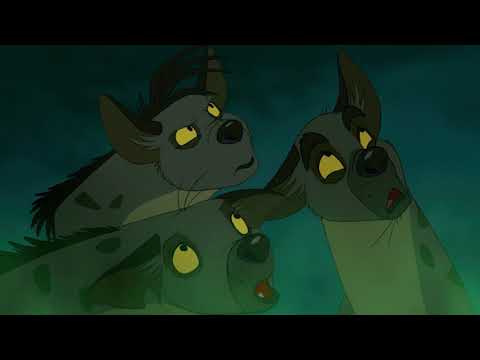
The song is built on that sly Disney hybrid: Broadway villain song meets military cadence. The groove is stiff enough to suggest marching, but theatrical enough to invite performance flourishes - talk-sung lines, held syllables, and those quick chorus jabs that feel like heckles turned into worship.
Power, hunger, and the sales pitch
Scar does not seduce with love; he seduces with rations. The hyenas are written as a community with a single urgent problem, and Scar weaponizes it. He offers food as policy, then turns policy into faith. If you listen closely, the structure mirrors a con: diagnosis (you are starving), enemy (the current order), solution (me), then the hook (chant it back).
Historical touchpoints and visual symbolism
In the film, the number is staged as mass spectacle, with disciplined formations and upward beams of light that deliberately echo real-world propaganda aesthetics. According to Entertainment Weekly magazine, as relayed in later reporting, the concept grew from a story-sketch that cast Scar in a Hitler-like pose and pushed the directors toward a "Triumph of the Will" style rally. The sequence is not subtle, and it is not meant to be: it is the movie teaching kids what tyranny looks like when it dresses up for the camera.
Why the cut opening matters
The soundtrack version opens with Scar weighing the hyenas as assets, a calculating little monologue that the film removes. Losing it makes the on-screen Scar feel already committed - he is not debating morality, he is managing manpower. That edit sharpens the drama: the lair is not a brainstorming session, it is a campaign office on launch day.
Technical Information
- Artist: Jeremy Irons with Whoopi Goldberg, Cheech Marin, Jim Cummings
- Featured: Whoopi Goldberg, Cheech Marin
- Composer: Elton John
- Producer: Hans Zimmer, Ted Kryczko
- Release Date: May 31, 1994
- Genre: Film soundtrack, villain show tune, theatrical march
- Instruments: Orchestra, choir-style backing vocals, percussion-forward rhythm
- Label: Walt Disney Records
- Mood: Menacing, satirical, commanding
- Length: 3:40
- Track #: 3 (The Lion King: Original Motion Picture Soundtrack)
- Language: English
- Album: The Lion King: Original Motion Picture Soundtrack
- Music style: Broadway-influenced villain anthem with militarized pulse
- Poetic meter: Mixed - conversational patter with marching accents
Questions and Answers
- What is Scar really promising the hyenas?
- Food first, status second, and dependence always. The deal is built so Scar remains the bottleneck to survival.
- Why does the chorus sound like a crowd instead of backup singers?
- The writing treats them as a rally line: short responses, chantable fragments, and laughter that lands like approval.
- Is the song meant to be funny or frightening?
- Both, because humor is part of the intimidation. Scar weaponizes wit to keep the room under his thumb.
- Why does the film cut the opening soliloquy found on some releases?
- It speeds the scene and makes Scar feel already committed. The film version enters after the decision, not during it.
- How does the Broadway version change the storytelling?
- It expands Scar's managerial language and adds extra material that makes the coup feel like a system, not a moment.
- Why do people link the visuals to propaganda aesthetics?
- The staging leans into disciplined formations and theatrical light beams, echoing the grammar of mass rallies discussed in press commentary about the sequence.
- What changes in the 2019 remake?
- The number is shortened and tilted toward spoken delivery, reducing the big chorus-and-choreography spectacle into something more like a threat made in passing.
- Did the song ever function outside the film narrative?
- Yes. It appears in stage adaptations, and elements of it have been used in other Lion King-related productions and park entertainment settings.
- Why does the melody feel so controlled?
- Because it is built around command phrases and rhythmic hooks rather than wide-open, romantic lines. The song is about control, so it sounds controlled.
- What is the core message?
- Charisma can sell cruelty when it offers certainty. The song dramatizes how a crowd can be recruited through grievance and appetite.
Awards and Chart Positions
The song itself is tied to one of the most decorated animated-film music packages of its era. At the 67th Academy Awards, The Lion King won for Best Original Score and won for Best Original Song with a different track from the film, while other songs from the soundtrack also received nominations.
| Category | Work | Result | Notes |
|---|---|---|---|
| Certification | RIAA (US) - Single | Gold | Certification date: January 18, 2023 |
| Awards context | The Lion King (music) | Academy Awards wins | Best Original Score won; Best Original Song won for a different track |
How to Sing Be Prepared
Common metadata listings put the track in A minor at around 122 BPM, which fits the song's marching, speech-forward delivery. Treat those numbers as practical practice targets, not sacred law: the performance lives in character timing, not in metronome worship.
- Tempo first: Set a click near 122 BPM and speak the lines in rhythm before you sing them. If the words do not lock, the melody will not save you.
- Diction: Over-articulate consonants on purpose. Scar's power is in crisp syllables that land like gavel taps.
- Breathing: Map breaths at the ends of ideas, not the ends of bars. The delivery is political speech with musical punctuation.
- Flow and rhythm: Keep the patter buoyant. The danger is dragging the march until it turns into mud.
- Accents: Lean into key trigger words (coup, prepared, king) and let the rest play like a smirk.
- Ensemble handling: If you have a chorus, keep their interjections tight and percussive. They should sound like a crowd answering a chant.
- Mic and space: On stage or on mic, use proximity for menace - closer for whispers, back off for the big rally moments to avoid barky strain.
- Pitfalls: Do not shout your way through the climax. The character is in control; let the control be the intimidation.
Practice materials: Speak-through drills at tempo, then sing with a neutral vowel to stabilize pitch, then restore consonants. Finish by acting the text with minimal melody, then re-add melody without losing the acting.
Additional Info
One reason this song keeps resurfacing is that it is not just a villain confession - it is a tutorial in persuasion. The sequence has been discussed for its deliberate borrowing from propaganda staging; as stated in TIME magazine's coverage of the 2019 remake differences, the newer film notably tones down the big musical staging and repositions the number toward spoken threat. That contrast, between spectacle and understatement, accidentally proves the durability of the writing: the same text can play as cabaret, rally, or menace.
And a side note from the working life of voice-and-song production: the recording lore around Scar's sung performance has become part of the song's mythology, because it underlines the piece's tightrope. It sits low, it sits sharp, and it demands character acting that never slips into plain yelling. When performers get it right, the song sounds easy. That is the trick.
Key Contributors
| Entity | Type | Relationship (S-V-O) |
|---|---|---|
| Elton John | Person | Elton John composed the music for the song. |
| Tim Rice | Person | Tim Rice wrote the lyrics for the song. |
| Hans Zimmer | Person | Hans Zimmer produced the soundtrack recording and composed the film score context. |
| Ted Kryczko | Person | Ted Kryczko co-produced the soundtrack recording. |
| Jeremy Irons | Person | Jeremy Irons performed Scar's lead vocal and voice performance. |
| Jim Cummings | Person | Jim Cummings performed credited vocal parts and is associated with Scar's sung recording work. |
| Whoopi Goldberg | Person | Whoopi Goldberg performed supporting vocals as Shenzi. |
| Cheech Marin | Person | Cheech Marin performed supporting vocals as Banzai. |
| Walt Disney Records | Organization | Walt Disney Records released the soundtrack and related recordings. |
| Music Theatre International | Organization | Music Theatre International distributes licensed stage materials that preserve extended lyrical content. |
| Roger Allers | Person | Roger Allers co-directed the 1994 film adaptation that stages the number as a rally. |
| Rob Minkoff | Person | Rob Minkoff co-directed the 1994 film adaptation that stages the number as a rally. |
| Jon Favreau | Person | Jon Favreau directed the 2019 remake that reworked the song's presentation. |
| Chiwetel Ejiofor | Person | Chiwetel Ejiofor performed the 2019 remake version of the song. |
| Hollywood Bowl | Place | Hollywood Bowl hosted anniversary performances tied to the film's music legacy. |
Sources: RIAA Gold and Platinum database, Oscars ceremony page (67th Academy Awards), The Lion King (1994 soundtrack) reference page, Be Prepared (song) reference page, Pitchfork soundtrack announcement for 2019, TIME magazine report on 2019 film differences, Tunebat track metadata, SongBPM track metadata, Music Theatre International lyric sheet (The Lion King JR)