
Chim Chim Cher-ee (Mary Poppins) Lyrics
Chim Chim Cher-ee (Mary Poppins)
Bert:Chim chim-in-ey, chim chim-in-ey
Chim chim cher-ee!
A sweep is as lucky, as lucky can be
Chim chim-in-ey, chim chim-in-ey
Chim chim cher-oo!
Good luck will rub off when I shakes 'ands with you
Or blow me a kiss and that's lucky too
Now, as the ladder of life 'as been strung
You might think a sweep's on the bottommost rung
Though I spends me time in the ashes and smoke
In this 'ole wide world there's no 'appier bloke
Chim chim-in-ey, chim chim-in-ey
Chim chim cher-ee!
A sweep is as lucky, as lucky can be
Chim chim-in-ey, chim chim-in-ey
Chim chim cher-oo!
Good luck will rub off when I shakes 'ands with you
All:
Chim chim-in-ey, chim chim-in-ey
Chim chim cher-ee!
A sweep is as lucky, as lucky can be
Chim chim-in-ey, chim chim-in-ey
Chim chim cher-oo!
Good luck will rub off when I shakes 'ands with you
Bert:
I choose me bristles with pride, yes, I do
A broom for the shaft and a brush for the flute
Up where the smoke is all billered and curled
'Tween pavement and stars is the chimney sweep world
When there's 'ardly no day nor 'ardly no night
There's things 'alf in shadow and 'alfway in light
On the rooftops of London coo, what a sight!
Chim chim-in-ey, chim chim-in-ey
Chim chim cher-ee!
When you're with a sweep you're in glad company
Nowhere is there a more 'appier crew
Than them wot sings, "Chim chim cher-ee, chim cher-oo!"
On the
Chim chim-in-ey, chim chim cher-ee, chim cher-oo!
Song Overview

Review and Highlights
Quick summary
- Where it appears: Disney's Mary Poppins (1964), first as Bert's street-level calling card, later as a rooftop reprise.
- Who performs it in the film: Dick Van Dyke with Julie Andrews, Karen Dotrice, and Matthew Garber across versions.
- How it functions: A mood-setter that makes soot and skyline feel like two sides of the same coin.
- Style note: A 3-4 waltz that can sound like a lullaby, a superstition, or a sly work song depending on who is singing.
- Afterlife: It became a jazz standard for risk-takers and a stage staple in the 2004- onward theater adaptation.
Mary Poppins (1964) - film - diegetic, with light fantasy shading. Bert sings it on the streets as a greeting and a charm (often indexed in releases as "Pavement Artist"). Later, the rooftop reprise reframes the tune as a shared nighttime spell. Scene timing varies by cut, but the first appearance arrives early and the reprise lands after the sweep sequence, when London turns to silhouettes and star-light.
I have always loved how this number refuses to pick one face. It arrives like a nursery rhyme, then tilts into something older and stranger - a working-class superstition delivered with a wink. The waltz meter does the heavy lifting: one-two-three, one-two-three, steady as footsteps on slate. The melody floats, but it also trudges. That tension is the trick, and it is why the song can feel comforting and a little eerie in the same breath.
The Sherman Brothers write like dramatists. They give Bert a philosophy that fits in a pocket: luck is portable, grime is honest, and a handshake can be a blessing. Van Dyke performs it as if he is making friends with a whole city block, while the later ensemble version softens the edges, turning a solo charm into a communal lull. According to Billboard, the tune became the film's awards-season flag-bearer, even with so many famous songs in the same score.
Creation History
Richard M. Sherman and Robert B. Sherman wrote the song for Mary Poppins, shaping it around the figure of a London chimney sweep and the film's blend of realism and make-believe. The number was recorded for the 1964 soundtrack and later issued in single form on Buena Vista. On stage, the Mary Poppins musical kept the melody as a core identity marker, leaning into its theatrical hush and its rooftop imagery.
Song Meaning and Annotations
Plot
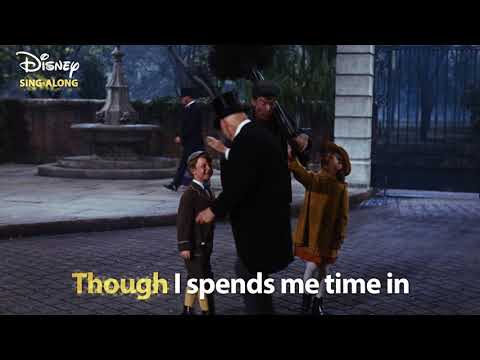
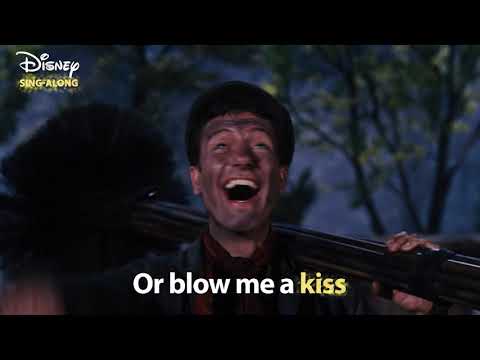
Bert introduces himself and his world with a tune that doubles as a calling card. Later, the melody returns in a rooftop setting, where the children's view of London widens and the story briefly pauses to let night do its work. The reprise is not just repetition, it is a shift in perspective: the same notes, but now the skyline feels like a map of possibilities.
Song Meaning
The meaning is a small argument dressed as a lullaby: luck is not only for the polished. In this song, soot is not shame, it is evidence of labor, and labor earns its own kind of blessing. The lyric turns superstition into social glue - a kiss blown, a hand shaken, a brief ritual that says, "You are safe with me, at least for this verse." That is also why it sits so neatly in the film's moral architecture: Mary Poppins is always teaching through play, and Bert is her best accomplice.
Annotations
"A sweep is as lucky, as lucky can be"
It is a reversal of status. The lyric takes a job associated with grime and makes it a talisman. Not because the world suddenly becomes fair, but because the character chooses a frame that lets him stand tall.
"Good luck will rub off when I shakes hands with you"
That handshake is a whole worldview: luck as contact, not inheritance. The phrase also carries the rhythm of a friendly pitch, like Bert is turning greeting into street theater.
"Up where the smoke is all billowed and curled"
The rooftop language shifts the song from charm to imagery. London becomes a second sky, and the sweep's work turns into a vantage point. It is the same melody, but now it is pointing upward.
Genre and rhythm
The 3-4 pulse is the anchor. It can be played slow enough to feel like a cradle song, or brisk enough to sound like work boots on brick. That flexibility explains the long afterlife: jazz players can stretch it, stage productions can choreograph it, and singers can treat it as spoken theater with melody attached.
Symbols and touchpoints
Soot and stars are the key symbols, and the song braids them together until they become inseparable. It is also a tidy bit of London myth-making: the sweep as omen, the rooftops as secret streets, the night as a place where rules loosen. No wonder later adaptations keep returning to it when they need to bottle a little old-city magic.
Technical Information
- Artist: Dick Van Dyke (film performance), with Julie Andrews, Karen Dotrice, and Matthew Garber across versions
- Featured: Ensemble and reprise vocals (depending on edition)
- Composer: Richard M. Sherman; Robert B. Sherman
- Producer: Film soundtrack production credited to Disney's original soundtrack team (varies by release documentation)
- Release Date: 1964 (film and soundtrack era release)
- Genre: Film musical; waltz-based show tune
- Instruments: Vocal lead, orchestra, rhythm accents supporting a 3-4 feel
- Label: Buena Vista and Walt Disney soundtrack imprints (varies by territory and format)
- Mood: Gentle, sly, a little smoky
- Length: About 2:46 on common soundtrack listings (edition-dependent)
- Track #: Listed as track 14 on a widely referenced soundtrack configuration
- Language: English
- Album: Mary Poppins (Original Soundtrack)
- Music style: Waltz groove with theatrical phrasing and folk-like melodic contours
- Poetic meter: Accentual, conversational lines shaped for sing-speak delivery
Questions and Answers
- Why does it sound like a lullaby and a work song at the same time?
- The 3-4 waltz can be softened into a cradle sway or sharpened into a steady tramp. The melody is simple enough to hold either mood.
- Who sings it in the film version most people remember first?
- Bert, performed by Dick Van Dyke, introduces the tune as a personal signature before the story expands it through reprises.
- What is the lyric's main trick?
- It turns a hard job into a lucky omen, shifting status with one confident line and keeping the tone friendly rather than bitter.
- Is it only a solo?
- No. Soundtrack configurations and the film itself include versions that bring in Mary and the children, reshaping it into a shared nighttime spell.
- Why did jazz musicians adopt it?
- The waltz feel, the sturdy chord movement, and the singable melody make it easy to reharmonize and stretch, which is exactly what John Coltrane did on record.
- Does it appear in the stage musical?
- Yes. The Mary Poppins stage adaptation keeps it as a thematic anchor, often using it to connect street life, rooftops, and the show's sense of wonder.
- What makes the rooftop imagery hit harder than the street version?
- Up high, the city becomes abstract - smoke, stars, shadow, light. The tune stops being a greeting and starts sounding like a quiet philosophy.
- Why do people remember it as the film's awards song?
- Because it won the Academy Award for Original Song, which turned a character number into a headline piece of the film's legacy.
- Is there a well-known vocal approach for it?
- Many singers treat verses as intimate storytelling and keep the waltz moving, saving fuller tone for the refrain so it feels like a charm being repeated.
Awards and Chart Positions
At the 37th Academy Awards (held in 1965), the song won the Oscar for Music (Song), with the Sherman Brothers credited for music and words. That win mattered because it crowned a character-driven number, not a big production finale, and it helped define how Disney musical films would campaign their music for decades.
| Year | Recognition | Work credited | Result |
|---|---|---|---|
| 1965 | Academy Awards - Music (Song) | Richard M. Sherman; Robert B. Sherman | Winner |
| 1965 | Soundtrack context - Billboard 200 | Mary Poppins original soundtrack album | Peak No. 1, with an extended chart run |
| 1965 | Soundtrack context - Official UK Albums Chart | Mary Poppins original soundtrack album | Peak No. 2, long-running chart presence |
How to Sing Chim Chim Cher-ee
Performance metrics (guide-level, edition-dependent): Many vocal reference tools place the melody in a minor key and suggest a compact range suitable for conversational singing. Tempo readings vary by recording and arrangement, but the consistent instruction is the same: keep the 3-4 pulse alive, even when you sing softly.
- Tempo: Choose a waltz tempo that feels like walking, not drifting. If your arrangement sits slower, keep the inner count active so phrases do not sag.
- Diction: Treat verses like dialogue. The charm works when consonants land cleanly and the lyric sounds like something you would say to a stranger on a street corner.
- Breathing: Plan small, frequent breaths. The melody is built from short arcs, and the performance feels natural when breaths mirror speech.
- Flow and rhythm: Keep the "one" of each bar grounded, then let "two-three" lift. That lift is where the song gets its float.
- Accents: Emphasize the refrain as if you are repeating a lucky charm. Do not punch every word. Let the repetition do the persuasion.
- Color and character: For Bert-style delivery, aim for warm, friendly tone with a slight hush. For a more theatrical take, add dynamic swell on the refrain and pull back in the verses.
- Ensemble and doubles: If you have multiple voices, keep harmony light and airy. The song sounds best when it feels like night air, not a choir competition.
- Mic technique: Stay close for verses, step back for the refrain. The song rewards intimacy more than volume.
- Pitfalls: Dragging the waltz, over-singing the refrain, and turning the lyric into a novelty accent. The magic is understatement with steady rhythm.
- Practice material: Speak the text in 3-4, then sing on a single comfortable vowel, then add words back. It trains rhythm first, color second.
Additional Info
The tune's strangest compliment might be how far it travels from its source while staying recognizable. John Coltrane recorded a version that treats the melody as raw material, stretching it into a long, searching waltz. Louis Armstrong also cut a take that flips it into a friendly jazz vocal, proof that the song can survive outside its film context without losing its silhouette.
In recent years, the story around the song also became part of a larger story about its writers. According to Reuters, Richard M. Sherman died in May 2024, prompting renewed attention to how the Sherman Brothers built Disney's mid-century musical language, from film themes to songs that became cultural shorthand.
Key Contributors
| Entity | Type | Relationship statement |
|---|---|---|
| Richard M. Sherman | Person | Richard M. Sherman - wrote - music and lyrics (with his brother) |
| Robert B. Sherman | Person | Robert B. Sherman - wrote - music and lyrics (with his brother) |
| Dick Van Dyke | Person | Dick Van Dyke - performed - the film's signature vocal as Bert |
| Julie Andrews | Person | Julie Andrews - performed - key soundtrack vocals and reprises |
| Walt Disney / Buena Vista | Organization | Buena Vista - released - soundtrack editions and select single formats |
| Mary Poppins (1964 film) | Work | Mary Poppins (1964 film) - featured - street version and rooftop reprise |
| Mary Poppins (stage musical) | Work | Mary Poppins (stage musical) - adapted - the tune as a thematic anchor |
| John Coltrane Quartet | Organization | John Coltrane Quartet - recorded - a jazz interpretation on a 1965 album |
| Louis Armstrong | Person | Louis Armstrong - recorded - a vocal jazz cover in the late 1960s |
Sources: Oscars ceremony archive (37th Awards), D23 archive note on the Shermans, Billboard charts (Billboard 200 historical page), Official Charts Company (UK albums), Discogs release listings, Wikipedia (song and soundtrack pages), Reuters obituary report (May 2024), SecondHandSongs (cover documentation), Everything Jazz (album commentary), Disney UK official lyric video page