
You've Got a Friend in Me (Toy Story) Lyrics
Randy NewmanYou've Got a Friend in Me (Toy Story)
You've got a friend in meYou've got a friend in me
When the road looks rough ahead
And you're miles and miles
From your nice warm bed
You just remember what your old pal said
Boy, you've got a friend in me
Yeah, you've got a friend in me
You've got a friend in me
You've got a friend in me
If you've got troubles,I've got 'em too
There isn't anything I wouldn't do for you
We stick together and can see it through
Cause you've got a friend in me
You've got a friend in me
Some other folks might be
A little bit smarter than I am
Bigger and stronger too
Maybe
But none of them will ever love you
The way I do, it's me and you
Boy, and as the years go by
Our friendship will never die
You're gonna see it's our destiny
You've got a friend in me
You've got a friend in me
You've got a friend in me
Song Overview

Review and Highlights
Quick summary
- Role: A main-theme handshake between a film and its audience, written and performed by Randy Newman for Toy Story.
- Signature move: A swing-leaning, talk-sung melody that sounds like a friend pulling up a chair, not a vocalist stepping onto a pedestal.
- Release trail: Issued as a single in 1996, then kept alive through sequels, covers, and translated versions.
- Awards footprint: Major awards attention followed quickly: nominations at the Academy Awards and Golden Globes.
- Afterlife: Later reworks range from country duets to a 2018 collaboration with Rex Orange County.
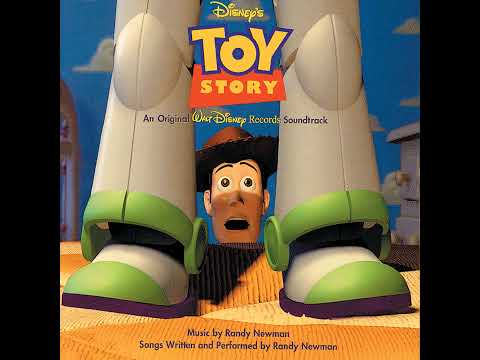
Toy Story (1995) - film soundtrack - non-diegetic. Opening credits, approx 00:00-02:05. The cue acts like a prologue: it sketches the Woody-Andy bond with the ease of a nursery rhyme, but in grown-up chord clothes, so parents hear craft while kids hear comfort.
Toy Story (1995) - film soundtrack - non-diegetic. End credits (alternate/duet editions appear across releases). The theme returns as a curtain call, turning a buddy-comedy premise into a promise: loyalty outlasts the chaos of playtime.
Toy Story 2 (1999) - film soundtrack - mixed use. The tune is reframed through character voice and texture, showing how one melody can behave like a leitmotif: same face, different lighting.
Toy Story 3 (2010) - film soundtrack - non-diegetic and translated variants. The theme is revisited as the franchise pivots toward time passing, a trick that can feel nostalgic without pleading for tears. According to The Guardian, Newman is part of what helped the first film land with both children and adults.
What makes this song stick is not volume, or vocal fireworks, or some myth of childhood purity. It is the way Newman writes like a screenwriter. The melody walks in short steps, like someone talking while half-smiling, and the harmony gives that talk a backbone. The piano anchors the groove, but the arrangement leaves air pockets - places where the listener can nod, laugh, or quietly agree. That empty space is doing work.
Listen to the rhythm and you will hear a style fusion that is sneakier than it looks on paper: a swing-ish pulse with pop clarity, plus a dash of Hollywood orchestration. The chord changes are friendly, but not lazy. They move like a story beat: setup, reassurance, small lift, return to center. The result is a theme that can be replayed for decades without wearing out its welcome.
Creation History
The recorded performance feels like it was built to fit the camera edit, but it also stands on its own as a piece of songwriting. Newman keeps the vocal almost conversational, letting timing sell the character. The song was released as a single in 1996, which matters because it signals confidence: this was not just background score material, it was a standalone calling card. When the Recording Industry Association of America later issued its first-time digital single awards list, Newman is on it for this track - proof that a film theme can keep selling long after the opening weekend.
Song Meaning and Annotations
Plot
On screen, the theme introduces a world where play is a serious business. The camera is busy, the toys are moving, and the song supplies a stable narrator. It frames friendship as practical, not ceremonial: a companion for the rough road, the long distance, the small humiliations of growing up. The story is not about perfection. It is about sticking around.
Song Meaning
The meaning lands in plain language, but the subtext is richer: loyalty is an action, not a label. In the film, toys fear replacement; in the song, the speaker refuses to compete on strength or smarts and offers constancy instead. That is why the hook has the shape of a pledge, not a brag. The mood is warm, but the message is sturdy: relationships survive on patience, shared trouble, and showing up when the shine wears off.
Annotations
- Conversational lead: Newman delivers the melody like dialogue. That keeps the promise believable, as if the singer is leaning over the table rather than reaching for a spotlight.
- Groove as trust: The swing feel suggests ease and familiarity. A strict, marching pulse would sound like duty. This pulse sounds like choice.
- Brag-free contrast: The lyric admits others might be "smarter" or "stronger". That admission disarms the listener, then the song wins by doubling down on care.
- Franchise logic: The theme works as a musical ID card. Change the instrumentation, shift the tempo, translate the words - the identity remains readable.
- Why covers work: The core is not tied to a single vocal style. It can be played as country, jazz-pop, or intimate piano because the melody is built like a standard.
You've got a friend in me.
That line is the thesis and the handshake. Five words, no ornament. A film theme rarely gets to be this direct without turning corny, and the reason it avoids that trap is the music underneath: slightly sophisticated changes that give the phrase adult weight.
We stick together and see it through.
This is where the lyric quietly upgrades itself from sentiment to plan. It is not "I will adore you", it is "I will cooperate with you". Friendship as shared labor - a surprisingly mature idea for a family film theme.
Instrumentation and production
The arrangement sells reliability. Piano sets the spine, rhythm section keeps the gait steady, and orchestral color fills the room without crowding the vocal. The best trick is restraint: the track never tries to outshine its own promise. You could call it a lullaby for grown-ups, except it has too much wit in the chord turns to be purely soothing.
Cultural and historical touchpoints
In the mid-1990s, Pixar was asking audiences to trust a new kind of animation. The song does a parallel job: it asks you to trust a new world by offering an old kind of tune - concise, hummable, built like classic American pop writing. When the franchise later revisits the theme, it is also revisiting that original contract with the viewer: you are safe here, the story knows its heart.
Technical Information
- Artist: Randy Newman
- Featured: None (original recording)
- Composer: Randy Newman
- Producer: Randy Newman
- Release Date: April 12, 1996
- Genre: Pop/Rock; Soundtrack
- Instruments: Vocal; piano; rhythm section; orchestral colors
- Label: Walt Disney Records
- Mood: Reassuring; playful; steadfast
- Length: 2:04
- Track #: Theme song (soundtrack context)
- Language: English
- Album: Toy Story (Original Motion Picture Soundtrack)
- Music style: Swing-leaning pop standard with film-score polish
- Poetic meter: Loose iambic tendencies with speech-like phrasing
Questions and Answers
- Why does the melody sound so easy to remember?
- It moves mostly stepwise and repeats its shapes, like spoken language that happens to land on pitches. The hook is designed to be recalled after one pass.
- Is the song a character speaking, or a narrator?
- Both. In the film context it behaves like a narrator, but the voice is intimate enough to feel like Woody, or any loyal friend, is doing the talking.
- What is the main musical trick behind the feeling of trust?
- A relaxed swing pulse plus harmony that sounds familiar but not simplistic. The groove never pushes, it carries.
- Why do later films keep returning to the theme?
- Because it is a franchise identity marker. Change the scene, the stakes, the decade - the theme says the story is still about loyalty under pressure.
- What does the lyric admit that many theme songs avoid?
- It admits insecurity. The speaker might not be the smartest or strongest, which makes the promise feel earned rather than automatic.
- How did the song perform on Canadian radio charts?
- It reached the Canadian RPM Adult Contemporary chart, peaking at number 40 in June 1996.
- What is a notable country-adjacent reinterpretation?
- George Jones and Kathy Mattea recorded a version tied to a Disney country compilation circuit, showing how naturally the tune sits in Nashville phrasing.
- What is a notable modern pop rework?
- Rex Orange County recorded a 2018 version with Newman, keeping the melody while shifting the texture toward contemporary indie-pop polish. As stated by Pitchfork, that collaboration became one of Rex's high-profile side steps between album cycles.
- What is one reason the song survives karaoke nights?
- The vocal line is approachable, but the phrasing is where the challenge lives. You can hit the notes and still miss the feel if you rush.
- Does the tune require a big belt?
- No. The range is moderate in common published references, and the bigger demand is rhythmic patience and clear diction.
Awards and Chart Positions
The awards story is simple and telling: the industry treated this as more than a cute theme. It was nominated for Best Original Song at the Academy Awards and at the Golden Globes. Years later, it also appeared in the RIAA note about first-time digital single award recipients, receiving a Gold digital single certification - a very modern accolade for a mid-1990s film track.
| Category | Result | Detail |
|---|---|---|
| Awards | Nominated | Academy Award - Best Original Song |
| Awards | Nominated | Golden Globe - Best Original Song |
| Certification | Gold | RIAA Digital Single (first-time recipient list, Sept 2013 tally) |
| Chart | Peak #40 | Canada - RPM Adult Contemporary (week of June 3, 1996) |
How to Sing You've Got a Friend in Me
In published references, the tune is often treated as a moderate-range selection for developing singers, which makes sense: it is not an acrobatics test. It is a phrasing test. Common data points put the track in E-flat major with a tempo around 116 BPM, and one widely used performance syllabus lists a working range of E-flat 4 to F5.
- Tempo first: Set a metronome near 116 BPM. Tap a gentle swing feel - think "walk, not sprint".
- Diction: Keep consonants crisp but friendly. The lyric reads like conversation. Over-pronouncing turns it theatrical in the wrong way.
- Breathing: Treat the spaces as part of the groove. Inhale early, then wait. The patience sells confidence.
- Flow and rhythm: Practice speaking the lines in time, then add pitch. If you sing it first, you may iron out the natural timing that makes it believable.
- Accents: Lean lightly into the backbeat. Do not punch it. The charm is in the easy swing, not in force.
- Ensemble and doubles: If you have backing vocals, keep them soft and supportive. The lead has to sound like a single person making a promise.
- Mic approach: Stay close, sing low volume, and let warmth do the work. A gentle proximity effect flatters this style.
- Pitfalls: Rushing the phrases, singing too brightly on the hook, and turning the final repetitions into a big finish. The point is steadiness.
- Practice materials: Loop the opening 20 seconds until your timing settles, then move to the last 30 seconds to practice sustained notes without pushing.
Additional Info
The song's cover history is a reminder that strong themes behave like standards. In a 1997 industry listing, George Jones and Kathy Mattea show up with a Disney-linked version in a vocal event category - an unlikely but perfectly logical pairing once you hear the lyric as a country promise. Another strand of the afterlife is translation: the franchise commissioned Spanish-language takes, including a Gipsy Kings performance credit for a Spanish-market variant in Toy Story 3, and later Spanish versions circulated for regional releases.
The modern era added a different kind of validation: younger artists did not just sample the melody, they invited the composer into the room. In 2018, Rex Orange County released a version with Newman and framed it as an approved, collaborative rework. That is a neat cultural handoff - a teenager-adjacent indie star borrowing a childhood theme while its author signs the guestbook.
Key Contributors
| Entity | Type | Relation (S-V-O) |
|---|---|---|
| Randy Newman | Person | Randy Newman wrote and performed the theme for Toy Story. |
| Walt Disney Records | Organization | Walt Disney Records released the single and soundtrack editions. |
| Pixar | Organization | Pixar used the song as a franchise leitmotif across films. |
| Recording Industry Association of America | Organization | RIAA certified the track as a Gold digital single (first-time recipient list). |
| Academy of Motion Picture Arts and Sciences | Organization | The Academy nominated the song for Best Original Song. |
| Golden Globes | Organization | The Golden Globes nominated the song for Best Original Song. |
| Rex Orange County | Person | Rex Orange County collaborated with Newman on a 2018 rework. |
| ABRSM | Organization | ABRSM listed the song in a musical theatre syllabus with a defined singing range. |
| RPM (Canada) | Organization | RPM charted the song on Adult Contemporary at a #40 peak. |
Sources: AllMusic, RIAA, Oscars, Golden Globes, RPM (WorldRadioHistory), ABRSM syllabus, Music Row (WorldRadioHistory), Tunebat, Consequence, Pitchfork, RandyNewman.com, SecondHandSongs, The Guardian