
When I See an Elephant Fly (Dumbo) Lyrics
When I See an Elephant Fly (Dumbo)
I saw a peanut stand, heard a rubber band,I saw a needle that winked its eye.
But I think I will have seen everything
When I see an elephant fly.
I saw a front porch swing, heard a diamond ring,
I saw a polka-dot railroad tie.
But I think I will have seen everything
when I see an elephant fly.
I seen a clothes horse, he r'ar up and buck
And they tell me that a man made a vegetable truck
I didn't see that, I only heard
But just to be sociable I'll take your word
I heard a fireside chat, I saw a baseball bat
And I just laughed till I thought I'd die
But I'd be done see'n about everything
when I see an elephant fly
Song Overview
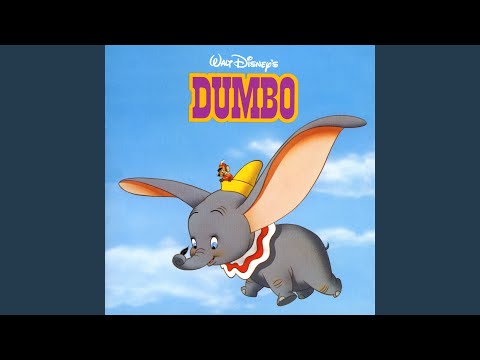
Review and Highlights
Quick summary
- Film origin: Dumbo (1941), led by the crows after the "Pink Elephants" night.
- Credits: music by Oliver Wallace, words by Ned Washington, as listed in major film reference catalogs.
- Vocal identity: Cliff Edwards fronts the crows, backed by the Hall Johnson Choir for choral effects.
- Structure: a rolling list-song of absurd sights, ending in the one thing nobody believes - a flying elephant.
- Afterlife: reused as a reprise at the finale, later sampled as source music in other Disney projects and recordings.
Dumbo (1941) - film - diegetic. After the characters wake in a tree, the crows needle Timothy's claim that Dumbo can fly, then the number turns into a chorus of disbelief that gradually becomes a dare. Why it matters: the song is a hinge - it shifts the story from humiliation to possibility while keeping the scene playful.
This is Disney swing writing disguised as a joke you can whistle. The verses stack odd images like a vaudeville comic stacking props, but the real engine is the rhythm: little bursts of speech that land right on the beat, then a chorus line that feels like a group leaning in together. In the film it plays like teasing, yet you can hear the craft in how it sets up the final punch: the one sight that beats all the others.
Key takeaways
- Hook: the refrain returns fast, so the ear learns it before the brain finishes the joke.
- Character writing: each line reads like a short gag, perfect for animated mouths and quick cuts.
- Story function: skepticism becomes fuel - the crows move from mockery to mentorship without breaking tempo.
- Reprise value: the melody is sturdy enough to come back at the end and still feel earned.
Creation History
The paper trail is unusually clear for a studio song this old: according to the AFI Catalog, the number is credited to Oliver Wallace (music) and Ned Washington (words), and it sits beside other Dumbo songs split between Wallace and Frank Churchill. D23 also highlights Cliff Edwards as the crow voice who introduced the tune on screen, a reminder that this is not just a composition but a performance built around timing, dialect, and ensemble bounce. The film used choral forces for texture, with the Hall Johnson Choir credited for choral effects in reference listings.
Song Meaning and Annotations
Plot
Timothy wakes up to a shock: he and Dumbo are high in a tree, and the only explanation is that Dumbo got there by flying. A group of crows spots them, laughs at the idea, and turns their disbelief into a musical routine. By the end of the exchange, the teasing loosens into curiosity - the crows can see what Timothy sees, and the song becomes the bridge toward the famous "magic feather" gamble.
Song Meaning
The surface message is blunt: people have seen plenty of strange things, but an elephant in flight is beyond belief. Underneath, it is about how crowds police possibility. The singers list wonders, then draw a line around what the world is allowed to contain. That line is the target. The tune is bright and quick, almost smug, and that attitude is the point: confidence is easiest when you are laughing with friends.
Annotations
-
"I have seen everything"
A classic brag turned into a setup. The lyric is not about knowledge, it is about certainty - and the story will spend the next reel shaking that certainty loose.
-
"horsefly ... dragonfly ... housefly"
A neat wordplay ladder. The joke lands fast, but it also frames the theme: language can make the impossible sound ordinary for a second, and that matters when you are trying to sell a miracle.
-
"just to be sociable"
A small line with a big tell. The narrator admits he is willing to accept a tall tale for the sake of the room, which is how the crows begin softening toward Timothy.
-
"When I see an elephant fly"
The refrain is a moving finish line. It is not "never," it is "not yet." That tiny gap leaves space for the plot to drive through.
Genre and driving rhythm
This sits in the swing-and-novelty pocket: short phrases, quick internal rhymes, and a chorus that wants claps on the backbeat. The animation-friendly pacing matters. Each lyric is compact enough to be staged as a single gag, then cleared for the next.
Emotional arc
It starts as public doubt, then slides toward private intrigue. The song does not change its smile, but the story around it does. That is the trick: the number keeps laughing while the film quietly pivots from ridicule to rescue.
Historical context and a side note
The crow sequence has been debated for decades, and modern viewers often arrive carrying that context in their pocket. That does not erase the musical intelligence on display, but it does change how the performance reads: humor, voice, and stereotype can sit in the same bar of music. If you want a clean summary of the film's release-era documentation, the AFI Catalog is a solid place to start.
Technical Information
Artist: Cliff Edwards and the Hall Johnson Choir
Featured: Jim Carmichael (often listed with the film vocal group)
Composer: Oliver Wallace
Producer: Walt Disney Productions (film)
Release Date: October 31, 1941 (general release listing)
Genre: film song; swing-leaning novelty number
Instruments: lead vocal; ensemble chorus; brass-and-rhythm studio scoring
Label: RCA Victor (1941 soundtrack 78 set); later Walt Disney Records reissues list the track in remastered programs
Mood: sly, playful, skeptical
Length: about 1:48 for a common soundtrack cut; some releases run slightly longer
Track #: varies by release configuration
Language: English
Album (if any): Walt Disney's Dumbo (RCA Victor soundtrack 78 set, 1941)
Music style: list-song verses with chorus-driven punchlines
Poetic meter: conversational, with repeated stress patterns that behave like a chant over swing time
Questions and Answers
- Who is the voice most listeners recognize?
- D23 credits Cliff Edwards as the crow performer who introduced the song in the 1941 feature, and his bright, percussive phrasing defines the scene.
- Who wrote it?
- Major reference listings credit Oliver Wallace for the music and Ned Washington for the words.
- Where does it sit in the story?
- It arrives after the characters wake in a tree and the film needs a pivot from humiliation to possibility.
- Why does the song feel like stand-up comedy?
- Because it uses the list-song trick: each line is a miniature gag, then the refrain snaps the whole routine back into place.
- Is the crow chorus mocking Dumbo or mocking Timothy?
- Both at first. The joke is aimed at the idea of flight, which sounds absurd in that moment, but the chorus soon becomes the group that helps make flight real.
- What is the musical secret behind the hook?
- Short phrases that land cleanly on beat, then a chorus that is easy for multiple voices to lock in together.
- Does the film reuse the melody later?
- Yes, there is a reprise at the end when Dumbo's success is public and the old disbelief has been flipped on its head.
- Did the song show up outside the animated film?
- According to IMDb soundtrack notes, the original recording is reused in the 1995 film Operation Dumbo Drop as a source cue.
- What is a good performance approach?
- Think ensemble first: crisp diction, quick punchlines, and a chorus that sounds like friends finishing each other’s sentences.
- Why do some listeners feel uneasy about the scene today?
- The crow sequence has long been criticized for racialized caricature, which means the performance can be heard as both musically sharp and culturally fraught.
Awards and Chart Positions
The tune itself was not the Academy Awards headline, but the musical world around it was. The film won the Oscar for scoring of a musical picture, and its soundtrack became one of the early Disney examples of music marketed as a standalone listening experience. That matters because this number is built for replay: it is compact, chorus-forward, and easy to drop into other contexts.
| Year | Milestone | What it signals |
|---|---|---|
| 1941 | RCA Victor 78 soundtrack set released (November 14, 1941) | Early film-music packaging: songs and cues treated as a consumer release. |
| 1942 | Multiple contemporary covers documented in discography and cover databases | The melody travels beyond the film, into band and vocal repertory. |
| 1995 | Source use in Operation Dumbo Drop | Disney repurposes the recording as a recognizable legacy cue. |
| 2020 | Dapper Dans "Voices From Home" performance posted by Disney channels | Classic repertoire repositioned as a communal sing-through moment. |
How to Sing When I See an Elephant Fly
This is an ensemble number that rewards clarity more than volume. Modern metric databases often tag the soundtrack cut around 149 BPM, while published vocal resources commonly present the piece in F major with a printed range roughly C4 to F5. Treat those as practical targets: aim for crisp syllables first, then chase the swagger.
Step-by-step practice plan
- Tempo: set a metronome near 145 to 150 BPM. Speak the verses in rhythm before you sing them.
- Diction: over-articulate consonants on the list items. The jokes live in the nouns.
- Breathing: take quick, silent breaths between images, not in the middle of them. Keep the line moving.
- Flow and rhythm: keep the verse light and forward, then let the chorus land with a slightly firmer pulse.
- Accents: give the final word of each setup line a tiny lift so the refrain feels inevitable.
- Ensemble: rehearse call-and-response with strict cutoffs. The charm comes from unanimity.
- Mic technique: if amplified, stay a touch off-axis on sharp consonants so the chorus does not spit.
- Pitfalls: do not drag the list, and do not oversell the punchline. Let the rhythm do the work.
Practice materials
Range checkpoint: comfortable access to C4 to F5 (in common printed keys).
Rhythm drill: chant the verse on one pitch at tempo, then add melody.
Ensemble drill: record two chorus passes and practice locking your phrasing to the playback.
Additional Info
A fun historical quirk: the AFI synopsis notes the number sits right after the tree-wake revelation, which is exactly where a songwriter wants it. Comedy lowers defenses. Then, once the audience is relaxed, the film can ask for belief. I have seen many scores try to do that with swelling strings. Here it is done with a grin and a chorus.
The credits also tell a story. D23 points to Wallace as a key Disney music figure and names this tune among his notable contributions, while the D23 profile of Cliff Edwards frames the performance as one of the reasons his voice stayed lodged in Disney history. Different pages, same takeaway: the song works because the writing and the voice meet in the same place - fast, crisp, and communal.
Key Contributors
| Entity | Type | Relation | S-V-O statement |
|---|---|---|---|
| Oliver Wallace | Person | composer | Oliver Wallace wrote the music credited for the song in major film references. |
| Ned Washington | Person | lyricist | Ned Washington wrote the words and shaped the list-song punchline structure. |
| Cliff Edwards | Person | lead performer | Cliff Edwards fronted the crow performance that introduced the tune on screen. |
| Hall Johnson Choir | Organization | choral effects | The Hall Johnson Choir provides the choral bed that turns a solo into a chorus joke. |
| Walt Disney Productions | Organization | producer | Walt Disney Productions produced the 1941 feature that premiered the song. |
| RKO Radio Pictures | Organization | distributor | RKO Radio Pictures distributed the film in its original theatrical run. |
| RCA Victor Records | Organization | soundtrack label | RCA Victor Records issued an early 78 soundtrack set that included the number. |
| Dapper Dans | Organization | later performance | The Dapper Dans performed the song for Disney's home-recorded social series in 2020. |
| Operation Dumbo Drop | Work | source reuse | Operation Dumbo Drop reused the recording as a legacy cue in 1995. |
Sources: AFI Catalog - Dumbo; D23 A to Z - Dumbo (film); D23 profile - Cliff Edwards; D23 profile - Oliver Wallace; IMDb soundtrack page - Dumbo (1941); IMDb soundtrack page - Operation Dumbo Drop (1995); Cartoon Research - Walt Disney's Dumbo Soundtrack on Records; ABRSM Singing for Musical Theatre syllabus; MusicBrainz release - Dumbo; MusicStax track metrics; Disney Parks social post - Dapper Dans Voices From Home