
The Silly Song (Snow White & the 7 Dwarfs) Lyrics
The Silly Song (Snow White & the 7 Dwarfs)
(Yodel:)Ho-la-la-ee-ay
Ho-la-la-ee-ay
Ho-la-la-ee-ay-ee-la-ee-ay-ee-lee-ay
Ho-la-la-ee-ay
Ho-la-la-ee-ay
Ho-la-la-ee-ay-ee-la-lee-ay-lee-o-lee-ay
(repeat)
I'd like to dance and tap my feet
But they won't keep in rhythm
You see, I washed them both today
And I can't do nothing with 'em
(Chorus)
Ho hum the tune is dumb
The words don't mean a thing
Isn't this a silly song
For anyone to sing?
I chased a polecat up a tree
Way out on upon a limb
And when he got the best of me
I got the worst of him
(Chorus)
(Yodel, etc.)
Song Overview
Review and Highlights
Quick summary
- Introduced in Snow White and the Seven Dwarfs (1937) as the dwarfs throw a welcome-home party at the cottage.
- Credited to Frank Churchill (music) and Larry Morey (lyrics), voiced by the dwarf cast in the film recording.
- A yodel-driven set piece: the tune circles a folk-like melody while the visuals turn into slapstick choreography.
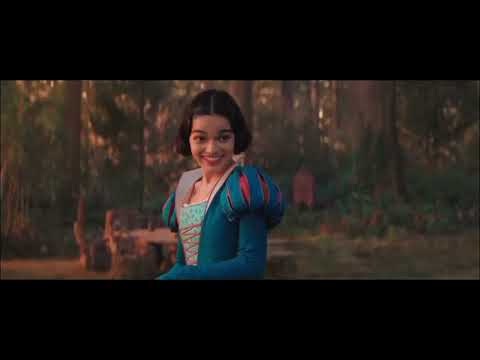
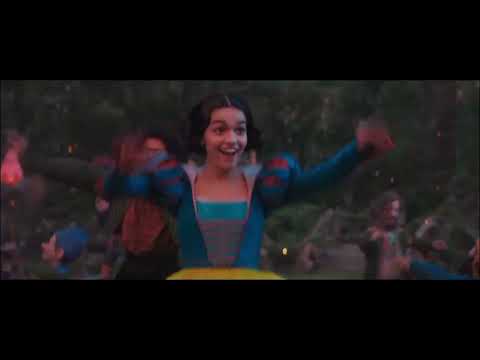
- Revisited in Disney's live-action Snow White (2025) as one of the classic songs carried into the new film.
Snow White and the Seven Dwarfs (1937) - animated film sequence - diegetic. The dwarfs perform it inside their home to entertain Snow White, with dance steps and props treated like part of the scene rather than background music. The famous gag that caps the number (Dopey balancing high, a sneeze detonating the moment) is timed like a vaudeville button: the song does not fade out, it lands.
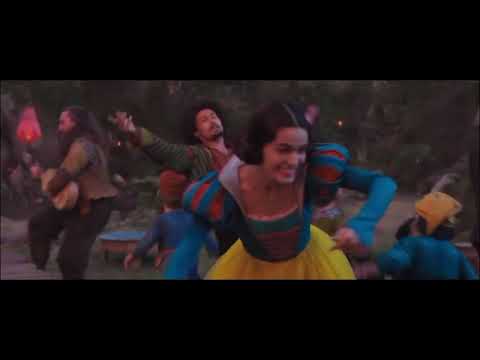
Snow White (2025) - live-action film sequence - diegetic. The 2025 remake keeps it among the original-era selections on the official soundtrack, presenting the piece as a short ensemble spotlight rather than a long, dialogue-laced film transfer.
Key takeaways
- Yodel as character writing: the vocal flips are not decoration, they are personality, a playful dare between performers.
- Folk melody with studio timing: the tune feels old-world, but the structure is built for screen comedy.
- Dance-first storytelling: it pauses plot on purpose, letting the audience learn the cottage rules: warmth, chaos, and a big table that doubles as a stage.
- Short phrases, clean payoffs: every musical idea gets a physical response, then exits before it wears out its welcome.
Creation History
Frank Churchill and Larry Morey wrote the number as part of the film's early-song blueprint, and later disc and CD editions kept its alternate naming in circulation by pairing "The Dwarfs' Yodel Song" with the common title. The earliest commercial soundtrack issue for the film arrived as a Victor J-8 set of three 78 rpm discs, with the yodel number paired on Victor 25737 with "Some Day My Prince Will Come" - a packaging choice that put comedy and romance on the same slab of shellac. According to Film Music Reporter, the 2025 soundtrack rollout for the live-action film leaned on a similar logic: new material up front, classic cues folded in as recognizable anchors.
Song Meaning and Annotations
Plot
After the cottage is restored to order and dinner settles the nerves, the dwarfs pivot into celebration. The performance turns the home into a miniature hall: partners spin, feet stamp, and the group cycles through small solo bits and call-backs. The scene is simple on paper - a party for a guest - but the film uses it as a turning point in tone, shifting from survival in the forest to belonging in a community.
Song Meaning
At face value, it is a toast to nonsense: sing something silly because joy is practical. Underneath, it is a lesson in consent and welcome. The dwarfs are not just amusing Snow White, they are signaling safety, offering a social contract: you are in our space, and we will make it kind. The yodeling matters here because it is vulnerable and a little ridiculous; you do not yodel if you are trying to look untouchable.
Annotations
"It ain't no use to grumble, and complain"
The line functions like a house rule. Grumpy can scowl, but the group vote is clear: the cottage runs on laughter, and the song is how they enforce it without a lecture.
"Just laugh"
Two words, big philosophy. The movie treats laughter as a tool for bonding - the quick kind that dissolves tension and keeps everyone moving in the same direction.
"Yodel-ay-hee-hoo"
The syllables are pure motion. They are also a sly musical joke: speech drops away, and sound becomes physical comedy, like a slide whistle made human.
Genre and rhythm fusion
You can hear two traditions shaking hands. One is old-country yodel practice, built on quick register shifts and bright open vowels. The other is screen-musical craft: short sections, clear resets, and a steady pulse that makes animators look like they have a metronome hidden in every chair leg.
Production and instrumentation
The arrangement favors clarity over lushness. A small band feel - strings, reeds, and rhythm support - keeps space for the vocal flips to read cleanly, and the ensemble refrains are staged like group choreography. When the chorus answers a solo line, it lands like a camera cut: same room, same party, new angle.
Cultural and historical touchpoints
Later music notes often point out that the melody draws from an older folk source, which helps explain why the tune feels "already known" even on a first listen. The number also became one of the film's most portable sequences: it is easy to excerpt for TV packages, compilation albums, and theme-park mood-setting because it carries its own little room of story inside it.
Technical Information
- Artist: Roy Atwell, Pinto Colvig, Billy Gilbert, Otis Harlan, Scotty Mattraw (film vocals, commonly grouped as The Dwarf Chorus)
- Featured: None credited
- Composer: Frank Churchill
- Producer: Not consistently credited on early releases
- Release Date: December 21, 1937 (film context); January 1938 (Victor J-8 disc set context)
- Genre: Film soundtrack; yodel novelty; traditional-pop crossover
- Instruments: Vocal ensemble; small orchestra or band backing (varies by edition)
- Label: Victor Records (early issue); later Disney and reissue labels vary by edition
- Mood: Playful, communal, dance-led
- Length: Common modern listing around 4:35 (edition dependent)
- Track #: Varies by release
- Language: English
- Album (if any): Songs from Walt Disney's Snow White and the Seven Dwarfs (Victor J-8) and later expanded soundtrack editions
- Music style: Folk-tinged yodel refrain framed by screen-musical call-and-response
- Poetic meter: Mixed, accent-driven, built for short punch lines and refrain returns
Questions and Answers
- Why does the song feel like a stage number inside a cartoon?
- Because it is staged as an in-room performance. The music is not just accompaniment; it is a party the characters actively make, with dance steps functioning like dialogue.
- Which moment turns the tune into pure comedy?
- The ending gag. The performance keeps tightening its rhythm until the final physical punch line drops like a rimshot.
- What makes the yodel refrain work for animation?
- Clear shapes and quick resets. Yodeling creates audible "jumps" that match visual flips, spins, and sudden cuts.
- Who wrote the number?
- Frank Churchill is credited for music and Larry Morey for lyrics on film-era listings and later catalog references.
- Is it connected to earlier folk material?
- Many reference notes describe the melody as adapted from an older Irish folk tune, which helps explain its familiar, circular contour.
- Why does the lyric sound like advice instead of plot?
- The scene is about bonding. The words establish house rules: lighten up, join in, and let the group take care of the mood.
- How did it reach listeners outside theaters in the 1930s?
- The Victor J-8 78 rpm set packaged film audio elements with character flavor and sound effects, including the pairing of the yodel song with the romance theme on Victor 25737.
- How is the 2025 version different in practice?
- It is typically presented as a compact ensemble track on the official soundtrack, functioning more like a quick spotlight than a long film-transfer sequence.
- Why does it still show up in compilation culture?
- It is self-contained. Even without context, you can hear the room, the jokes, and the dance pulse in under a minute.
How to Sing The Silly Song (Snow White and the Seven Dwarfs)
This is not a "big range" showpiece so much as a precision-and-play number. The yodeling will expose hesitation fast, so you train it like rhythmic comedy: clean timing, fearless register flips, and a grin you can hear. Track-metadata sources commonly list the piece around 120 BPM in D major, which is a useful starting point even if your arrangement shifts key for comfort.
- Tempo: about 120 BPM
- Key: commonly listed as D major
- Style: bright vowels, quick register breaks, and short phrase endings
- Common issues: scooping into notes, blurring consonants on fast lines, and tensing the throat during yodel flips
- Set the groove. Clap quarter notes at about 120 BPM, then speak the lyric rhythm in time. If the words drag, your yodel will drag.
- Choose your yodel "gear shift." Mark the exact syllables where you change register. Practice only the flip on one vowel until it feels automatic.
- Keep the throat loose. The flip should feel like switching resonance, not forcing volume. If you strain, reduce loudness and sharpen diction instead.
- Sing in short arcs. Many phrases are built like jokes: set up, answer, stop. Clip the ends so the ensemble responses land cleanly.
- Dial vowels to the room. Open vowels help the yodel read, but keep them consistent across the group so the chorus sounds like one character.
- Practice with "dance breath." Take quick, quiet inhales as if you are moving between steps. Long breaths will make the number feel sleepy.
- Ensemble polish. Rehearse consonants together, then rehearse yodel flips together. The comedy improves when the timing is tight.
- Pitfalls. Avoid sliding into notes, rushing the refrains, and adding extra vibrato. The style wants directness and sparkle.
Additional Info
The song's release history is a small piece of soundtrack history. The Victor J-8 set is frequently cited as the first commercially issued feature-film soundtrack album, and its packaging promised the same characters and sound effects as the movie - an early pitch for authenticity long before streaming playlists made that a default expectation. The yodel number sits at the center of that idea: it is so tied to character voices and room noise that a clean "studio" remake would lose half the charm.
Its afterlife is unusually international for a comedy yodel. SecondHandSongs documents language adaptations such as "La Tyrolienne des nains" and "Ich hab' Musik im Blut", along with later cover versions that treat the melody as a jazz or ensemble curiosity. For the 2025 live-action film, Disney's press material and music reporting framed the classic selections as continuity points, with this track appearing as a brief ensemble feature on the soundtrack.
Key Contributors
| Entity | Type | Relationship (S-V-O) |
|---|---|---|
| Frank Churchill | Person | Frank Churchill composed the music for the song. |
| Larry Morey | Person | Larry Morey wrote the lyrics for the song. |
| Roy Atwell | Person | Roy Atwell provided dwarf vocals for the film recording. |
| Pinto Colvig | Person | Pinto Colvig provided dwarf vocals for the film recording. |
| Billy Gilbert | Person | Billy Gilbert provided dwarf vocals for the film recording. |
| Otis Harlan | Person | Otis Harlan provided dwarf vocals for the film recording. |
| Scotty Mattraw | Person | Scotty Mattraw provided dwarf vocals for the film recording. |
| Snow White and the Seven Dwarfs (1937) | Work (Film) | The film stages the number as a diegetic cottage party performance. |
| Victor J-8 | Work (Release) | Victor J-8 issued the film songs on three 78 rpm discs including Victor 25737. |
| Victor Records | Organization | Victor Records released the early 78 rpm soundtrack set in 1938. |
| Snow White (2025) | Work (Film) | The 2025 remake includes the song among its carried-over classic selections. |
| Walt Disney Records | Organization | Walt Disney Records released the 2025 soundtrack featuring a short ensemble rendition. |
Sources: The Silly Song (Wikipedia), The Silly Song (Disney Wiki), SecondHandSongs work page for The Silly Song, Snow White and the Seven Dwarfs soundtrack history (Wikipedia), Snow White Museum page on Victor J-8, Catalogue of Victor Records (1938) (Archive.org text), Disney Snow White press kit (Disney Press), Film Music Reporter soundtrack-album details, Tunebat key and BPM page, SongBPM tempo and key page, Snow White (2025 film) music notes (Wikipedia)