
Kiss the Girl (The Little Mermaid) Lyrics
Kiss the Girl (The Little Mermaid)
There you see herSitting there across the way
She don't got a lot to say
But there's something about her
And you don't know why
But you're dying to try
You wanna kiss the girl
Yes, you want her
Look at her, you know you do
Possible she wants you too
There is one way to ask her
It don't take a word
Not a single word
Go on and kiss the girl
Sha la la la la la
My oh my
Look like the boy too shy
Ain't gonna kiss the girl
Sha la la la la la
Ain't that sad?
Ain't it a shame?
Too bad, he gonna miss the girl
Now's your moment
Floating in a blue lagoon
Boy you better do it soon
No time will be better
She don't say a word
And she won't say a word
Until you kiss the girl
Sha la la la la la
Don't be scared
You got the mood prepared
Go on and kiss the girl
Sha la la la la la
Don't stop now
Don't try to hide it how
You want to kiss the girl
Sha la la la la la
Float along
And listen to the song
The song say kiss the girl
Sha la la la la
The music play
Do what the music say
You got to kiss the girl
You've got to kiss the girl
You wanna kiss the girl
You've gotta kiss the girl
Go on and kiss the girl
Song Overview

Review and Highlights
Quick summary
- Where it lives: A signature set piece from Disney's 1989 animated film The Little Mermaid, built for a lantern-lit boat scene and a near-miss romantic moment.
- Who performs it: Sung onscreen by Sebastian (voiced by Samuel E. Wright), with animals and the lagoon itself drafted into the chorus.
- What it does in the story: It is the plot's gentle shove - not a love duet, but a supportive nudge designed to get two shy leads over the line.
- Style: Calypso-leaning pop with theater timing, a danceable groove, and lots of call-and-response.
- Later variants: The 2023 live-action remake kept the scene but adjusted wording to reflect modern consent sensitivities, a change discussed widely in entertainment press.
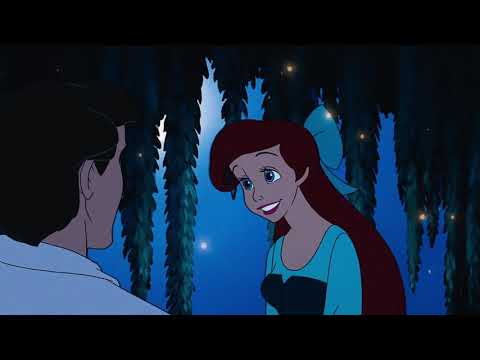
The Little Mermaid (1989) - animated film - not diegetic. Lagoon boat sequence (approx mid-film). The number turns side characters into matchmakers: music and staging do the talking for Ariel, whose silence is the dramatic catch that makes every cue feel urgent.
This is one of those Disney numbers that works like stagecraft you can dance to. The groove says "party," but the structure says "clock." Menken and Ashman build a little persuasion machine: verse after verse of friendly pressure, each chorus coming back with a slightly tighter screw. The joke is that the crab is the most romantic person in the scene, and the brilliance is that the music never breaks character while it hustles the plot forward.
The rhythm is the engine. Calypso is not just a flavor tag here - it is how the song flirts. The off-beat accents keep things buoyant, the percussion keeps it moving, and the ensemble responses make the whole lagoon feel in on the plan. Even if you are watching for the first time, you can sense the number's mission: get Eric to notice what is right in front of him, then get him to act before the moment slips away.
Key takeaways: (1) It is a comedy of timing disguised as romance. (2) The chorus is engineered for crowd memory, but the verses contain the real persuasion. (3) The arrangement treats nature like a backup choir, which is why the scene feels bigger than the boat.
Creation History
Written by composer Alan Menken and lyricist Howard Ashman, the song was created for Disney's late-1980s push to rebuild the animated musical as pop theater. The recording is tailored to performance: crisp diction, punchy ensemble replies, and a tempo that lets the scene cut between close-ups, animal choreography, and the ever-ticking romantic deadline. The official video presentation popularized it beyond the film, helping it travel as a standalone classic in Disney compilations, sing-alongs, and stage editions.
Song Meaning and Annotations
Plot
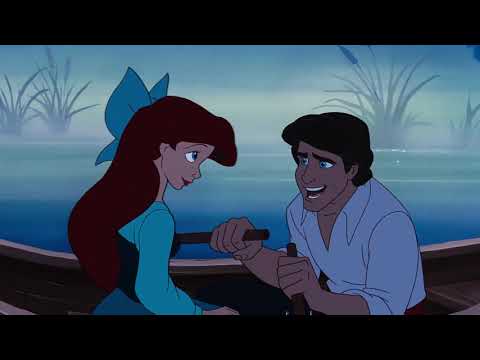
Ariel and Eric share a fragile window of time: she needs a kiss to break a deal's trap, but she cannot speak. Sebastian tries to manufacture romance on cue, recruiting animals and atmosphere to create the perfect moment. The comedy comes from the gap between setup and follow-through - every time the mood lands, something knocks it sideways. By the end, the song has done its job even without a kiss: it makes the audience feel how close the story is to turning.
Song Meaning
On the surface, it is a playful prompt - a friend telling a hesitant guy to stop overthinking. Underneath, it is about urgency and interpretation: reading signals, taking a risk, and trusting that tenderness can be mutual. The emotional arc runs from teasing confidence to real insistence, because the stakes are not just romance - they are Ariel's autonomy and future. That double layer is why the number keeps sparking debate in later decades: it is charming persuasion, but it sits on top of a plot where one character's voice has been taken away. As stated in a 2023 Vanity Fair interview with Menken, that tension is part of why later wording was revisited.
Annotations
"There you see her, sitting there across the way."
This opening is stage direction in lyric form. It frames Ariel as visible but unreachable, which is a neat trick: the camera can show her clearly while the story insists Eric is still missing the obvious.
"You know you want to kiss the girl."
Notice the certainty. The lyric does not ask what Eric feels; it declares it. That boldness is comic, but it also reveals Sebastian's role as a dramaturg - he is writing the scene while it happens.
"It do not take a word."
This line is the song's tightrope. In 1989, it reads like romantic shorthand. With Ariel unable to speak, it also lands as narrative irony. That is the exact pressure point later adaptations have tried to soften without losing the song's swing.
Genre and groove
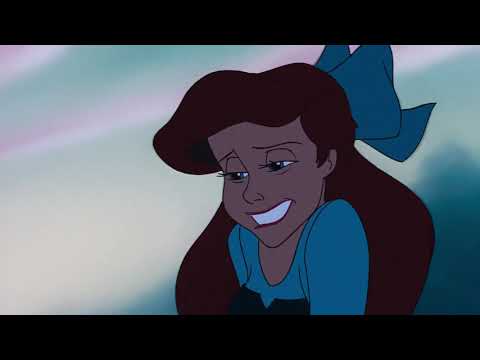
The calypso influence is doing more than setting a seaside mood. It supplies a social feeling - like the whole community is dancing behind the couple - and it makes the instruction ("do it, now") feel like a celebration instead of a lecture. The chorus hits like a chant, but the verses keep the narrative nimble, slipping between observation, encouragement, and mild heckling.
Emotional tone
There is comedy in the bustle, but the tone is warmer than it pretends to be. You can hear the caretaking in the phrasing: the crab is anxious, but he is also rooting for Ariel like family. The song's sweetness comes from that protective impulse, a classic musical-theater move: make the supporting character sing the feelings the lead cannot voice.
Symbols and staging
Lanterns, moonlight, and a "choir" of animals are not just cute visuals - they are a metaphor for consensus. Everything around the couple says "this is the moment." In narrative terms, nature becomes peer pressure with good intentions. The scene almost plays like a romantic heist: the team assembles, the plan is flawless, and then the universe improvises.
Technical Information
- Artist: Samuel E. Wright (as Sebastian)
- Featured: Ensemble (chorus and scene vocals)
- Composer: Alan Menken
- Producer: Alan Menken; Howard Ashman; Robert Kraft
- Release Date: October 19, 1989
- Genre: Calypso; pop; musical theater
- Instruments: Vocals; percussion; brass and winds; strings; rhythm section
- Label: Walt Disney Records
- Mood: Flirtatious; urgent; playful
- Length: 2:43
- Track #: 10 (on common soundtrack editions)
- Language: English
- Album: The Little Mermaid: Original Motion Picture Soundtrack
- Music style: Caribbean-leaning pop with ensemble call-and-response
- Poetic meter: Mostly conversational accentual verse with refrain-driven hooks
Questions and Answers
- Who is actually singing in the original film version?
- It is Sebastian, voiced by Samuel E. Wright, with an ensemble that makes the lagoon feel like a full cast number.
- Why does the song feel like a push rather than a duet?
- Because it is written as encouragement. Ariel is the silent center of the scene, so the supporting character sings the momentum for her.
- What makes the hook so sticky?
- The refrain is short, repeated, and slightly varied across sections - a musical-theater trick that keeps the chorus familiar while raising urgency.
- Is it purely calypso?
- It borrows calypso rhythm and social energy, then frames it with pop-friendly harmony and Broadway-style pacing.
- Why did the 2023 remake tweak some lines?
- Menken has said the team responded to modern concerns about consent, since the original scene involves a heroine who cannot speak.
- Did it get performed at the Oscars?
- Yes - the 62nd Academy Awards featured a performance linked to the film's nominated songs, with Geoffrey Holder associated with that presentation.
- What is the song really about, beyond romance?
- It is about timing and courage: recognizing a mutual moment and risking a small leap before the story's countdown closes the door.
- Why do animals show up as backup singers?
- On screen it is spectacle; structurally it is peer pressure with a smile. The environment itself becomes an argument for love.
- How did it travel into pop culture outside the film?
- Through soundtrack reissues, sing-alongs, and covers - including UK chart action in the late 1990s and teen-pop Disney compilations in the 2000s.
- Does the Broadway version change the musical feel?
- Stage versions tend to broaden the ensemble and punch up theatrical timing, while keeping the same Caribbean-leaning dance impulse.
Awards and Chart Positions
Disney had two serious contenders that season, and this one ended up as the runner-up to its sibling song. According to the Academy's official Oscars database, it received a Best Original Song nomination at the 62nd Academy Awards. The Golden Globes also nominated it in the same category, again up against the film's other breakout number.
| Year | Credit or Version | Milestone |
|---|---|---|
| 1990 | Original film song | Academy Awards - Best Original Song nomination (lost to "Under the Sea"). |
| 1990 | Original film song | Golden Globes - Best Original Song nomination (same category winner: "Under the Sea"). |
| 1998 | Peter Andre cover | UK Official Singles Chart peak: 9. |
| 2007 | Ashley Tisdale cover | Billboard Bubbling Under Hot 100 peak: 16 (week of April 14, 2007). |
How to Sing Kiss the Girl
Most singers meet it in C major, with a danceable tempo around 135 BPM and a practical range often cited around A3 to C5. Stage and backing-track materials also circulate in multiple keys (common options include Ab major and nearby transpositions), which is a gift if you want to tailor it to your voice.
- Lock the tempo first: Practice with a metronome near 135 BPM. The trick is staying light on the beat - do not stomp it like a march.
- Diction over volume: The lyric is fast conversational theater. Keep consonants crisp, especially in the setup lines that lead into the refrain.
- Breathing plan: Mark quick refills before longer phrases. Think "sip breaths" rather than big gasps, so you do not sound frantic.
- Ride the call-and-response: Even solo, imagine the ensemble answering you. Let your phrasing leave space for that invisible chorus.
- Accent the groove: Put gentle emphasis on off-beats and syncopations. It should feel like dancing while you talk.
- Character choice: Decide if you are the anxious matchmaker, the narrator, or a party host. Your tone changes everything.
- Mic and mix: Keep peaks controlled on the chorus. Aim for bright speech-like tone rather than belting.
- Common pitfalls: Rushing the verses, swallowing consonants, and over-singing the hook until it turns heavy.
- Practice materials: Use a backing track in your best key, then rehearse with the original tempo and one slower pass (about 120 BPM) to clean up rhythm and words.
Additional Info
The song has a second life as a pop cover magnet. Peter Andre took it into the UK Top 10 in 1998, turning the lagoon flirtation into late-1990s radio sheen. Ashley Tisdale later recorded a teen-pop version tied to Disney compilation culture, and it even made a brief appearance on Billboard's Bubbling Under chart.
It also adapts cleanly to new textures. Brian Wilson recorded it for In the Key of Disney, and critics noted how his arrangement choices treat the material like classic American pop craft. If you have ever wondered why the melody holds up outside animation, that is a strong exhibit.
On the prestige-TV side of award-season memory, the 1990 Oscars presentation for the film's nominated songs became its own little artifact of the era, with Geoffrey Holder associated with the show performance. And on stage, the Broadway cast recording preserved the number in a more explicitly theatrical frame, keeping the same teasing engine while broadening the ensemble feel.
Key Contributors
| Entity | Relationship | Work or Role |
|---|---|---|
| Alan Menken | composed | Music for the song; also wrote the film score. |
| Howard Ashman | wrote | Lyrics for the original film version. |
| Robert Kraft | produced | Song production on key soundtrack editions. |
| Samuel E. Wright | performed | Original vocal performance as Sebastian. |
| Walt Disney Records | released | Soundtrack and later reissues. |
| The Little Mermaid (1989 film) | featured | Lagoon boat sequence built around the song. |
| The Little Mermaid (2023 film) | reinterpreted | Updated lyrical framing discussed in press interviews. |
| The Little Mermaid (stage musical) | adapted | Broadway and licensed stage versions include the number. |
| Peter Andre | covered | 1998 UK hit cover. |
| Ashley Tisdale | covered | 2000s Disney compilation era version. |
| Brian Wilson | covered | Album cut on In the Key of Disney. |
| Geoffrey Holder | performed | Associated with the Oscars presentation of the nominated songs. |
Sources: Oscars official site (62nd Academy Awards), Golden Globes official site (The Little Mermaid), Vanity Fair (Alan Menken interview, March 2023), Billboard (Bubbling Under Hot 100, April 2007), Official Charts Company (Peter Andre chart stats), Discogs (soundtrack and album tracklists), Tunebat (key and BPM), Singing Carrots (vocal range), AV Club (Brian Wilson album review)