
One Jump Ahead (Alladin) Lyrics
One Jump Ahead (Alladin)
Aladdin:Gotta keep
One jump ahead of the breadline
One swing ahead of the sword
I steal only what I can't afford
( That's Everything! )
One jump ahead of the lawmen
That's all, and that's no joke
These guys don't appreciate I'm broke
Crowd:
Riffraff! Street rat! Scoundrel! Take that!
Aladdin:
Just a little snack, guys
Crowd:
Rip him open, take it back, guys
Aladdin:
I can take a hint, gotta face the facts
You're my only friend, Abu!
Crowd:
Who?
Ladies:
Oh it's sad Aladdin's hit the bottom
He's become a one-man rise in crime
I'd blame parents except he hasn't got 'em
Aladdin:
Gotta eat to live, gotta steal to eat
Tell you all about it when I got the time!
One jump ahead of the slowpokes
One skip ahead of my doom
Next time gonna use a nom de plume
One jump ahead of the hitmen
One hit ahead of the flock
I think I'll take a stroll around the block
Crowd:
Stop, thief! Vandal!
Aladdin:
Abu!
Crowd:
Scandal!
Aladdin:
Let's not be too hasty
Lady:
Still I think he's rather tasty
Aladdin:
Gotta eat to live, gotta steal to eat
Otherwise we'd get along
Crowd:
Wrong!
Aladdin:
One jump ahead of the hoofbeats
(Vandal!)
One hop ahead of the hump
(Street rat!)
One trick ahead of disaster
(Scoundrel!)
They're quick, but I'm much faster
(Take that!)
Here goes, better throw my hand in
Wish me happy landin'
All I gotta do is jump
Song Overview
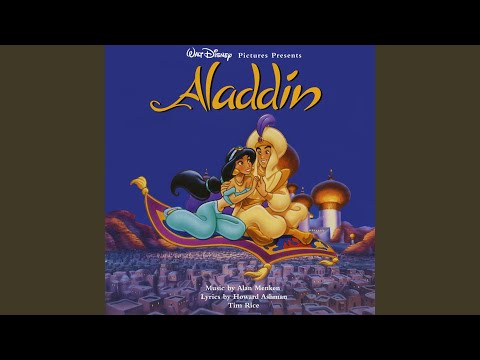
Review and Highlights
Quick summary
- Work: Aladdin (1992 animated feature), marketplace chase sequence.
- Main vocal: Brad Kane as Aladdin's singing voice, with crowd responses.
- Songwriters: Alan Menken (music) and Tim Rice (lyrics).
- Also exists as: a reprise, plus later screen and stage adaptations.
- Signature idea: a streetwise character intro that runs on comic momentum.
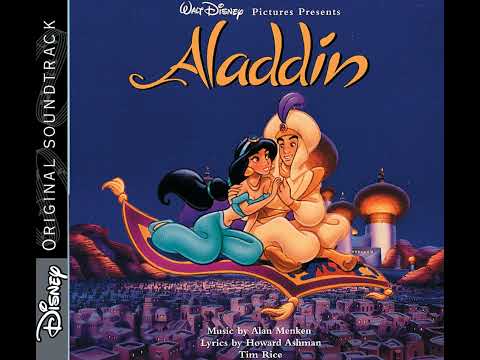
Aladdin (1992) - animated film - diegetic. Marketplace escape, begins about 00:07:37, with the crowd heckling and the guards closing in, then shifts into acrobatics and near-misses by about 00:09:20. The point is not just speed - it is reputation management, the city narrating him in real time.
This number is built like a pocket-sized Broadway sprint: clipped phrases, quick internal rhymes, and a call-and-response chorus that behaves like street signage. The melody keeps hopping back to a bright center, almost daring you to relax - then the accompaniment shoves you forward again. If you listen closely, the orchestration feels like it is doing stage blocking: little punctuations for turns, chases, and a grin over the shoulder.
According to AllMusic, the track sits in that classic show-tune lane, with the kind of manic pep that makes a character introduction feel like a small athletic event. That is exactly why it works: you learn his ethics and his hunger without a lecture, because the beat refuses to stop long enough for him to pretend otherwise.
Key Takeaways
- Character in motion: he sells you on charm while the city tries to write him off.
- Chorus as social pressure: the crowd commentary functions like a second antagonist.
- Comedy with consequence: jokes land, but the chase never feels harmless.
- Hook as survival math: every phrase is a quick calculation - escape, eat, repeat.
Creation History
Menken and Rice shape the piece as a character entrance that doubles as choreography, even when the scene is animated. In a Disney D23 interview around the 2019 remake, Menken described the animated version as "vaudevillian", while noting the later film leaned into "more of a chase than a dance". That one sentence explains the tune's DNA: showbiz sparkle strapped to a getaway route.
Song Meaning and Annotations
Plot
A loaf of bread becomes the fuse. Aladdin slips, ducks, jokes, and scrambles through the marketplace, with Abu as co-conspirator and the guards as the clock. The city talks back: vendors, onlookers, and would-be moralists label him as they chase him. The reprise that follows turns inward, where bravado thins and ambition pokes through the cracks.
Song Meaning
The surface is simple: keep moving, keep eating, keep living. The deeper point is identity under surveillance. He is poor, but the song is not poverty tourism; it is a portrait of improvisation, the kind you learn when every day is a negotiation with hunger and authority. The mood stays cheeky because cheek is a tool - he cannot afford despair in public.
Annotations
"Gotta keep one jump ahead of the breadline."
Eight words, and the whole moral argument is there: this is not greed, it is logistics. The rhyme is catchy, but the setup is bleak if you let it sit for a second.
"More of a chase than a dance."
Menken's description of the remake is also a reading guide for the original: the number is choreography disguised as survival. Even when it feels playful, the engine is pursuit.
"One Jump Ahead. Music by Alan Menken. Lyrics by Tim Rice. Performed by Brad Kane."
That credit line matters because the song is often remembered as pure character comedy. The official billing pins it to a specific late-production songwriting team, after the film's musical direction shifted during development.
Genre and rhythm
Call it show-tune craft with cinematic pacing. The rhythm has that skipping, ducking quality - the vocal line darts, the band answers, and the chorus throws verbal tomatoes. The fusion is the trick: Broadway-style patter meets animation-era orchestral punch.
Arc and cultural touchpoints
The arc is confidence to vulnerability, with the reprise hinting at the dream beneath the hustle. Culturally, it leans on older stage idioms (patter, crowd interjections, quick modulations of mood) and drops them into a marketplace that behaves like a chorus from classic theatre. I have always liked how it borrows the "city as character" idea without turning the crowd into saints - they are messy, funny, and occasionally cruel, like crowds tend to be.
Symbols and phrases
"Breadline" is not just hunger, it is the boundary of who gets to belong. "One jump ahead" becomes a worldview: progress as evasion. The phrase is hopeful and exhausting at the same time, which is why it sticks.
Technical Information
- Artist: Brad Kane
- Featured: Ensemble voices (marketplace crowd), character responses from guards
- Composer: Alan Menken
- Producer: Alan Menken; Tim Rice
- Release Date: October 27, 1992
- Genre: Show tune; Stage and Screen
- Instruments: Lead vocal; chorus; orchestra (brass, reeds, strings, percussion)
- Label: Walt Disney Records
- Mood: Fast-paced; sly; kinetic
- Length: 2:22
- Track #: 3 (Aladdin: Original Motion Picture Soundtrack)
- Language: English
- Album: Aladdin: Original Motion Picture Soundtrack
- Music style: Patter-driven show writing with chase-scene orchestration
- Poetic meter: Mostly iambic-leaning patter with frequent anacrusis and spoken-like pickups
TL-DR: A chase-song character intro - bright G major energy, around 124 BPM, with a crowd chorus that turns the marketplace into a running commentary.
Questions and Answers
- Who is the main vocalist in the 1992 recording?
- Brad Kane performs the lead vocal as Aladdin's singing voice, while the scene uses crowd and guard responses to make the city part of the arrangement.
- Where does the song land in the film's story?
- It arrives early, right after the opening atmosphere-setting music, to establish Aladdin as clever, hungry, and always one step from getting caught.
- Is it diegetic or non-diegetic?
- It plays as diegetic: characters react mid-chase, and the marketplace voices answer him as if the number is happening inside the scene.
- What is the hook really saying?
- That survival is measured in small advantages. The hook turns daily scarcity into a repeating strategy, not a speech.
- Why does the chorus sound like heckling?
- Because it is. The chorus functions as public judgment, turning rumor into rhythm and making his escape a social spectacle.
- How did the 2019 version change the feel?
- Menken framed the remake approach as less dance-like and more chase-driven, which nudges the number toward grit while keeping the melodic identity intact.
- Is it part of the stage adaptation?
- Yes. The Broadway show and youth editions keep it as a key early showcase, because it gives the lead a fast, physical calling card.
- Why does it feel shorter than it is?
- The phrasing is compressed and forward-leaning, and the scene keeps cutting to new obstacles, so your ear registers it like a montage.
- What is the musical theatre trick hiding in plain sight?
- It is a character song that doubles as scene-setting. You learn the town's hierarchy, the guards' threat level, and his moral code in one run.
- Does the reprise change the meaning?
- It softens the mask. The reprise points toward the bigger dream, so the earlier bravado reads as a practiced defense.
How to Sing One Jump Ahead
If you want to perform it cleanly, treat it like patter with parkour. Most audio-analysis listings place it in G major at about 124 BPM, with steady 4/4 drive. The commonly cited melody range for the stage-style reading sits around B2 to A4, though productions transpose as needed.
- Tempo first: Practice at 70 percent speed, then climb in small steps. At full tempo, you cannot fix consonants after the fact.
- Diction: Consonants are your drum kit. Aim for crisp T, K, and D without biting the vowel. Fast does not mean tight-throated.
- Breathing plan: Mark breaths like choreography. Take quick, silent sips, especially before longer patter strings.
- Flow and rhythm: Keep the pulse in your body. Tap heel or shift weight subtly in rehearsal so the groove stays physical.
- Accents and character: Let the smile live in the sound, but do not overplay it. The bravado is a shield, not a joke.
- Ensemble timing: If you have a chorus, drill the call-and-response like dialogue. The crowd lines must land like a coordinated heckle.
- Mic and space: On mic, back off for the loudest consonants to avoid pops. Unmic'd, aim the sound forward and keep jaw loose.
- Pitfalls: Rushing ahead of the accompaniment, swallowing words, and turning the whole thing into shouting. Speed comes from support, not force.
- Practice materials: Run it as spoken text on a metronome, then add pitch. Finally, sing it while doing light movement to simulate chase energy.
Additional Info
The tune has an unusually visible second life because Aladdin itself keeps getting reintroduced. The Broadway production explicitly includes it among the film carryovers, and the youth editions build whole staging beats around the marketplace escape. Then the 2019 remake re-records the moment with a new lead, keeping the melodic identity while shifting the physical vibe, as Menken discussed in D23. On top of that, the Walt Disney Records reissue cycle means listeners may meet different masters and editions, including a major anniversary expansion in 2022 that put the track back in circulation for collectors.
Screen and Media Placements: Beyond the 1992 film scene, the number appears in the live-action remake (with Mena Massoud on the soundtrack), and it remains a staple in the stage and school-licensed versions, where it functions as the first major sprint for the lead.
Key Contributors
| Entity | Type | Relationship (S-V-O) |
|---|---|---|
| Alan Menken | Person | composed the music for the song |
| Tim Rice | Person | wrote the lyrics for the song |
| Brad Kane | Person | performed the lead vocal as Aladdin's singing voice |
| Walt Disney Records | Organization | released the soundtrack album that contains the track |
| Aladdin (1992) | Work | features the song during the marketplace escape sequence |
| Aladdin (2019) | Work | re-recorded the number for the live-action adaptation soundtrack |
| Aladdin (stage musical) | Work | includes the song as an early character showcase |
Sources: IMDb soundtrack listing for Aladdin (1992), Disney D23 interview with Alan Menken (May 2019), Wikipedia - Aladdin (1992 soundtrack) track listing and release history, SubtitleCat timecodes for Aladdin (1992), Broadway.com show FAQ, MTI Shows - Disney's Aladdin Jr and Kids, Tunebat audio analysis listings, AllMusic track entry and 2019 soundtrack entry