
On the Front Porch (Summer Magic) Lyrics
On the Front Porch (Summer Magic)
Three creaky wooden stairsThose squeaky rocking chairs
The well worn welcome mat
The lattice vines
The happy times
All I want to do
When the day is through
Is linger here on the front porch
With you
From the wicker swing
While the night birds sing
We'll watch the fireflies sparkin'
Do some sparkin' too
How the hours fly
As the moon drifts by --
How sweet the air
As we stare
At the sight
Oh! How I love to linger here like this
Hold your hand, and steal a kiss
Or two
On the front porch with you
All I want to do
When the day is through
Is linger here on the front porch
With you
From the wicker swing
While the night birds sing
We'll watch the fireflies sparkin'
Do some sparkin' too
(Some sparkin' too!)
How the hours fly
As the moon drifts by --
How sweet the air
As we stare
At the sight
Oh! How I love to linger here like this
Hold your hand, and steal a kiss
Or two
On the front porch with you
Song Overview
Review and Highlights
Quick summary
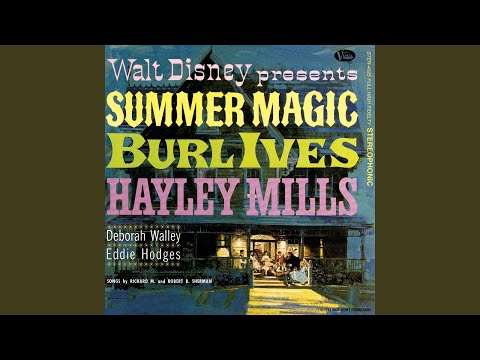
- Work: A homespun ensemble number from the 1963 Disney live-action musical Summer Magic.
- Lead voice: Burl Ives, written to suit his folksy warmth, with the cast joining in.
- Function in story: A diegetic porch sing that turns a house into a home and neighbors into a chorus.
- Songwriters: Richard M. Sherman and Robert B. Sherman.
- Release footprint: Issued on the film soundtrack and as a 45 paired with "The Ugly Bug Ball."
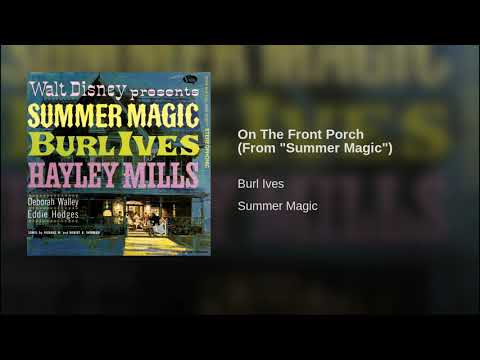
Summer Magic (1963) - film - diegetic. A front-porch sing-along with Burl Ives leading and the household joining in, late in the picture (runtime placement varies by cut). It matters because the camera stops chasing plot for a moment and lets community do the heavy lifting: the porch becomes a stage, and belonging becomes the point.
Musically, it is a slow-roll folk-pop lullaby with the cadence of conversation. The hook does not punch, it leans. Each line feels like it was written to travel comfortably across a rocking chair, not a spotlight. That is the trick: the melody is plain enough to invite a group, but shaped enough to keep the scene from turning into background noise. I have heard flashier Sherman constructions, but this one knows when to keep its hands in its pockets.
Key takeaways: This is a character song disguised as a communal sing. Burl Ives does not belt or polish - he hosts. The harmonies do not compete with him, they validate him, like neighbors answering from the next step over.
Creation History
The Sherman Brothers wrote several numbers for Summer Magic once Burl Ives was in the cast, and the song was shaped as a custom fit for his persona, as stated in the D23 feature on the film. Production-wise, it plays like a staged spontaneity: guitar-forward, chorus-ready, and filmed to make the audience feel like they have been offered a seat, not sold a performance.
Song Meaning and Annotations
Plot
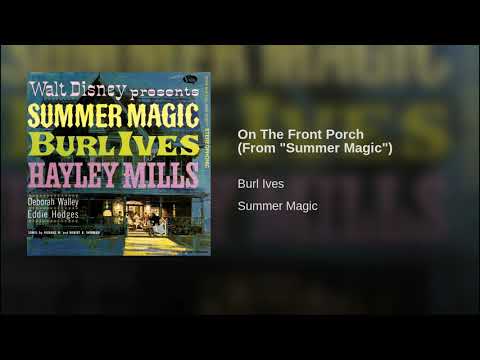
In the world of Summer Magic, a financially humbled family tries to restart life in a small New England town where manners can be as sharp as they are welcoming. The porch number lands after the story has done its social sorting: who belongs, who is bluffing, who is falling in love, and who is quietly terrified of being left out. The song pauses the machinery of conflict and lets domestic peace arrive on foot.
Song Meaning
The porch is the central symbol: not private like a bedroom, not public like the street. It is the in-between space where a community can gather without paperwork. The lyric imagery stacks ordinary objects into a philosophy - stairs, chairs, worn boards - turning the architecture of daily life into a promise that tomorrow can be kinder than today. The singer is not arguing for love in grand terms; he is pointing at the place where love routinely shows up.
Annotations
Three creaky wooden stairs
That opening image is a mission statement. The song does not romanticize wealth or novelty; it elevates wear. "Creaky" is not a flaw here, it is proof that people have been coming and going, and that the house has held steady through it all.
Those squeaky rockin' chairs
Rocking chairs suggest time that is not being spent efficiently. That is the joke and the comfort: the best things in this town are not optimized. They are repeated.
Hold your hand and steal a kiss
In a film that enjoys polite social surfaces, this line sneaks in a private spark. It is playful, a little daring, and still safe enough to sing in a group - the classic porch compromise.
Genre and rhythm
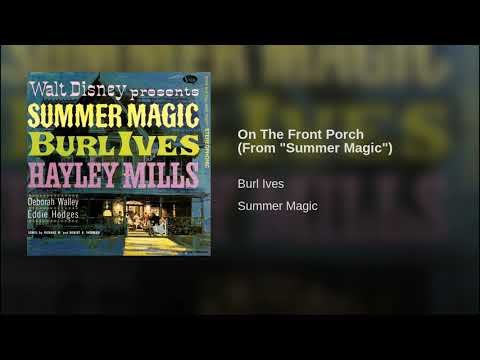
The style blends folk storytelling with light soundtrack polish. The rhythm sits back, giving the cast room to phrase like they are speaking to each other rather than aiming for a studio-perfect unison. That relaxed pocket is why the number reads as believable, not staged.
Emotional arc without the big speech
It starts with objects, moves into shared ritual, and ends up at intimacy. The arc is domestic: a song about a place becomes a song about a life. No sermon, just a slow widening of the circle.
Cultural touchpoints
Front-porch singing is an American shorthand for small-town sociability, and the film leans into that shorthand with confidence. The porch becomes a public square you can sweep, a stage you do not have to rent, a place where stories can be traded like pie plates.
Technical Information
- Artist: Burl Ives
- Featured: Cast ensemble (film performance)
- Composer: Richard M. Sherman; Robert B. Sherman
- Producer: Not consistently credited across releases
- Release Date: May 1963 (single, Buena Vista Records); July 7, 1963 (film release in the United States)
- Genre: Film soundtrack; folk-pop ensemble
- Instruments: Acoustic guitar; group vocals
- Label: Buena Vista Records (single); Walt Disney Records (soundtrack reissues)
- Mood: Neighborly; reflective; courtship-ready
- Length: About 3:27 (soundtrack track timing varies by edition)
- Track #: Appears on the Summer Magic soundtrack track list (position varies by release)
- Language: English
- Album (if any): Summer Magic (Original Motion Picture Soundtrack)
- Music style: Folk-inflected soundtrack ballad
- Poetic meter: Predominantly conversational iambic feel with sung-speech flexibility
Questions and Answers
- Who actually leads the performance in the film?
- Burl Ives carries the lead as Osh Popham, with the cast joining in as the number opens up into a porch-sized chorus.
- Is the song diegetic or background score?
- It is diegetic - the characters sing it in-scene, which is why it feels like a social ritual rather than a montage cue.
- Why does the setting matter so much?
- The porch is a threshold space: public enough for neighbors, private enough for closeness. The lyric uses that geography to turn place into meaning.
- What makes this a Sherman Brothers song even without fireworks?
- Craft: the tune is singable on first pass, the lyric imagery is concrete, and the scene function is clean - it belongs to the story rather than sitting on top of it.
- Was it written with Burl Ives in mind?
- Yes. D23 notes the song was composed especially for him, which explains the relaxed folk delivery and the host-like phrasing.
- How does it contrast with the bigger showpiece songs in the film?
- Where novelty numbers play for spectacle, this one plays for credibility. It sells the town as lived-in, not just decorated.
- Does the song connect to the film's romance plots?
- Quietly. Lines about hand-holding and stolen kisses let romance surface in a communal setting, which fits a story where courtship is always half-private.
- Why do listeners remember it even if they forget plot details?
- Because it packages a feeling - summer-night safety - into a handful of objects you can picture. Memory likes pictures.
- Is there a notable cover?
- Michelle Shocked recorded a version that surfaces on discographies and library listings, showing how the tune can travel outside its original film context.
- Where can you find the official credit line?
- IMDb lists it under the film's soundtrack as written by the Sherman Brothers and sung by Burl Ives and cast.
Additional Info
The song has lived a double life: as a narrative porch moment in the film and as a piece of Disney catalog infrastructure. On record, it appeared as a 45 paired with "The Ugly Bug Ball," and at least one reference discography notes the single used shorter, alternate edits compared to the album versions. That kind of detail matters if you are chasing the version you heard first - sometimes the memory is the edit.
It also pops up on later compilations of Disney songs, where its plainspoken charm works like a palate cleanser between flashier, later-era numbers. According to the AFI Catalog, the film itself had a healthy theatrical life in 1963, and that context helps explain why these songs were pressed, promoted, and repackaged for years.
Trusted-source note: As stated in the D23 film write-up, the song was composed especially for Burl Ives and counted among the Shermans' personal favorites, which tracks with how confidently it sits inside his comfort zone.
Key Contributors
| Entity | Type | Relationship |
|---|---|---|
| Burl Ives | Person | Performs the song in the film; leads the recorded track. |
| Richard M. Sherman | Person | Co-writes the song; shapes its folk-leaning melody and lyric cadence. |
| Robert B. Sherman | Person | Co-writes the song; anchors the imagery in everyday objects and rituals. |
| Summer Magic | Work | Film that features the song as an in-story performance. |
| Buena Vista Records | Organization | Issues the 1963 single paired with "The Ugly Bug Ball." |
| Walt Disney Productions | Organization | Produces the film that contextualizes the performance. |
Sources: D23 film feature on Summer Magic, D23 A to Z entry for Summer Magic, Disney Movies page for Summer Magic, AFI Catalog entry for Summer Magic, IMDb soundtrack page for Summer Magic, DisneylandRecords.com single discography page (F-419), Tunebat track analysis page, Apple Music album listing for Summer Magic soundtrack, Muziekweb library catalog entry referencing a Michelle Shocked cover