
Under the Sea (The Little Mermaid) Lyrics
Under the Sea (The Little Mermaid)
The seaweed is always greenerIn somebody else's lake
You dream about going up there
But that is a big mistake
Just look at the world around you
Right here on the ocean floor
Such wonderful things surround you
What more is you lookin' for?
Under the sea
Under the sea
Darling it's better
Down where it's wetter
Take it from me
Up on the shore they work all day
Out in the sun they slave away
While we devotin'
Full time to floatin'
Under the sea
Down here all the fish is happy
As off through the waves they roll
The fish on the land ain't happy
They sad 'cause they in their bowl
But fish in the bowl is lucky
They in for a worser fate
One day when the boss get hungry
Guess who's gon' be on the plate
Under the sea
Under the sea
Nobody beat us
Fry us and eat us
In fricassee
We what the land folks loves to cook
Under the sea we off the hook
We got no troubles
Life is the bubbles
Under the sea
Under the sea
Since life is sweet here
We got the beat here
Naturally
Even the sturgeon an' the ray
They get the urge 'n' start to play
We got the spirit
You got to hear it
Under the sea
The newt play the flute
The carp play the harp
The plaice play the bass
And they soundin' sharp
The bass play the brass
The chub play the tub
The fluke is the duke of soul
(Yeah)
The ray he can play
The lings on the strings
The trout rockin' out
The blackfish she sings
The smelt and the sprat
They know where it's at
An' oh that blowfish blow
Under the sea
Under the sea
When the sardine
Begin the beguine
It's music to me
What do they got? A lot of sand
We got a hot crustacean band
Each little clam here
know how to jam here
Under the sea
Each little slug here
Cuttin' a rug here
Under the sea
Each little snail here
Know how to wail here
That's why it's hotter
Under the water
Ya we in luck here
Down in the muck here
Under the sea
Song Overview
Review and Highlights
Quick summary
- Character-led showstopper: Sebastian tries to keep Ariel anchored to ocean life.
- Menken and Ashman lean into calypso pep with musical-theatre punchlines and call-and-response.
- Oscar winner at the 62nd Academy Awards ceremony, with a later GRAMMY win tied to visual-media songwriting.
- On stage, the Broadway adaptation famously shifted keys to fit different vocal types, turning it into a cast-athletics moment.
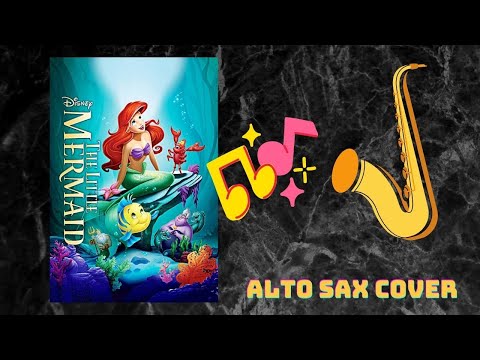
The Little Mermaid (1989) - animated film - diegetic. The underwater concert erupts as Sebastian tries to sell Ariel on the sea's everyday joys, with sea creatures turning the reef into a bandstand (approx. mid-film). Why it matters: it is persuasion disguised as a party, a character beat that says Sebastian will do anything - even stage a carnival - to keep Ariel safe.
The craft is sly. The melody bounces like a tightrope walker, never lingering long enough to let Ariel's longing for land take over. Menken lets the rhythm do the arguing: the groove keeps grinning, as if the beat itself is saying, "Why rush anywhere?" It is a classic Disney trick - deliver story information while your foot taps. I have heard plenty of film songs try this; few make it feel so effortless.
Key takeaways
- Rhythm as rhetoric: the pulse keeps the scene buoyant even when the subtext is protective and anxious.
- Comic detail as worldbuilding: the lyrics drop quick creature cameos like a travel brochure written by a nervous parent.
- Chorus engineering: ensemble answers and instrumental "chatter" make the ocean feel crowded in the best way.
Creation History
Written for Disney's 1989 film, the song pairs Alan Menken's Broadway-trained sense of payoff with Howard Ashman's sharp internal rhymes. The on-screen performance belongs to Samuel E. Wright, whose character voice lands somewhere between nightclub host and overworked advisor - a perfect match for the number's persuasive hustle. Later, the track took on a club afterlife via a 1990 remix single credited to "Sebastian C," a reminder that Disney has long understood how to let a show tune wander into other formats without losing its grin.
Song Meaning and Annotations

Plot
Ariel is restless, drawn toward the human world and the prince she has glimpsed. Sebastian, tasked with keeping her out of trouble, counters her curiosity with spectacle: he stages an underwater revue meant to prove that the sea is not a second choice, but the better life. The crowd joins in, the ocean "plays" along, and the argument arrives wrapped in celebration.
Song Meaning
The song is a sales pitch that doubles as a love letter to community. On the surface it brags about comfort, color, and carefree living. Underneath, it is Sebastian revealing his fear: land is danger, and Ariel is the kind of dreamer who runs toward danger with her eyes open. The calypso flavor matters because it frames persuasion as communal joy rather than scolding. The groove keeps the mood bright, but the mission is serious.
Annotations
-
"the seaweed is always greener"
A classic envy proverb, flipped into ocean logic. It is not just a joke - it is Sebastian diagnosing Ariel's restlessness as a human-style fantasy, even though she is not human.
-
"life is better down where it's wetter"
A sticky slogan with a practical agenda: repetition makes it feel like common sense. Official Charts later nodded to this line when discussing the track's modest UK chart appearance, proof that one hook can outswim its context.
-
"we got the spirit"
The phrase works like a choir cue. Even if Ariel is unconvinced, the community is, and the number frames the sea as a place where belonging is the default setting.
-
"each little clam here know how to jam here"
This is worldbuilding in one breath: every creature is cast as a musician. The ocean is not silent background - it is a working band.

Rhythm and style fusion
Menken uses a theatre-composer's instincts - clear sections, quick lift into the chorus, tidy tag lines - but he dresses them in Caribbean-leaning rhythm that feels like it belongs to a parade. That blend is the secret sauce: it keeps the song legible to a family audience while giving the reef a sense of real musical culture. If you listen closely, the arrangement is busy on purpose, like a street band where every player wants to be heard for a second.
Arc and character
The number starts as friendly persuasion, escalates into full-blown carnival, then ends without solving Ariel's problem. That is the point. Sebastian can throw the biggest party in the ocean and still lose the argument. The scene lets the audience enjoy the celebration while also clocking the tension: Ariel's desire is bigger than any chorus.
Technical Information
- Artist: Samuel E. Wright
- Featured: Chorus (ensemble sea creatures)
- Composer: Alan Menken
- Producer: Alan Menken, Howard Ashman
- Release Date: December 13, 1989
- Genre: Film song, musical theatre, calypso-pop
- Instruments: Vocal lead, chorus, percussion-led groove (stage and studio arrangements often feature marimba-like patterns and bright brass-leaning accents)
- Label: Walt Disney Records (soundtrack context), Hollywood Records (1990 remix single credit)
- Mood: Playful, persuasive, celebratory
- Length: 3:16
- Track #: Soundtrack placement varies by edition
- Language: English
- Album: The Little Mermaid: Original Motion Picture Soundtrack
- Music style: Show-tune structure with danceable Caribbean pulse
- Poetic meter: Mixed, speech-like phrasing with tight internal rhyme (suited to patter and call-and-response)
Questions and Answers
- Who is the narrator inside the story?
- Sebastian, acting as both court advisor and reluctant babysitter, performs the number as a persuasive intervention aimed at Ariel.
- Why does the song feel like a party instead of a lecture?
- Because the rhythm does the convincing. The upbeat pulse keeps the message light, letting persuasion arrive through celebration rather than scolding.
- What is the key dramatic irony of the scene?
- The reef throws its biggest celebration, yet the audience knows Ariel's desire for land will not be solved by a chorus, no matter how tight the groove is.
- How did the stage musical change the song for singers?
- Broadway versions transposed the number to suit different vocal types, turning it into a showcase that can sit higher than the film performance.
- Is there a notable remix history?
- Yes. A 1990 release credited to "Sebastian C" packaged multiple club-style mixes, a neat example of Disney letting a film song cross into dance formats.
- What makes the lyric writing stand out?
- Ashman stacks internal rhymes and quick characterful images, so each line moves story and paints the reef as a bustling community.
- Why has the song stayed popular in live concerts and theme-park settings?
- It is modular: you can scale it from a single singer and piano to a full parade of dancers, and it still lands as a celebration.
- How does the 2023 film context echo the original?
- The live-action adaptation keeps the number as a showpiece, reaffirming it as the story's big "stay here" argument delivered through spectacle.
- What is a smart acting objective when performing it?
- Not "be funny," but "win." Play it like you must convince Ariel right now, and let the humor spill out as a tactic.
- What is the biggest interpretive trap?
- Rushing the patter so hard that the groove disappears. If the rhythm stops smiling, the persuasion turns brittle.
Awards and Chart Positions
As stated on Oscars.org, the song won Music (Original Song) at the 62nd Academy Awards ceremony (held March 26, 1990). GRAMMY.com also notes it achieved the rare double of Oscar and GRAMMY recognition tied to visual-media songwriting.
| Category | Result | Year and details |
|---|---|---|
| Academy Awards - Music (Original Song) | Winner | 62nd ceremony, March 26, 1990 - Music by Alan Menken; Lyric by Howard Ashman |
| GRAMMY - Songwriting for visual media | Winner | Recognized as an Oscar-then-GRAMMY double (category naming varies by era) for the following awards year |
| UK Official Singles Chart | Peak: 90 | Artist credit: Sebastian C, chart run in November 1990 |
How to Sing Under the Sea
For a widely used musical-theatre reference point, ABRSM lists the song in B-flat with a suggested range of C4 to D5 for one published edition. For tempo practice, many modern listings place it around 99 to 100 BPM, which matches the number's quick, dance-forward feel.
Step-by-step
- Tempo first: Set a metronome near 100 BPM. Clap the offbeats for a full minute before singing, so the rhythm sits in your body.
- Diction: Treat the consonants like percussion. Crisp "t" and "k" sounds keep the patter readable without speeding up.
- Breathing: Plan breaths at the ends of thought units, not wherever you panic. The chorus can be loud, but it should not be breathless.
- Flow and rhythm: Do not iron the groove into straight eighth notes. Let the swing-like bounce live in the phrasing, especially in the lead-in lines.
- Accents: Pop the key words, then release. Over-accenting every syllable makes the persuasion sound desperate.
- Ensemble awareness: If you have a chorus, rehearse call-and-response like dialogue. The group is not decoration - it is Sebastian's proof that the sea agrees with him.
- Mic and projection: If amplified, keep the voice forward and speech-clear. If unamplified, aim for bright resonance over brute volume.
- Pitfalls: The big mistake is rushing the jokes. Hold the groove, land the rhyme, then move on.
Practice materials
- Sing it once on a neutral syllable (like "da") to lock rhythm without text.
- Mark the highest pitches in your copy and practice them softly first, then add character.
- Use a published edition that prints the range and key you need; ABRSM references a Musicnotes edition for one common cut.
Additional Info
Official Charts tells a funny footnote: despite its fame, the UK chart appearance was modest, peaking at 90 under the "Sebastian C" credit in 1990. That small data point says something larger about Disney music in the pre-streaming era: family favorites did not always behave like pop singles, yet the hooks still traveled by word of mouth, compilations, and import bins.
When the material moved to the stage, it gained new athletic demands. Broadway openings and concert stagings leaned into the number as a production centerpiece, and press coverage around the musical has long treated it as the "all-hands" moment where choreography, creature design, and vocal stamina meet.
Alan Menken, in a GRAMMY.com interview:"It has to be hummable."
That one-line rule explains why this song survives endless versions - school productions, cruise-ship shows, concert bowls, and live-action re-imaginings. The tune sticks, then the arrangement can change outfits as needed.
Key Contributors
| Entity | Type | Relationship statement (S-V-O) |
|---|---|---|
| Alan Menken | Person | Menken composed the music for the song and the film score. |
| Howard Ashman | Person | Ashman wrote the lyrics and shaped the storytelling voice. |
| Samuel E. Wright | Person | Wright performed the song in the 1989 film as Sebastian. |
| Walt Disney Records | Organization | Walt Disney Records released the soundtrack editions tied to the film. |
| Hollywood Records | Organization | Hollywood Records issued a 1990 remix single credited to Sebastian C. |
| Academy of Motion Picture Arts and Sciences | Organization | The Academy awarded Music (Original Song) at the 62nd ceremony to the work. |
| Recording Academy | Organization | The Recording Academy recognized the song in a visual-media songwriting category era. |
| Official Charts Company | Organization | Official Charts Company documented the UK chart run for the Sebastian C single credit. |
| Radio City Music Hall | Venue | Radio City Music Hall hosted the 33rd GRAMMY Awards ceremony (context for the era). |
| Dorothy Chandler Pavilion | Venue | Dorothy Chandler Pavilion hosted the 62nd Academy Awards ceremony. |
Sources: Oscars.org ceremony archive, GRAMMY.com feature on songs linked by GRAMMY and Oscar gold, Official Charts Company pages and editorial feature, ABRSM Singing for Musical Theatre syllabus, Wikipedia song entry, Wikipedia 2023 soundtrack entry, Discogs release listings, Tunebat key and BPM listing, Playbill Broadway opening report