
Bibbidi-Bobbidi-Boo (Cinderella) Lyrics
Bibbidi-Bobbidi-Boo (Cinderella)
Fairy GodmotherSalagadoola mechicka boola bibbidi-bobbidi-boo
Put 'em together and what have you got
bibbidi-bobbidi-boo
Salagadoola mechicka boola bibbidi-bobbidi-boo
It'll do magic believe it or not
bibbidi-bobbidi-boo
Salagadoola means mechicka booleroo
But the thingmabob that does the job is
bibbidi-bobbidi-boo
Salagadoola menchicka boola bibbidi-bobbidi-boo
Put 'em together and what have you got
bibbidi-bobbidi bibbidi-bobbidi bibbidi-bobbidi-boo
Song Overview
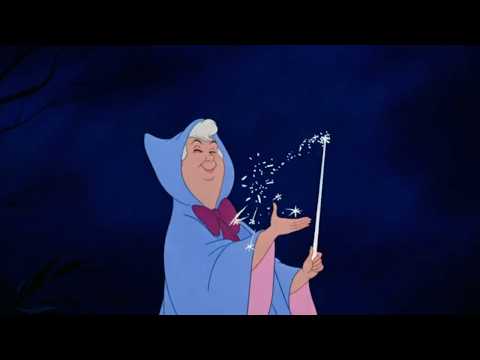
Review and Highlights
Quick summary
- Where it appears: Disney's animated Cinderella (1950), Fairy Godmother transformation sequence.
- Writers: Mack David, Al Hoffman, Jerry Livingston.
- Film performance: Verna Felton with chorus, presented as a character-led spell rather than a stand-alone show tune.
- Pop crossover: A 1949-1950 recording wave, including Perry Como with The Fontane Sisters, pushed the novelty hook onto U.S. charts.
- What makes it last: The nonsense syllables are not filler - they are percussion, punchline, and plot device in one breath.
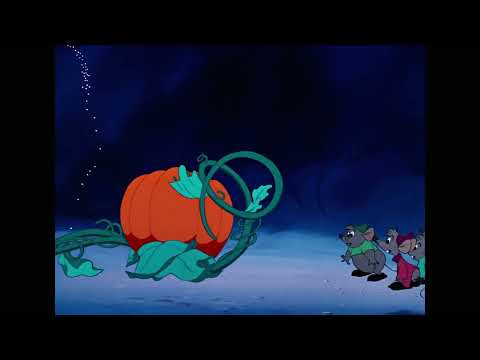
Cinderella (1950) - animated film - diegetic. Transformation set piece (approx 00:35:30-00:38:00, varies by cut). Fairy Godmother sings while she works the wand, turning household scraps into royal transport. The placement matters because the song is literally the mechanism: the magic is not scored around the scene, it is sung into existence.
This number is a studio-era novelty song dressed in chiffon. It bounces like light comedy, but it is engineered with a watchmaker's touch: short phrases, quick resets, and a chorus that can be repeated without wearing out its welcome. The trick is that the hook does not behave like a chorus from a romance ballad. It behaves like a chant, closer to a rhythmic tool than a confession. One minute you are hearing verbal glitter, the next minute you are watching a carriage appear.
Key Takeaways
- Hook as choreography: The syllables cue the animation beats, like a conductor tapping the podium for each visual gag.
- Comedy with craft: Under the wink, the melody is tightly shaped for singability, with clear cadences and friendly intervals.
- Pop elasticity: It can be sung by a character actor, a crooner, or a big-band vocalist without losing its central gimmick.
Creation History
Written in 1948 and recorded in late 1949 for the film pipeline, the tune arrived right when Disney needed a hit and the record business could still turn a movie song into a winter chart entry. On the film side, it is credited as a character performance, with Felton and ensemble support. On the pop side, it was quickly treated like novelty material that radio could slot between ballads. As stated in the Academy's official Oscars listing for the 23rd ceremony, it even reached the Best Original Song ballot, which tells you Hollywood did not hear it as a mere throwaway.
Song Meaning and Annotations
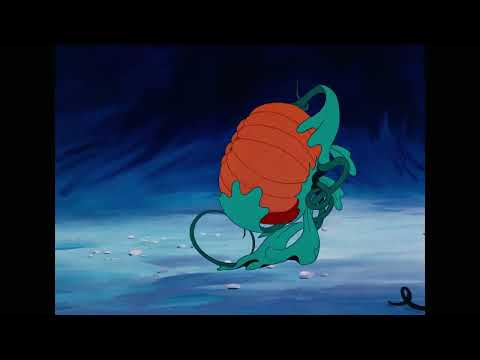
Plot
Cinderella is stuck with chores and no invitation to the ball. Fairy Godmother arrives, sizes up the situation, and decides to solve it on the spot. The song accompanies the transformation montage: pumpkin to carriage, mice to horses, pet to footman, rags to gown. The comedy is in the contrast: the problem is heavy, the solution arrives with sing-song confidence, and the visuals snap into place on cue.
Song Meaning
The meaning is practical: imagination becomes a technique. The lyric is not arguing that wishes come true; it is demonstrating how, with a wink. The nonsense syllables are a theatrical device that makes magic feel audible, like you could repeat the phrase at home and at least straighten your posture. The mood is buoyant, but it is also reassuring: help can arrive, and it can arrive with style.
Annotations
"Salagadoola menchicka boola"
A deliberate pile-up of sounds that sidesteps literal meaning. In the scene, that is the point: the audience does not need to understand the words, only the effect. The syllables act like sparks from the wand.
"Put them together and what have you got"
This is the sly part. The song pretends the spell is a recipe, as if magic is just good kitchen technique. That framing keeps the scene playful rather than ominous.
"Bibbidi-bobbidi-boo"
The hook works because it is built like rhythm more than language. It pops on the beat and leaves space for the animation to answer back. If you have ever found yourself tapping it on a table, you have already learned why it endures.
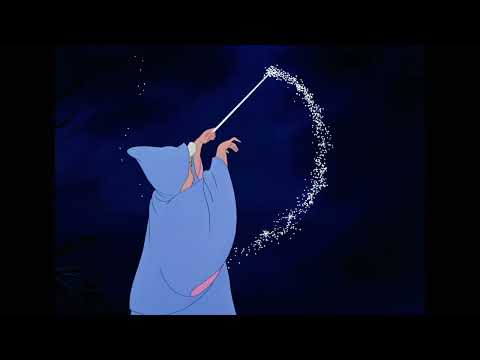
Rhythm and style fusion
It sits in the novelty tradition, but it borrows the clean, dance-ready bounce of late-1940s pop. That matters: you can imagine a bandstand version without changing the bones. The vocal line stays nimble, the harmony stays bright, and the refrain behaves like a drum fill.
Symbols and key phrases
The central symbol is the spell as confidence. The song treats transformation as an everyday craft, which is why audiences remember it as comfort music as much as comedy. The silliness is the disguise. Underneath is a firm promise: you are not stuck with what you have.
Appearances in Film/TV/Stage
Beyond the 1950 animation, Disney brought the tune back in the 2015 live-action Cinderella as an end-credits moment performed by Helena Bonham Carter. That choice reframes it as a curtain-call nod: less plot machinery, more affectionate signature.
Technical Information
- Artist: Verna Felton
- Featured: Disney Studio Chorus
- Composer: Jerry Livingston; Al Hoffman
- Lyricist: Mack David
- Release Date: February 15, 1950 (film release)
- Written: 1948
- Recorded: October 26, 1949 (film-era recording timeline commonly cited)
- Genre: Film song; novelty pop
- Instruments: Voice; chorus; studio orchestra
- Label: Film era: Walt Disney Productions (screen credit context); pop issues varied by label
- Mood: Playful; brisk; bright
- Length: About 1 minute 18 seconds to 1 minute 42 seconds (varies by release and edit)
- Track #: Varies by soundtrack edition
- Language: English
- Album: Cinderella (1950 film soundtrack context)
- Music style: Chant-hook refrain with danceable mid-century phrasing
- Poetic meter: Mixed, with strong trochaic snap in the refrain and conversational swing in the verse
Questions and Answers
- Who sings it in the animated film?
- Fairy Godmother is voiced by Verna Felton, and the screen credit context includes chorus support, keeping the sequence big and theatrical without turning it into a solo spotlight.
- Why are the “magic words” nonsense?
- Because the sound is the effect. The syllables let the music behave like sparks and smoke, so the audience feels the spell even without literal meaning.
- Is it a song or a piece of dialogue with melody?
- It is both. In scene terms it functions like dialogue, since it advances the action; musically it is a fully structured novelty tune with a repeating refrain engineered for memory.
- How did it become a pop hit outside the movie?
- The hook is easy to sing and easy to market. Crooner-era recordings turned it into a novelty single, and at least one major version reached the U.S. charts during the film's release window.
- Did Disney reuse it in later films?
- Yes, it returns in the 2015 live-action Cinderella as an end-credits performance by Helena Bonham Carter, more like a wink goodbye than a plot engine.
- What makes the melody feel so “forward”?
- Short phrases, quick cadences, and a refrain that resets fast. It is built to keep the montage moving, so it rarely lingers.
- Is the tune difficult for casual singers?
- In a comfortable key, not particularly. The challenge is articulation: the consonants and quick syllable strings need clarity without rushing.
- Why does it work so well with animation?
- Because the music leaves space for sight gags. The hook lands, the wand flick lands, the orchestra answers, and the visuals complete the joke.
- Does it have a “message” beyond fun?
- It smuggles reassurance into comedy: change is possible, help can arrive, and transformation can feel like play rather than punishment.
- Where else do people encounter the phrase today?
- In Disney Parks branding and references across pop culture, where the words often stand in for magic itself, even when the full song is not present.
Awards and Chart Positions
For a song built on nonsense syllables, it had serious institutional luck: it earned a Best Original Song nomination at the 23rd Academy Awards. In the record marketplace, crooner-era releases carried it onto major U.S. charts, with the most visible pop version peaking in the teens.
| Year | Category | Result | Notes |
|---|---|---|---|
| 1951 | Academy Awards - Best Original Song | Nominated | Nominated for Cinderella, credited to Mack David, Al Hoffman, and Jerry Livingston. |
| Recording | Chart | Peak | Notes |
|---|---|---|---|
| Perry Como with The Fontane Sisters | U.S. Billboard pop chart listing (Best Sellers era) | #14 | Commonly cited peak for the best-known pop version from the release period. |
| Jo Stafford and Gordon MacRae | U.S. Billboard pop chart listing (Best Sellers era) | #19 | Another early version that charted during the same window. |
How to Sing Bibbidi-Bobbidi-Boo
Reference metrics (arrangement-dependent): Audio-feature databases often list the classic soundtrack edit around 106 BPM and a concert key near A-flat major, while some later soundtrack and karaoke references list nearby keys such as B-flat. Vocal-range databases vary by arrangement, but a practical planning window for many singers is roughly F3 to G5 with transposition as needed.
- Tempo choice: Start slower than you think. Lock the tongue-twister syllables at a comfortable pace, then bring it up toward performance tempo once you can stay crisp.
- Diction drills: Speak the refrain rhythmically before singing it. Keep consonants clean, but do not over-punch them. The joke lands when it sounds effortless.
- Breath mapping: Mark quick “sip” breaths between short phrases. The hook is repetitive, and repetition can tempt you to run on fumes.
- Rhythm over vowels: Treat the nonsense syllables like percussion. Aim for even subdivisions, then add swing and character on top.
- Character voice: Decide what you are playing: grandmotherly warmth, theatrical mischief, or pop-novelty brightness. Each choice changes how much edge you give the consonants.
- Key strategy: If the top feels pinched, transpose down and keep the sparkle through articulation rather than pitch strain.
- Ensemble awareness: In group versions, tune the “answer” lines carefully. The charm comes from tight blend behind the lead.
- Performance pitfall: Rushing. The audience will laugh with you if the rhythm is stable. If you sprint, it sounds like homework.
Additional Info
One reason the song never fully leaves the culture is that it doubles as a phrase. Disney Parks even built a makeover brand around the title, which is a remarkable second life for a film cue: a piece of mid-century novelty writing turned into modern retail shorthand for transformation. And that word “transformation” is the key. It is not a love song, it is an action song, and that makes it unusually portable for parodies and callbacks.
Collectors also love its early recording history. According to SecondHandSongs, the first recording is traced to Jo Stafford and Gordon MacRae in 1949, and the cover list that follows reads like a quick tour of postwar pop. The tune was ready-made for crooners: short, playful, and impossible to get stuck in traffic without humming.
Key Contributors
| Entity | Type | Relationship (S-V-O) |
|---|---|---|
| Mack David | Person | David wrote lyrics for the song. |
| Al Hoffman | Person | Hoffman co-wrote the song. |
| Jerry Livingston | Person | Livingston co-wrote the song. |
| Verna Felton | Person | Felton performed the film character version. |
| Disney Studio Chorus | Organization | The chorus supported the film performance. |
| Cinderella (1950 film) | Work | The film used the song during the transformation sequence. |
| Academy of Motion Picture Arts and Sciences | Organization | The Academy nominated the song for Best Original Song. |
| Perry Como | Person | Como recorded a charting pop version. |
| The Fontane Sisters | Organization | The trio featured on the Como recording. |
| Jo Stafford | Person | Stafford recorded an early charting version. |
| Gordon MacRae | Person | MacRae co-recorded an early version with Stafford. |
| Helena Bonham Carter | Person | Bonham Carter performed the end-credits version in Cinderella (2015). |
| Bibbidi Bobbidi Boutique | Organization | The boutique brand borrows the title as shorthand for makeover magic. |
Sources: Academy Awards official ceremony listing, IMDb soundtrack credits, Disney official film page, SecondHandSongs cover database, MusicBrainz work credits, Perry Como discography references, TuneBat and Singing Carrots practice metrics