
Jolly Holiday (Mary Poppins) Lyrics
Jolly Holiday (Mary Poppins)
Ain't it a glorious day?Right as a mornin' in May
I feel like I could fly
'Ave you ever seen
The grass so green?
Or a bluer sky?
Oh, it's a jolly holiday
With Mary
Mary makes your 'eart so light
When the day is gray
And ordinary
Mary makes the sun shine bright!
Oh 'appiness is bloomin'
All around 'er
The daffoldils are smilin'
At the dove
When Mary 'olds your 'and
You feel so grand
Your 'eart starts beatin'
Like a big brass band
Oh, it's a jolly holiday with Mary
No wonder that it's Mary that we love!
Now then what'd be nice
We'll start with raspberry ice
And then some cakes and tea
Order what you will
There'll be no bill
It's complimentary
Oh, it's a jolly holiday
With you, Bert
Gentlemen like you are few
Though your just a diamond
In the rough, Bert
Underneath your blood is blue!
You'd never think of pressing
Your advantage
For bearance is the hallmark
Of your creed
A lady needn't fear
When you are near
Your sweet gentility is crystal clear!
Oh, it's a jolly holiday with you, Bert
A jolly, jolly holiday with you!
Song Overview
Review and Highlights
Quick summary
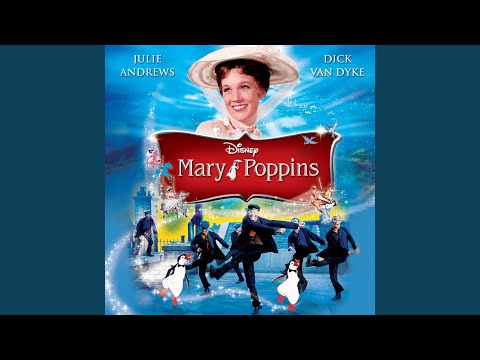
- Where it appears: Mary Poppins (1964), inside the chalk-drawing park fantasy that blooms into animated animals, penguin waiters, and carousel flair.
- Who performs it in the film: Dick Van Dyke as Bert with Julie Andrews as Mary Poppins, supported by vocal character parts in the fantasy world.
- What it does in the story: A trust-building duet that lets Mary and Bert model wonder as a practical skill, not a fluffy mood.
- Signature sound: Edwardian music-hall polish with playful tempo turns and a refrain designed to be repeated like a charm.
- Stage legacy: The 2004 stage musical retools the park sequence so the statues come alive and join the number, reshaping the scene without losing its bounce.
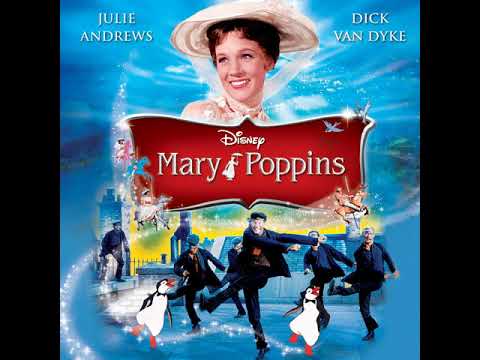
Mary Poppins (1964) - Film - diegetic, with fantasy staging. The song anchors the chalk-drawing outing: what begins as a stroll turns into a full-on music-hall pageant in pastel, with animals and penguin waiters behaving like a well-trained chorus line. It is placement-by-design: early enough to make Mary feel safe, late enough to prove the film can crack open reality and step through.
The number is deceptively clever. On the surface it is a bright compliment song, Bert praising the day and praising Mary, but the craft sits in how it keeps switching gears. Verses speak like patter, then the refrain lifts into a glide that feels half waltz, half showbiz stroll. I hear it as a hinge between worlds: soot-and-street London on one side, confectionary color on the other, with the melody acting like the key that fits both locks.
There is also a neat social trick. Bert is the working-class guide, Mary the mysterious authority figure, and the tune lets them meet as equals for a few minutes. When the refrain returns, it does not just repeat a compliment. It signals agreement: we are in this together, and the children can follow. As stated in the Walt Disney Family Museum blog, the Sherman Brothers built the scene by adding the Banks children into the pavement-picture chapter and then writing this song to make that leap feel inevitable.
Creation History
Richard M. Sherman and Robert B. Sherman wrote the song for Disney's 1964 film, shaping it to sit comfortably in a period music-hall frame while still landing as modern musical storytelling. The orchestral personality is often credited to Irwin Kostal's work as music supervisor and arranger, and the recording has circulated for decades through soundtrack reissues and digital releases. Later adaptations kept returning to it because it does not merely decorate the plot. It demonstrates Mary Poppins' method: turn the day into a game, and the game becomes a lesson.
Song Meaning and Annotations
Plot
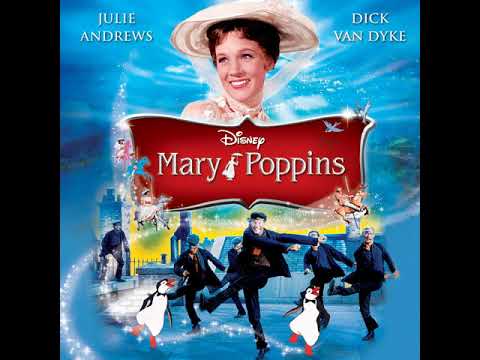
Bert takes Mary and the children to the park and invites them into his sidewalk art. Once the world flips into fantasy, the duet becomes the social glue for the whole sequence. Everyone in the imagined countryside joins in, the outing escalates into a staged celebration, and the characters step back out with the sense that something ordinary has been permanently re-labeled as possible.
Song Meaning
The meaning sits in the refrain's insistence: a fine day is not an accident, it is something you can actively make. Bert treats joy as a choice and a performance, while Mary treats it as a tool. The song is not about romance, even if it has flirtatious sparkle. It is about permission. Once Mary is framed as the reason the day feels lighter, the children understand her power is safe and, better yet, fun.
Annotations
"Mary makes your heart so light"
The phrase is sweet, but it also tells you the job description. Mary reduces emotional gravity. In a film about a family stuck in rigid roles, that is not decoration. It is the mission statement.
"When the day is gray and ordinary, Mary makes the sun shine bright"
This is the song's little engine of transformation: the day does not change first, the attitude does. The lyric sells a kind of practical optimism, the sort you can teach to children without sounding like a lecture.
"It's a jolly holiday with Mary"
The repeated line behaves like a chorus slogan. It is easy to sing, easy to remember, and it builds community inside the fantasy scene the way a music-hall crowd chant would.
Style and rhythm
Think music hall: bright phrasing, tidy rhyme, and a tempo that can flex for comedy. Even when you hear it as a straight soundtrack track, you can sense the choreography baked in. The accompaniment wants tap shoes, canes, and perfectly timed pauses.
Fantasy mechanics as meaning
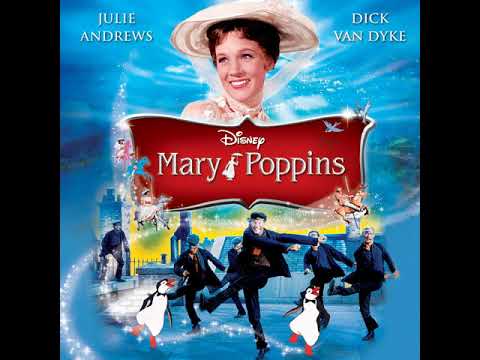
The animated animal voices and penguin waiter bits are not random ornaments. They externalize the idea that the environment responds to the characters' mood. The scene does what Mary does: it makes the world cooperate, at least long enough for the lesson to stick.
Technical Information
- Artist: Dick Van Dyke and Julie Andrews (film soundtrack performance)
- Featured: Character voices and ensemble parts in the fantasy sequence
- Composer: Richard M. Sherman; Robert B. Sherman
- Producer: Soundtrack production varies by edition; Irwin Kostal is widely credited as music supervisor and arranger for the film's music
- Release Date: 1964 (soundtrack era; major digital listings commonly date the track to August 27, 1964)
- Genre: Film musical; music-hall show tune
- Instruments: Lead vocals, supporting vocals, orchestra, period-style rhythm accents
- Label: Disneyland Records and later Walt Disney Records listings (varies by release)
- Mood: Sparkling, teasing, bright
- Length: About 5:24 on a widely circulated soundtrack track timing (edition-dependent)
- Track #: Varies by release configuration
- Language: English
- Album: Mary Poppins (Original Soundtrack)
- Music style: Edwardian music-hall flavor filtered through mid-century Hollywood orchestration
- Poetic meter: Accent-driven, conversational lines, built for sing-speak phrasing and refrain repetition
Questions and Answers
- What scene does the song anchor in the film?
- It drives the chalk-drawing park fantasy, where the outing shifts into a pastel performance world with animated characters and show-style staging.
- Is it a romance duet?
- It flirts, but its real function is trust and tone. Bert and Mary model how to choose wonder, giving the children a safe way to follow.
- Why does the refrain feel like a charm?
- Because it is built for repetition and group joining. Each return tightens the sense of agreement and shared mood.
- What gives it that period flavor?
- The phrasing and structure nod to Edwardian music hall, with patter-like verses and a refrain designed for theatrical lift.
- How did the stage musical adapt it?
- The 2004 stage version reworks the park scene so statues come alive and join the number, keeping the musical shape while shifting narrative details.
- Why is it so easy to parody?
- Its hook is instantly recognizable, and the lyric structure can be swapped with new names or targets while the cadence still lands cleanly.
- What should a singer focus on first?
- Diction and rhythm. The song sells character through crisp consonants and a steady pulse that can flex for comedy.
- Does it have a fixed tempo?
- Not really. Many analyses cite a tempo around 110 to 111 BPM for the common soundtrack track timing, but performance tradition includes rubato and small tempo turns.
- What is the hidden lesson inside the compliments?
- That joy is an action you can practice. The lyric frames brightness as something Mary (and by extension the children) can generate, not wait for.
Awards and Chart Positions
The tune itself was not the Oscar winner from Mary Poppins, but it lived inside a soundtrack that became a commercial force. According to the Academy's official ceremony archive, the film's Original Song Oscar went to "Chim Chim Cher-ee" at the 1965 ceremony, leaving this number as a fan-favorite set piece rather than the awards headline.
| Year | Metric | Work | Result |
|---|---|---|---|
| 1965 | Academy Awards - Music (Song) | "Chim Chim Cher-ee" from Mary Poppins | Winner (film's recognized song) |
| 1964-1965 | Billboard 200 album performance | Mary Poppins original soundtrack album | Peak No. 1, 14 weeks at No. 1, 114 total weeks on the chart |
| 1965-1966 | Official UK Albums Chart | Mary Poppins original soundtrack album | Peak No. 2, 82 weeks on chart |
How to Sing Jolly Holiday
Reference metrics (edition-dependent): a widely shared vocal guide lists an original key of C major with a working range around B3 to E5, while tempo analyses often land near 110 to 111 BPM for the common soundtrack track timing. Treat these as rehearsal anchors, not iron laws, because the number is traditionally performed with phrasing freedom.
- Tempo: Start by counting a steady pulse around 110 BPM, then practice the refrain with slight elastic timing. The trick is to stretch without losing the thread.
- Diction: This is music hall, so consonants are part of the percussion. Keep words crisp, especially on repeated hook lines.
- Breath planning: Mark quick, speech-like breaths between patter phrases. Long dramatic breaths tend to make the verses sag.
- Rhythm feel: Let verses speak and the refrain sing. If you blur that difference, the song loses its theatrical wink.
- Character split: Bert can lean into playful patter and friendly swagger. Mary can keep a cleaner, brighter line that feels composed and effortless.
- Ensemble handling: If you have chorus parts, keep them light. The fantasy world works when it feels like a stage crew appearing on cue, not a wall of sound.
- Mic technique: Stay close for conversational lines, back off slightly on the refrain peaks so the tone stays airy.
- Pitfalls: Over-singing the hook, rushing the patter, and flattening the dynamic shape. The number should feel like a guided tour with surprises.
- Practice materials: Speak the verse text in rhythm, then sing it on one comfortable vowel, then add words back. It locks timing first and polish second.
Additional Info
The stage musical leans hard into the park's transformation. In that version, the statues come alive and the number becomes a choreographic handshake between the Banks children and a new friend, Neleus, which changes the narrative texture while keeping the core charm of the duet. Music Theatre International's synopsis spells out the scene function plainly: the park "bursts into brilliant colors" as the statues dance through the number.
Then there is the affectionate skewering. Gerard Alessandrini's Forbidden Broadway built a parody track titled "Jolly Holiday With Rudy," a reminder that the hook is so strong you can swap the subject and the cadence still clicks. That kind of parody only happens when a tune has lodged itself in the culture's muscle memory.
Key Contributors
| Entity | Type | Relationship statement |
|---|---|---|
| Richard M. Sherman | Person | Richard M. Sherman - wrote - music and lyrics (with his brother) |
| Robert B. Sherman | Person | Robert B. Sherman - wrote - music and lyrics (with his brother) |
| Dick Van Dyke | Person | Dick Van Dyke - performed - Bert's lead vocal in the film |
| Julie Andrews | Person | Julie Andrews - performed - Mary Poppins' duet vocal in the film |
| Irwin Kostal | Person | Irwin Kostal - supervised and arranged - the film's music (widely credited role) |
| Walt Disney Productions | Organization | Walt Disney Productions - produced - Mary Poppins (1964) |
| Disneyland Records | Organization | Disneyland Records - released - the original soundtrack album (classic LP era) |
| Mary Poppins (1964 film) | Work | Mary Poppins (1964 film) - staged - the chalk-drawing park fantasy sequence |
| Mary Poppins (stage musical) | Work | Mary Poppins (stage musical) - adapted - the park sequence with living statues and Neleus |
| Music Theatre International | Organization | Music Theatre International - publishes - synopsis and licensing materials for the stage musical |
| Gerard Alessandrini | Person | Gerard Alessandrini - created - the parody track "Jolly Holiday With Rudy" for Forbidden Broadway |
Sources: The Academy (Oscars ceremony archive), Official Charts Company, Walt Disney Family Museum blog, Music Theatre International synopsis, Apple Music track listing, Singing Carrots vocal guide, TuneBat tempo/key listing, Wikipedia (track background and credited voices), Spotify listing for the parody track