
I Just Can't Wait to Be King (Lion King) Lyrics
I Just Can't Wait to Be King (Lion King)
YOUNG SIMBAI'm gonna be a mighty king, so enemies beware!
[ZAZU]
[spoken] Well I've never seen a king of beasts
With quite so little hair
[YOUNG SIMBA]
I'm gonna be the mane event
Like no king was before
I'm brushing up on looking down
I'm working on my roar
[ZAZU]
[spoken] Thus far, a rather uninspiring thing
[YOUNG SIMBA]
Oh, I just can't wait to be king!
No one saying do this
[YOUNG NALA]
No one saying be there
[YOUNG SIMBA]
No one saying stop that
[YOUNG NALA AND YOUNG SIMBA]
No one saying see here
Free to run around all day
[ZAZU]
[spoken] Now when I said that --
What I meant was --
What you don't realize --
Now see here!
That's definitely out!
[YOUNG SIMBA]
Free to do it all my way
[ZAZU]
[spoken] I think it's time that you and I arranged a
[YOUNG NALA]
Kings don't need advice
From little hornbills for a start
[ZAZU]
[spoken] If this is where the monarchy is headed
Count me out
Out of service, out of Africa
I wouldn't hang about
This child is getting wildly out of [sung] wing
[YOUNG SIMBA]
Oh, I just can't wait to be king
Everybody look left
[YOUNG NALA]
Everybody look right
[YOUNG SIMBA]
Everywhere you look I'm
[YOUNG NALA AND YOUNG SIMBA]
Standing in the spotlight
[ZAZU]
[spoken] Not yet!
[YOUNG NALA, YOUNG SIMBA AND CHORUS]
Let every creature go for broke and sing
Let's hear it in the herd and on the wing
It's gonna be King Simba's finest fling
[YOUNG SIMBA]
Oh, I just can't wait to be king!
[YOUNG NALA]
Oh, he just can't wait to be king!
[YOUNG SIMBA]
Oh, I just can't wait...
[YOUNG NALA]
Just can't wait...
[YOUNG SIMBA AND YOUNG NALA]
To be king!
Song Overview
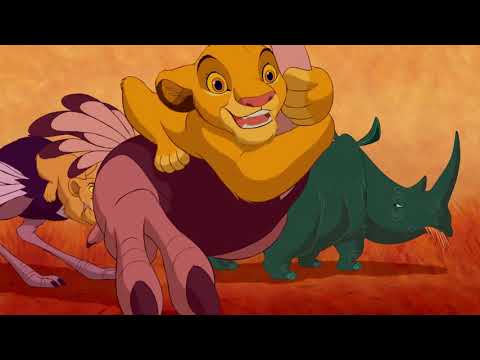
Review and Highlights
Quick summary
- What it is: A showpiece from Disney's The Lion King (1994), built for young Simba's swagger and Zazu's weary referee energy.
- Who performs it: Jason Weaver with Rowan Atkinson and Laura Williams on the original soundtrack.
- What it does in the story: A bright, cocky wish-song that plants Simba's impatience right where the plot will later punish it.
- Notable later versions: The 2019 film soundtrack features a new cast recording with JD McCrary, Shahadi Wright Joseph, and John Oliver.
- Why it lasts: It sells a kid's daydream with marching-band punch and a carnival of call-and-response, then exits before the world gets heavy.
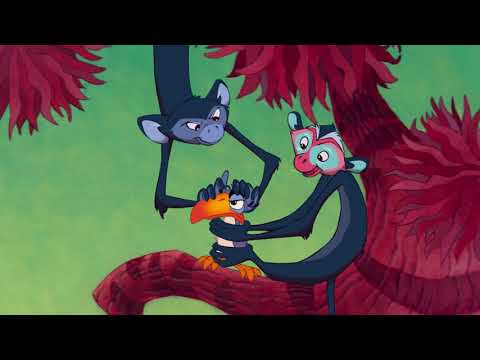
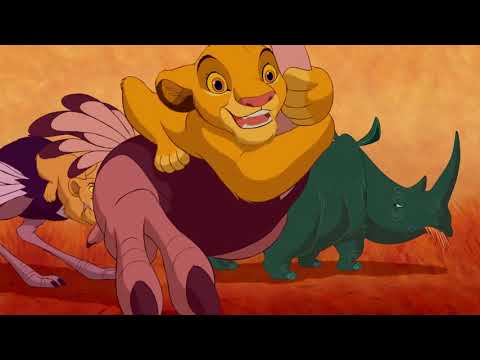
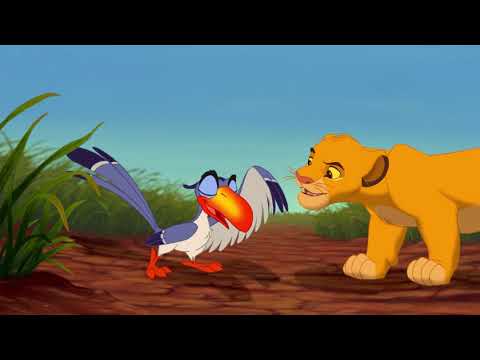
The Lion King (1994) - Film - Diegetic, with fantasy staging. Early in the first act, Simba and Nala needle Zazu while Simba daydreams his future crown. The sequence turns the savanna into a parade ground, which is the joke: Simba thinks ruling is mostly about getting to boss everyone around.
The Lion King (2019) - Film - Diegetic, more grounded staging. The same narrative function, but played with a more naturalistic camera and less of the Busby Berkeley-style geometry that made the animated scene such a visual flex.
The Lion King (1997) - Stage musical cast recording - Diegetic, theatrical spectacle. The number becomes a choreography showcase, the kind that lets a production prove it can make animals, masks, and bodies move like one big instrument.
This is the rare Disney Renaissance song that brags so loudly it becomes its own punchline. The hook is pure kid logic: if the title says "king," then the chorus should feel like a coronation rehearsal. Elton John's melody keeps things spring-loaded, while the arrangement gives you that worldbeat shimmer and parade percussion that pushes the scene into carnival mode. The comedic hinge is Zazu. He is the adult in the room, trying to talk governance while a child insists the job is basically "more me, more now."
Key takeaways: the chorus is designed for communal shout-back, the verses keep tightening the leash with Zazu's warnings, and the visual concept in the film sequence sells scale without adding plot. It is a character portrait you can dance to.
Creation History
Elton John and Tim Rice wrote the song for The Lion King with Mark Mancina producing the soundtrack recording. Jason Weaver recorded the lead vocal as young Simba's singing voice, with Rowan Atkinson and Laura Williams supporting as Zazu and Nala's singing voice. Decades later, Disney has kept pulling the track back into the spotlight, from anniversary events to new cast recordings, and I still hear the same core idea: a pop composer writing a kid's anthem that also lets the story quietly roll its eyes. According to The New York Times, Weaver's contribution was famously under-recognized at the time, even as the performance became part of the film's identity.
Song Meaning and Annotations
Plot
Simba is young, impatient, and already treating leadership like a costume he cannot wait to try on. He and Nala rile up Zazu, Simba sketches out his future reign in big, childish promises, and the world around them seems to join in. The scene ends before reality can interrupt. That is the point: the song is a daydream that sets up the story's later lessons about consequence, duty, and loss.
Song Meaning
The meaning is not subtle, and it does not need to be. This is a portrait of youthful arrogance that still feels charming because the melody is so buoyant and the banter is so quick. Under the fun, the song is a warning label: Simba wants the power, not the patience. The number also shows how a community can hype a future leader, for better and for worse, with call-and-response chants that turn ego into pageantry.
Annotations
"I'm gonna be a mighty king, so enemies beware"
It starts as a boast, but the lyric also sketches Simba's worldview: leadership equals confrontation, and the world is divided into allies and "enemies." The story will later complicate that clean little map.
"I've never seen a king of beasts with quite so little hair"
Zazu's crack lands because it punctures the fantasy with something petty and physical. It is a tiny reminder that Simba is still a kid, and that royal destiny does not magically speed up growing up.
"I'm working on my roar"
One of the song's best gags is that Simba treats authority as sound design. If he can perfect the performance of power, he assumes the power will follow.
Rhythm and style fusion
The arrangement plays like a parade: bright brass-like punches, layered percussion, and a bouncing groove that can be felt at a walking pace or in double-time. That flexibility is why the track works in film, on stage, and in school productions. It is built to move bodies.
Symbols and staging
In the animated sequence, the animal pyramid, synchronized kicks, and bold color blocks turn "future king" into a literal tower of attention. That is the metaphor. Simba is on top because everyone is holding him up. The song asks, without asking, what happens when the tower wobbles.
Cultural touchpoints
Disney leans on big musical theater traditions here: the comic foil, the mass chorus, and the kid lead whose confidence is bigger than his life experience. If you have ever watched a stage show and felt the ensemble suddenly become a single machine, this number is the Disney version of that trick.
Technical Information
- Artist: Jason Weaver with Rowan Atkinson and Laura Williams
- Featured: Rowan Atkinson, Laura Williams
- Composer: Elton John
- Producer: Mark Mancina
- Release Date: May 31, 1994
- Genre: Worldbeat, soundtrack musical number
- Instruments: Lead vocals, ensemble vocals, percussion, orchestral pop arrangement, pan flute (credited), programming (credited)
- Label: Walt Disney Records
- Mood: Cocky, playful, kinetic
- Length: 2:49
- Track #: 2 (The Lion King: Original Motion Picture Soundtrack tracklist context)
- Language: English
- Album: The Lion King: Original Motion Picture Soundtrack
- Music style: Pop theater writing with worldbeat coloring and call-and-response chorus
- Poetic meter: Predominantly iambic-leaning conversational lines, tightened by internal rhyme and quick comedic retorts
Questions and Answers
- Who is the lead vocal on the original soundtrack recording?
- Jason Weaver sings the lead as young Simba's singing voice, with Rowan Atkinson and Laura Williams supporting as Zazu and Nala's singing voice.
- Why does the song feel like a parade instead of a quiet wish?
- The arrangement is built for movement: a bouncing groove, punchy accents, and chorus vocals that behave like a crowd. It is a daydream with a marching cadence.
- What is Zazu doing musically besides being funny?
- Zazu is the counter-melody of responsibility. Every time Simba inflates, Zazu needles him back toward reality, which keeps the number from becoming simple self-congratulation.
- Is the song meant to be taken literally inside the story?
- Yes and no. The characters sing, but the staging escalates into fantasy, especially in the animated film. That stretch is the point: we are inside Simba's imagination.
- How does the number foreshadow the plot?
- It frames Simba as impatient and hungry for status, which makes later mistakes believable. The brighter the boast, the sharper the later fall.
- What changed in the 2019 version?
- The newer recording is tied to a more naturalistic visual style, and the cast is different. The narrative function stays the same: Simba wants the crown before he understands the cost.
- Why do audiences still respond to it in live shows?
- Because it is built like a crowd scene. The hook invites group singing, and the rhythmic engine is simple enough that dancers and ensemble vocals can sell it at scale.
- Is there a notable stage cast recording?
- Yes. The Broadway cast recording includes a theatrical version credited to stage performers and ensemble, and it plays as a choreographic centerpiece rather than a cartoon spectacle.
- Are there popular pop covers outside the films?
- Disney compilation albums have hosted several, including versions by Aaron Carter and Allstar Weekend, which reframe the tune as teen-pop for their eras.
- What is the song's core message in one sentence?
- It is a kid's promise of future power, sung with enough confidence to make you laugh, and enough blind spots to make you worry.
Awards and Chart Positions
The parent film dominated awards season, but this specific number was not the one that voters singled out. At the 67th Academy Awards, The Lion King placed three different songs in the Original Song category, while this track stayed off the nominee list. The Golden Globes database shows a similar split: a win for one Lion King song and a nomination for another, with this one absent from the category.
| Year | Award body | Category | Status for this song | Related Lion King songs recognized |
|---|---|---|---|---|
| 1995 | Academy Awards | Music (Original Song) | Not nominated | Can You Feel the Love Tonight (won), Circle of Life (nominated), Hakuna Matata (nominated) |
| 1995 | Golden Globes | Best Original Song - Motion Picture | Not nominated | Can You Feel the Love Tonight (won), Circle of Life (nominated) |
How to Sing I Just Can't Wait to Be King
Practical metrics (common references): many vocal guides place the original key around G major with a compact lead range around D3 to D4, while tempo analyses often land near 99 BPM (or felt in double-time for choreography). Published analyses disagree on exact key because editions and transpositions vary, especially between soundtrack, stage, and karaoke arrangements.
- Tempo first: Set a metronome to about 99 BPM. If you are rehearsing with dancers, try feeling the pulse in double-time, but keep your phrasing relaxed.
- Diction: The comedy lives in crisp consonants. Hit the "k" in "king" and the bite in Zazu's lines without overdoing it.
- Breath plan: Treat verses like spoken theater with pitch. Mark breaths at the ends of longer phrases, not mid-thought, so the character stays confident.
- Flow and rhythm: Keep the chorus buoyant, not shouted. Aim for a grin in the tone. The hook works when it feels effortless.
- Accents and character: Simba sings forward and bright. Zazu sings more clipped and corrective. Nala sits between, playful but grounded.
- Ensemble awareness: If you have a chorus, rehearse call-and-response like a percussion section. Tight entrances matter more than volume.
- Mic technique: On the chorus, back off slightly to avoid hard peaks. On verses, come closer to capture conversational detail.
- Pitfalls: Rushing the verses, flattening the comedic timing, and forcing childlike tone. Play the confidence, not a cartoon voice.
- Practice material: Speak the verse text in rhythm, then add pitch. Finally, sing it while walking the beat to lock body and groove together.
Additional Info
One reason the track keeps getting revived is how easily it changes costumes. It can be a full Broadway machine, a classroom showstopper, or a teen-pop cover without losing its spine. Disney compilation culture proved that: Aaron Carter recorded a version tied to the DisneyMania ecosystem, and Allstar Weekend later took their turn as well. There is also a long afterlife in anniversary events. In 2024, the Hollywood Bowl celebration of the film's 30th anniversary put the song back in front of a live audience in a high-profile, headline-grabbing way.
There is another detail fans love: studio footage. A 2017 promotional clip surfaced with never-before-seen recording-session material featuring the original vocal cast at work, a neat reminder that the "kid king" swagger was built in a booth, one take at a time.
Key Contributors
| Entity | Type | Relationship statement |
|---|---|---|
| Jason Weaver | Person | Sings lead vocal as young Simba on the 1994 soundtrack recording. |
| Rowan Atkinson | Person | Provides vocal performance as Zazu on the 1994 soundtrack recording. |
| Laura Williams | Person | Provides vocal performance as Nala's singing voice on the 1994 soundtrack recording. |
| Elton John | Person | Composed the music and recorded a pop cover version for the soundtrack ecosystem. |
| Tim Rice | Person | Wrote the lyrics for the song. |
| Mark Mancina | Person | Produced the soundtrack recording and is credited in production roles. |
| Walt Disney Records | Organization | Released the soundtrack recordings across film and stage tie-ins. |
| The Lion King (1994 film) | Work | Features the song as an early character-defining musical sequence. |
| The Lion King (stage musical) | Work | Includes a theatrical adaptation of the number on the 1997 cast recording. |
| The Lion King (2019 film) | Work | Includes a new cast recording released with the 2019 soundtrack. |
Sources: Wikipedia entry for the song, EltonJohn.com discography page for The Lion King, Shazam credits page, Oscars.org 67th Academy Awards page, Golden Globes Awards Database, Pitchfork tracklist report for the 2019 soundtrack announcement, People magazine report on the 2024 Hollywood Bowl event, Singing Carrots vocal range listing, TuneBat and SongBPM tempo listings, Discogs and Apple Music pages for the 1997 Broadway cast recording