
A Whale of a Tale (20,000 Leagues Under the Sea) Lyrics
A Whale of a Tale (20,000 Leagues Under the Sea)
Got a whale of a tale to tell ya, ladsA whale of a tale or two
'Bout the flappin' fish and the girls I've loved
On nights like this with the moon above
A whale of a tale and it's all true
I swear by my tattoo
There was Mermaid Minnie, met her down in Madagaskar
She would kiss me, any time that I would ask her
Then one evening her flame of love blew out
Blow me down and pick me up!
She swapped me for a trout
Got a whale of a tale to tell ya, lads
A whale of a tale or two
'Bout the flappin' fish and the girls I've loved
On nights like this with the moon above
A whale of a tale and it's all true
I swear by my tattoo
There was Typhoon Tessie, met her on the coast of Java
When we kissed I bubbled up like molten lava
Then she gave me the scare of my young
Blow me down and pick me up!
She was the captain's wife
Got a whale of a tale to tell ya, lads
A whale of a tale or two
'Bout the flappin' fish and the girls I've loved
On nights like this with the moon above
A whale of a tale and it's all true
I swear by my tattoo
Song Overview
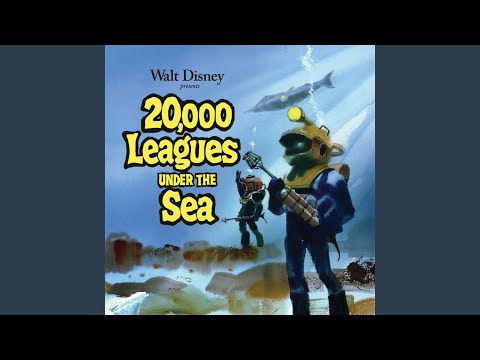
Review and Highlights
Quick summary
- Performed on-screen by Kirk Douglas as Ned Land, the film's loudest heartbeat and its comic pressure valve.
- Built like a pub singalong with showbiz punchlines, nautical slang, and a dancer's bounce rather than a museum shanty.
- The melody doubles as a character stamp, returning when Ned swings into hero mode.
- Issued in multiple recorded forms across decades, from the 1954 single era to later archival soundtrack editions.
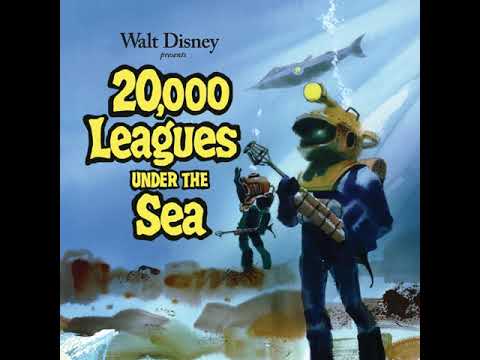
20,000 Leagues Under the Sea (1954) - film song - diegetic. Dockside tavern performance early in the story, with the room turning into a chorus line as Ned works the crowd. Why it matters: it sketches his swagger in seconds, then keeps paying rent later as a recurring motif for his comic scenes and his sudden bursts of bravery.
As a piece of screen songwriting, this number is a small engine that pulls a heavy train. You get the boasting, the grin, the elbows-on-the-bar rhythm - and you also get a practical bit of plotting. Ned is introduced as the guy who talks big, lives bigger, and cannot resist a captive audience. The song's hook is simple enough to be remembered after one hearing, and that is the trick: a short melody that can be threaded back into the score whenever the film wants to remind you who is about to cause trouble.
Key Takeaways
- Character-first writing: the verses are basically a résumé delivered with a wink.
- Comedy with craft: rapid rhymes and clipped cadences sell the tall tales without overexplaining them.
- Score integration: the tune is not a one-off - it becomes Ned Land's calling card.
- Performance style: Douglas leans into a stage-bred, front-of-house delivery that suits a tavern scene.
Creation History
The song was written by Al Hoffman (music) and Norman Gimbel (lyrics), tailored for Disney's 1954 Jules Verne adaptation and performed on screen by Kirk Douglas. It also spun into a period single release and later appeared as part of a modern digital soundtrack issue. According to Disney's D23 feature, the filmmakers treated the tune as more than a novelty, repurposing it as a thematic tag for Ned Land across multiple moments in the film.
Song Meaning and Annotations
Plot
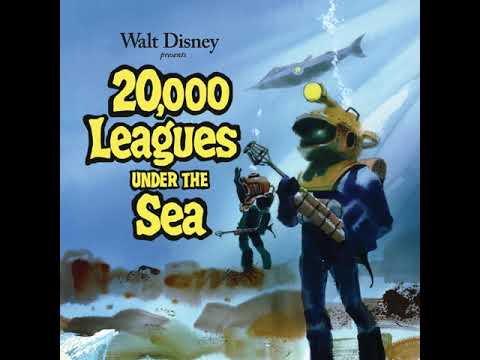
The narrator is a seafaring braggart spinning outrageous whaling yarns to an approving crowd. Each verse tries to top the last: bigger beasts, tighter escapes, louder applause. The point is not whether the stories are true - it is that he can sell them. In the film, that salesman energy tells you exactly how Ned Land survives: with nerve, charm, and a talent for turning danger into entertainment.
Song Meaning
At heart, this is a portrait of confidence as survival strategy. Ned performs toughness the way some people hold a job: daily, loudly, and in public. The humor keeps the audience on his side, but it also hides something else - the need to stay in control. A man who sings like this does not want to be trapped, not by a ship, not by Captain Nemo's rules, not by anyone's idea of destiny.
Annotations
"Got a whale of a tale to tell ya, lads"
That opening is a handshake and a challenge. "Lads" is not just a word, it is a way of claiming the room. You can hear the communal setup: call-and-response, clapped time, a chorus ready to jump in.
"A whale of a tale or two"
The phrase admits the exaggeration up front. The song does not pretend to be documentary - it is a brag delivered as cabaret, a wink that makes the boasting feel friendly rather than hostile.
"It is a whale of a tale"
Repetition here is functional: it brands the hook so the score can reuse it later. When the motif pops up in an underscored moment, you get Ned's personality without dialogue.
"To tell ya, lads"
Those clipped syllables are rhythm fuel. The language is chosen for percussive bite, not poetic delicacy, which is why the number reads like a tavern stomp even when orchestrated.
Genre and style fusion
Call it a sea shanty by way of mid-century show tune: salty vocabulary riding a theatrical bounce. The performance has a vaudeville edge - chest-forward, grin audible - while the structure stays singalong-simple. That hybrid makes it perfect for Disney adventure storytelling: old-world flavor, modern punch.
Emotional arc
It starts as pure fun, then becomes a power move. By the end of the chorus cycles, the crowd belongs to him, and Ned looks less like background color and more like a man steering his own myth. That is the arc: from entertainer to self-appointed legend.
Cultural touchpoints
The lyric posture belongs to tall-tale America as much as it belongs to the sea: frontier brags, barroom stories, carnival barkers. The film is set in an earlier century, but the song knowingly plays like a 1950s novelty number dropped into period costume - a choice that makes Ned feel contemporary and immediate.
Technical Information
- Artist: Kirk Douglas
- Featured: Various supporting vocal and cast recordings exist across releases (including ensemble variants documented on expanded soundtrack editions)
- Composer: Al Hoffman
- Producer: Not consistently credited across public listings for the original period single
- Release Date: 1954 (film era); January 1, 2008 (digital soundtrack release date for the modern album issue)
- Genre: Film song; novelty-leaning sea shanty/show tune
- Instruments: Lead vocal; orchestral accompaniment; rhythm section emphasis typical of mid-century studio scoring
- Label: Walt Disney Records (modern soundtrack issue)
- Mood: Boastful, playful, rowdy
- Length: About 2:10 (album track timing varies slightly by version)
- Track #: 4 (on one widely circulated expanded soundtrack sequence)
- Language: English
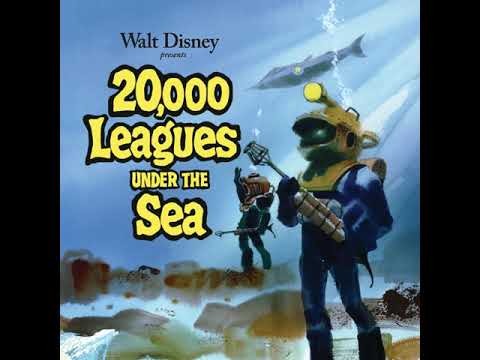
- Album (if any): 20,000 Leagues Under the Sea (Soundtrack)
- Music style: Singalong chorus with theatrical verse delivery
- Poetic meter: Loose anapestic swing, built for punchline rhymes more than strict scansion
Questions and Answers
- Who is the singer in the film scene?
- Kirk Douglas performs it on screen as Ned Land, using the tavern crowd like a backing choir.
- Why does the song sound more like a stage number than a strict sea shanty?
- Because it is designed for clarity and punchlines. The lyric cadence and chorus repetition favor a show-tune engine that audiences can grab quickly.
- What is the song's job inside the story?
- It introduces Ned's personality fast: bold, funny, restless, and hungry for attention. That profile matters once he clashes with Captain Nemo's discipline.
- Is the tune used again after the tavern?
- Yes. It functions as a recurring signature for Ned Land in the score, a short melodic reminder of his comic energy and his streak of heroism.
- What makes the lyrics stick?
- Short rhymes, repeated hook phrasing, and a spoken-sung delivery that feels like a friend leaning in to share gossip.
- Are there multiple recorded versions?
- Expanded soundtrack releases document several: the main film performance, a single version, brief reprise material, and additional performer variants.
- How should a singer approach the character?
- Think storyteller first. Prioritize diction, sell the punchlines, and let the rhythm carry you forward like a confident walk across a crowded room.
- What is the emotional subtext under the comedy?
- Control. Ned uses humor and brash charm to stay on top of any room, especially in a world where powerful men and machines try to cage him.
- Why does the song feel anachronistic?
- It is intentionally modern for its time of production. The film wears period clothing, but the number plays like a 1950s crowd-pleaser, making Ned feel immediate.
Additional Info
Collectors love this track because it lives two lives at once: it is a self-contained barroom number, and it is also a connective thread inside the orchestral score. On expanded editions, you can trace how the soundtrack producers framed it as part of a bigger musical architecture, placing the song among large symphonic set pieces while also preserving single-era alternates and a tiny reprise.
Outside the original film, the number has circulated in Disney compilation culture. It has been listed as part of the Disney Sing-Along Songs "Under the Sea" program, which is a reminder that the hook works even when separated from Captain Nemo, the Nautilus, and the giant squid spectacle.
Key Contributors
| Entity | Type | Relationship | Statement |
|---|---|---|---|
| Kirk Douglas | Person | Performer | Kirk Douglas performs the song on screen as Ned Land. |
| Ned Land | Character | Role | Ned Land uses the number to charm the tavern crowd and define his persona. |
| Al Hoffman | Person | Composer | Al Hoffman composed the music. |
| Norman Gimbel | Person | Lyricist | Norman Gimbel wrote the lyrics. |
| 20,000 Leagues Under the Sea | Work | Film | The film features the song as a diegetic tavern performance. |
| Walt Disney Records | Organization | Label | Walt Disney Records issued a modern digital soundtrack release that includes the track. |
| Intrada | Organization | Archival release | Intrada released an expanded CD edition documenting multiple versions and bonus tracks. |
| Paul J. Smith | Person | Score composer | Paul J. Smith composed the broader film score that surrounds and reprises the motif. |
Sources: Disney D23, IMDb soundtrack credits, Apple Music album listing, Intrada album page, 20,000 Leagues Under the Sea film article