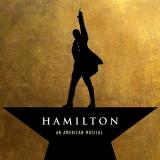
Hamilton Lyrics: Song List
- Act 1
- Alexander Hamilton
- Aaron Burr, Sir
- My Shot
- The Story of Tonight
- The Schuyler Sisters
- Farmer Refuted
- You'll Be Back
- Right Hand Man
- A Winter's Ball
- Helpless
- Satisfied
- The Story of Tonight (Reprise)
- Wait For It
- Stay Alive
- Ten Duel Commandments
- Meet Me Inside
- That Would Be Enough
- Guns and Ships
- History Has Its Eye on You
- Yorktown
- What Comes Next?
- Dear Theodosia
- Non-Stop
- Act 2
- What'd I Miss
- Cabinet Battle #1
- Take a Break
- Say No to This
- The Room Where It Happens
- Schuyler Defeated
- Cabinet Battle #2
- Washington on Your Side
- One Last Time
- I Know Him
- The Adams Administration
- We Know
- Hurricane
- The Reynolds Pamphlet
- Burn
- Blow Us All Away
- Stay Alive (Reprise)
- It's Quiet Uptown
- The Election of 1800
- The Obedient Servant
- Best of Wives and Best of Women
- The World Was Wide Enough
- Finale (Who Lives, Who Dies, Who Tells Your Story)
- Off-Broadway musical numbers, 2014 Workshop
- Ladies Transition
- Redcoat Transition
- Lafayette Interlude
- Tomorrow There'll Be More Of Us
- No John Trumbull
- Let It Go
- One Last Ride
- Congratulations
- Dear Theodosia (Reprise)
- Stay Alive, Philip
- Ten Things One Thing
About the "Hamilton" Stage Show
TL;DR: Hamilton’s cast album is a full dramatic engine — not a “best-of.” It raps history like it’s happening in real time, then flips into soul ballads when the cost hits. If you only stream one Broadway record this decade, this is the one that behaves like a living document.
Release date of the musical: 2015
"Hamilton" – The Musical Guide & Song Meanings
Review
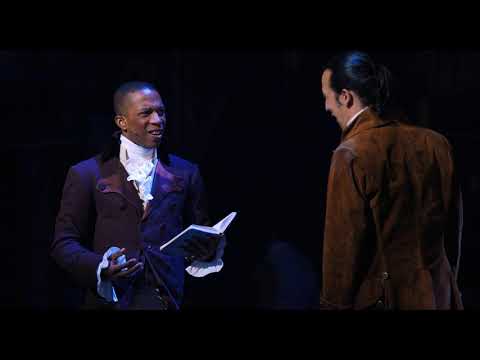
How do you turn cabinet minutes, pamphlets, and duels into a score that feels like it is happening right now? “Hamilton” answers with a lyric engine that behaves like a camera. The words cut, pan, and jump in time. The show does not merely “tell” history. It argues with it, line by line, then hands the argument to the next voice.
The writing is built around contrast as a character. Hamilton’s language is forward-leaning: stacked rhymes, compressed clauses, punchy lists. Burr’s language waits, circles, and edits itself in real time. That difference is not an academic trick. It is the plot. Their vocabularies become their ethics, and their ethics become the collision course that the score keeps foreshadowing.
Musically, the show is a blend of hip-hop flow, R& B melody, and Broadway structure. The style choice is narrative, not decoration. Rap is used for velocity and intellect: Hamilton thinks at performance speed. Traditional theatre melody arrives when the story needs breath, especially for the Schuyler women. This is where the album matters: the cast recording preserves the density of the language, but the live staging adds the physical “counterpoint” that the lyrics imply.
Listener tip: if you are new to the show, start with “Alexander Hamilton,” then jump to “Wait For It,” then “The Room Where It Happens.” You will hear the central rivalry form in three different musical grammars: biography, philosophy, and obsession.
How it was made
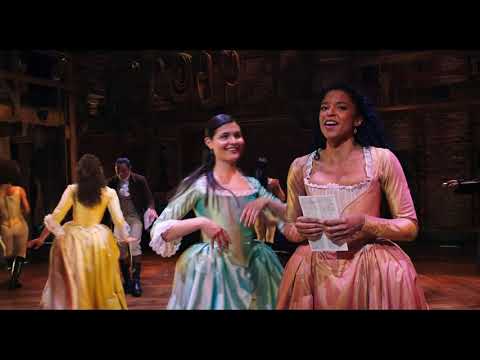
“Hamilton” began as a concept sparked by Ron Chernow’s biography of Alexander Hamilton and grew through years of drafting and performance testing, including an early White House appearance that helped frame the project as a spoken-word idea before it became a full musical. That origin explains the score’s mix of lecture-hall precision and mixtape swagger. The show often feels like someone rapping footnotes, because it was built from a research-first impulse and then forced to sing.
The lyric technique is unusually architectural. Instead of writing “numbers” that pause the story, Miranda writes scenes that happen to be music. The internal rhyme and repeated motifs allow the show to recap itself without sounding like a recap. The book “Hamilton: The Revolution” formalised that method for readers by publishing the libretto with extensive annotations, turning the lyric density into a documented creative process.
One practical consequence: the cast album is not just a souvenir. It is a study tool. The original Broadway cast recording is long, fast, and information-heavy, and it rewards re-listening because the rhymes carry political detail that the ear may miss on first pass.
Key tracks & scenes

"Alexander Hamilton" (Company)
- The Scene:
- A prologue that works like a group deposition. Voices step forward as if called to the stand, sketching the immigrant arrival and the future tragedy before the story even begins. The framing is blunt: the ending is announced, then rewound.
- Lyrical Meaning:
- The opening establishes the show’s core tactic: biography as momentum. The lyric style compresses years into a few minutes, then plants a question the rest of the score keeps revisiting: who owns a life story once history turns it into a symbol?
"My Shot" (Hamilton)
- The Scene:
- New York crackles with talk of rebellion. Hamilton meets fellow strivers in a crowded public space and turns nervous energy into a manifesto, as if daring the room to keep up.
- Lyrical Meaning:
- This is ambition with teeth. The hook is not only determination. It is self-mythmaking. Hamilton writes the headline about himself while he is still unknown, and the rhyme scheme sells it as inevitability.
"The Schuyler Sisters" (Angelica, Eliza, Peggy, Company)
- The Scene:
- The city becomes a marketplace of ideas. The sisters move through it with curiosity and caution, scanning faces and futures while the ensemble turns “work” into a percussive street sound.
- Lyrical Meaning:
- The lyric reframes revolution as social access. Angelica’s language is sharp and selective; Eliza’s is open and direct. In one number, the show builds a feminine counter-narrative to the war talk, and it never lets the audience forget it.
"Wait For It" (Burr)
- The Scene:
- The stage clears into a private argument with fate. Burr speaks to the audience like a confidant, weighing patience against hunger while the ensemble echoes his restraint as a kind of ritual.
- Lyrical Meaning:
- Burr’s philosophy is not laziness. It is risk management shaped into identity. The lyric repeats like a mantra because Burr is trying to convince himself as much as he is explaining himself.
"Yorktown (The World Turned Upside Down)" (Hamilton, Lafayette, Company)
- The Scene:
- War becomes choreography. Orders and boasts fly across the stage as if transmitted by drumline. Victory arrives with a folk reference that lands like a historical stamp.
- Lyrical Meaning:
- The number is triumph, but it is also a warning: the lyric turns coalition into brand. When the company claims credit for the win, the show hints that nation-building will soon become a fight over who gets to narrate the victory.
"The Room Where It Happens" (Burr, Company)
- The Scene:
- A political dinner becomes a locked-door myth. Burr reconstructs a deal he was excluded from, filling the unseen room with rhythm, jealousy, and increasingly frantic insistence.
- Lyrical Meaning:
- This is the show’s thesis about power: decisions are made offstage, then explained onstage after the fact. Burr’s lyric turns exclusion into appetite, and appetite into action. The repetition is the point. He cannot stop hearing the door close.
"Burn" (Eliza)
- The Scene:
- The public world falls away. Eliza stands with paper and memory, deciding what survives. The act is intimate, but it carries the weight of archival violence: what gets destroyed, and why.
- Lyrical Meaning:
- Eliza’s lyric is control after betrayal. She refuses to be used as collateral in Hamilton’s legacy project. The song is also a structural pivot: it forces the audience to realise the story has more than one author.
"Who Lives, Who Dies, Who Tells Your Story" (Eliza, Company)
- The Scene:
- A final ledger. Characters step forward to summarise outcomes, then the focus narrows to Eliza’s long aftermath: the work of preserving, curating, and arguing for a life’s meaning.
- Lyrical Meaning:
- The ending refuses a clean moral. It admits that legacy is made from institutions, edits, and advocacy. The lyric turns biography into responsibility, and the show ends by placing the microphone in the hands of the survivor.
Live updates 2025/2026
Information current as of January 27, 2026. The Broadway production continues at the Richard Rodgers Theatre, with recent principal cast coverage highlighting Edred Utomi as Hamilton and Jin Ha as Burr, alongside Morgan Anita Wood as Eliza. For the most reliable day-to-day casting, the official production site and major Broadway outlets track changes as they happen.
The North American tour schedule remains active into early 2026, with officially listed stops running through February 2026 and beyond. If you are planning around the score, note a practical difference between tour listening and Broadway listening: tempos and comic timing can shift slightly by company, even when the orchestration stays consistent.
London also remains in motion. The West End production’s official cast listings show current principals, and industry coverage notes an extension through March 2026. That matters for soundtrack fans because “Hamilton” is a show where diction is dramatic clarity: different casts alter the texture of the same rhyme.
On the media side, the filmed stage version remains a key reference point for lyric comprehension, and an anniversary-era marketing push has included theatrical-trailer promotion for big-screen presentations. Separate from touring logistics, national arts programming news has also intersected with “Hamilton” touring plans, including a widely reported cancellation of a planned 2026 Kennedy Centre engagement.
Notes & trivia
- The original Broadway cast recording was released digitally on September 25, 2015, with a later physical two-disc rollout that fall.
- The cast album credits include production involvement from Ahmir “Questlove” Thompson and Tariq “Black Thought” Trotter.
- The libretto-and-annotation volume “Hamilton: The Revolution” presents the full text with extensive footnotes, treating lyrics like documented craft rather than mystery.
- Early public development included a White House performance context that helped position the project as spoken-word storytelling before a Broadway scale.
- In published criticism, the set has been described as a single wooden environment that transforms by context, mirroring how the score reuses motifs to shift meaning.
- Myth check: many assume the show’s speed makes it “impossible to follow” without visuals. The cast album is intentionally engineered as narrative delivery, but it rewards lyric sheets or annotations on first listen.
Reception
Critics tended to praise the lyric craft in two lanes: technique and impact. Technique is about the rhyme density, the way the show fits policy argument into verse without flattening character. Impact is about what that technique does to an audience: it makes political history feel like personal stakes.
“That rapper style, with its interlocking interior rhymes and pounding cadences, perfectly captures Hamilton’s feverish intelligence.”
“Miranda’s music and lyrics combine two things that rarely go together: political passion and nimble wit.”
“Why do you write like you’re running out of time?”
With time, the debate has widened. Alongside celebration, substantial criticism has questioned what the lyrics choose to foreground and what they smooth over. That ongoing argument is part of the show’s afterlife: the text is sharp enough that people still fight over what, exactly, it is saying.
Quick facts
- Title: Hamilton
- Year: 2015 (Broadway era; original cast recording released 2015)
- Type: Sung-through musical with hip-hop/R&B/Broadway idiom
- Book, Music & Lyrics: Lin-Manuel Miranda
- Based on: Ron Chernow’s biography “Alexander Hamilton”
- Original Broadway Cast Recording: Released September 25, 2015; label Atlantic
- Album production credits (not exhaustive): Alex Lacamoire, Bill Sherman, Lin-Manuel Miranda; executive production credits include Questlove and Black Thought
- Selected notable placements: Filmed stage version released via Disney+ (premiere announced for July 3, 2020)
- Availability: Widely available on major streaming platforms and physical formats
Frequently asked questions
- Is the cast album the full show?
- It is close, and it is designed to be narrative-complete, but staging and physical storytelling add clarity and irony that the recording cannot fully capture.
- Why does the lyric style change from character to character?
- Because the show uses language as psychology. Hamilton’s speed signals urgency and ego; Burr’s restraint signals strategy; Eliza’s lyric space signals interior life and choice.
- What is the “room” in “The Room Where It Happens”?
- It is both a literal closed-door compromise and a metaphor for access. Burr is obsessed with being present where decisions are made, because absence equals powerlessness.
- Where should a first-time listener start?
- Start with the first track to learn the cast “map,” then jump to “Wait For It” and “The Room Where It Happens” to understand the central rivalry. After that, return to Act I in order.
- Is there an official filmed version?
- Yes. A filmed version of the original Broadway production was released for streaming, and it has become a standard reference for lyric comprehension.
Key contributors
| Name | Role | Contribution |
|---|---|---|
| Lin-Manuel Miranda | Book, Music, Lyrics | Wrote the show’s text engine: character, argument, and rhyme architecture. |
| Alex Lacamoire | Music director / album producer credit | Helped shape the sound-world and recording presentation of the score. |
| Bill Sherman | Producer / album producer credit | Key production leadership across stage and recording contexts. |
| Thomas Kail | Director | Staged the lyric density so narrative remains legible at speed. |
| Andy Blankenbuehler | Choreography | Made movement act as “second text,” especially in debates and battle music. |
| Ahmir “Questlove” Thompson | Executive producer credit (cast album) | Credited in cast-album production leadership. |
| Tariq “Black Thought” Trotter | Executive producer credit (cast album) | Credited in cast-album production leadership. |
Sources: Hamilton Official Site; Playbill; Variety; The Guardian; The New Yorker; Vogue; Disney+ Press (Disney); The Walt Disney Company; Hamilton script/libretto PDF; AP News.