Phantom of the Opera, The Lyrics – All Songs from the Musical
Phantom of the Opera, The Lyrics: Song List
- Act 1
- Prologue
- Overture/Hannibal
- Think of Me
- Angel of Music
- Little Lotte/The Mirror
- The Phantom of the Opera
- Music of the Night
- Magical Lasso
- I Remember/Stranger Than You Dreamt It
- Notes/Prima Donna
- Poor Fool, He Makes Me Laugh/Il Muto
- Why Have You Brought Me Here / Raoul I've Been There
- All I Ask of You
- All I Ask of You (Reprise)
- Act 2
- Entr'Acte: Act Two / Six Months Later
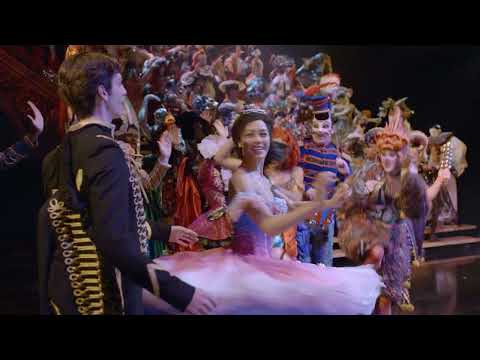
- Masquerade / Why So Silent?
- Madame Giry's Tale / The Fairground
- Journey to the Cemetery
- Wishing You Were Somehow Here Again
- Wandering Child
- The Swordfight
- We Hall All Been Blind
- A Rehearsal for Don Juan Triumphant
- Point of No Return / Chandelier Crash
- Down Once More/Track Down This Murderer
- Learn to Be Lonely
About the "Phantom of the Opera, The" Stage Show
Release date: 1986
"The Phantom of the Opera" (1986) – The Musical Guide & Song Meanings
Review: What the lyrics are really doing
Why does a show about a stalker-teacher with an organ addiction feel, to so many people, like a romance you can hum? Because the lyric writing keeps swapping masks. The text is constantly recoding menace as mentorship, and then recoding mentorship as desire. “Angel of Music” is the banner headline. It sells Christine a story about her own talent, and it sells the Phantom a story about his own virtue. That’s the lyric engine: words that flatter, words that trap, words that rhyme their way into consent.
On the page, the language is clean and legible. In performance, it’s weaponized by placement. The show loves a phrase that can be tender and coercive at the same time: “sing for me” as invitation, “sing for me” as command. And it loves bureaucratic lyric writing when it wants to make the Opera Populaire feel real. The “Notes” sequences read like office memos that learned how to dance. That tonal pivot matters. It makes the Phantom’s interventions feel like part of the building’s operating system, not a random haunting.
Musically, this is pop opera with a rock spine. The score behaves like opera (leitmotifs recur, characters are identified by musical DNA), but the lyric delivery behaves like radio: hook first, explanation later. When the Phantom’s chromatic, organ-heavy material returns, the lyric often narrows into imperatives and hypnotic reassurance. When Raoul shows up, the lyric opens into daylight grammar: promises, futures, plain verbs. Christine sits between those languages, and the show’s tension is basically her code-switching in real time.
Viewer tips (because craft shows up better when you know where to look):
- If you want to read the lyric strategy, listen to the “Notes” scenes with headphones. You’ll hear how “polite” wording is staged as a threat.
- In replica-style productions, seats that see the proscenium clearly make the show’s central metaphor pop: theatre as seduction machine.
- Before you go, re-listen to “All I Ask of You” and then its reprise. Same emotional vocabulary, different power dynamics.
How it was made: the lyric handoff that changed the show
The production history gets told as spectacle: chandeliers, fog, velvet, money. The lyric history is more interesting, because it’s about control. Andrew Lloyd Webber began developing the piece with Richard Stilgoe, then brought in Charles Hart to rework lyrics as the show approached its final form. That shift is audible if you know what to listen for. Stilgoe’s contributions tend to be brisk, architecturally clear, slightly wry. Hart often writes with a more intimate, romanticized vocabulary, especially when the Phantom is trying to sound like fate instead of a man with boundaries problems.
That collaboration also explains the show’s most effective trick: it can sound grand and personal at once. The Phantom’s seduction is never just “come with me.” It’s “come with me and become the person you were meant to be.” That’s a lyric move you build in drafts, not in a first pass. It’s also why the score’s motifs and the lyric’s promises lock together so snugly: the show is selling transformation, and the lyric keeps returning to images of mirrors, masks, and voices that don’t quite belong to the body singing them.
Key tracks & scenes: 8 lyrical turning points
"Think of Me" (Christine)
- The Scene:
- During a rehearsal that tilts into full performance, Christine steps into the spotlight as the company scrambles. The space looks like backstage chaos turning into staged beauty in real time.
- Lyrical Meaning:
- The lyric reads like a polite farewell, but it’s a brand launch. Christine sells intimacy to the room with “remember me” language, then pivots into virtuosity. The subtext is ambition wrapped in nostalgia.
"The Phantom of the Opera" (Phantom & Christine)
- The Scene:
- Christine is pulled into the labyrinth below the opera house. The staging usually turns the world into moving shadow, with the music driving like machinery.
- Lyrical Meaning:
- It’s a duet that behaves like a takeover. Christine’s lines name fear and confusion; the Phantom’s lines define the narrative and claim authorship over her voice. The title becomes a label he stamps onto her reality.
"The Music of the Night" (Phantom)
- The Scene:
- In the lair, candlelight and soft motion cues make the space feel curated, almost museum-like. He sings as if he’s teaching, but he’s auditioning her as a soulmate.
- Lyrical Meaning:
- The lyric is persuasion by sensory detail: darkness becomes safety, music becomes truth, surrender becomes artistry. Notice how often the language moves from “feel” to “trust.” It’s seduction framed as aesthetic education.
"Prima Donna" (Carlotta, Managers, Company)
- The Scene:
- In the managers’ office, everyone sings like they’re litigating. Doors slam, egos spin, and the building’s social hierarchy gets mapped in melody.
- Lyrical Meaning:
- This is the show’s comic scalpel. The lyric turns opera politics into operetta. It also sets up the Phantom’s advantage: a world this petty is easy to haunt, because nobody listens well.
"All I Ask of You" (Raoul & Christine)
- The Scene:
- On the opera roof, the air changes. The lighting tends toward moonlit openness, with the city implied beyond the set. It’s the show’s clearest “outside” moment.
- Lyrical Meaning:
- The lyric is radically simple compared to the Phantom’s rhetoric: protection, patience, a future that doesn’t require disguises. That simplicity is the point. It’s the one song that asks Christine what she wants.
"Masquerade" (Company)
- The Scene:
- A grand staircase becomes a human display case. Costumes do half the storytelling. The party is glittering, but the geometry is controlled.
- Lyrical Meaning:
- “Hide your face” is the thesis in four syllables. The lyric turns society itself into a costume party, so the Phantom’s literal mask feels like an extreme version of something everyone is already doing.
"Wishing You Were Somehow Here Again" (Christine)
- The Scene:
- At a graveyard, the stage strips down. You get wind, stone, and memory. The Phantom’s presence is felt as pressure even when he’s not visible.
- Lyrical Meaning:
- The lyric is grief without ornament. It’s also the key to Christine’s vulnerability: she’s not only seduced by the Phantom’s attention, she’s starved for guidance and permission to grow up.
"Point of No Return" (Phantom & Christine)
- The Scene:
- In the opera-within-the-opera, danger gets staged as erotically “proper.” The audience inside the story watches, not realizing they’re watching a crime in progress.
- Lyrical Meaning:
- The lyric weaponizes operatic language: it sounds like a scripted seduction, which lets the Phantom hide in plain sight. Christine’s responses are measured, tactical, and full of double meanings.
"Down Once More / Final Lair" (Phantom, Christine, Raoul)
- The Scene:
- The chase collapses into the lair. The music returns to its darkest materials, and the staging often feels like a courtroom held underwater.
- Lyrical Meaning:
- This is where the show admits its central contradiction: the Phantom wants love, but he wants it on authored terms. The lyric turns confession into bargaining, then dares Christine to rewrite the ending.
Live updates: 2025–2026 productions, casts, tickets
London (West End): The show continues at His Majesty’s Theatre. Booking has been extended deep into 2026, and the official ticketing market shows wide price variance depending on date and seat location. The current cast line-up changes seasonally, but the public-facing cast listings for late 2025 into 2026 have included Dean Chisnall (Phantom), Lily Kerhoas (Christine), and Adam Rhys-Charles (Raoul), among others.
North America: A new multi-year North American tour launches in November 2025, opening in Baltimore at the Hippodrome Theatre, with major-city stops that include Chicago, Denver, Los Angeles, and more. Casting announcements have been released via trade coverage, and venue pages have begun publishing on-sale windows and run dates through 2026.
New York (Off-Broadway): “Masquerade,” an immersive reimagining that uses Lloyd Webber’s score, opened in 2025 and has since extended. It’s part theme-park, part close-up musical performance: small groups, strict entry timing, and the material reorganized for proximity. If your relationship to “Phantom” is primarily the cast album, this version plays like someone turned your headphones into architecture.
Note: Touring schedules and casts move fast. Check official production sites and venue pages for the most current performance calendars.
Notes & trivia
- The show’s “notes” concept is not just plot. It’s a lyric device that turns administration into menace: threats written in polite language.
- A promotional single of “The Phantom of the Opera” (Sarah Brightman and Steve Harley) charted in the UK in 1986 and peaked in the Top 10.
- The Original London Cast Recording was released by Polydor in 1987 in both highlights and fuller configurations across different markets and reissues.
- Academic and educational music materials frequently point to the Phantom’s signature chord progression as a recognizable leitmotif, used as a recurring identifier.
- The 2025–2026 North American tour is billed as a revitalized staging that preserves Maria Björnson’s original design concepts while adapting production logistics for touring.
- “Masquerade” (the immersive NYC version) employs multiple rotating casts for key roles, turning “the Phantom” into a literal plurality.
Reception: praise, side-eye, and why it keeps winning
Critics have never fully agreed on whether “Phantom” is high craft, high gloss, or both. Some early Broadway coverage admired the theatrical engineering while wishing the writing cut deeper. Over time, the conversation shifted: less “is it subtle,” more “why does it work on so many people so reliably?” The answer, again, is lyric strategy. The show speaks in desire-phrases you can memorize after one listen, then repeats them until they feel like your own thoughts.
“There aren’t many moments when Lloyd Webber’s music or Charles Hart’s lyrics grasp its dark unsettling magic.”
“It will soothe and transport you … with all the subtlety of a plunging chandelier.”
“Oh, man, when the music goes full-on eighties heavy metal, it is overwhelming.”
Quick facts
- Title: The Phantom of the Opera
- Year: 1986 (West End premiere)
- Type: Sung-through mega-musical with operatic pastiche and pop-rock writing
- Music: Andrew Lloyd Webber
- Lyrics: Charles Hart (with additional lyrics credited to Richard Stilgoe)
- Book: Andrew Lloyd Webber and Richard Stilgoe
- Original director: Harold Prince
- Design cornerstone: Maria Björnson (production design)
- Selected notable placements (story locations): “Think of Me” (rehearsal into performance), “All I Ask of You” (roof), “Masquerade” (staircase), “Wishing You Were Somehow Here Again” (graveyard), “Point of No Return” (Don Juan Triumphant performance)
- Soundtrack album status: Original London Cast Recording released via Polydor (1987), with highlights and expanded configurations across formats and reissues
- Availability: Widely available via major streaming platforms and physical reissues (territory-dependent)
Frequently asked questions
- Who wrote the lyrics for The Phantom of the Opera?
- The final lyric credits are shared: Charles Hart is the primary lyricist, with additional lyrics credited to Richard Stilgoe. The collaboration history matters because the show’s tone shifts between intimacy and wit.
- Is the 1986 cast album the same as the “highlights” album?
- No. Many releases labeled “Highlights” are shorter selections, while other configurations present a fuller two-disc listening experience. The exact track list varies by market and reissue.
- Where do the biggest songs sit in the story?
- “Think of Me” is Christine’s public arrival, “The Music of the Night” is the Phantom’s private sales pitch, “All I Ask of You” is the counter-offer (safety and daylight), and “Point of No Return” is the trap staged as art.
- Is Phantom touring in 2025–2026?
- Yes. A new North American tour launches in November 2025, and the West End production continues in London with booking extended well into 2026.
- What is “Masquerade” in New York?
- It’s an immersive, off-Broadway reimagining that uses Lloyd Webber’s score and reorganizes the experience around proximity, movement through spaces, and rotating casts for principal roles.
Key contributors
| Name | Role | Contribution |
|---|---|---|
| Andrew Lloyd Webber | Composer | Score built around recurring motifs; pop-operatic writing designed for repetition and recognition. |
| Charles Hart | Lyricist | Primary lyrical voice; sharpened the show’s romantic and hypnotic diction. |
| Richard Stilgoe | Book & additional lyrics | Co-shaped the libretto mechanics and tone; credited for additional lyrical material. |
| Cameron Mackintosh | Producer | Scaled the production globally; stewarded major revivals and touring iterations. |
| Harold Prince | Director (original) | Staged the show as theatre-about-theatre, where spectacle becomes narrative pressure. |
| Maria Björnson | Production design | Iconic visual world: masks, staircases, candlelit underground imagery. |
| Gillian Lynne | Musical staging & choreography | Turned crowd movement into storytelling, especially in opera-company sequences. |
| Seth Sklar-Heyn | Director (revitalized staging) | Credited on modern iterations for adapting the staging language to current production realities. |
Sources: Andrew Lloyd Webber Musicals (official site), The Phantom of the Opera (official site), Official London Theatre, WestEndTheatre.com, Playbill, Cameron Mackintosh (official site), Masquerade (official site), Deadline, Official Charts Company, MusicBrainz, Discogs, Los Angeles Times, The Guardian, The New Yorker, Charlotte Symphony program notes, Aristotle University of Thessaloniki e-journal (auth.gr).