The World Was Wide Enough Lyrics — Hamilton
The World Was Wide Enough Lyrics
One two three four
[FULL COMPANY (EXCEPT HAMILTON AND BURR)]
Five six seven eight nine—
[BURR]
There are ten things you need to know
[COMPANY]
Number one!
[BURR]
We rowed across the Hudson at dawn
My friend, William P. Van Ness signed on as my—
[BURR AND COMPANY]
Number two!
[BURR]
Hamilton arrived with his crew:
Nathaniel Pendleton and a doctor that he knew
[COMPANY]
Number three!
[BURR]
I watched Hamilton examine the terrain
I wish I could tell you what was happ’ning in his brain
This man has poisoned my political pursuits!
[COMPANY]
Most disputes die and no one shoots!
Number four!
[BURR]
Hamilton drew first position
Looking, to the world, like a man on a mission
This is a soldier with a marksman’s ability
The doctor turned around so he could have deniability
COMPANY
Five!
BURR
Now I didn’t know this at the time
But we were—
[BURR AND PHILIP]
Near the same spot
Your son died, is that
Why— [HAMILTON]
Near the same spot
My son died, is that
Why—
[COMPANY]
Six!
[BURR]
He examined his gun with such rigor?
I watched as he methodically fiddled with the trigger
[COMPANY]
Seven!
[BURR]
Confession time? Here’s what I got:
My fellow soldiers’ll tell you I’m a terrible shot
[COMPANY]
Number eight!
[BURR/HAMILTON/ENSEMBLE MEN]
Your last chance to negotiate
Send in your seconds, see if they can set the record straight
[BURR]
They won’t teach you this in your classes
But look it up, Hamilton was wearing his glasses
Why? If not to take deadly aim?
It’s him or me, the world will never be the same
I had only one thought before the slaughter:
This man will not make an orphan of my daughter
[COMPANY]
Number nine!
[BURR]
Look him in the eye, aim no higher
Summon all the courage you require
Then count:
[COMPANY]
One two three four five six seven eight nine
Number ten paces! Fire!—
[HAMILTON]
I imagine death so much it feels more like a memory
Is this where it gets me, on my feet, sev’ral feet ahead of me?
I see it coming, do I run or fire my gun or let it be?
There is no beat, no melody
Burr, my first friend, my enemy
Maybe the last face I ever see
If I throw away my shot, is this how you’ll remember me?
What if this bullet is my legacy?
Legacy. What is a legacy?
It’s planting seeds in a garden you never get to see
I wrote some notes at the beginning of a song someone will sing for me
America, you great unfinished symphony, you sent for me
You let me make a difference
A place where even orphan immigrants
Can leave their fingerprints and rise up
I’m running out of time. I’m running, and my time’s up
Wise up. Eyes up
I catch a glimpse of the other side
Laurens leads a soldiers’ chorus on the other side
My son is on the other side
He’s with my mother on the other side
Washington is watching from the other side
Teach me how to say goodbye
Rise up, rise up, rise up
Eliza
My love, take your time
I’ll see you on the other side
Raise a glass to freedom...
[BURR AND COMPANY]
He aims his pistol at the sky—
[BURR]
Wait!
[BURR]
I strike him right between his ribs
I walk towards him, but I am ushered away
They row him back across the Hudson
I get a drink
[COMPANY]
Aaaah
Aaaah
Aaaah
[BURR]
I hear wailing in the streets
[COMPANY]
Aaaah
Aaaah
Aaaah
[BURR]
Somebody tells me, “You’d better hide.”
[COMPANY]
Aaaah
Aaaah
Aaaah
[BURR]
They say
[BURR AND ANGELICA]
Angelica and Eliza—
[BURR]
Were both at his side when he died
Death doesn’t discriminate
Between the sinners and the saints
It takes and it takes and it takes
History obliterates
In every picture it paints
It paints me and all my mistakes
When Alexander aimed
At the sky
He may have been the first one to die
But I’m the one who paid for it
I survived, but I paid for it
Now I’m the villain in your history
I was too young and blind to see...
I should’ve known
I should’ve known
The world was wide enough for both Hamilton and me
The world was wide enough for both Hamilton and me
Song Overview

The number known as "The World Was Wide Enough" is the duel song near the end of Hamilton: An American Musical, the point where the show finally collides with the historical moment everyone sees coming. Written by Lin-Manuel Miranda with additional writing credit to Christopher E. Martin and Khary Kimani Turner due to its sample of The Notorious B.I.G.'s "Ten Crack Commandments", it appears as the twenty-second song of Act 2 and the forty-fifth track overall in the stage show sequence. On the Hamilton (Original Broadway Cast Recording), it runs just over five minutes and serves as the bridge between the fatal duel in Weehawken and the epilogue "Who Lives, Who Dies, Who Tells Your Story".
The recording features Leslie Odom Jr. as Aaron Burr and Lin-Manuel Miranda as Alexander Hamilton, supported by the original Broadway ensemble. Musically, it moves from a tense reprise of "Ten Duel Commandments" to Hamilton's suspended inner monologue, where the beat falls away and time seems to stop. According to coverage from outlets like NPR and HuffPost, many listeners experience this as one of the show’s most devastating sequences, the moment where the musical stops being clever and simply sits with consequence.
Review and Highlights
Quick summary
- Penultimate song of Hamilton, dramatizing the 1804 duel between Aaron Burr and Alexander Hamilton from Burr's perspective.
- Located near the end of the original cast album (Hamilton: An American Musical), released September 25, 2015 on Atlantic Records.
- Written by Lin-Manuel Miranda with additional credit to Christopher E. Martin and Khary Kimani Turner through the interpolation of "Ten Crack Commandments".
- Combines Broadway storytelling, hip hop rhythm, and score-like underscoring, shifting from ticking-countdown tension to a suspended spoken soliloquy.
- Takes its title from a line attributed to Burr himself, referencing Laurence Sterne and Voltaire, and now widely quoted in cultural and academic writing about the show.
Review: structure, sound, and stage picture
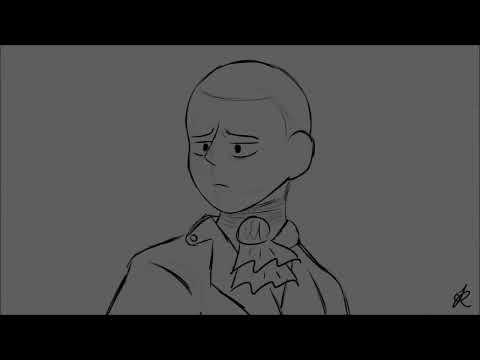
The track opens with Burr as cool narrator one last time, counting out "ten things you need to know" about the duel over a reprise of "Ten Duel Commandments." The groove borrows the hard-edged feel of the Notorious B.I.G. track that inspired the earlier number, but Alex Lacamoire's orchestration threads in strings and low brass so that it still sits comfortably inside a Broadway score. The effect is almost clinical: Burr is listing conditions, advantages, and technicalities as if he can still keep control by naming them.
As soon as the pistols go up, control slips. The ensemble reappears, time slows, and a single performer becomes the Bullet, moving across the stage in slow motion. Musically, the pulse thins out; by the time Hamilton begins his spoken soliloquy, the beat has drained away, leaving only sparse harmonic support. It is one of the rare spots in Hamilton where Miranda lets silence and near-silence do the heavy lifting. The shift from driving rap to almost free verse makes the moment feel less like theater and more like consciousness cracking open.
Odom's performance charts Burr's collapse with grim precision. He starts the song in sharp, almost smug command of the narrative, then slides into shock when the shot lands. He even stops rhyming for a moment - something that listeners and critics from outlets like HuffPost have noted as a subtle way of signaling that Burr has spun out of the carefully constructed persona he has carried all show.
Key takeaways
- Form as fate: the reprise of "Ten Duel Commandments" turns a once-witty list song into a ritual that marches the characters toward a foregone conclusion.
- Time distortion: the removal of the beat during Hamilton's monologue makes the stage feel suspended in a single instant, underlining his sense that he has lived with death at his shoulder for years.
- Two tragedies at once: Burr shoots, but the song never lets him become a simple villain; he is left alive, narrating his own downfall as the man remembered for killing Hamilton rather than for his own career.
- Intertext overload: motifs from "My Shot," "The Story of Tonight," "Wait For It," "One Last Time," and more all reappear, so that the entire show seems to echo inside this one scene.
Song Meaning and Annotations
Plot
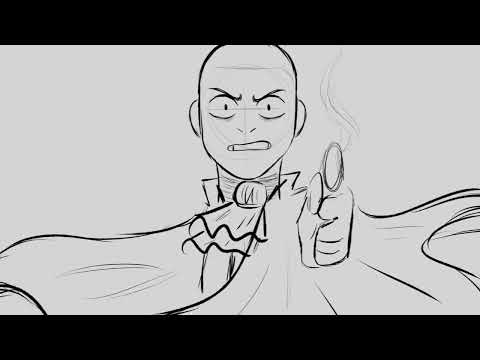
The song walks us step by step through the 1804 duel in Weehawken, New Jersey. Burr opens by listing contextual facts: the crossing at dawn, the choice of seconds, the placement of the sun, the reuse of the same pistols that killed Hamilton's son Philip, the geography of the ledge. We learn that Hamilton chooses the less advantageous northern position with the sun in his eyes, while Burr has the clearer view. Pendleton and Van Ness pace out the ground; the ten-count begins, echoing "Ten Duel Commandments."
At the count's climax, time seems to freeze. An ensemble member becomes the Bullet, crossing the stage in slow motion while Hamilton steps outside of linear time to address the audience and himself. He revisits his past - his mother, Washington, Eliza, Philip, his writings - and reflects on the idea of legacy. Eventually, he decides to throw away his shot in a literal sense by aiming at the sky. When time snaps back, the bullet hits; Burr reacts with a stunned "Wait!", but the shot has already found its mark. The rest of the piece deals with aftermath: Hamilton's final hours, Burr's hurried retreat, and his realization that history will remember him first and foremost as "the villain in your history."
Song Meaning
At its core, the number is about how people are remembered and who gets to frame that memory. Hamilton, whose life has been driven by the idea of writing himself into eternity, finally understands that he cannot control the narrative that comes after him. Instead of trying to win one more argument, he chooses to act according to his own sense of honor: he fires upward, trusting that Eliza and others will give his story meaning later.
Burr, by contrast, is trapped. This is the man who once sang "Wait For It" as his explanation for hanging back and choosing his moments. Here, he finally acts, but does so from a mixture of anger, fear, and wounded pride. The aftermath reveals the bitter joke: he has waited his whole life, then acts once at the worst possible time. As he says, "Now I'm the villain in your history" - a line critics have seized on as one of the show's most cutting bits of self-knowledge. According to HuffPost's analysis, the piece succeeds because it lets Burr see himself as history will see him, without granting him an easy escape.
The title phrase, "The world was wide enough," comes from a real line attributed to Burr, where he laments that he should have realized there was room in the world for both men. Miranda pulls that regret forward, making it the hinge of the song: a late admission that his rival did not need to be eliminated for him to thrive. As a critic quoted in Hamilton: The Revolution points out, the line also nods to Laurence Sterne's Tristram Shandy, underlining how steeped in literature the historical Burr was.
Annotations
"Legacy. What is a legacy? It is planting seeds in a garden you never get to see."
That couplet has taken on a life of its own, even outside the musical - Hillary Clinton quoted it in her 2016 convention speech, and business and academic writers have used it as shorthand for long-term thinking. In the context of the scene, it is Hamilton realizing that the point was never personal glory so much as leaving work and people behind who can continue what he started. The garden may be a nation, a family, or a body of writing.
"Now I am the villain in your history."
Miranda has said that this line was crucial in shaping Burr: he wanted him to be the one person on stage who understands that he will be flattened into a stock villain in the stories to come. Burr is still responsible for his actions, but he is painfully aware that the nuance will likely be lost once the story is retold by others. According to NME-style commentary and various interviews, the line captures that queasy mix of guilt and resentment that follows him.
"I imagine death so much it feels more like a memory."
This reprise of a line from "My Shot" lands differently here. In the earlier song, it sounded like swagger, the voice of a young man who lives hard and fast. In the duel, it reads as confession: Hamilton has rehearsed his death so many times that, in this frozen moment, it feels like he has been here before. Time collapses, and the audience sees just how long he has been bargaining with his own mortality.
Motifs, callbacks, and the Bullet
The song is thick with musical and lyrical callbacks. Snatches of "My Shot," "The Story of Tonight," "Wait For It," "One Last Time," and more drift in, reminding us of earlier turning points. Even the counting structure of "Ten Duel Commandments" comes back as a grim, procedural frame. Academic work on the show has noted how this density of self-reference turns the duel into a kind of recap episode in miniature, where every major theme - ambition, friendship, compromise, compromise refused - flickers through one last time.
The Bullet, an ensemble performer who has appeared in earlier scenes as an ominous figure, becomes literal death here. She moves slowly toward Hamilton while other characters try to pull him away, a physicalization of the idea that his choices have been leading him to this moment all along. It is one of those staging decisions that fans obsess over and that critics routinely single out when talking about the show’s craft.
History versus myth
Historically, it is unclear whether Hamilton truly aimed skyward with the intent not to hit Burr; eyewitness accounts differ, and duels were structured in ways that left plenty of room for ambiguity. Miranda leans into that uncertainty. On one hand, the character declares he will throw away his shot; on the other, stage directions and lighting suggest that he hesitates and that Burr fires out of genuine fear that Hamilton is still aiming at him. The audience is allowed to hold both possibilities at once, which is very much in keeping with the show's interest in the gaps between archive, biography, and stage narrative. According to NME magazine and other reviewers, that refusal to settle the debate is a feature, not a bug, because it keeps the story alive rather than locking it into a single reading.
Technical Information
- Artist: Leslie Odom Jr., Lin-Manuel Miranda & Original Broadway Cast of Hamilton
- Featured: Company vocals
- Composer: Lin-Manuel Miranda (music and primary text)
- Producer: Alex Lacamoire, Bill Sherman, Lin-Manuel Miranda; executive producers Ahmir "Questlove" Thompson and Tariq "Black Thought" Trotter
- Release Date: September 25, 2015 (cast album digital release)
- Genre: Hip hop, show tune, Broadway cast recording
- Instruments: vocals, drums, bass, strings, piano, guitar, synths and sound design elements
- Label: Atlantic Records
- Mood: tense, reflective, regretful, meditative
- Length: 5:02
- Track #: 22 on the standard album sequence
- Language: English
- Album: Hamilton: An American Musical (Original Broadway Cast Recording)
- Music style: narrative-heavy hip hop fused with orchestral theater writing and underscored spoken word
- Poetic meter: mixed; rapid dueling couplets in loose iambic patterns, contrasted with freer, prose-like monologue sections.
Questions and Answers

- Why does Hamilton aim at the sky in the musical?
- Within the show, Hamilton decides to "throw away his shot" in a literal sense by firing upward. It is framed as an act of principle: rather than kill Burr, he chooses a gesture that matches his lifelong obsession with legacy, trusting that his story will matter more than his survival. Historically, accounts differ; Miranda makes a clear choice for dramatic purposes.
- Why is the song titled "The World Was Wide Enough"?
- The title comes from a line attributed to Burr: he later wrote that had he read more Sterne and less Voltaire, he would have known the world was big enough for both him and Hamilton. The phrase becomes a shorthand for missed alternatives, the life where they both walk away from the duel.
- How does this number connect to the rest of the musical?
- It pulls in motifs from "My Shot," "The Story of Tonight," "Wait For It," "Ten Duel Commandments," and "One Last Time," so that nearly every major philosophical thread in the show resurfaces here: ambition, compromise, friendship, and the stories people tell about themselves.
- What role does silence play in the song?
- Silence is used as a dramatic shock. When Hamilton begins his inner monologue, the beat and much of the underscoring drop out. That void draws all attention to his words and creates the sensation that time has paused, making the audience feel as if they are inside his last thoughts.
- Does the song portray Aaron Burr as evil?
- Not really. It shows him making a terrible decision that he will spend the rest of his life regretting. By giving him lines like "Now I am the villain in your history," the piece lets him articulate how it feels to become the antagonist in someone else's story while still being a complicated human being.
- How accurate is the duel as shown in the song?
- The basic facts - location, participants, use of the same pistols from Philip's duel, Hamilton dying the next day with Eliza nearby - are rooted in historical accounts. Details like the exact height of Hamilton's aim are contested in the record, which the musical acknowledges by emphasizing uncertainty rather than documentary precision.
- Where does the "legacy" quote from this song show up outside the show?
- One of the most famous lines, "Legacy - what is a legacy? It is planting seeds in a garden you never get to see," has been quoted in political speeches, articles on leadership, and even scholarly work on entrepreneurship, often as a way of capturing long-horizon thinking in one sentence.
- Is "The World Was Wide Enough" a rap song, a show tune, or something in between?
- It is firmly in between. The opening and much of Burr's narration ride a hip hop groove, complete with internal rhymes and a sample-inspired beat, while the overall structure and orchestration sit inside a Broadway idiom, with strings, ensemble vocals, and an extended monologue that behaves more like spoken theater.
- Why does Burr shout "Wait!" twice?
- The double "Wait!" plays like a glitch in time: the first is the panicked reaction as he realizes what has happened; the second feels like an impossible attempt to rewind the moment. It echoes the idea from "Wait For It" that restraint is his guiding principle - except now his plea for patience arrives too late.
- What happens to Burr after the events described in the song?
- The musical hints at his slide into obscurity and disgrace: he is tried for treason after a failed expeditions scheme, acquitted but politically ruined, and spends his later years in relative exile. Historically, he lived more than three decades longer than Hamilton, but in the public imagination he became frozen at the moment of the shot.
Awards and Chart Positions
The duel song has not been released as a standalone single in the way that tracks like "Alexander Hamilton" or "My Shot" have circulated on playlists, so it does not have its own dedicated chart history. It lives inside the larger success story of the cast album and the stage production.
Album and show recognition
| Year | Award body | Category | Result | Relevance to this track |
|---|---|---|---|---|
| 2016 | Tony Awards | Best Musical | Won | "The World Was Wide Enough" is part of the score that earned the show its 11 Tony wins. |
| 2016 | Grammy Awards | Best Musical Theater Album | Won | The original cast recording, including this track, took the Grammy for its category. |
| 2016 | Pulitzer Prize | Drama (for the musical) | Won | The full work, of which this song is a crucial dramatic piece, received the Pulitzer for Drama. |
| 2023 | RIAA | Hamilton (Original Broadway Cast Recording) | Diamond | The album became the first cast recording to be certified Diamond, covering all 46 tracks including the duel number. |
How to Sing "The World Was Wide Enough"
Vocal style, range, and pacing
Most of the piece sits in a comfortable baritone range for Burr, with Hamilton's lines slightly higher but still accessible to many male voices. The key on the cast album leans toward the lower middle of the staff, which lets Odom keep his delivery nimble in the counting verses and then open up for more sustained phrases near the end. The tempo is moderate - urgent but not breakneck - and it relaxes noticeably during the monologue, where rhythm becomes more elastic.
If you are approaching the song as a singer, it helps to think of it as two linked tasks: precise, rhythmically tight storytelling in the early sections, and then grounded, almost spoken performance in the soliloquy. The goal is not to show off vocal fireworks so much as to make the text land clearly while riding the groove.
Step-by-step guide
- Learn the structure first. Map the song into sections: Burr's factual countdown, the approach to the duel, the slow-motion bullet passage with Hamilton's monologue, and the aftermath. Knowing where the energy spikes and where it drops will guide your vocal choices.
- Lock in the tempo and subdivision. Use a metronome or the original track to feel how the "ten things you need to know" fall against the beat. Practice speaking the lines in time before adding pitch, especially the long lists and internal rhymes.
- Work on clarity of diction. Burr carries an enormous amount of information in a short window. Go consonant by consonant on phrases like "We rowed across the Hudson at dawn" and "My friend William P. Van Ness signed on" so they stay crisp on top of the band.
- Shape Burr's emotional arc. Start the song with relative composure - matter-of-fact, almost detached. As you move past the shot, let the voice lose some polish: longer pauses, slight breaks, a sense that the words are surprising Burr as he says them.
- Switch gears for Hamilton's monologue. When the beat falls away, change your physical stance and tone. Think in longer thoughts rather than bars. Support the breath, but let the delivery sit closer to heightened speech than strict singing; the power comes from the ideas more than from any single high note.
- Mark breath points strategically. In both Burr's verses and Hamilton's reflections, avoid grabbing air in the middle of an important image. Mark breaths at punctuation marks or natural thought breaks, and practice sustaining key words like "legacy" or "history" with a steady line.
- Manage dynamics. Resist the urge to shout the climax. The most effective performances tend to save real volume for just a few lines, letting intensity come from focus and stillness elsewhere. Think of the final "The world was wide enough for both Hamilton and me" as more of a realization than a scream.
- Rehearse with and without accompaniment. Once you are comfortable with the recording or a backing track, try delivering sections a cappella to test your sense of time and pitch. Then return to the track and see how your interpretation sits inside the arrangement.
- Honor the text above all. This is a text-driven scene. If you ever have to choose between a showy vocal inflection and making a line intelligible, choose clarity. The song hits hardest when listeners follow each turn of the story.
Additional Info
The duel song has seeped into public life in ways few Broadway tracks manage. When Hillary Clinton accepted the Democratic nomination in 2016, she quoted Hamilton's soliloquy about planting seeds in a garden you never get to see, bringing a line from this number to a national political stage. That moment, endlessly replayed on news and social media, underscored how widely the show had permeated civic language.
The piece has also sparked a small body of academic writing. Essays on the "poetics of America" and business case studies alike have picked up the legacy line as a way to talk about long-term projects, succession, and intergenerational work. In those contexts, Hamilton stops being just a historical figure or a character; he becomes a metaphor for anyone pouring effort into a future they may never personally inhabit.
For the creative team, this was always meant to be one of the show's pivots. Hamilton: The Revolution recounts how Miranda and director Thomas Kail honed the duel sequence - tinkering with the length of Hamilton's monologue, the use of the Bullet, and the question of how much time to spend after the shot. The final version lets the audience sit with Burr's stunned narration, then pivots into the broader reckoning of "Who Lives, Who Dies, Who Tells Your Story", completing the arc from one man's life to the question of national memory.
Key Contributors
| Subject | Verb | Object |
|---|---|---|
| Lin-Manuel Miranda | writes and originates | the role of Hamilton and the composition "The World Was Wide Enough" |
| Leslie Odom Jr. | performs | Aaron Burr's lead vocal on the original Broadway cast recording |
| Alex Lacamoire | orchestrates and produces | the track as part of the cast album |
| Bill Sherman | co-produces | the recording of the duel song for Atlantic Records |
| Ahmir "Questlove" Thompson | serves as | executive music producer for the cast album |
| Tariq "Black Thought" Trotter | serves as | executive producer, helping bridge hip hop and theater sensibilities |
| Atlantic Records | releases | Hamilton: An American Musical (Original Broadway Cast Recording) worldwide |
| Thomas Kail | directs | the stage production that gives the song its iconic choreography |
| Andy Blankenbuehler | choreographs | the slow-motion duel and Bullet movement that define the scene |
Sources: Hamilton cast album credits; Wikipedia and academic essays on "The World Was Wide Enough"; Apple Music and Amazon Music track listings; BroadwayWorld and Ticketmaster song order guides; journalism from NPR, HuffPost, and other major outlets.
Music video
Hamilton Lyrics: Song List
- Act 1
- Alexander Hamilton
- Aaron Burr, Sir
- My Shot
- The Story of Tonight
- The Schuyler Sisters
- Farmer Refuted
- You'll Be Back
- Right Hand Man
- A Winter's Ball
- Helpless
- Satisfied
- The Story of Tonight (Reprise)
- Wait For It
- Stay Alive
- Ten Duel Commandments
- Meet Me Inside
- That Would Be Enough
- Guns and Ships
- History Has Its Eye on You
- Yorktown
- What Comes Next?
- Dear Theodosia
- Non-Stop
- Act 2
- What'd I Miss
- Cabinet Battle #1
- Take a Break
- Say No to This
- The Room Where It Happens
- Schuyler Defeated
- Cabinet Battle #2
- Washington on Your Side
- One Last Time
- I Know Him
- The Adams Administration
- We Know
- Hurricane
- The Reynolds Pamphlet
- Burn
- Blow Us All Away
- Stay Alive (Reprise)
- It's Quiet Uptown
- The Election of 1800
- The Obedient Servant
- Best of Wives and Best of Women
- The World Was Wide Enough
- Finale (Who Lives, Who Dies, Who Tells Your Story)
- Off-Broadway musical numbers, 2014 Workshop
- Ladies Transition
- Redcoat Transition
- Lafayette Interlude
- Tomorrow There'll Be More Of Us
- No John Trumbull
- Let It Go
- One Last Ride
- Congratulations
- Dear Theodosia (Reprise)
- Stay Alive, Philip
- Ten Things One Thing