
Just Around the Riverbend (Pocahontas) Lyrics
Just Around the Riverbend (Pocahontas)
[Pocahontas]What I love most about rivers is:
You can't step in the same river twice
The water's always changing, always flowing
But people, I guess, can't live like that
We all must pay a price
To be safe, we lose our chance of ever knowing
What's around the riverbend
Waiting just around the riverbend
I look once more
Just around the riverbend
Beyond the shore
Where the gulls fly free
Don't know what for
What I dream the day might send
Jut around the riverbend
For me
Coming for me
I feel it there beyond those trees
Or right behind these waterfalls
Can I ignore that sound of distant drumming
For a handsome sturdy husband
Who builds handsome sturdy walls
And never dreams that something might be coming?
Just around the riverbend
Just around the riverbend
I look once more
Just around the riverbend
Beyond the shore
Somewhere past the sea
Don't know what for ...
Why do all my dreams extend
Just around the riverbend?
Just around the riverbend ...
Should I choose the smoothest curve
Steady as the beating drum?
Should I marry Kocoum?
Is all my dreaming at an end?
Or do you still wait for me, Dream Giver
Just around the riverbend?
Song Overview
Review and Highlights
Quick summary
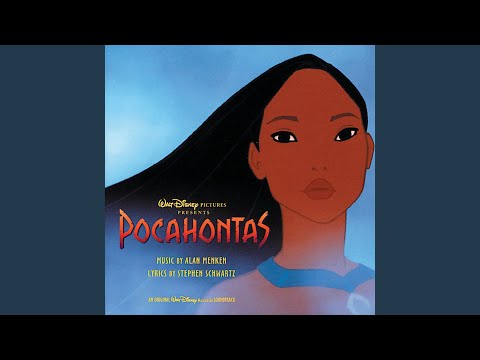
- Featured in Pocahontas (1995) as Pocahontas's main "I want" moment, framed by the river as metaphor.
- Music by Alan Menken and words by Stephen Schwartz.
- Performed in the film by Judy Kuhn as the singing voice of Pocahontas.
- Released on the film soundtrack on May 30, 1995, then resurfaced on later Disney collections and The Legacy Collection reissue line.
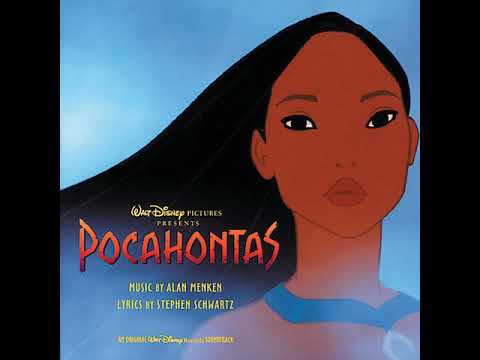
Pocahontas (1995) - animated film sequence - non-diegetic. The song sits on a visual hinge: the river offers two ways to live, the safe straight run and the turn into the unknown. Pocahontas is not serenading another character. She is arguing with herself, using motion and water to make the argument feel physical. It is one of those Disney numbers where the scenery is not set dressing, it is the point.
Key takeaways
- Menken builds momentum through contour: the melody keeps leaning forward, like curiosity refusing to stay still.
- Schwartz writes decisive language: the phrases keep choosing verbs that move, not verbs that wait.
- The arrangement paints weather and current: you can hear the push and pull of water in the way the accompaniment swells and releases.
- It balances restlessness and responsibility: the tension is not rebellion for its own sake, it is a search for a truer path.
Creation History
The track was written for the 1995 feature as Pocahontas's defining internal debate, and it was issued on the official soundtrack the same day as the album release. That timing matters: the song entered homes as a standalone track, not only as a scene. As stated on the Oscars site, Menken and Schwartz were at the center of the film's music recognition in that awards era, and the songwriting approach here shows why: it is character-first, but it is engineered for cinematic movement.
Song Meaning and Annotations
Plot
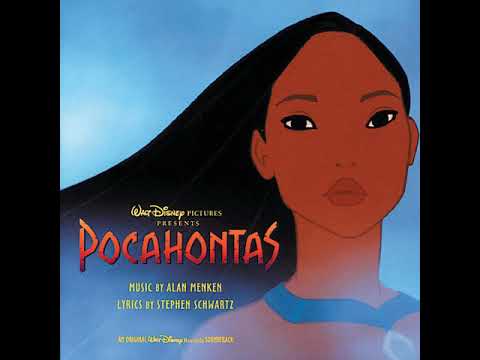
Pocahontas is pulled between what her community expects and what her instincts demand. The river becomes her thought process. One direction looks calm and mapped. The other looks risky, but alive. The number turns that choice into a ride: she moves, the music moves with her, and the scene makes uncertainty feel like a force of nature rather than a private worry.
Song Meaning
The meaning is not mystery, it is motion. The river stands in for a life that changes shape, and the lyric frames change as the honest option rather than a guilty impulse. The song also quietly refuses easy certainty. It does not promise that the bend will be safe. It argues that staying still can be its own danger.
Annotations
"What I love most about rivers is you cannot step in the same river twice"
This line is a thesis in disguise. Change is not a surprise here, it is the rule, and the rule becomes permission. If the river is always new, then choosing the unknown is not betrayal, it is alignment.
"The water is always changing, always flowing"
Schwartz doubles down on the idea with plain language. No poetry maze, no clever detour, just insistence. The song wants the listener to feel the current under the feet.
"Just around the riverbend"
It is a hook that behaves like a horizon. You cannot see it, but you can sense it. That is why it works as an "I want" number: desire is often a shape you feel before you can name it.
Genre and rhythm fusion
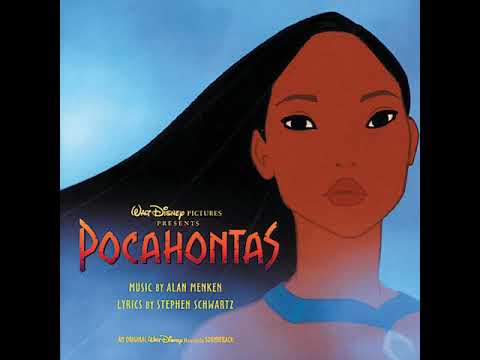
It is a show tune at heart, but it is staged like a nature sequence. The meter gives it a rolling feel, and the orchestration keeps suggesting water, wind, and a path that will not hold a straight line for long.
Emotional arc
It begins with mild frustration at predictability, builds into a bright insistence, then lands on a kind of brave curiosity. The climax is not defiance. It is clarity, the moment where uncertainty becomes a choice rather than a fog.
Instrumentation and production
The backing is designed to support a vocal that stays intimate while the scene looks vast. The accompaniment swells at key decision points, then pulls back to let Kuhn's phrasing read like thought. According to Billboard's Disney-hits ranking feature, the film's musical identity helped power strong soundtrack performance, and this track is part of that identity: a narrative song that still plays cleanly outside the film.
Technical Information
- Artist: Judy Kuhn
- Featured: None credited
- Composer: Alan Menken
- Producer: Alan Menken; Stephen Schwartz (soundtrack album credits)
- Release Date: May 30, 1995
- Genre: Show tune; film soundtrack
- Instruments: Vocal with orchestral accompaniment
- Label: Walt Disney Records
- Mood: Restless curiosity, then resolve
- Length: 2:28 (common soundtrack listing)
- Track #: 6 (soundtrack sequencing)
- Language: English
- Album (if any): Pocahontas: An Original Walt Disney Records Soundtrack
- Music style: Character "I want" song with flowing orchestral color
- Poetic meter: Accent-driven with a rolling waltz-like feel
Questions and Answers
- What scene job does the song perform?
- It is the character decision engine. The plot has not yet fully collided with the outside world, so the song sets Pocahontas's internal compass.
- Why is the river metaphor so effective?
- Because it turns choice into physics. The listener can feel a current pulling, which makes the debate less abstract and more bodily.
- Who sings it in the film?
- Judy Kuhn performs it as Pocahontas's singing voice on the official soundtrack.
- Who wrote it?
- Alan Menken composed the music and Stephen Schwartz wrote the words.
- Is it meant to be a love song?
- No. It is about identity and direction. Romance comes later in the story, but this track is about choosing movement over certainty.
- Why does it feel like it is always leaning forward?
- The melodic contour keeps rising and resetting, and the accompaniment swells like a current. The arrangement refuses to sit still.
- Did other artists cover it?
- Yes. SecondHandSongs documents later covers, including a medley-style treatment by the a cappella group DCappella.
- Is there notable recognition tied to the film's music era?
- Yes. The film won Academy Awards for its score and for "Colors of the Wind," which frames the entire soundtrack as an awards-season benchmark for Disney of that period.
Awards and Chart Positions
The track was not pushed as a pop single, so its most visible commercial story is attached to the album. The Pocahontas soundtrack reached No. 1 on the Billboard 200 and is described as triple-platinum in soundtrack references. The awards headline belongs to the film's music more broadly: the Oscars site lists Pocahontas as the winner for Music (Original Musical or Comedy Score) and for Music (Original Song) with "Colors Of The Wind."
| Item | Market | Result | Date reference |
|---|---|---|---|
| Pocahontas soundtrack album | US | Billboard 200 peak - 1 | July 22, 1995 (chart date cited in soundtrack references) |
| Pocahontas soundtrack album | US | RIAA level - triple-platinum (as commonly reported) | 1995 (year of release and certification reporting) |
| Colors Of The Wind | Academy Awards | Winner - Music (Original Song) | 68th Academy Awards (ceremony date March 25, 1996) |
| Pocahontas | Academy Awards | Winner - Music (Original Musical or Comedy Score) | 68th Academy Awards (ceremony date March 25, 1996) |
A separate modern footnote is worth mentioning carefully: Disney Music social posts have stated that "Just Around The Riverbend" received a Gold certification by the RIAA. Treat that as an announced milestone rather than a fully documented public database entry in this writeup.
How to Sing Just Around the Riverbend
This is a singer-actor song that wants breath and line more than brute volume. The vocal sits in a friendly range for many mezzos and sopranos, but it demands clean legato over a rolling pulse. Track-metric databases commonly list it in C major, and vocal-range listings commonly place it around G3 to E5. The tempo is often reported in a way that reflects the meter: some sources describe a fast count near 160, while others suggest feeling it as half-time around 80.
- Key: commonly listed as C major
- Tempo: often described around 160 BPM, with a half-time feel around 80 BPM
- Typical vocal range: commonly listed as G3 to E5
- Common issues: running out of breath on long phrases, flattening the dynamic build, and rushing the rolling meter
- Start with the river pulse. Count in 3 and tap the beat like a gentle oar stroke. The groove should feel like moving water, not marching.
- Map breaths on the long lines. Mark two or three silent, quick inhales that do not interrupt the thought. The song is persuasion, not punctuation.
- Sing legato with crisp consonants. Keep the line connected, but let key consonants land clearly so the story stays intelligible.
- Build dynamics in steps. Do not jump from soft to loud. Let the sound grow as the lyric commits to the bend.
- Shape the hook as horizon. On the title phrase, open vowels slightly and lift the resonance, like the view just widened.
- Protect the top. Approach higher notes with forward placement and steady breath, not a shove. The sound should bloom, not strain.
- Practice materials. Work with a piano reduction to lock the harmonic turns, then rehearse with the track to match phrasing and scene-like timing.
Additional Info
Cover culture has treated the song as a showcase for storytelling singers rather than belters. SecondHandSongs lists versions including DCappella's medley approach, and live pop-theater events have used it as a "princess repertory" staple, which makes sense: it is a self-contained dramatic monologue with a natural lift built into the refrain.
The soundtrack context is also part of its legacy. The broader album success, combined with the Academy Awards sweep for song and score, turned the Pocahontas music package into a reference point for Disney's mid-1990s strategy: narrative tracks for the film, plus radio-facing singles for the credits. This track sits firmly in the narrative lane, and that is why it still reads like a scene even when you only hear audio.
Key Contributors
| Entity | Type | Relationship (S-V-O) |
|---|---|---|
| Alan Menken | Person | Alan Menken composed the music for the song. |
| Stephen Schwartz | Person | Stephen Schwartz wrote the words for the song. |
| Judy Kuhn | Person | Judy Kuhn performed the song as the singing voice of Pocahontas. |
| Pocahontas (1995) | Work (Film) | The film uses the song as Pocahontas's "I want" statement alongside the river sequence. |
| Walt Disney Records | Organization | Walt Disney Records released the soundtrack album containing the track. |
| DCappella | MusicGroup | DCappella released a documented cover in a medley format. |
| Academy of Motion Picture Arts and Sciences | Organization | The Academy awarded Pocahontas for song and score at the 68th ceremony. |
Sources: Oscars - The 68th Academy Awards (1996), Wikipedia - Just Around the Riverbend, Wikipedia - Pocahontas (soundtrack), SecondHandSongs - Just Around the Riverbend, Apple Music - Pocahontas (Original Motion Picture Soundtrack), Billboard feature on major Disney hits, Singing Carrots - vocal range and key, Disney Music social certification post, YouTube - official audio upload