
Supercalifragilisticexpialidocious (Mary Poppins) Lyrics
Supercalifragilisticexpialidocious (Mary Poppins)
Supercalifragilisticexpialidocious!Even though the sound of it
is something quite atrocious
If you say it loud enough you'll
always sound precocious
Supercalifragilisticexpialidocious!
Um diddle diddle diddle
um diddle ay! (etc.)
Because I was afraid to speak
when I was just a lad
Me father gave me nose
a tweak
and told me I was bad
But them one day I learned
a word
That saved me achin' nose
The biggest word I ever heard
And this is how it goes: Oh!
Supercalifragilisticexpialidocious!
Even though the sound of it
is something quite atrocious
If you say it loud enough you'll
always sound precocious
Supercalifragilisticexpialidocious!
Um diddle diddle diddle
um diddle ay! (etc.)
He traveled all around
the world
And everywhere he went
He'd use his word and all
would say
"There goes a clever gent"
When dukes and maharajas
pass the time of day with me
I say me special word and then
they ask me out to tea
Supercalifragilisticexpialidocious!
Even though the sound of it
is something quite atrocious
If you say it loud enough you'll
always sound precocious
Supercalifragilisticexpialidocious!
Um diddle diddle diddle
um diddle ay! (etc.)
So when the cat had got
your tongue
There's no need for dismay
Just summon up this word
and then
You've got a lot to say
But better say it carefully or it
could change your life . . .
She's
Supercalifragilisticexpialidocious!
Supercalifragilisticexpialidocious!
Supercalifragilisticexpialidocious!
Supercalifragilisticexpialidocious!
Song Overview

Review and Highlights
Quick summary
- First introduced on screen in the 1964 film Mary Poppins, with a bustling call-and-response built for a room full of voices.
- The hook is not just a long word - it is a theatrical device: the cast turns awkward silence into a shared chant.
- It later moved into the stage musical in a new setting (Mrs Corry's shop), where letters become the fuel for invention.
- The single pairing with "A Spoonful of Sugar" helped the song live beyond the movie, as a novelty-pop curio that still reads as craft.
- In the 2018 sequel, the filmmakers chose not to reprise the number, treating the original as untouchable shorthand for the whole Mary Poppins mythos, according to Entertainment Weekly magazine.
Key takeaways
If you ever needed proof that film songwriting can be both silly and surgical, this is it. The joke is the length of the word, sure - but the real trick is how the Shermans make length feel like momentum. Each syllable lands like a tap step: clipped, buoyant, and designed to travel. The chorus works because it is communal. You can picture the cast, then the audience, then a classroom, then a pub choir, each group inheriting the rhythm like a chant passed hand-to-hand.
There is also a small act of cultural camouflage happening. The number borrows the snap of music hall and the clean machinery of Broadway patter, then dresses it in Edwardian trim so it feels "period" without turning dusty. That is why it keeps resurfacing: it does not belong to one decade. It belongs to performance itself.
Soundtrack and media placements
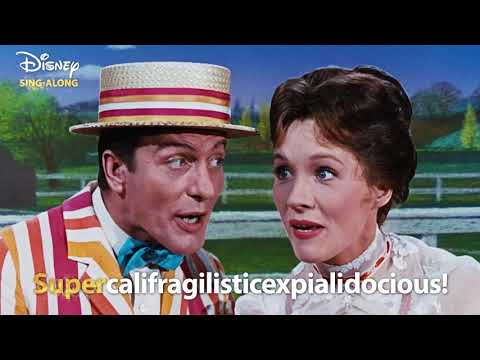
Mary Poppins (1964) - film - non-diegetic set-piece that plays like diegetic celebration. The number arrives in a sequence that treats language as spectacle: a crowd gathers, the word becomes the party, and spelling turns into choreography. In the movie, the momentum is the point: a social moment flips into musical momentum before anyone can blink.
Mary Poppins - stage musical (2004) - stage - diegetic-adjacent in a heightened theatrical space. Mrs Corry's shop becomes the engine: letters are chosen, nonsense words are argued over, then Mary builds the famous mouthful as a solution. The staging practically invites you to see the cast inventing the number in real time, and the script even notes the tempo tightening as the spelling becomes a group sport.
Mary Poppins Returns (2018) - film - not performed as a full reprise. The sequel keeps the word and the melody as a reference point rather than a retread: the creators argued that some icons work best when left in their original frame, and the soundtrack includes a cue that quotes the theme in an end-title suite.
Creation History
The Sherman Brothers wrote the song for Walt Disney's Mary Poppins, aiming for something that could sit inside an early-1900s London setting while still popping like a contemporary show tune. The film recording was shaped by Irwin Kostal's orchestrations and the cast's crisp articulation - a necessary choice, because the joke dies if the consonants blur. The single release paired it with "A Spoonful of Sugar," a neat summary of the score's two faces: disciplined charm on one side, verbal fireworks on the other.
Song Meaning and Annotations
Plot
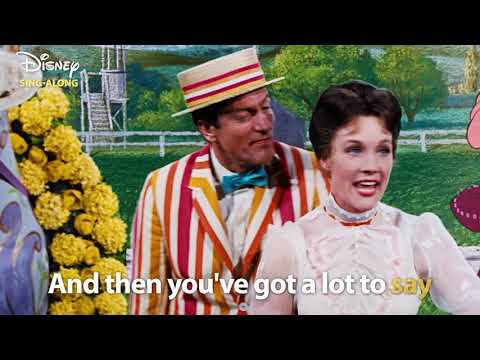
The scene logic is simple and stage-smart: someone runs out of the right thing to say, the world pauses, then a new word arrives as a kind of escape hatch. What follows is less a "song about a word" than a demonstration of what a word can do when a group agrees to believe in it. The verses set up the problem (speech feels too small), then the chorus detonates as the solution (speech gets gloriously oversized).
Song meaning
The meaning lives in the utility of nonsense. The word is not meant to define a single emotion; it is meant to replace the whole search for precision with a burst of confidence. In that way, the song treats language like a costume change: when you cannot find the perfect phrase, you put on a bigger one. The mood lifts because the characters stop trying to be exact and start trying to be together.
Under the sparkle, there is a sly argument about class and performance. Proper conversation can be a cage, especially in a world that prizes being "correct." This number kicks the door open. It says: speak boldly, even if the boldness is playful. A little theatricality can be its own honesty.
Annotations
When trying to express oneself it's frankly quite absurd
The opening is an impatient shrug at polite vocabulary. It is not anti-language; it is anti-fussiness. The lyric sets up a problem that every shy person knows: sometimes you want a feeling, not a thesaurus.
To leaf through lengthy lexicons to find the perfect word
The alliteration is the joke and the critique at once. The song is already doing what it claims to reject (showing off), which is part of its charm: it mocks verbal gymnastics while nailing them.
If you say it loud enough you'll always sound precocious
This is the thesis in one line. Confidence is performance. The song is a manual for sounding brave by committing to the bit.
Even though the sound of it is something quite atrocious
The lyric grants skeptics their point, then refuses to care. The number does not deny awkwardness; it weaponizes it as comedy and momentum.
Genre and rhythm
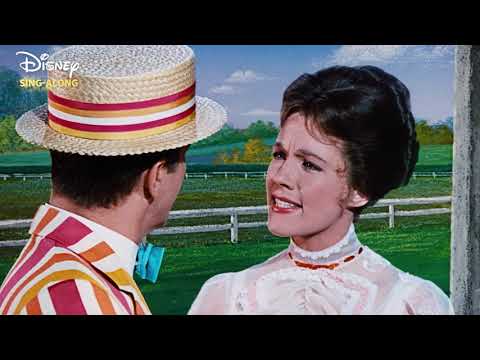
This is show-tune craft with music-hall bounce: brisk two-step energy, bright brass-and-woodwind color, and a chorus built to be shouted in unison without losing pitch. The rhythm is the secret driver. Syllables land like percussion, and the repeated spelling turns pronunciation into groove. It is also a call-and-response number in disguise, which is why it works for audiences: you are invited to join the cast, not merely watch them.
Emotional arc
The arc runs from constraint to release. Verses talk about being stuck, then the chorus kicks off a communal cure. The funniest part is how the cure is not "better communication" but "bigger communication." The song laughs at the idea of perfect expression, then gives you a new tool: shared silliness that feels oddly empowering.
Cultural touchpoints
The word became bigger than the scene. Dictionaries eventually had to deal with it, and the Oxford English Dictionary later added an entry for the term, underlining how a film lyric can wander into everyday life. The American Film Institute also treated the number as a pillar of screen music history, ranking it in its major movie-song list. And in the stage version, the spelling and gesture work lets productions lean into physical language as much as verbal language - a neat theatrical upgrade that keeps the core idea intact.
Technical Information
- Artist: Julie Andrews and Dick Van Dyke
- Featured: The Pearlie Chorus (film soundtrack version)
- Composer: Richard M. Sherman; Robert B. Sherman
- Producer: Jimmy Johnson (soundtrack album credit)
- Release Date: 1964 (single and film soundtrack era)
- Genre: Show tune; film musical
- Instruments: Orchestra (brass, woodwinds, strings, percussion); ensemble vocals
- Label: Disneyland Records (single); Buena Vista Records (album releases credited in soundtrack documentation)
- Mood: Buoyant, comic, triumphant
- Length: 2:03 (common soundtrack listing)
- Track #: Varies by edition (film soundtrack and later reissues)
- Language: English (with well-known localized title variants in some dubbing markets)
- Album: Mary Poppins: Original Cast Soundtrack
- Music style: British music-hall flavor filtered through mid-century Broadway technique
- Poetic meter: Mixed meter with a strong trochaic bounce in the hook and patter-driven phrasing in the verses
Questions and Answers
- Why does the song feel like it is moving faster than it actually is?
- Because the hook is built from syllables that function like percussion. Even at a moderate tempo, the consonant clusters create the sensation of acceleration.
- Is it a novelty song or a theatre song?
- Both. As a single, it played like novelty-pop. In context, it behaves like a classic ensemble number: it advances mood, bonds characters, and gives the cast something athletic to do.
- What is the dramatic job of the long word?
- It replaces precision with permission. Instead of searching for the correct phrase, the characters agree to be bold together, and the scene becomes a celebration rather than an explanation.
- Why is the spelling section so satisfying?
- It turns pronunciation into choreography. Audiences love participatory structure, and spelling is a built-in way to invite everyone into the rhythm without needing vocal virtuosity.
- How did the stage musical reinvent the setup?
- It shifts the action to Mrs Corry's shop, where letters are physically chosen and nonsense is debated. That makes the word feel "made" onstage, not merely announced.
- Why did the 2018 sequel avoid a full reprise?
- The creative team framed the number as inseparable from the original film, preferring new songs and lighter quotation rather than direct repetition, according to Entertainment Weekly magazine.
- Does the song have a hidden message about language?
- Yes: language is not only about accuracy, it is also about connection. A playful word can be socially useful when it helps people share a moment.
- Is the tune tied to a specific era of London music?
- It borrows the snap of Edwardian music hall while using Broadway-style craftsmanship, which is why it sounds old-fashioned and modern at the same time.
- What makes it hard to perform well?
- Diction and ensemble timing. If consonants smear or the group lands syllables unevenly, the joke loses its precision and the groove collapses.
- Why does it endure outside the film?
- Because it is modular. Schools can chant it, choirs can arrange it, bands can swing it, and theatre casts can stage it as a full-body spelling routine.
Awards and Chart Positions
The song itself did not need a trophy to become a cultural passport, but it traveled with an awards juggernaut. The Academy Awards database lists Mary Poppins as the 1965 winner for Best Original Song with "Chim Chim Cher-ee" and winner for music score categories, and GRAMMY.com documents major wins for the soundtrack in the same era. In that glow, this number became the crowd-pleaser that crossed into pop charts as a single.
| Recognition | Year | Result |
|---|---|---|
| American Film Institute - movie songs list placement | 2004 | Ranked #36 |
| US Billboard Hot 100 (single peak) | 1965 | #66 |
| US Adult Contemporary (single peak) | 1965 | #14 |
| US Cash Box Top 100 (single peak) | 1965 | #80 |
Additional Info
The afterlife of the song is almost as entertaining as the original staging. A 1960s pop cover by Teresa Brewer helped translate the movie number into radio-friendly novelty format, and later renditions range from family-record staples to instrumental holiday-world detours. Secondhand catalogs of performances show how often arrangers reach for it when they need instant recognition and a built-in wink.
One small storytelling detail I love: the stage version frames the word as something you can build from scraps. That shift matters. Film magic drops the word into the world; theatre makes you watch the cast earn it, letter by letter, like a communal invention. It is the same punchline, but with carpentry marks still visible.
Key Contributors
| Entity | Type | Relation | Statement |
|---|---|---|---|
| Richard M. Sherman | Person | Composer-lyricist | Richard M. Sherman co-wrote the song for Mary Poppins. |
| Robert B. Sherman | Person | Composer-lyricist | Robert B. Sherman co-wrote the song for Mary Poppins. |
| Julie Andrews | Person | Performer | Julie Andrews performs the film recording as Mary Poppins. |
| Dick Van Dyke | Person | Performer | Dick Van Dyke performs the film recording as Bert. |
| Irwin Kostal | Person | Arranger-conductor | Irwin Kostal shaped the orchestral sound of the film's music. |
| Walt Disney Studios | Organization | Production | Walt Disney Studios produced the 1964 film where the song debuted. |
| Disneyland Records | Organization | Label | Disneyland Records issued the single pairing with "A Spoonful of Sugar" in common discographies. |
| Mary Poppins (1964 film) | Work | Original appearance | The song appears as a signature ensemble moment in the film. |
| Mary Poppins (stage musical) | Work | Adaptation appearance | The stage musical re-stages the number in Mrs Corry's talking shop scene. |
| American Film Institute | Organization | Recognition | The American Film Institute ranked the song in its major movie-song list. |
Sources: Oscars.org ceremony database (1965), GRAMMY.com awards coverage, American Film Institute movie songs list, Oxford English Dictionary entry page, Entertainment Weekly feature on Mary Poppins Returns, Disney UK official sing-along video page, SecondHandSongs performance listings, Disneyland Records discography pages