The Work Song (Cinderella) Lyrics — Disney: 60 Years of Musical Magic
The Work Song (Cinderella) Lyrics
That's the time that they begin it
Cinderelly, Cinderelly
Cinderella
Cinderelly, Cinderelly
Night and day it's Cinderelly
Make the fire, fix the breakfast
Wash the dishes, do the mopping
And the sweeping and the dusting
They always keep her hopping
She goes around in circles
Till she's very, very dizzy
Still they holler
Keep a-busy Cinderelly
We can do it, we can do it
We can help our Cinderelly
We can make her dress so pretty
There's nothing to it, really
We'll tie a sash around it
Put a ribbon through it
When dancing at the ball
She'll be more beautiful than all
In the lovely dress we'll make for Cinderelly
Hurry, hurry, hurry, hurry
Gonna help our Cinderelly
Got no time to dilly-dally
We gotta get a-goin'
I'll cut it with these scissors
And I can do the sewing
Leave the sewing to the women
You go get some trimmin'
And we'll make a lovely dress for
Cinderelly
We'll make a lovely dress for
Cinderelly
Song Overview
Review and Highlights
Quick summary
- 1950 animated-film work-chant that turns sewing into choreography: snips, tugs, stitches, all on beat.
- Written by Mack David, Jerry Livingston, and Al Hoffman, voiced by Jimmy MacDonald with a team of squeaky helpers.
- Diegetic scene fuel: the mice sing while they build Cinderella's dress, so the rhythm is literally the labor.
- Later reimagined by outside artists, most famously Take 6 on a 1995 Disney tribute release.
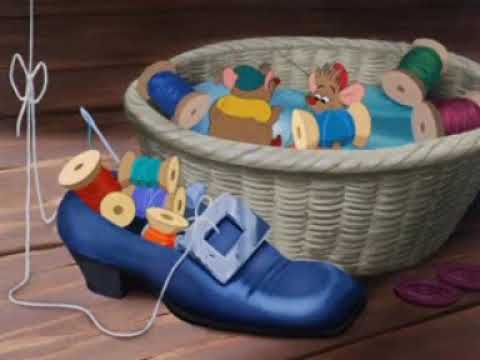
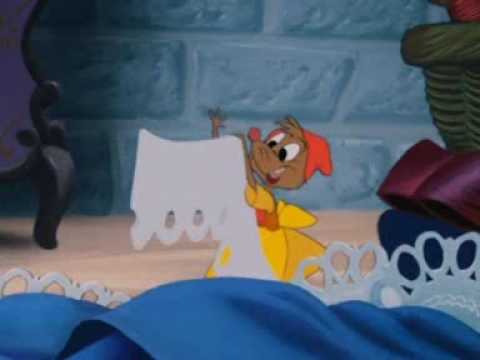
Cinderella (1950) - film soundtrack cue - diegetic. The mice stage a miniature garment factory in the attic, hauling thread, pinning cloth, and improvising teamwork while Cinderella is offscreen. Approx placement: early in the film, before the ball preparations crest into magic. Why it matters: it sells community as a machine, with the melody acting like a conveyor belt that never jams.
This is one of those Disney numbers that looks simple until you watch how much it has to do. It is not just background cheer, it is a timing system for animation. Every repeated phrase lands like a hammer tap, giving the scene permission to cut fast: spool, stitch, knot, pull, grin, repeat. I have always liked how the writing keeps the tune compact. No grand melodic detours, no extra decoration. The song knows its job is to keep hands moving.
There is a sly character angle too. Cinderella is not singing here, yet the film makes her feel present through the mice. Their chorus becomes her support network in sound, and the number turns kindness into something you can hear with your eyes closed.
Creation History
According to IMDb soundtrack credits, the piece was finished in 1949 and credited to Mack David, Jerry Livingston, and Al Hoffman, with performance attributed to Jimmy MacDonald and several mice. The trio wrote the film's core song set in a Tin Pan Alley style that could glide between lullaby, comic patter, and ballroom glow, and this track is their briskest bit of craft: melody as practical tool.
Song Meaning and Annotations
Plot
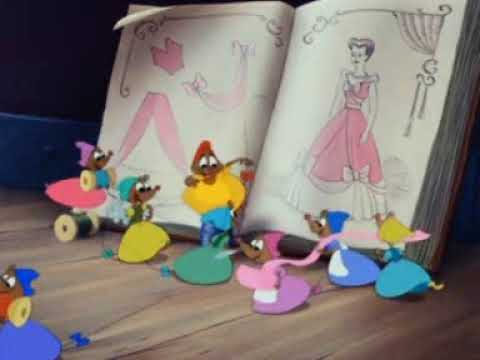
A group of mice decide Cinderella deserves a break, then organize themselves into an impromptu workshop. The song narrates the process in real time: the leader calls the plan, the crew answers, and the visual gag is that these tiny bodies run a full production line. The scene builds momentum until the dress is nearly complete, setting up the later conflict when it gets wrecked.
Song Meaning
The meaning is teamwork without speeches. The lyrics are basically a to-do list, but the deeper message is about dignity in helping. Nobody is doing this for applause. They do it because they can, because it is right, and because it is more fun when everyone pulls in the same direction. The mood stays bright, yet there is grit underneath: work is hard, so they turn it into play and move anyway.
Annotations
"Cinderelly, Cinderelly"
A nickname that functions like a drum hit. It keeps the chorus tight and reminds you who the whole operation is for, without dragging Cinderella into the scene.
"We can do it"
This is the engine. Short, repeatable, and built for call-and-response. It is less a pep talk than a switch that flips the room from chaos to order.
"Time to start"
The line sounds like stage direction, which is exactly what it is. The song is half narration, half workflow chart, and the animation follows it like a metronome.
Genre and rhythm
It plays like a children’s march filtered through swing-era studio songwriting: steady pulse, compact phrases, and a chorus that can be chanted by a crowd. The rhythm never shows off, it just keeps pushing the scene forward, one stitch at a time.
Symbols and subtext
Needle and thread become symbols of care. The mice are literally weaving a different future for Cinderella, and the song frames that labor as communal pride rather than sacrifice. It is one of Disney’s smartest tricks: making support feel active, not sentimental.
Technical Information
- Artist: Mice Chorus (Cinderella cast recording credits vary by release)
- Featured: Jimmy MacDonald (lead voice) with ensemble mouse voices
- Composer: Jerry Livingston
- Producer: Walt Disney Productions (film production credit context)
- Release Date: February 15, 1950 (album-release metadata for later catalog editions)
- Genre: Film soundtrack; ensemble work chant
- Instruments: Vocal ensemble; studio orchestra (light, rhythmic scoring)
- Label: Walt Disney Records (later soundtrack editions)
- Mood: Brisk, playful, industrious
- Length: Track timings vary by edition (often appears inside a longer suite)
- Track #: Often packaged within a suite on legacy soundtrack issues
- Language: English
- Album (if any): Cinderella (Motion Picture Soundtrack) - Walt Disney Records legacy editions
- Music style: Call-and-response chorus with tight rhythmic phrasing
- Poetic meter: Accentual, chant-driven phrasing designed for clear cutoffs
Questions and Answers
- Who wrote the song?
- It is credited to Mack David, Jerry Livingston, and Al Hoffman in the film’s documented soundtrack credits.
- Who leads the vocal in the scene?
- Soundtrack credits commonly identify Jimmy MacDonald as the lead voice, backed by an ensemble of mice.
- Is the singing diegetic?
- Yes, it is staged as part of the scene: the mice sing while they work, and the action is timed to the phrasing.
- Why does the chorus repeat so much?
- Because repetition is the motor. The hook is built to loop while the animation cuts rapidly across tiny tasks.
- What is the song really saying?
- It is a celebration of helping without bargaining. The lyrics talk about work, but the message is shared care made practical.
- Why does it feel like a production line?
- The melody is segmented into short commands and responses, which maps neatly onto a visual assembly process.
- Did it get notable cover versions?
- Yes. Take 6 recorded a prominent version for a 1995 Disney tribute release, and cover databases list additional choral, orchestral, and lullaby-style interpretations.
- How is it used in modern vocal training?
- ABRSM includes it in musical theatre syllabi as a manageable, character-forward selection, with published guidance on key and range.
- What makes it tricky to perform well?
- Keeping the diction crisp while staying light. If you push the sound too hard, the number loses its quick-footed charm.
Awards and Chart Positions
The track itself was not pushed as a pop single in the way later Disney songs would be, but the film’s recorded music had real commercial life in the early 1950s and in later catalog releases.
| Date | Release or milestone | Evidence |
|---|---|---|
| February 4, 1950 | RCA Victor and Disney announced a children’s album tied to the theatrical run; later accounts report the release sold about 750,000 copies and hit number one on Billboard’s pop charts. | Historical soundtrack notes |
| September 12, 1995 | Tribute release introduced modern covers of the film’s songbook, including Take 6 performing this tune. | Catalog release history |
| February 4, 1997 | Walt Disney Records issued a dedicated soundtrack album on CD and cassette, consolidating songs and score cues for collectors. | Catalog release history |
As an awards footnote, the 1950 film earned Oscar nominations for other songs in its lineup, which tells you the broader songwriting team was taken seriously, even if this particular cue was valued more as scene craft than awards bait.
How to Sing The Work Song
Vocal profile
- Common audition key: G major (syllabus listing)
- Suggested range: D4-E5 (syllabus listing)
- Tempo: Brisk and even, like a light march; suite recordings are often indexed around the low-120 BPM zone, but edition matters.
- Style note: Prioritize clarity and ensemble blend over volume. This is character rhythm, not belting.
Step-by-step HowTo
- Tempo: Set a steady pulse and practice speaking the chorus in time. If the consonants do not line up, the groove collapses.
- Diction: Keep "t", "k", and "d" crisp. Aim for percussive clarity without biting the vowels.
- Breathing: Use quick, quiet sips of air between short phrases. Do not wait for a "big" breath that never arrives.
- Flow and rhythm: Treat each line like a small tool stroke. Consistency sells the scene.
- Accents: Lean gently into the first beat of each phrase, then lighten. Too much weight makes it plod.
- Ensemble and doubles: Match vowels on sustained syllables and cut off together. Group precision is the sparkle.
- Mic and staging: If amplified, keep distance consistent during repeated hooks. Repetition exposes level swings fast.
- Pitfalls: Rushing, mumbling, or pushing past E5 with strain. Keep it nimble and playful.
Additional Info
The fun surprise in the afterlife of this song is how flexible it turned out to be. You can dress it up as choral pop (Take 6 did), arrange it for orchestra, or sand it down into lullaby form, and the core still reads: a simple hook built to keep hands moving. Cover databases list a spread of versions, which is a quiet compliment to the underlying structure.
There is also a collector’s-story angle. Cinderella did not ship with a modern soundtrack album in 1950 the way later Disney titles would. The music circulated through story-and-song records and later reissues, then came back in a more archival way through Walt Disney Records editions that organized cues, demos, and suites for the deep listeners.
Key Contributors
| Entity | Relation | Statement |
|---|---|---|
| Mack David | songwriter | Mack David co-wrote the words and music for the song. |
| Jerry Livingston | songwriter | Jerry Livingston co-wrote the words and music and is frequently listed as composer on sheet-music editions. |
| Al Hoffman | songwriter | Al Hoffman co-wrote the words and music. |
| Jimmy MacDonald | performer | Jimmy MacDonald is credited as a lead performer voice on the film recording. |
| Walt Disney Productions | film production | Walt Disney Productions produced the 1950 animated feature that contains the cue. |
| Walt Disney Records | catalog label | Walt Disney Records issued later soundtrack editions that keep the cue in circulation. |
| Take 6 | cover artist | Take 6 recorded a featured cover for a 1995 Disney tribute compilation. |
| ABRSM | performance reference | ABRSM syllabus listings document a practical audition key and range for the song. |
Sources: IMDb soundtrack credits page for Cinderella (1950), Music of Cinderella (1950 film) reference article, ABRSM Singing for Musical Theatre syllabus PDFs, SecondHandSongs cover listing for The Work Song, Walt Disney Records catalog listings (Spotify and Apple Music), Cartoon Research feature on Cinderella soundtrack on records, Deseret News review of the 1995 Cinderella tribute release, YouTube uploads of the film sequence and the Take 6 cover
Music video
Disney: 60 Years of Musical Magic Lyrics: Song List
- Volume One
- A Whole New World (Aladdin)
- Circle of Life (Lion King)
- Beauty and the Beast (Beauty and the Beast)
- Under the Sea (The Little Mermaid)
- Hakuna Matata (Lion King)
- Kiss the Girl (The Little Mermaid)
- I Just Can't Wait to Be King (Lion King)
- Poor Unfortunate Souls (The Little Mermaid)
- Chim Chim Cher-ee (Mary Poppins)
- Jolly Holiday (Mary Poppins)
- A Spoonful of Sugar (Mary Poppins)
- Let's Get Together (The Parent Trap)
- The Monkey's Uncle (The Monkey's Uncle)
- The Ugly Bug Ball (Summer Magic)
- The Spectrum Song (Walt Disney's Wonderful World of Color)
- Colonel Hathi's March (The Jungle Book)
- A Whale of a Tale (20,000 Leagues Under the Sea)
- You Can Fly! You Can Fly! You Can Fly! (Peter Pan)
- The Work Song (Cinderella)
- A Dream is a Wish Your Heart Makes (Cinderella)
- Zip-A-Dee-Doo-Dah (Song of the South)
- Dance of the Reed Flutes (Fantasia)
- Love Is a Song (Bembi)
- Someday My Prince Will Come (Snow White and the Seven Dwarfs)
- Minnie's Yoo Hoo! (Mickey's Follies)
- Volume Two
- Be Our Guest (Beauty & The Beast)
- Can You Feel the Love Tonight (The Lion King)
- Part of Your World (The Little Mermaid)
- One Jump Ahead (Alladin)
- Gaston (Beauty And the Beast)
- Something There (Beauty And the Beast)
- Supercalifragilisticexpialidocious (Mary Poppins)
- Candle on the Water (Pete's Dragon)
- Main Street Electrical Parade (Disneyland)
- The Age of Not Believing (Bedknobs and Broomsticks)
- The Bare Necessities (The Jungle Book)
- Feed the Birds (Mary Poppins)
- Best of Friends (The Fox and the Hound)
- Let's Go Fly a Kite (Mary Poppins)
- It's a Small World (Disneyland)
- The Tiki, Tiki, Tiki Room (Disneyland)
- Mickey Mouse Club March (Mickey Mouse Club)
- On the Front Porch (Summer Magic)
- The Second Star to the Right (Peter Pan)
- Ev'rybody Has a Laughing Place (Song of the South)
- Bibbidi-Bobbidi-Boo (Cinderella)
- So This is Love (Cinderella)
- When You Wish Upon a Star (Pinocchio)
- Heigh-Ho (Snowwhite & the 7 Dwarfs)
- Who's Afraid of the Big Bad Wolf (The 3 Little Pigs)
- Volume Three
- Colors of the Wind (Pocahontas)
- You've Got a Friend in Me (Toy Story)
- Be Prepared (The Lion King)
- Out There (The Hunchback of Notre Dame)
- Family (James & The Giant Peach)
- Les Poissons (The Little Mermaid)
- Mine, Mine, Mine (Pocahontas)
- Jack's Lament (The Nightmare Before Christmas)
- My Name Is James (Jame & The Giant Peach)
- Heffalumps and Woozles (Winnie the Pooh and the Blustery Day)
- The Mob Song (Beauty & The Beast)
- Portobello Road (Bedknobs and Broomsticks)
- Stay Awake (Mary Poppins)
- I Wan'na Be Like You (The Jungle Book)
- Oo-De-Lally (Robin Hood)
- Are We Dancing (The Happiest Millionaire)
- Once Upon a Dream (Sleeping Beauty)
- Bella Notte (Lady and the Tramp)
- Following the Leader (Peter Pan)
- Trust in Me (The Jungle Book)
- The Ballad of Davy Crockett (Davy Crockett)
- I'm Professor Ludwig Von Drake (Walt Disney's Wonderful World of Color)
- Pink Elephants on Parade (Dumbo)
- Little April Shower (Bambi)
- The Silly Song (Snow White & the 7 Dwarfs)
- Volume Four
- One Last Hope (Hercules)
- A Guy Like You (The Hunchback of Norte Dame)
- On the Open Road (A Goofy Movie)
- Just Around the Riverbend (Pocahontas)
- Home (Beauty & the Beast (Broadway Musical))
- Fantasmic! (Disneyland)
- Oogie Boogie's Song (The Nightmare Before Christmas)
- I Will Go Sailing No More (Toy Story)
- Substitutiary Locomotion (Bedknobs and Broomsticks)
- Stop, Look, and Listen/I'm No Fool (Mickey Mouse Club)
- Love (Robin Hood)
- Thomas O'Malley Cat (The Aristocats)
- That's What Friends Are For (The Jungle Book)
- Winnie the Pooh
- Femininity (Summer Magic)
- Ten Feet Off the Ground (The One and Only, Genuine, Original Family Band)
- The Siamese Cat Song (Lady and the Tramp)
- Enjoy It! (In Search of the Castaways (film))
- Give a Little Whistle (Pinocchio)
- Oh, Sing Sweet Nightingale (Cinderella)
- I Wonder (Sleeping Beauty)
- Looking for Romance / I Bring You A Song (Bambi)
- Baby Mine (Dumbo)
- I'm Wishing/One Song (Snow White & the 7 Dwarfs)
- Volume Five
- I'll Make a Man Out of You (Mulan)
- I Won't Say / I'm in Love (Hercules)
- God Help the Outcasts (The Hunchback of Notre Dame)
- If I Can't Love Her (Beauty and the Beast)
- Steady As The Beating Drum (Pocahontas)
- Belle (Beauty & the Beast)
- Strange Things (Toy Story)
- Cruella De Vil (101 Dalmatians)
- Eating the Peach (James and the Giant Peach)
- Seize the Day (Newsies)
- What's This? (The Nightmare Before Christmas)
- Lavender Blue / Dilly Dilly (So Dear to My Heart)
- The Rain Rain Rain Came Down Down Down (Winnie the Pooh and the Blustery Day)
- A Step in the Right Direction (Bedknobs and Broomsticks)
- Boo Bop Bopbop Bop (Pete's Dragon)
- Yo Ho / A Pirate's Life for Me (Disneyland)
- My Own Home (The Jungle Book)
- Ev'rybody Wants to Be a Cat (The Aristocats)
- In a World of My Own (Alice in Wonderland)
- You Belong to My Heart (The 3 Caballeros)
- Humphrey Hop (In the Bag)
- He's a Tramp (Lady and the Tramp)
- How Do You Do? (Song of the South)
- When I See an Elephant Fly (Dumbo)
- I've Got No Strings (Pinocchio)