A Spoonful of Sugar (Mary Poppins) Lyrics — Disney: 60 Years of Musical Magic
A Spoonful of Sugar (Mary Poppins) Lyrics
There is an element of fun
you find the fun and snap!
The job's a game
Nad ev'ry task you undertake
Becomes a piece of cake
A lark! Aspree!
It's very clear to me
That a...
Spoonful of sugar helps the medicine go down
The medicine go down-wown
The medicine go down
Just a spoonful of sugar helps the medicine go down
In a most delightful way
A robin feathering his nest
Has very little time to rest
While gathering his
Bits of twine and twig
Though quite intent in his pursuit
He has a merry tune to toot
He knows a song
Will move the job along
For a...
Spoonful of sugar helps the medicine go down
The medicine go down-wown
The medicine go down
Just a spoonful of sugar helps the medicine go down
In a most delightful way
Song Overview
Review and Highlights
Quick summary
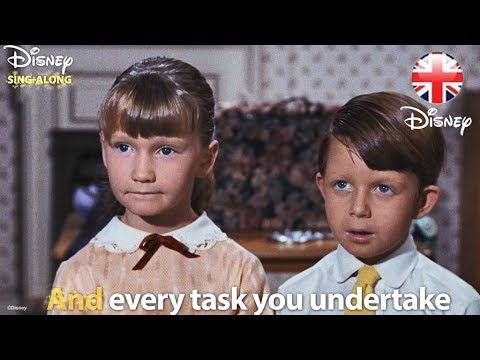
- Where it appears: Mary Poppins (1964), during the nursery clean-up that turns chores into choreography.
- Who performs it in the film: Julie Andrews as Mary, with Jane and Michael joining the moment.
- What it does in the story: It teaches the Banks children that attitude can be a lever, not a slogan.
- Signature sound: Bright, quick-footed pop-theater in common time, with a sing-speak verse that keeps the lesson playful.
- Stage reshuffle: The 2004 stage musical relocates the number into a later kitchen chaos scene, giving the idea a new dramatic job.

Mary Poppins (1964) - film song - diegetic. Nursery tidy-up sequence, with toys and objects snapping into motion as if the room itself has joined Marys lesson. Approx 00:30 to 00:36 in many home-video cuts (varies by edition). Why it matters: it is the first big proof that Mary does not just advise, she reprograms the day, one task at a time.
This is the song that makes Mary Poppins feel like a professional, not a fairy godmother drifting on vibes. The tune is upbeat, almost brisk enough to be mistaken for a pep talk, but listen closer: the craft is in the pacing. The verses move like spoken instruction with melody attached, then the refrain opens into a simple hook that sounds easy because it is meant to be repeated while you work.
The Sherman Brothers understood something that many writers miss: a moral lands better when it arrives wearing good shoes. The groove has a steady forward nudge, the rhymes are tidy without being precious, and the number never over-explains its point. It also sets the films tone for magic: not thunderbolts, but small rearrangements of the ordinary. As stated in the Academy Awards ceremony archive, Mary Poppins won Best Original Score, and you can hear why in moments like this, where a practical scene gets a full musical engine.
Creation History
The song was written by Richard M. Sherman and Robert B. Sherman for Disney's 1964 film. Its origin story has become part of Disney folklore: according to StoryCorps, the idea was sparked when a child was given a sugar cube to help medicine go down, and the writers recognized the metaphor as a whole approach to motivation. That real-life spark became a scene device: make the task lighter, then let the child do the heavy lifting.
Song Meaning and Annotations
Plot
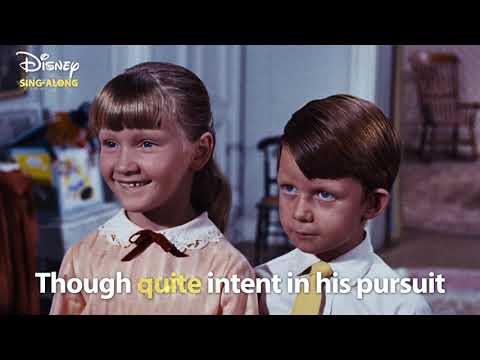
Mary introduces order as a game rather than a scolding. Jane and Michael face a dull chore, and she reframes it: find the fun element first, and the work follows. The room responds with animated cooperation, reinforcing the point that the world can feel different when you change your approach. Later adaptations reuse the same logic in new contexts, because it is an easy dramatic tool: a stubborn moment gets unlocked by a clever reframe.
Song Meaning
The meaning is practical, almost sneaky: discipline does not have to be joyless, and joy does not have to be passive. The core metaphor is medicine and sugar, but the deeper idea is consent and agency. Mary is not forcing the children to comply through fear. She is teaching them how to choose a mindset that makes the job doable. That is why the number endures in classrooms, rehearsals, and household jokes: it treats motivation as something you can build.
Annotations
"In evry job that must be done, there is an element of fun"
The line sounds like a motto, but it is also stage direction. It tells the performer to play the moment lightly, and it tells the scene to keep moving forward. No wallowing, no lecture, just a reset.
"You find the fun and snap, the jobs a game"
That snap is everything. It is the click of a reframed thought, the instant when effort stops feeling like punishment and starts feeling like play.
"A spoonful of sugar helps the medicine go down"
It is a simple image with a sharper edge. Sugar does not remove the medicine, it disguises it long enough for you to swallow. In story terms, Mary is teaching the children how to tolerate discomfort without making it their identity.
Rhythm, style, and the lesson delivery
The track sits in a bright common-time bounce rather than a waltz sway, which matters. It keeps the number task-oriented: step, lift, step, lift, like work getting done. The refrain is built to be sung while moving, and the verse lines are shaped like spoken coaching. The style is part theater, part pop, and part music-hall wink, which is why it can be staged with choreography or sung quietly at a piano and still work.
Objects as co-stars
In the film, the animated cleaning bits are not just spectacle. They are the argument made visible: when the mood changes, the room changes. It is a child-friendly way to dramatize self-management without using that phrase.
Technical Information
- Artist: Julie Andrews
- Featured: Karen Dotrice; Matthew Garber (scene vocals)
- Composer: Richard M. Sherman; Robert B. Sherman
- Producer: Soundtrack production credits vary by edition; Irwin Kostal is credited for scoring supervision and arrangement in Academy records
- Release Date: 1964
- Genre: Film musical; soundtrack
- Instruments: Lead vocal, ensemble vocals, orchestra with rhythmic accents
- Label: Disneyland Records
- Mood: Buoyant, instructive, playful
- Length: About 4:29 (full-length listings); some soundtrack editions shorten it
- Track #: Varies by edition
- Language: English
- Album: Mary Poppins (Original Soundtrack)
- Music style: Pop-theater with music-hall polish and brisk, scene-driven phrasing
- Poetic meter: Accentual, conversational, designed for sing-speak delivery
Questions and Answers
- What is the song really teaching, beyond the cute metaphor?
- It teaches reframing: change the mental entry point to a task, and effort feels lighter without becoming fake.
- Why does the verse feel like spoken coaching?
- The melody is shaped around instruction, with quick phrases that sit close to speech so the lesson lands as dialogue, not sermon.
- Is the magic the point, or the mindset?
- The mindset. The objects moving are visual reinforcement, but the core idea is that the children choose to engage differently.
- Did the stage musical keep the number in the same place as the film?
- No. In the stage version, the number is moved into a later sequence where the children wreak havoc and Mary helps restore order, giving the song a new dramatic trigger.
- Why does the refrain stay so memorable?
- It is built like a household saying: short, repeatable, and anchored to a simple image that anyone can recall.
- Is it tied to the films awards profile?
- The tune itself was not the Oscar-winning song, but it sits inside a score that won at the 1965 ceremony and became one of the best-selling soundtracks of its era.
- What is a good acting note for singing it?
- Play it as practical joy, not forced cheer. Mary is demonstrating technique, not begging the children to smile.
- Which modern cover put it back in pop conversation?
- Kacey Musgraves recorded a well-known cover for the We Love Disney project, showing how the hook can live in a contemporary vocal tone.
- Does the tune appear again later in the stage show?
- Yes, the stage materials list a reprise and finale usage that frames Marys departure as a completed task.
Awards and Chart Positions
The song did not receive a standalone Academy Award nomination in 1965. As stated in the Academys official ceremony listing, Mary Poppins won the Music (Song) Oscar for "Chim Chim Cher-ee" and won Music Score, while this number remained a beloved character lesson rather than the awards centerpiece.
| Year | Category or chart | Work | Result |
|---|---|---|---|
| 1965 | Academy Awards - Music (Song) | "Chim Chim Cher-ee" from Mary Poppins | Winner (films recognized song) |
| 1965 | Academy Awards - Music Score (substantially original) | Mary Poppins (Sherman Brothers) | Winner |
| 1965 | Official UK Albums Chart | Mary Poppins original soundtrack album | Peak No. 2; 82 weeks on chart |
How to Sing A Spoonful of Sugar
Reference metrics (edition-dependent): common vocal databases list a G major home key and a working range around C sharp 4 to E5 for the Julie Andrews recording. Tempo analyzers for cast and stage recordings often land near the low 110 BPM range. Use these as rehearsal anchors, then adjust for your production.
- Tempo: Start around 108 to 112 BPM so the song stays task-forward. If you slow down, keep the inner pulse clear or the lesson turns sleepy.
- Diction: Make consonants your percussion. The verse is instruction, so clarity matters more than glow.
- Breathing: Plan small breaths between coaching phrases. Long, dramatic breaths can break the sense of effortless control.
- Flow and rhythm: Keep verses close to speech, then let the refrain open into rounder tone. That contrast is the numbers built-in lift.
- Accents: Underline the key idea words, but do not punch every syllable. Mary persuades through ease.
- Ensemble choices: If children or chorus are involved, keep their sound light and responsive, like a room joining a game.
- Mic technique: Stay a touch closer on the verse lines, then back off slightly on the refrain peak so brightness does not turn sharp.
- Pitfalls: Over-smiling the tone, rushing the verse text, or singing it like a pep rally. The charm is calm authority.
- Practice materials: Speak the verse in rhythm, then sing on one comfortable vowel, then add words back. It locks timing before polish.
Additional Info
The song travels well because it is not tied to one setting. Clean-up, homework, rehearsal, training, recovery - any situation with a bitter pill can borrow the metaphor. That portability is why the cover ecosystem keeps growing. Whosampled lists dozens of recorded covers across styles, and one of the more visible modern pop readings came from Kacey Musgraves for We Love Disney, which treats the hook like a soft-rock singalong rather than a stage lesson.
Onstage, the number also gained a second life as a structural motif. MTI synopsis materials place the song in a later household preparation moment, and a finale reprise turns the phrase into a sign-off: the task is done, the job is complete, time to move on. The idea stays the same, but the emotion changes - less coaching, more farewell.
Key Contributors
| Entity | Type | Relationship statement |
|---|---|---|
| Julie Andrews | Person | Julie Andrews - performed - the film and soundtrack vocal as Mary Poppins |
| Richard M. Sherman | Person | Richard M. Sherman - wrote - music and words (with his brother) |
| Robert B. Sherman | Person | Robert B. Sherman - wrote - music and words (with his brother) |
| Irwin Kostal | Person | Irwin Kostal - provided - scoring and arrangement work credited in Academy records |
| Disneyland Records | Organization | Disneyland Records - released - the original soundtrack album and related singles |
| Mary Poppins (1964 film) | Work | Mary Poppins (1964 film) - staged - the nursery clean-up transformation |
| Mary Poppins (stage musical) | Work | Mary Poppins (stage musical) - repositioned - the song into a later chaos-to-order scene |
| Kacey Musgraves | Person | Kacey Musgraves - recorded - a cover for We Love Disney |
| Music Theatre International | Organization | Music Theatre International - publishes - synopsis and licensed song list including reprises |
Sources: The 37th Academy Awards ceremony archive (Oscars), StoryCorps feature on the songs inspiration, Disney UK official lyric video listing, Official Charts Company (Mary Poppins soundtrack), Music Theatre International full synopsis and show page, Whosampled cover list, Singing Carrots vocal range database, TuneBat key and BPM listing, Discogs single release listings
Music video
Disney: 60 Years of Musical Magic Lyrics: Song List
- Volume One
- A Whole New World (Aladdin)
- Circle of Life (Lion King)
- Beauty and the Beast (Beauty and the Beast)
- Under the Sea (The Little Mermaid)
- Hakuna Matata (Lion King)
- Kiss the Girl (The Little Mermaid)
- I Just Can't Wait to Be King (Lion King)
- Poor Unfortunate Souls (The Little Mermaid)
- Chim Chim Cher-ee (Mary Poppins)
- Jolly Holiday (Mary Poppins)
- A Spoonful of Sugar (Mary Poppins)
- Let's Get Together (The Parent Trap)
- The Monkey's Uncle (The Monkey's Uncle)
- The Ugly Bug Ball (Summer Magic)
- The Spectrum Song (Walt Disney's Wonderful World of Color)
- Colonel Hathi's March (The Jungle Book)
- A Whale of a Tale (20,000 Leagues Under the Sea)
- You Can Fly! You Can Fly! You Can Fly! (Peter Pan)
- The Work Song (Cinderella)
- A Dream is a Wish Your Heart Makes (Cinderella)
- Zip-A-Dee-Doo-Dah (Song of the South)
- Dance of the Reed Flutes (Fantasia)
- Love Is a Song (Bembi)
- Someday My Prince Will Come (Snow White and the Seven Dwarfs)
- Minnie's Yoo Hoo! (Mickey's Follies)
- Volume Two
- Be Our Guest (Beauty & The Beast)
- Can You Feel the Love Tonight (The Lion King)
- Part of Your World (The Little Mermaid)
- One Jump Ahead (Alladin)
- Gaston (Beauty And the Beast)
- Something There (Beauty And the Beast)
- Supercalifragilisticexpialidocious (Mary Poppins)
- Candle on the Water (Pete's Dragon)
- Main Street Electrical Parade (Disneyland)
- The Age of Not Believing (Bedknobs and Broomsticks)
- The Bare Necessities (The Jungle Book)
- Feed the Birds (Mary Poppins)
- Best of Friends (The Fox and the Hound)
- Let's Go Fly a Kite (Mary Poppins)
- It's a Small World (Disneyland)
- The Tiki, Tiki, Tiki Room (Disneyland)
- Mickey Mouse Club March (Mickey Mouse Club)
- On the Front Porch (Summer Magic)
- The Second Star to the Right (Peter Pan)
- Ev'rybody Has a Laughing Place (Song of the South)
- Bibbidi-Bobbidi-Boo (Cinderella)
- So This is Love (Cinderella)
- When You Wish Upon a Star (Pinocchio)
- Heigh-Ho (Snowwhite & the 7 Dwarfs)
- Who's Afraid of the Big Bad Wolf (The 3 Little Pigs)
- Volume Three
- Colors of the Wind (Pocahontas)
- You've Got a Friend in Me (Toy Story)
- Be Prepared (The Lion King)
- Out There (The Hunchback of Notre Dame)
- Family (James & The Giant Peach)
- Les Poissons (The Little Mermaid)
- Mine, Mine, Mine (Pocahontas)
- Jack's Lament (The Nightmare Before Christmas)
- My Name Is James (Jame & The Giant Peach)
- Heffalumps and Woozles (Winnie the Pooh and the Blustery Day)
- The Mob Song (Beauty & The Beast)
- Portobello Road (Bedknobs and Broomsticks)
- Stay Awake (Mary Poppins)
- I Wan'na Be Like You (The Jungle Book)
- Oo-De-Lally (Robin Hood)
- Are We Dancing (The Happiest Millionaire)
- Once Upon a Dream (Sleeping Beauty)
- Bella Notte (Lady and the Tramp)
- Following the Leader (Peter Pan)
- Trust in Me (The Jungle Book)
- The Ballad of Davy Crockett (Davy Crockett)
- I'm Professor Ludwig Von Drake (Walt Disney's Wonderful World of Color)
- Pink Elephants on Parade (Dumbo)
- Little April Shower (Bambi)
- The Silly Song (Snow White & the 7 Dwarfs)
- Volume Four
- One Last Hope (Hercules)
- A Guy Like You (The Hunchback of Norte Dame)
- On the Open Road (A Goofy Movie)
- Just Around the Riverbend (Pocahontas)
- Home (Beauty & the Beast (Broadway Musical))
- Fantasmic! (Disneyland)
- Oogie Boogie's Song (The Nightmare Before Christmas)
- I Will Go Sailing No More (Toy Story)
- Substitutiary Locomotion (Bedknobs and Broomsticks)
- Stop, Look, and Listen/I'm No Fool (Mickey Mouse Club)
- Love (Robin Hood)
- Thomas O'Malley Cat (The Aristocats)
- That's What Friends Are For (The Jungle Book)
- Winnie the Pooh
- Femininity (Summer Magic)
- Ten Feet Off the Ground (The One and Only, Genuine, Original Family Band)
- The Siamese Cat Song (Lady and the Tramp)
- Enjoy It! (In Search of the Castaways (film))
- Give a Little Whistle (Pinocchio)
- Oh, Sing Sweet Nightingale (Cinderella)
- I Wonder (Sleeping Beauty)
- Looking for Romance / I Bring You A Song (Bambi)
- Baby Mine (Dumbo)
- I'm Wishing/One Song (Snow White & the 7 Dwarfs)
- Volume Five
- I'll Make a Man Out of You (Mulan)
- I Won't Say / I'm in Love (Hercules)
- God Help the Outcasts (The Hunchback of Notre Dame)
- If I Can't Love Her (Beauty and the Beast)
- Steady As The Beating Drum (Pocahontas)
- Belle (Beauty & the Beast)
- Strange Things (Toy Story)
- Cruella De Vil (101 Dalmatians)
- Eating the Peach (James and the Giant Peach)
- Seize the Day (Newsies)
- What's This? (The Nightmare Before Christmas)
- Lavender Blue / Dilly Dilly (So Dear to My Heart)
- The Rain Rain Rain Came Down Down Down (Winnie the Pooh and the Blustery Day)
- A Step in the Right Direction (Bedknobs and Broomsticks)
- Boo Bop Bopbop Bop (Pete's Dragon)
- Yo Ho / A Pirate's Life for Me (Disneyland)
- My Own Home (The Jungle Book)
- Ev'rybody Wants to Be a Cat (The Aristocats)
- In a World of My Own (Alice in Wonderland)
- You Belong to My Heart (The 3 Caballeros)
- Humphrey Hop (In the Bag)
- He's a Tramp (Lady and the Tramp)
- How Do You Do? (Song of the South)
- When I See an Elephant Fly (Dumbo)
- I've Got No Strings (Pinocchio)