Following the Leader (Peter Pan) Lyrics — Disney: 60 Years of Musical Magic
Following the Leader (Peter Pan) Lyrics
We're following the leader wherever he may go
We won't be home till morning, till morning
We won't be home till morning
Because he told us so
Tee dum, tee dee
A teedle ee do tee day
We're out for fun
And this is the game we play:
Come on, join in
And sing your troubles away
With a teedle ee dum
A teedle do tee day
We're following the leader, the leader, the leader
We're following the leader wherever he may go
We won't be home till morning, till morning
We won't be home till morning
Because he told us so
Tee dum, tee dee
A teedle ee do tee day
We march along and
These are the words we say:
Tee dum, tee dee,
A teedle deelde deeay
Oh, a teedle ee dum
A teedle ee do tee day
Oh, a teedle ee dum
A teedle ee do tee day
Song Overview
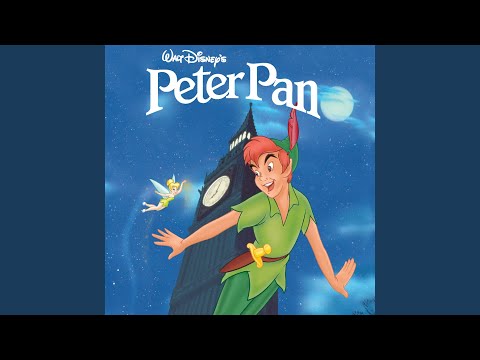
Review and Highlights
Quick summary
- Written for Disney's Peter Pan (1953), with music credited to Oliver Wallace and words credited to Winston Hibler and Ted Sears.
- In the film and classic soundtrack listings, the best-known vocal performance is tied to the child cast: Bobby Driscoll (Peter), Paul Collins (John), and Tommy Luske (Michael).
- Often indexed as a brisk march in C major at about 131 BPM, built around chant-like nonsense syllables and a follow-the-line hook.
- On streaming-era track pages, the soundtrack cut is commonly dated to February 5, 1953, aligning with the film's release period.
- Its afterlife is unusually practical: the melody is designed to be walked to, whistled, and copied, which explains why it keeps reappearing in sing-along contexts.
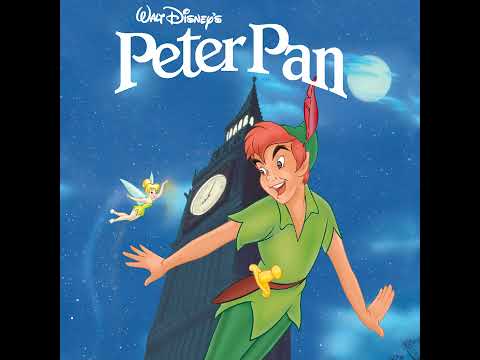
Peter Pan (1953) - animated film - diegetic. A walking-song sequence as the kids and Lost Boys play follow-the-leader through Never Land, heading toward a skirmish mindset. Approx placement: around the early Never Land wander, with some home-video song menus indexing it at about 1:29 into the song chapter. The point is narrative glue: it turns travel into play, and play into group loyalty.
What I like here is how efficiently the number does its job. A lesser film song would explain the game and move on. This one behaves like the game: it repeats, it loops, it dares you to copy it. The hook is almost a drum major's signal, while the syllables act like cartoon footfalls. According to LaughingPlace's home-video review, the track has long had a life beyond the film itself, and that makes sense: it is built for repetition and reuse, not for a chart run.
Key takeaways
- Rhythm first: the march pulse and the chant are the real melody, and everything else hangs off that backbone.
- Character in mechanics: the song tells you who is in charge without giving a speech about leadership.
- Comedy through precision: the nonsense syllables are not random filler, they are timing tools that keep the line moving.
Creation History
The songwriting credit is a neat reminder that Disney story people could be music people too. A D23 profile notes Winston Hibler's lyric work with Ted Sears, and the classic soundtrack documentation places Oliver Wallace on the music. The recordings tied to the restored classic soundtrack were tracked during 1952 sessions, then surfaced on later curated releases that standardize the performance credits and timings. In other words: crafted in the era of tight studio production schedules, then preserved by later soundtrack archivists who treated even the short numbers like museum pieces.
Song Meaning and Annotations
Plot
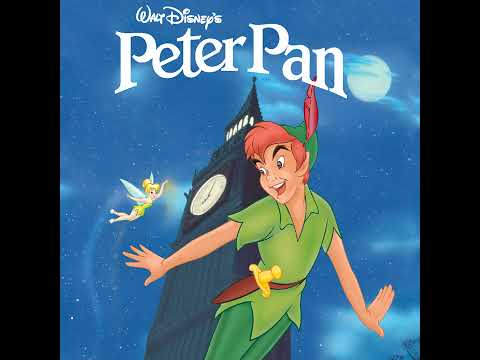
In the middle stretch of Peter Pan, the children and Lost Boys are in motion across Never Land. The group turns the walk into a game, lining up behind the leader and copying every move. The song is the soundtrack to that choreography: a chant that keeps the line together, turns wandering into purpose, and frames danger as play.
Song Meaning
On the surface, it is a playground tune: copy the leader, keep the line, do not think too hard. Underneath, it is a portrait of how groups form identity. The leader does not need a manifesto; he just needs momentum. The little verbal loops function like peer pressure with a grin. That is the trick: the mood stays buoyant even as the lyric points at obedience. The number sells belonging - and quietly hints at how easy it is to confuse belonging with judgment.
Annotations
- The chant is a metronome disguised as nonsense. Those repeated syllables are a rhythmic conveyor belt that makes the melody easy to remember and even easier to march to.
- Repetition is the message. A line like the title hook returns so often that the song becomes a demonstration of conformity, not just a description of it.
- The whistle section works like a cartoon cutaway. It gives the animators room to show gags without losing the beat, then snaps you back into the line.
- Child voices change the meaning. Sung by kids, the obedience reads as play. Sung by adults, it can sound like a warning label.
Following the leader, the leader, the leader
Seven words, and you already know the whole engine. It is not about lyrical detail, it is about behavioral instruction - a hook that doubles as choreography.
Tee dum, tee dee, a teedle ee do
This is classic studio craft: syllables that sound like movement. You can almost hear the feet and elbows, which is why the melody survives outside the film as a group-activity cue.
Genre and style fusion
Call it a mini show-tune march with a nursery-rhyme skeleton. The orchestration sits lightly so the rhythm and vocal unison can do the heavy lifting. There is a faint parade-band feel (snare-and-brass logic) but trimmed down to fit animation pacing. The swing is not in the harmony, it is in the timing: quick syllables, clean stops, then back into the chant.
Emotional arc
The arc is not about a big feeling shift. It is about acceleration: the number starts as a game and turns into momentum. By the time the line is fully chanting, the group sounds like one body. That is the thrill and the joke, and it is also the point.
Cultural touchpoints
The premise maps neatly onto the real-life children's game (the same phrase, the same rules), so the song borrows a universal script and turns it into screen action. That is why it works as a reference in sing-along programming: the audience already knows what to do before the first bar is finished.
Technical Information
- Artist: Bobby Driscoll, Paul Collins, Tommy Luske (classic film cast performance listing)
- Featured: Ensemble voices (Lost Boys group feel)
- Composer: Oliver Wallace
- Producer: Archival soundtrack production varies by reissue; classic soundtrack documentation credits restoration producers on later editions
- Release Date: February 5, 1953
- Genre: Film song, show tune, children's march
- Instruments: Group vocals, light orchestra, march-style percussion, whistle breaks
- Label: Walt Disney Records (common attribution on official audio uploads and reissues)
- Mood: Playful, brisk, communal
- Length: About 1:43 to 1:45 (varies by listing)
- Track #: 9 on the restored classic soundtrack sequence
- Language: English
- Album (if any): Classic Soundtracks: Peter Pan (Original Motion Picture Soundtrack) and later streaming-era compilations
- Music style: Unison chant over march pulse, built for movement cues
- Poetic meter: Predominantly trochaic chant patterns (stress-forward, like a playground call)
Questions and Answers
- Who wrote the song?
- The standard credits list Oliver Wallace for the music, with Winston Hibler and Ted Sears credited for the words.
- Who is singing on the classic soundtrack performance?
- Archival soundtrack listings commonly tie the vocals to Bobby Driscoll, Paul Collins, and Tommy Luske, reflecting the film's child cast leads.
- Why does it use so many nonsense syllables?
- They function like a rhythmic engine: easy to memorize, fast to articulate, and perfect for keeping a moving line in sync.
- What is the narrative purpose inside the film?
- It turns travel into play and play into unity, giving the story a quick montage-like bridge while showing group dynamics.
- Is the song meant to be funny or serious?
- Both. It plays as a carefree game, but it also sketches how quickly a crowd will merge into one voice when the rules are simple.
- What musical device makes it feel like marching?
- Clean downbeats, short phrases, and unison singing that acts like footstep alignment. Even without heavy percussion, the cadence implies a parade.
- What key and tempo are commonly reported for the soundtrack version?
- Listings frequently place it in C major at about 131 BPM, a tempo that is fast enough to feel buoyant but steady enough for walking.
- Why is it remembered outside the movie?
- Because it is functional music. You can use it to organize a group in real time, which is why it keeps returning in sing-along contexts.
- Did it have early covers?
- Yes. One notable early example is a 1953 recording by the Paulette Sisters, documented in cover-song databases.
- Does the song appear in later adaptations?
- It is strongly tied to the 1953 animated version and its legacy programming, and it is not automatically carried into every later remake.
How to Sing Following the Leader
Most listings for the soundtrack cut place it in C major at about 131 BPM, with a reported vocal range around B-flat 3 to E 5. That combination explains the real challenge: it is not high notes, it is breath and clarity at marching speed.
- Lock the tempo first: practice on a steady click around 131 BPM, speaking the rhythm before you sing it. If it feels rushed, rehearse at 110 BPM and nudge upward.
- Diction over volume: treat the chant like tongue-twister warmups. Keep consonants forward so the line stays crisp even when the melody is simple.
- Breathing plan: mark quick, frequent inhales. The phrases are short, but the repetition can drain you if you take lazy breaths.
- Flow and rhythm: the nonsense syllables should land like footsteps. Do not smooth them out. They need edges.
- Accents: put a light emphasis on the first beat of each bar, then let the rest bounce. This keeps the march feel without sounding militarized.
- Ensemble strategy: if you are singing with a group, assign one voice to lead the first word of each phrase. Everyone else snaps in behind it. That is how the game becomes harmony.
- Mic technique: stay close for the chant, back off slightly for shouted lines to avoid spikes. The song is mostly one dynamic level, so small mic moves matter.
- Common pitfalls: rushing the syllables, swallowing the T and D sounds, and turning the chant into a blur. If the words get muddy, the whole point disappears.
Practice materials: clap the rhythm while speaking the chant; then add a light march step. It sounds silly, but it is the design of the song, and it fixes timing faster than overthinking it.
Additional Info
A fun historical footnote is how quickly the number was treated as recordable pop-novelty material in the early 1950s. Cover-song documentation lists a 1953 recording by the Paulette Sisters, which hints at the era's appetite for Disney tie-ins that could sit on a jukebox next to standards. And in the streaming age, the official audio upload credits the 1952 rights holder on release notes, reinforcing that this was always a studio-built song meant to travel well beyond a single reel of film.
Also worth noting: soundtrack archivists have been unusually precise about this tiny track. The restored classic soundtrack listings not only assign credits and vocalist names, they also log the original recording window across 1952 sessions. For a one-and-a-half minute march, that is a lot of institutional memory - and it helps explain why the song still circulates in clean, standardized form.
Sources: D23 profile of Winston Hibler, VGMdb Classic Soundtrack listing for Peter Pan, SecondHandSongs work entry for Following the Leader, Apple Music track page for Following The Leader, SongBPM track metrics page, TuneBat track metrics page, LaughingPlace Walt Disney Signature Collection review, Singing Carrots range listing, YouTube official audio upload notes, SecondHandSongs artist entry for the Paulette Sisters
Key Contributors
| Entity | Type | Relationship (S-V-O) |
|---|---|---|
| Oliver Wallace | Person | Oliver Wallace composed the music for the song. |
| Winston Hibler | Person | Winston Hibler wrote words for the song with Ted Sears. |
| Ted Sears | Person | Ted Sears co-wrote the words for the song. |
| Bobby Driscoll | Person | Bobby Driscoll performed the lead vocal as Peter Pan in the film context. |
| Paul Collins | Person | Paul Collins performed vocals associated with John Darling in the film context. |
| Tommy Luske | Person | Tommy Luske performed vocals associated with Michael Darling in the film context. |
| Walt Disney Productions | Organization | Walt Disney Productions produced the film that introduced the song. |
| Walt Disney Records | Organization | Walt Disney Records distributed official soundtrack audio releases. |
| Peter Pan | Work (Film) | The film features the song as a diegetic marching game sequence. |
| The Paulette Sisters | MusicGroup | The Paulette Sisters recorded an early cover version in 1953. |
Music video
Disney: 60 Years of Musical Magic Lyrics: Song List
- Volume One
- A Whole New World (Aladdin)
- Circle of Life (Lion King)
- Beauty and the Beast (Beauty and the Beast)
- Under the Sea (The Little Mermaid)
- Hakuna Matata (Lion King)
- Kiss the Girl (The Little Mermaid)
- I Just Can't Wait to Be King (Lion King)
- Poor Unfortunate Souls (The Little Mermaid)
- Chim Chim Cher-ee (Mary Poppins)
- Jolly Holiday (Mary Poppins)
- A Spoonful of Sugar (Mary Poppins)
- Let's Get Together (The Parent Trap)
- The Monkey's Uncle (The Monkey's Uncle)
- The Ugly Bug Ball (Summer Magic)
- The Spectrum Song (Walt Disney's Wonderful World of Color)
- Colonel Hathi's March (The Jungle Book)
- A Whale of a Tale (20,000 Leagues Under the Sea)
- You Can Fly! You Can Fly! You Can Fly! (Peter Pan)
- The Work Song (Cinderella)
- A Dream is a Wish Your Heart Makes (Cinderella)
- Zip-A-Dee-Doo-Dah (Song of the South)
- Dance of the Reed Flutes (Fantasia)
- Love Is a Song (Bembi)
- Someday My Prince Will Come (Snow White and the Seven Dwarfs)
- Minnie's Yoo Hoo! (Mickey's Follies)
- Volume Two
- Be Our Guest (Beauty & The Beast)
- Can You Feel the Love Tonight (The Lion King)
- Part of Your World (The Little Mermaid)
- One Jump Ahead (Alladin)
- Gaston (Beauty And the Beast)
- Something There (Beauty And the Beast)
- Supercalifragilisticexpialidocious (Mary Poppins)
- Candle on the Water (Pete's Dragon)
- Main Street Electrical Parade (Disneyland)
- The Age of Not Believing (Bedknobs and Broomsticks)
- The Bare Necessities (The Jungle Book)
- Feed the Birds (Mary Poppins)
- Best of Friends (The Fox and the Hound)
- Let's Go Fly a Kite (Mary Poppins)
- It's a Small World (Disneyland)
- The Tiki, Tiki, Tiki Room (Disneyland)
- Mickey Mouse Club March (Mickey Mouse Club)
- On the Front Porch (Summer Magic)
- The Second Star to the Right (Peter Pan)
- Ev'rybody Has a Laughing Place (Song of the South)
- Bibbidi-Bobbidi-Boo (Cinderella)
- So This is Love (Cinderella)
- When You Wish Upon a Star (Pinocchio)
- Heigh-Ho (Snowwhite & the 7 Dwarfs)
- Who's Afraid of the Big Bad Wolf (The 3 Little Pigs)
- Volume Three
- Colors of the Wind (Pocahontas)
- You've Got a Friend in Me (Toy Story)
- Be Prepared (The Lion King)
- Out There (The Hunchback of Notre Dame)
- Family (James & The Giant Peach)
- Les Poissons (The Little Mermaid)
- Mine, Mine, Mine (Pocahontas)
- Jack's Lament (The Nightmare Before Christmas)
- My Name Is James (Jame & The Giant Peach)
- Heffalumps and Woozles (Winnie the Pooh and the Blustery Day)
- The Mob Song (Beauty & The Beast)
- Portobello Road (Bedknobs and Broomsticks)
- Stay Awake (Mary Poppins)
- I Wan'na Be Like You (The Jungle Book)
- Oo-De-Lally (Robin Hood)
- Are We Dancing (The Happiest Millionaire)
- Once Upon a Dream (Sleeping Beauty)
- Bella Notte (Lady and the Tramp)
- Following the Leader (Peter Pan)
- Trust in Me (The Jungle Book)
- The Ballad of Davy Crockett (Davy Crockett)
- I'm Professor Ludwig Von Drake (Walt Disney's Wonderful World of Color)
- Pink Elephants on Parade (Dumbo)
- Little April Shower (Bambi)
- The Silly Song (Snow White & the 7 Dwarfs)
- Volume Four
- One Last Hope (Hercules)
- A Guy Like You (The Hunchback of Norte Dame)
- On the Open Road (A Goofy Movie)
- Just Around the Riverbend (Pocahontas)
- Home (Beauty & the Beast (Broadway Musical))
- Fantasmic! (Disneyland)
- Oogie Boogie's Song (The Nightmare Before Christmas)
- I Will Go Sailing No More (Toy Story)
- Substitutiary Locomotion (Bedknobs and Broomsticks)
- Stop, Look, and Listen/I'm No Fool (Mickey Mouse Club)
- Love (Robin Hood)
- Thomas O'Malley Cat (The Aristocats)
- That's What Friends Are For (The Jungle Book)
- Winnie the Pooh
- Femininity (Summer Magic)
- Ten Feet Off the Ground (The One and Only, Genuine, Original Family Band)
- The Siamese Cat Song (Lady and the Tramp)
- Enjoy It! (In Search of the Castaways (film))
- Give a Little Whistle (Pinocchio)
- Oh, Sing Sweet Nightingale (Cinderella)
- I Wonder (Sleeping Beauty)
- Looking for Romance / I Bring You A Song (Bambi)
- Baby Mine (Dumbo)
- I'm Wishing/One Song (Snow White & the 7 Dwarfs)
- Volume Five
- I'll Make a Man Out of You (Mulan)
- I Won't Say / I'm in Love (Hercules)
- God Help the Outcasts (The Hunchback of Notre Dame)
- If I Can't Love Her (Beauty and the Beast)
- Steady As The Beating Drum (Pocahontas)
- Belle (Beauty & the Beast)
- Strange Things (Toy Story)
- Cruella De Vil (101 Dalmatians)
- Eating the Peach (James and the Giant Peach)
- Seize the Day (Newsies)
- What's This? (The Nightmare Before Christmas)
- Lavender Blue / Dilly Dilly (So Dear to My Heart)
- The Rain Rain Rain Came Down Down Down (Winnie the Pooh and the Blustery Day)
- A Step in the Right Direction (Bedknobs and Broomsticks)
- Boo Bop Bopbop Bop (Pete's Dragon)
- Yo Ho / A Pirate's Life for Me (Disneyland)
- My Own Home (The Jungle Book)
- Ev'rybody Wants to Be a Cat (The Aristocats)
- In a World of My Own (Alice in Wonderland)
- You Belong to My Heart (The 3 Caballeros)
- Humphrey Hop (In the Bag)
- He's a Tramp (Lady and the Tramp)
- How Do You Do? (Song of the South)
- When I See an Elephant Fly (Dumbo)
- I've Got No Strings (Pinocchio)