The Age of Not Believing (Bedknobs and Broomsticks) Lyrics — Disney: 60 Years of Musical Magic
The Age of Not Believing (Bedknobs and Broomsticks) Lyrics
searching everywhere for something true,
you’re at the age of not believing,
when all the make-believe is through.
When you’ve set aside your childhood heroes
and your dreams are lost upon a shelf,
you’re at the age of not believing
and, worst of all, you doubt yourself.
You’re a castaway where no one hears you
on a barren isle in a lonely sea.
Where did all the happy endings go?
Where can all the good times be?
You must face the age of not believing,
doubting everything you ever knew,
until at last you start believing
there’s something wonderful in you.
You’re at the age of not believing
and, worst of all, you doubt yourself.
You’re a castaway where no one hears you
on a barren isle in a lonely sea.
Where did all the happy endings go?
Where can all the good times be?
You must face the age of not believing,
doubting everything you ever knew,
until at last you start believing
there’s something wonderful in you.
Song Overview

Review and Highlights
Quick summary
- Role in the story: Miss Eglantine Price names a problem the film has been circling - a child growing out of faith, right when magic needs it most.
- Sound world: A measured ballad that leans on clear phrasing, gentle harmonic turns, and a lyric built like a pep talk that refuses to shout.
- Where it appears: Introduced in the 1971 film, then carried forward into later soundtrack editions and the 2021 stage musical (with a reprise in the show).
- What makes it land: The hook is not a big belt moment - it is a steady hand on the shoulder, timed to a character beat.
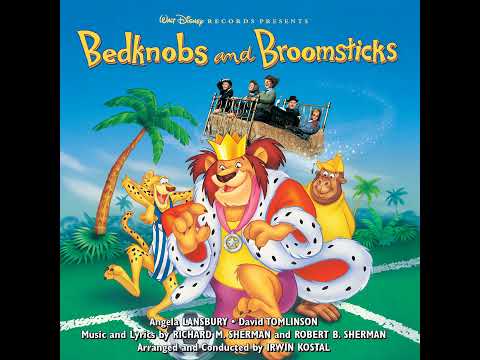
Bedknobs and Broomsticks (1971) - film song - diegetic. Sung by Miss Price in her cottage as she tries to reach the eldest child, who is old enough to sneer at spells but still young enough to need them. The moment sits early in the plot, right around the first serious attempts to make the bed travel, so the lyric doubles as instruction: belief is not a decoration, it is fuel.
I have always liked how this number refuses the usual Disney trick of distracting you with speed. Instead, it slows the room down. The melody arrives in tidy clauses, as if the writers are saying: if you want a child to hear you, do not perform at them - talk to them. That restraint is the real showmanship.
Creation History
Richard M. Sherman and Robert B. Sherman wrote the words and music for the film, with Irwin Kostal handling the broader scoring duties around their songs. A Buena Vista Records soundtrack followed in 1971, and later releases expanded and repackaged the material for CD and streaming listeners. The song also outlived the screen: when Bedknobs and Broomsticks was rebuilt as a stage musical for a 2021 UK and Ireland production, the creative team kept this ballad as a centerpiece and even gave it a reprise, a neat admission that the idea can be voiced by an adult and echoed by a kid.
Song Meaning and Annotations
Plot
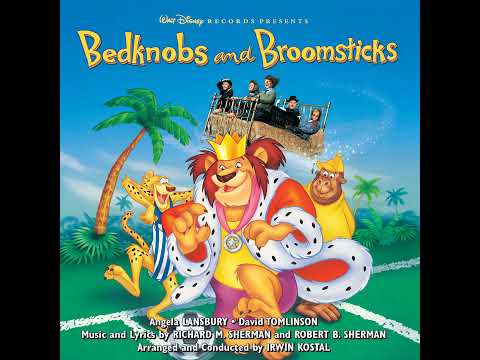
The plot is simple but strategically placed. Miss Price has three evacuee children in her care during wartime, and the eldest resists anything that sounds like fantasy. She names his attitude, sketches the loneliness it creates, and then pivots to a remedy: the child must learn to trust that something "wonderful" still exists inside him. In the film, this is not just comfort - it is a practical step toward getting the magic to work and moving the story forward.
Song Meaning
The lyric treats skepticism as a phase with a cost. It is not railing against growing up; it is describing what happens when a child trades wonder for self-doubt. That is the key twist: disbelief is framed less as intellectual maturity and more as a kind of shipwreck, a stranded state where you cannot even hear yourself think kindly. According to the Academy Awards listing for the 44th ceremony, the tune was taken seriously enough to earn an Original Song nomination, which makes sense because it is doing real narrative labor, not just filling airtime.
Annotations
"When you rush around in hopeless circles"
This is a sly opening image: motion without progress. The melody mirrors it by moving steadily but without flashy leaps, like a person pacing a room, trying to talk themselves into calm.
"You're a castaway where no one hears you"
The song briefly turns the child into a solitary figure. That metaphor is doing double duty: it captures adolescent isolation, and it also hints at why magic fails in the story - if you cannot be reached, you cannot be helped.
"Until at last you start believing"
The lyric does not demand instant faith. It promises a process, and the harmony agrees by saving the warmest resolution for the final stretch. That pacing is one reason the number feels persuasive rather than preachy.
Rhythm, style, and the vocal arc
Stylistically, it is a ballad that keeps its pulse polite. The rhythm does not tug or swing much; it just moves, letting the consonants carry meaning. The vocal line climbs in careful increments, so the emotional climb feels earned: skepticism, then weariness, then a cautious re-entry into trust.
Context and touchpoints
Set against a wartime backdrop, the message takes on a second layer: a country under strain wants certainty, but it also needs imagination to endure. The film never turns the idea into a lecture. It simply gives you a character who has to sing the lesson aloud before she can live it.
Technical Information
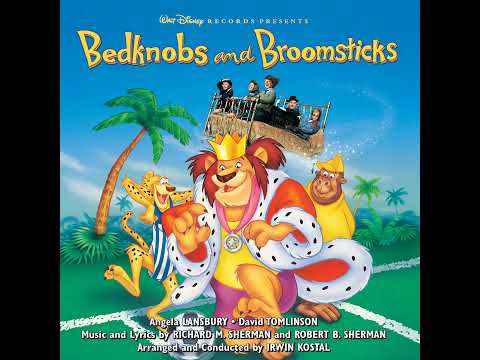
- Artist: Angela Lansbury
- Featured: Film character Miss Eglantine Price
- Composer: Richard M. Sherman; Robert B. Sherman
- Producer: Soundtrack credits vary by release edition; original soundtrack issued via Buena Vista Records
- Release Date: December 13, 1971 (soundtrack release date widely listed for the original cast album)
- Genre: Film song; ballad
- Instruments: Orchestra (film scoring palette) with voice-forward arrangement
- Label: Buena Vista Records (original album era); Walt Disney Records (later editions)
- Mood: Reflective; steady; reassuring
- Length: About 3:18 (streaming soundtrack timing commonly shown)
- Track #: Track 2 on the commonly listed soundtrack running order
- Language: English
- Album (if any): Bedknobs and Broomsticks (Original Motion Picture Soundtrack)
- Music style: Narrative ballad with classic Disney melodic craft
- Poetic meter: Predominantly iambic-leaning conversational lines with occasional trochaic pushes for emphasis
Questions and Answers
- Who sings it in the film?
- Miss Eglantine Price performs it, and the vocal is credited to Angela Lansbury on the soundtrack releases.
- What is the dramatic purpose of the number?
- It reframes a child's cynicism as self-doubt, then turns belief into something practical the story needs for magic to function.
- Why does the lyric focus on "doubting yourself" instead of just "doubting magic"?
- Because the film is really arguing that disbelief is not only intellectual skepticism. It is also a habit of undercutting your own agency.
- Is it more lullaby or lecture?
- Neither, and that is the trick. The performance feels like counsel: calm tempo, clear phrasing, and a lyric that gives the listener room to change.
- How does the melody help sell the message?
- It climbs gradually, saving the sweetest resolution for the end, so the final affirmation feels earned rather than pasted on.
- Did the song appear outside the film?
- Yes. It has circulated on soundtrack reissues and has been recorded by other artists and vocal groups, including a recent Disney-themed release by The King's Singers.
- Where does it sit in the stage musical version?
- In the 2021 stage adaptation, it remains a major Act I statement and later returns as a reprise, letting the theme echo back from a different character angle.
- Is there a "right" voice type for it?
- It is often treated as a mezzo or alto-leaning ballad, though keys vary widely in published and backing-track editions.
- Why do arrangers keep coming back to it?
- The melody is sturdy and the lyric is direct, which makes it adaptable for choir settings, auditions, and close-harmony arrangements.
- What is the one line that unlocks the song?
- The ending turn toward believing in something "wonderful" inside you. It shifts the number from diagnosis to remedy.
Awards and Chart Positions
As stated on the Academy Awards site, the song received a nomination for Music (Song - Original for the Picture) at the 44th ceremony, tied directly to Bedknobs and Broomsticks. That recognition is a useful clue to how the industry heard the number: not as a throwaway interlude, but as a self-contained piece of songwriting with a clear dramatic job.
| Award body | Year | Category | Result |
|---|---|---|---|
| Academy Awards | April 10, 1972 | Music (Song - Original for the Picture) | Nominated |
Mainstream singles-chart runs are not a major part of this song's public record. Its footprint has been sustained more reliably through soundtrack circulation, reissues, and the way vocal ensembles keep adopting it for new contexts.
How to Sing The Age of Not Believing
For a ballad like this, technique is mostly about control: long phrases, tidy consonants, and a steady tempo that does not sag. Common metadata listings place the soundtrack version around 108 BPM in G major, and published melody ranges are often shown roughly around B3 to C5 for a comfortable mezzo or alto setting.
- Tempo: Set a metronome near the commonly listed pace and practice speaking the lyric in time. If the words do not sit cleanly, the singing will not either.
- Diction: Prioritize the hard consonants in phrases like "hopeless circles" and "castaway." They are the rhythmic engine in a gentle orchestration.
- Breathing: Plan breaths after complete images, not mid-thought. Think in sentences, not bars.
- Flow: Keep the line moving through the quieter middle. The number is persuasive because it stays steady even while describing doubt.
- Dynamics: Save the largest sound for the final lift into the affirmation. Earlier intensity should be conversational, almost confidential.
- Vowels and placement: Use a forward, speech-like placement on "believing" so it does not turn heavy. That word has to sound possible.
- Style: Avoid theatrical rubato for its own sake. A small push into climactic words is enough, the lyric is already doing the work.
- Pitfalls: Rushing the setup, over-darkening the tone, or trying to turn the ending into a power finish. It is stronger when it remains human-scale.
Additional Info
One of the stranger compliments you can pay a Disney ballad is that it keeps migrating. This one has done exactly that. The song has been documented in multiple soundtrack editions, and the 2021 stage musical explicitly built a reprise around the central idea, as if the production team wanted the phrase to function like a thesis statement you hear twice, from two angles. According to LondonTheatre.co.uk coverage of the stage version, the show leaned on the Shermans' familiar catalogue while adding new material, but it kept this title as a recognizable anchor.
Covers tell a second story. A British band, Dodgy, performed it during a BBC Radio 1 session in the early 1990s, a case of indie musicians borrowing a Disney ballad because the writing is sturdy enough to survive a change of clothes. More recently, The King's Singers released a close-harmony arrangement as a streaming single tied to a Disney EP, which is a reminder that the melody can be both lullaby-soft and formally intricate, depending on who is holding the chords.
Key Contributors
| Entity | Type | Relationship (S-V-O) |
|---|---|---|
| Angela Lansbury | Person | Lansbury performs the song as Miss Eglantine Price in the film and soundtrack. |
| Richard M. Sherman | Person | Sherman co-wrote the music and lyrics for the song. |
| Robert B. Sherman | Person | Sherman co-wrote the music and lyrics for the song. |
| Irwin Kostal | Person | Kostal adapted and shaped the film's broader musical score around the songs. |
| Buena Vista Records | Organization | Buena Vista Records issued the original soundtrack album era release. |
| Walt Disney Records | Organization | Walt Disney Records handled later soundtrack editions and catalog circulation. |
| Bedknobs and Broomsticks | Work | The film provides the narrative context and first presentation of the song. |
| Bedknobs and Broomsticks (stage musical) | Work | The stage adaptation retains the song and adds a reprise to restate the theme. |
| Disney Theatrical Productions | Organization | Disney Theatrical Productions developed the stage adaptation for touring production. |
| The King's Singers | Organization | The King's Singers released a modern close-harmony recording of the song. |
| Dodgy | Organization | Dodgy performed a notable session cover that later surfaced on a compilation release. |
| Theatre Royal, Newcastle upon Tyne | Place | The venue hosted the stage musical world premiere in 2021. |
Sources: Academy of Motion Picture Arts and Sciences (Oscars ceremonies page), Apple Music album listing, D23 A to Z, The Guardian, LondonTheatre.co.uk, Wikipedia (film and stage musical entries), The King's Singers official site, SecondHandSongs
Music video
Disney: 60 Years of Musical Magic Lyrics: Song List
- Volume One
- A Whole New World (Aladdin)
- Circle of Life (Lion King)
- Beauty and the Beast (Beauty and the Beast)
- Under the Sea (The Little Mermaid)
- Hakuna Matata (Lion King)
- Kiss the Girl (The Little Mermaid)
- I Just Can't Wait to Be King (Lion King)
- Poor Unfortunate Souls (The Little Mermaid)
- Chim Chim Cher-ee (Mary Poppins)
- Jolly Holiday (Mary Poppins)
- A Spoonful of Sugar (Mary Poppins)
- Let's Get Together (The Parent Trap)
- The Monkey's Uncle (The Monkey's Uncle)
- The Ugly Bug Ball (Summer Magic)
- The Spectrum Song (Walt Disney's Wonderful World of Color)
- Colonel Hathi's March (The Jungle Book)
- A Whale of a Tale (20,000 Leagues Under the Sea)
- You Can Fly! You Can Fly! You Can Fly! (Peter Pan)
- The Work Song (Cinderella)
- A Dream is a Wish Your Heart Makes (Cinderella)
- Zip-A-Dee-Doo-Dah (Song of the South)
- Dance of the Reed Flutes (Fantasia)
- Love Is a Song (Bembi)
- Someday My Prince Will Come (Snow White and the Seven Dwarfs)
- Minnie's Yoo Hoo! (Mickey's Follies)
- Volume Two
- Be Our Guest (Beauty & The Beast)
- Can You Feel the Love Tonight (The Lion King)
- Part of Your World (The Little Mermaid)
- One Jump Ahead (Alladin)
- Gaston (Beauty And the Beast)
- Something There (Beauty And the Beast)
- Supercalifragilisticexpialidocious (Mary Poppins)
- Candle on the Water (Pete's Dragon)
- Main Street Electrical Parade (Disneyland)
- The Age of Not Believing (Bedknobs and Broomsticks)
- The Bare Necessities (The Jungle Book)
- Feed the Birds (Mary Poppins)
- Best of Friends (The Fox and the Hound)
- Let's Go Fly a Kite (Mary Poppins)
- It's a Small World (Disneyland)
- The Tiki, Tiki, Tiki Room (Disneyland)
- Mickey Mouse Club March (Mickey Mouse Club)
- On the Front Porch (Summer Magic)
- The Second Star to the Right (Peter Pan)
- Ev'rybody Has a Laughing Place (Song of the South)
- Bibbidi-Bobbidi-Boo (Cinderella)
- So This is Love (Cinderella)
- When You Wish Upon a Star (Pinocchio)
- Heigh-Ho (Snowwhite & the 7 Dwarfs)
- Who's Afraid of the Big Bad Wolf (The 3 Little Pigs)
- Volume Three
- Colors of the Wind (Pocahontas)
- You've Got a Friend in Me (Toy Story)
- Be Prepared (The Lion King)
- Out There (The Hunchback of Notre Dame)
- Family (James & The Giant Peach)
- Les Poissons (The Little Mermaid)
- Mine, Mine, Mine (Pocahontas)
- Jack's Lament (The Nightmare Before Christmas)
- My Name Is James (Jame & The Giant Peach)
- Heffalumps and Woozles (Winnie the Pooh and the Blustery Day)
- The Mob Song (Beauty & The Beast)
- Portobello Road (Bedknobs and Broomsticks)
- Stay Awake (Mary Poppins)
- I Wan'na Be Like You (The Jungle Book)
- Oo-De-Lally (Robin Hood)
- Are We Dancing (The Happiest Millionaire)
- Once Upon a Dream (Sleeping Beauty)
- Bella Notte (Lady and the Tramp)
- Following the Leader (Peter Pan)
- Trust in Me (The Jungle Book)
- The Ballad of Davy Crockett (Davy Crockett)
- I'm Professor Ludwig Von Drake (Walt Disney's Wonderful World of Color)
- Pink Elephants on Parade (Dumbo)
- Little April Shower (Bambi)
- The Silly Song (Snow White & the 7 Dwarfs)
- Volume Four
- One Last Hope (Hercules)
- A Guy Like You (The Hunchback of Norte Dame)
- On the Open Road (A Goofy Movie)
- Just Around the Riverbend (Pocahontas)
- Home (Beauty & the Beast (Broadway Musical))
- Fantasmic! (Disneyland)
- Oogie Boogie's Song (The Nightmare Before Christmas)
- I Will Go Sailing No More (Toy Story)
- Substitutiary Locomotion (Bedknobs and Broomsticks)
- Stop, Look, and Listen/I'm No Fool (Mickey Mouse Club)
- Love (Robin Hood)
- Thomas O'Malley Cat (The Aristocats)
- That's What Friends Are For (The Jungle Book)
- Winnie the Pooh
- Femininity (Summer Magic)
- Ten Feet Off the Ground (The One and Only, Genuine, Original Family Band)
- The Siamese Cat Song (Lady and the Tramp)
- Enjoy It! (In Search of the Castaways (film))
- Give a Little Whistle (Pinocchio)
- Oh, Sing Sweet Nightingale (Cinderella)
- I Wonder (Sleeping Beauty)
- Looking for Romance / I Bring You A Song (Bambi)
- Baby Mine (Dumbo)
- I'm Wishing/One Song (Snow White & the 7 Dwarfs)
- Volume Five
- I'll Make a Man Out of You (Mulan)
- I Won't Say / I'm in Love (Hercules)
- God Help the Outcasts (The Hunchback of Notre Dame)
- If I Can't Love Her (Beauty and the Beast)
- Steady As The Beating Drum (Pocahontas)
- Belle (Beauty & the Beast)
- Strange Things (Toy Story)
- Cruella De Vil (101 Dalmatians)
- Eating the Peach (James and the Giant Peach)
- Seize the Day (Newsies)
- What's This? (The Nightmare Before Christmas)
- Lavender Blue / Dilly Dilly (So Dear to My Heart)
- The Rain Rain Rain Came Down Down Down (Winnie the Pooh and the Blustery Day)
- A Step in the Right Direction (Bedknobs and Broomsticks)
- Boo Bop Bopbop Bop (Pete's Dragon)
- Yo Ho / A Pirate's Life for Me (Disneyland)
- My Own Home (The Jungle Book)
- Ev'rybody Wants to Be a Cat (The Aristocats)
- In a World of My Own (Alice in Wonderland)
- You Belong to My Heart (The 3 Caballeros)
- Humphrey Hop (In the Bag)
- He's a Tramp (Lady and the Tramp)
- How Do You Do? (Song of the South)
- When I See an Elephant Fly (Dumbo)
- I've Got No Strings (Pinocchio)