Colors of the Wind (Pocahontas) Lyrics — Disney: 60 Years of Musical Magic
Colors of the Wind (Pocahontas) Lyrics
You think I'm an ignorant savage
And you've been so many places
I guess it must be so
But still I cannot see
If the savage one is me
Now can there be so much that you don't know?
You don't know ...
You think you own whatever land you land on
The Earth is just a dead thing you can claim
But I know every rock and tree and creature
Has a life, has a spirit, has a name
You think the only people who are people
Are the people who look and think like you
But if you walk the footsteps of a stranger
You'll learn things you never knew you never knew
Have you ever heard the wolf cry to the blue corn moon
Or asked the grinning bobcat why he grinned?
Can you sing with all the voices of the mountains?
Can you paint with all the colors of the wind?
Can you paint with all the colors of the wind?
Come run the hidden pine trails of the forest
Come taste the sunsweet berries of the Earth
Come roll in all the riches all around you
And for once, never wonder what they're worth
The rainstorm and the river are my brothers
The heron and the otter are my friends
And we are all connected to each other
In a circle, in a hoop that never ends
How high will the sycamore grow?
If you cut it down, then you'll never know
And you'll never hear the wolf cry to the blue corn moon
For whether we are white or copper skinned
We need to sing with all the voices of the mountains
We need to paint with all the colors of the wind
You can own the Earth and still
All you'll own is Earth until
You can paint with all the colors of the wind
Song Overview
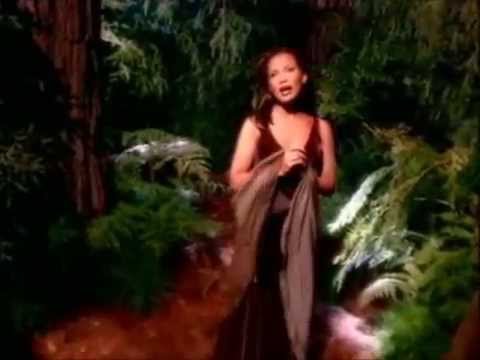
Disney has a long habit of giving its film anthems two lives: the story version that carries character, and the radio version that carries the brand into cars, kitchens, and late-night playlists. This song sits right in that tradition. In the film, the vocal is Judy Kuhn as the singing voice of Pocahontas. In the end credits, the pop single is led by Vanessa Williams, built for 1995 airplay without losing the core argument of the lyric.
What makes it endure is not just melody craft (Alan Menken can spin a chorus that lands like a handshake) but the lyrical posture. Stephen Schwartz writes a confrontation that refuses to wink. It is a lesson, yes, but it is also a dare: if you claim the land is yours, prove you can hear it first.
Review and Highlights
Quick summary
- Two signature recordings: Judy Kuhn leads the film performance; Vanessa Williams fronts the end-title pop single.
- Big awards sweep: it won Best Original Song at the Oscars and the Golden Globes, and won a Grammy for songwriting for visual media, as stated in the Academy of Motion Picture Arts and Sciences database and the Recording Academy archives.
- Commercial peak: the Vanessa Williams single reached the top five on the Billboard Hot 100 and peaked at number two on Billboard Adult Contemporary.
- Message-first writing: the lyric is framed as a rebuttal to colonial certainty, using nature imagery as evidence rather than decoration.
- Pop arrangement shift: the end-title version smooths the theatrical edges into adult contemporary, with a wider, radio-friendly mix and a prominent flute color.
Pocahontas (1995) - animated film - not diegetic. The song arrives as Pocahontas challenges John Smith's worldview, moving from direct argument to a sweeping montage of land, water, and living detail (around the middle of the film). Why it matters: it flips the romance dynamic into a moral test, turning attraction into accountability.
Creation History
The song was pivotal early. Schwartz and Menken have described it as their first collaboration for the project, and the lyric helped define what the film wanted to be about: not simply a love story, but a clash of assumptions with a thesis statement you can hum. The pop single followed Disney's well-worn crossover playbook: recruit a contemporary star, keep the hook, polish the edges, and let radio do the rest. According to the Recording Academy feature on the Pocahontas songwriters, Schwartz has spoken about drawing inspiration from Indigenous philosophy and credited that influence when the song later collected its biggest honors.
On the page, the writing is blunt in the best way. Schwartz uses plain verbs (know, own, hear, paint) and makes them do heavy lifting. Menken answers with a melody that starts conversationally and then opens into long notes, as if the song itself is learning to breathe wider. The result is a pop ballad with Broadway bones: direct address, a rising argument, and a chorus that does not merely repeat but expands the thesis.
Song Meaning and Annotations
Plot
Within the film, the song is positioned as a turning point. John Smith arrives with tidy categories: land is property, resources are prizes, and unfamiliar people are obstacles. Pocahontas answers by rejecting the premise. She describes a living world with names, voices, and relationships, and she pushes him to measure value by listening rather than taking. By the end, the argument is not abstract. It is personal: if he cannot see the world as alive, he cannot truly see her.
Song Meaning
The song is an argument dressed as an invitation. Its meaning lives in the tension between instruction and seduction: it teaches, but it also tempts the listener toward a different kind of attention. The chorus is the hinge. "Painting" becomes a metaphor for perception itself, a reminder that what you notice shapes what you believe you deserve. Menken's arrangement helps sell the shift: steady pulse, swelling strings, and that airy flute color that suggests wind as a real presence, not just scenery.
In a 1990s context, the theme also reads as a mainstream environmental statement that smuggled itself into pop radio. That is part of its odd magic: it can play as a love-adjacent ballad while also functioning as a miniature manifesto. TIME magazine later framed it among Disney songs that marked a shift in how a heroine argues for respect rather than waiting for it, and that observation tracks with how the lyric stages agency.
Annotations
"You think you own whatever land you land on"
That opening is blunt on purpose. It does not soften the critique with metaphor first. The lyric starts with the mindset it intends to dismantle, like holding up a cracked mirror and asking the listener to recognize the face.
"Every rock and tree and creature has a life"
This is animism stated plainly: the world is not inert. Notice how the line lists rock and tree beside creature. It removes the hierarchy that makes exploitation feel normal.
"You think the only people who are people"
A sharp line because it calls out dehumanization as a habit, not a single act. Schwartz does not write a villain monologue; he writes a common reflex and makes it uncomfortable.
"Have you ever heard the wolf cry"
Here the song pivots from argument to sensory proof. The lyric asks for experience, not agreement. It is also where the emotional arc warms: curiosity replaces accusation, even if the challenge remains.
"Can you sing with all the voices"
The word "voices" matters. Nature is presented as speaking, and the listener is asked to join a choir rather than dominate a map. Rhythmically, the phrase rides the melody's lift, making the question feel like motion.
"Paint with all the colors"
The hook works because it is both concrete and elastic. "Colors" can mean biodiversity, perspective, culture, or plain attention. The chorus does not tell you which one to choose, so it can follow you into different years of your life.
Genre and groove
Call it a pop ballad with theatrical architecture. The film version leans into storytelling clarity. The end-title single leans into adult contemporary sheen, with a stable backbeat, glossy harmonies, and a mix that keeps the vocal front and centered. Either way, the rhythm is less about dance and more about procession: it carries you through an argument as if walking a long trail.
Imagery and cultural touchpoints
The song uses nature images as ethical evidence. Mountains "sing" and winds have "colors" because the lyric is insisting that perception is moral. That framing also sits inside the film's broader, debated attempt to present Indigenous worldview in a mass-market format. The piece has been praised for its clarity and criticized in broader Pocahontas discussions for the simplifications that come with mainstream storytelling. The song survives those tensions partly because it is written as a challenge to certainty, not as a claim of perfect representation.
Technical Information
- Artist: Vanessa Williams (end-title single); Judy Kuhn (film vocal)
- Featured: none
- Composer: Alan Menken
- Lyricist: Stephen Schwartz
- Producer: Alan Menken and Stephen Schwartz (film recording); pop single produced by Keith Thomas is widely credited in discographies and reference listings
- Release Date: May 30, 1995 (soundtrack release listing); June 6, 1995 (lead single release listing)
- Genre: pop; adult contemporary crossover
- Instruments: lead vocal; strings; piano; light percussion; synth textures; flute color prominent in pop arrangement
- Label: Walt Disney Records (primary)
- Mood: reflective, instructive, uplift at the chorus
- Length: about 3:34 (film recording); about 4:18 (end-title version commonly listed)
- Track #: 11 on the Pocahontas soundtrack track list (film performance)
- Language: English
- Album: Pocahontas: An Original Walt Disney Records Soundtrack (film); also tied to reissues and pop compilations
- Music style: melodic pop ballad with orchestral lift and theatrical phrasing
- Poetic meter: mixed conversational stress with frequent iambic lean in longer lines
Questions and Answers
- Why do people talk about two main versions of the song?
- The film performance is tied to character and scene, while the end-title single is mixed and phrased for radio. They share the hook, but they aim at different rooms.
- Who sings it in the movie?
- Judy Kuhn is credited as the singing voice for the character in the soundtrack listings, while the end credits use the pop single vocalist.
- Why does the chorus feel like it "opens up"?
- Menken writes the melody so the verse sits closer to speech, then stretches into longer notes on the big idea lines, letting breath and harmony do persuasion.
- Is it a love song?
- Not in the usual sense. It is a worldview test that happens inside a romance plot. The affection is conditional on learning to listen.
- What is the central conflict inside the lyric?
- Ownership versus relationship. The lyric rejects the idea that land is dead property and replaces it with a model of living connection and responsibility.
- Why does the song use so many sound images like voices and singing?
- Because the argument is about attention. If the world has voices, then the moral act is to hear them rather than overwrite them.
- Did it have real pop chart impact, or was it mostly a film song?
- It had real pop traction. Billboard chart listings show the Vanessa Williams single reaching the Hot 100 top five, and Adult Contemporary peaking at number two.
- What is the quickest way to explain the hook without quoting it?
- It asks whether you can perceive beyond your own categories - and whether you are willing to change what you think you deserve.
- Why do covers keep showing up decades later?
- The structure is sturdy, and the message is adaptable. Artists can lean into orchestral drama, gospel phrasing, pop-punk energy, or stripped acoustic intimacy without breaking the core.
- Is there a modern example of its cover life?
- Yes. A 2024 compilation of alternative and pop-punk takes on Disney material includes a new cover by Tokio Hotel, showing how the song survives genre shifts.
Awards and Chart Positions
Some songs get nominated and move on. This one collected hardware. It won Best Original Song at the Oscars (ceremony dated March 25, 1996) and won Best Original Song at the Golden Globes (1996 listing). It also won the Grammy award for song written for a motion picture or television, credited to Menken and Schwartz, according to the Recording Academy awards page.
| Category | Result | Year | Notes |
|---|---|---|---|
| Academy Awards - Best Original Song | Won | 1996 ceremony | Menken (music) and Schwartz (lyrics) |
| Golden Globes - Best Original Song | Won | 1996 | Listed under Pocahontas |
| Grammy Awards - Song for visual media | Won | 1996 | Songwriters credited; associated with both principal vocal recordings |
| Chart | Peak | Market | Evidence note |
|---|---|---|---|
| Billboard Hot 100 | 4 | United States | Vanessa Williams single listing |
| Billboard Adult Contemporary | 2 | United States | Adult Contemporary chart listing |
| Official Singles Chart | 21 | United Kingdom | Official Charts entry uses the UK spelling in the title |
How to Sing Colors of the Wind
Most singers underestimate the song because it is familiar. The trick is not volume, it is line control. Metric listings commonly place the end-title version around 84 BPM in B-flat major, which is slow enough to expose every breath choice.
- Tempo first: Set a metronome near 84 BPM and speak the verse text in time. If you cannot speak it without rushing, you will not sing it cleanly.
- Diction: Keep consonants forward on words that carry the argument (own, know, hear, voices). Crisp consonants let you stay gentle without going blurry.
- Breathing: Plan breaths by meaning, not by bar lines. Take air before the thought turns, not after you are already late.
- Flow and rhythm: Treat the verse like measured speech. Save the long legato for the chorus, where the melody is designed to widen.
- Accents: Lightly emphasize the first beat of key phrases, then relax into the vowel. A hard accent makes it sound like a lecture; a soft accent keeps it persuasive.
- Dynamics: Build in layers. Verse: intimate and direct. Pre-chorus: slightly brighter. Chorus: open tone, taller vowels, longer arcs.
- Vocal range planning: Range guides for common arrangements often sit roughly around G3 to B-flat4 in an original-key framework. If the top feels tight, transpose rather than push.
- Mic technique: If amplified, step closer for the verse and back off slightly on chorus peaks. The song wants intimacy early and space later.
- Common pitfalls: Over-singing the chorus, scooping into every big note, and letting breath noise lead the phrase. Keep it honest, not inflated.
- Practice materials: Record two takes: one spoken-in-rhythm, one sung. Compare where the argument loses clarity. Fix that spot before you chase high notes.
Additional Info
The song has had an unusually long second life in covers and themed compilations. The 2015 pop tribute album We Love Disney includes a version by Tori Kelly, and a 2024 pop-punk Disney covers compilation includes a Tokio Hotel take. These are not novelty picks. They are evidence that the melody can wear new clothes without losing its spine.
There is also a quiet historical footnote in how the song was talked about by its writers. In a Recording Academy interview feature, Schwartz described how the lyric was shaped by Indigenous ideas he had been reading, and he pointed to that influence as part of what he wanted to honor when the awards came calling. That kind of comment is rare in mainstream pop: it frames the song not as pure fantasy, but as a borrowed lens that demands respect.
Key Contributors
| Entity | Type | Relationship statement |
|---|---|---|
| Alan Menken | Person | Composed the music for the song for the film. |
| Stephen Schwartz | Person | Wrote the lyrics and shaped the confrontational point of view. |
| Judy Kuhn | Person | Performed the primary film vocal recording. |
| Vanessa Williams | Person | Performed the end-title single that crossed onto pop radio. |
| Walt Disney Records | Organization | Released the soundtrack and associated single listings. |
| Academy of Motion Picture Arts and Sciences | Organization | Listed the song as the Best Original Song winner at the 1996 ceremony page. |
| Golden Globe Awards | Organization | Listed the song as Best Original Song winner for Pocahontas. |
| Recording Academy | Organization | Lists the song as a Grammy winner in the 38th Annual awards archive. |
| Pocahontas (1995 film) | Work | Uses the song as a narrative turning point between Pocahontas and John Smith. |
| A Whole New Sound (2024 compilation) | Work | Includes a modern alternative cover that extends the song's catalog life. |
Sources: Academy Awards ceremony database, Golden Globes film entry for Pocahontas, Recording Academy awards archive, Billboard charts archive, Official Charts Company, Wikipedia reference entries, DisneyMusic social post about certification
Music video
Disney: 60 Years of Musical Magic Lyrics: Song List
- Volume One
- A Whole New World (Aladdin)
- Circle of Life (Lion King)
- Beauty and the Beast (Beauty and the Beast)
- Under the Sea (The Little Mermaid)
- Hakuna Matata (Lion King)
- Kiss the Girl (The Little Mermaid)
- I Just Can't Wait to Be King (Lion King)
- Poor Unfortunate Souls (The Little Mermaid)
- Chim Chim Cher-ee (Mary Poppins)
- Jolly Holiday (Mary Poppins)
- A Spoonful of Sugar (Mary Poppins)
- Let's Get Together (The Parent Trap)
- The Monkey's Uncle (The Monkey's Uncle)
- The Ugly Bug Ball (Summer Magic)
- The Spectrum Song (Walt Disney's Wonderful World of Color)
- Colonel Hathi's March (The Jungle Book)
- A Whale of a Tale (20,000 Leagues Under the Sea)
- You Can Fly! You Can Fly! You Can Fly! (Peter Pan)
- The Work Song (Cinderella)
- A Dream is a Wish Your Heart Makes (Cinderella)
- Zip-A-Dee-Doo-Dah (Song of the South)
- Dance of the Reed Flutes (Fantasia)
- Love Is a Song (Bembi)
- Someday My Prince Will Come (Snow White and the Seven Dwarfs)
- Minnie's Yoo Hoo! (Mickey's Follies)
- Volume Two
- Be Our Guest (Beauty & The Beast)
- Can You Feel the Love Tonight (The Lion King)
- Part of Your World (The Little Mermaid)
- One Jump Ahead (Alladin)
- Gaston (Beauty And the Beast)
- Something There (Beauty And the Beast)
- Supercalifragilisticexpialidocious (Mary Poppins)
- Candle on the Water (Pete's Dragon)
- Main Street Electrical Parade (Disneyland)
- The Age of Not Believing (Bedknobs and Broomsticks)
- The Bare Necessities (The Jungle Book)
- Feed the Birds (Mary Poppins)
- Best of Friends (The Fox and the Hound)
- Let's Go Fly a Kite (Mary Poppins)
- It's a Small World (Disneyland)
- The Tiki, Tiki, Tiki Room (Disneyland)
- Mickey Mouse Club March (Mickey Mouse Club)
- On the Front Porch (Summer Magic)
- The Second Star to the Right (Peter Pan)
- Ev'rybody Has a Laughing Place (Song of the South)
- Bibbidi-Bobbidi-Boo (Cinderella)
- So This is Love (Cinderella)
- When You Wish Upon a Star (Pinocchio)
- Heigh-Ho (Snowwhite & the 7 Dwarfs)
- Who's Afraid of the Big Bad Wolf (The 3 Little Pigs)
- Volume Three
- Colors of the Wind (Pocahontas)
- You've Got a Friend in Me (Toy Story)
- Be Prepared (The Lion King)
- Out There (The Hunchback of Notre Dame)
- Family (James & The Giant Peach)
- Les Poissons (The Little Mermaid)
- Mine, Mine, Mine (Pocahontas)
- Jack's Lament (The Nightmare Before Christmas)
- My Name Is James (Jame & The Giant Peach)
- Heffalumps and Woozles (Winnie the Pooh and the Blustery Day)
- The Mob Song (Beauty & The Beast)
- Portobello Road (Bedknobs and Broomsticks)
- Stay Awake (Mary Poppins)
- I Wan'na Be Like You (The Jungle Book)
- Oo-De-Lally (Robin Hood)
- Are We Dancing (The Happiest Millionaire)
- Once Upon a Dream (Sleeping Beauty)
- Bella Notte (Lady and the Tramp)
- Following the Leader (Peter Pan)
- Trust in Me (The Jungle Book)
- The Ballad of Davy Crockett (Davy Crockett)
- I'm Professor Ludwig Von Drake (Walt Disney's Wonderful World of Color)
- Pink Elephants on Parade (Dumbo)
- Little April Shower (Bambi)
- The Silly Song (Snow White & the 7 Dwarfs)
- Volume Four
- One Last Hope (Hercules)
- A Guy Like You (The Hunchback of Norte Dame)
- On the Open Road (A Goofy Movie)
- Just Around the Riverbend (Pocahontas)
- Home (Beauty & the Beast (Broadway Musical))
- Fantasmic! (Disneyland)
- Oogie Boogie's Song (The Nightmare Before Christmas)
- I Will Go Sailing No More (Toy Story)
- Substitutiary Locomotion (Bedknobs and Broomsticks)
- Stop, Look, and Listen/I'm No Fool (Mickey Mouse Club)
- Love (Robin Hood)
- Thomas O'Malley Cat (The Aristocats)
- That's What Friends Are For (The Jungle Book)
- Winnie the Pooh
- Femininity (Summer Magic)
- Ten Feet Off the Ground (The One and Only, Genuine, Original Family Band)
- The Siamese Cat Song (Lady and the Tramp)
- Enjoy It! (In Search of the Castaways (film))
- Give a Little Whistle (Pinocchio)
- Oh, Sing Sweet Nightingale (Cinderella)
- I Wonder (Sleeping Beauty)
- Looking for Romance / I Bring You A Song (Bambi)
- Baby Mine (Dumbo)
- I'm Wishing/One Song (Snow White & the 7 Dwarfs)
- Volume Five
- I'll Make a Man Out of You (Mulan)
- I Won't Say / I'm in Love (Hercules)
- God Help the Outcasts (The Hunchback of Notre Dame)
- If I Can't Love Her (Beauty and the Beast)
- Steady As The Beating Drum (Pocahontas)
- Belle (Beauty & the Beast)
- Strange Things (Toy Story)
- Cruella De Vil (101 Dalmatians)
- Eating the Peach (James and the Giant Peach)
- Seize the Day (Newsies)
- What's This? (The Nightmare Before Christmas)
- Lavender Blue / Dilly Dilly (So Dear to My Heart)
- The Rain Rain Rain Came Down Down Down (Winnie the Pooh and the Blustery Day)
- A Step in the Right Direction (Bedknobs and Broomsticks)
- Boo Bop Bopbop Bop (Pete's Dragon)
- Yo Ho / A Pirate's Life for Me (Disneyland)
- My Own Home (The Jungle Book)
- Ev'rybody Wants to Be a Cat (The Aristocats)
- In a World of My Own (Alice in Wonderland)
- You Belong to My Heart (The 3 Caballeros)
- Humphrey Hop (In the Bag)
- He's a Tramp (Lady and the Tramp)
- How Do You Do? (Song of the South)
- When I See an Elephant Fly (Dumbo)
- I've Got No Strings (Pinocchio)