The Bare Necessities (The Jungle Book) Lyrics — Disney: 60 Years of Musical Magic
The Bare Necessities (The Jungle Book) Lyrics
The simple bare necessities
Forget about your worries and your strife
I mean the bare necessities
Old Mother Nature's recipes
That brings the bare necessities of life
Wherever I wander, wherever I roam
I couldn't be fonder of my big home
The bees are buzzin' in the tree
To make some honey just for me
When you look under the rocks and plants
And take a glance at the fancy ants
Then maybe try a few
The bare necessities of life will come to you
They'll come to you!
Look for the bare necessities
The simple bare necessities
Forget about your worries and your strife
I mean the bare necessities
That's why a bear can rest at ease
With just the bare necessities of life
Now when you pick a pawpaw
Or a prickly pear
And you prick a raw paw
Next time beware
Don't pick the prickly pear by the paw
When you pick a pear
Try to use the claw
But you don't need to use the claw
When you pick a pear of the big pawpaw
Have I given you a clue ?
The bare necessities of life will come to you
They'll come to you!
So just try and relax, yeah cool it
Fall apart in my backyard
'Cause let me tell you something little britches
If you act like that bee acts, uh uh
You're working too hard
And don't spend your time lookin' around
For something you want that can't be found
When you find out you can live without it
And go along not thinkin' about it
I'll tell you something true
The bare necessities of life will come to you
Song Overview
Review and Highlights
Quick summary
- First heard in the 1967 animated film as a character-to-character number: Baloo tutors Mowgli in the art of staying calm.
- Written by Terry Gilkyson, and kept when the film shifted creative directions.
- Its swing-jazz gait sells a philosophy: comfort is a practice, not a purchase.
- Later echoed across Disney spinoffs and stage-friendly editions, with a long afterlife in covers.
- A modern proof of durability: it earned new-era single certifications decades after its debut.
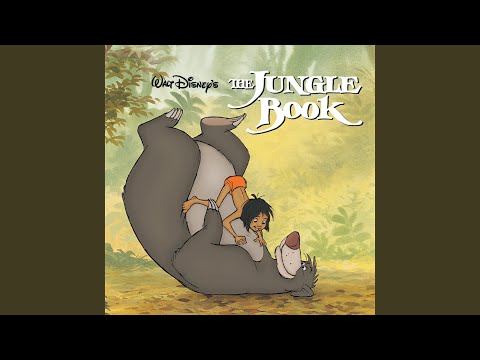
The Jungle Book (1967) - animated film - diegetic. Baloo leads Mowgli through a breezy walk-and-talk lesson in the jungle, around the mid-first act (a commonly cited placement is about 00:25:00). Why it matters: the melody is a soft rope bridge between danger and comfort, setting up Baloo as the film's warmest persuader rather than a mere comic detour.
Creation History
This number has the feel of something discovered rather than manufactured, and that is close to the truth. Terry Gilkyson wrote it for an earlier version of the project, but it survived the rewrite, and the final film built one of its most memorable character beats around it. The arrangement is often linked to Van Dyke Parks' touch, which helps explain why the groove feels streetwise instead of precious. According to D23, it went on to secure a major awards nod, which is a tidy reminder that a song can sound casual while being extremely well-made.
Song Meaning and Annotations
Plot
In the story, the boy is meant to be escorted to safety, but the jungle is crowded with competing ideas of what safety looks like. Baloo interrupts the march of responsibility with a counterproposal: stop sprinting, start living. The song plays like a negotiation in motion - one voice pitching a lifestyle, the other voice learning how to smile without surrendering caution. Later, a brief reprise helps fold that lesson into the film's goodbye.
Song Meaning
The core claim is disarmingly simple: worry is loud, but it is not always useful. Baloo frames contentment as a skill you can rehearse, not a prize you win. Under the friendly wink is a survival logic: if you can name what you truly need, you can move through fear without letting it drive. That tension - comfort versus caution - is why the tune lands beyond its jungle setting.
Annotations
-
Look for the bare necessities
That opening verb matters. It is not "buy," not "build," not "earn." It is "look," like a scavenger with good taste. The lyric sneaks in an ethic: attention is the first tool.
-
Mother Nature's recipes
The phrasing turns survival into cookery. A recipe implies repeatable steps, and the melody follows suit: short phrases, easy to remember, designed for a child to echo back.
-
forget about your worries
Baloo is not offering ignorance. He is offering triage. The swing rhythm does what the words prescribe - it keeps moving, refuses to linger, and gives anxiety less room to sprawl.
-
wherever I wander
This is the song's roaming passport. The message is portable: the philosophy works in a jungle, a city, or a kitchen at 2 a.m. when you are trying to talk yourself down.
Rhythm and style fusion
Its secret weapon is swing: the beat leans forward, then relaxes, like a hammock that still gets you across the river. That jazz posture keeps the philosophy from sounding like a lecture. You can hear why critics keep calling it a standard rather than "just" a cartoon song - according to Billboard magazine, it belongs in the top tier of Disney writing where melody and character are welded together.
The arc in plain language
The tune begins as a pitch, becomes a duet, and ends as something closer to a pact. The boy does not magically forget danger; he learns a softer posture inside it. In storytelling terms, the number is a character shortcut: it makes you trust Baloo without a monologue, and it makes Mowgli's later choices feel earned rather than forced.
Symbols that keep returning
Fruit, paws, and "recipes" are not random jungle props. They are metaphors for competence. A kid in a world of predators is being taught a tiny syllabus: notice, choose, improvise. The lyric keeps pointing away from abstract fear and toward tangible action, and the music follows with clear cadences and friendly call-and-response.
Technical Information
- Artist: Phil Harris and Bruce Reitherman
- Featured: Character performance as Baloo and Mowgli
- Composer: Terry Gilkyson
- Producer: Soundtrack production credits vary by release edition
- Release Date: October 18, 1967 (soundtrack listing)
- Genre: Jazz, soundtrack
- Instruments: Big-band leaning rhythm section and horns (arranged for swing feel)
- Label: Disneyland (original single branding), later Walt Disney Records releases
- Mood: Easygoing, lightly comic, reassuring
- Length: About 4:51 (classic soundtrack take)
- Track #: 4 on a commonly cited LP track sequence
- Language: English
- Album (if any): The Jungle Book (Original Soundtrack)
- Music style: Swing-jazz character song with duet phrasing
- Poetic meter: Conversational stress with swing syncopation (speechlike lines riding a steady pulse)
Questions and Answers
- Why does the song sound so relaxed while the story is full of danger?
- That contrast is the point. The groove acts like Baloo's argument: calm is a survival tactic, not a denial of risk.
- What makes it feel like jazz rather than a typical studio singalong?
- It leans on swing phrasing, short call-and-response hooks, and a conversational melody that sits comfortably on the beat instead of trying to overpower it.
- Is it a lesson or a temptation?
- Both. Baloo teaches a healthy focus on needs, but he also tries to keep Mowgli close, so the advice carries a hint of self-interest.
- What is the lyric trick that makes it stick in memory?
- Repetition with tiny variations. The phrase returns like a refrain you can hum while walking, and the images change just enough to keep your attention.
- Why does the duet format matter?
- A duet creates proof. When Mowgli answers back, the philosophy shifts from a sales pitch to shared language.
- How does the song connect to the film's theme of belonging?
- It defines belonging as a set of practices: eat, rest, notice the world, and keep moving. It is community by habit, not by speeches.
- What is the most important line for the story?
- The repeated focus on "necessities" reframes the jungle as workable. It tells the audience that Mowgli can learn competence, not just be rescued.
- Why did later Disney projects keep returning to it?
- It functions as a signature for Baloo - a musical shorthand that instantly signals comfort, humor, and a certain stubborn optimism.
- Does the message hold up outside the film?
- Yes, because it is not tied to a plot twist. It is a portable mindset: sort needs from noise, then act on what you can control.
Awards and Chart Positions
It reached awards-season air without ever sounding like it was trying. The film's signature song earned an Academy Award nomination, then kept accumulating proof of cultural longevity in the form of later certifications. As stated in TIME magazine's Disney ranking feature, its lasting appeal is tied to how effortless it feels - like advice you can hum while walking.
| Category | Result | Date | Notes |
|---|---|---|---|
| Academy Awards - Music (Song) | Nominated | April 8, 1968 | Nominated as part of the 40th ceremony; credited to Terry Gilkyson. |
| United Kingdom certification (single) | Gold | March 31, 2023 | Listed under Phil Harris for the single. |
| United States certification (single) | Gold | February 3, 2025 | Listed under Phil Harris for the single. |
How to Sing The Bare Necessities
Baseline metrics (classic take): about 103 BPM in C major. One widely used vocal-range estimate for the Phil Harris performance places it roughly from G2 to A3, which sits comfortably for baritone and bass voices, and can be transposed up for higher singers.
- Tempo first: Set a metronome near 103 BPM. Practice speaking the lyric in time before you sing. If you rush, the swing turns into a sprint.
- Diction: Keep consonants crisp but light. This number is friendly conversation, not a big stage belt.
- Breathing: Plan breaths at phrase ends, not mid-thought. The melody is built in bite-size units, so do not steal air too often.
- Flow and rhythm: Aim for a lazy pocket. Let the ends of phrases relax slightly so the swing can breathe.
- Accents: Stress the verbs and images. Make "look," "forget," and the food words pop, and the story tells itself.
- Ensemble doubles: In a duet, treat the second voice like a mirror. Match vowel shapes and timing, even if your tone color is different.
- Mic and tone: Use a warm, spoken placement. A little smile in the sound helps, but keep it grounded.
- Pitfalls: Overacting can flatten the groove. Underacting can make it dull. The sweet spot is a storyteller who trusts the tune.
- Practice materials: Clap the backbeat, then sing on a single vowel, then add words. Record yourself once and listen for whether the rhythm feels settled.
Additional Info
Long after the first jungle stroll, the song kept popping up in unexpected corners. A hip-hop flavored version performed by Lou Rawls became the theme for the animated series Jungle Cubs, proof that the hook can survive a wardrobe change. The 2016 live-action adaptation also kept the tune in play, performed on-screen by Bill Murray and Neel Sethi, treating it as a piece of DNA that the remake could not responsibly lose.
Covers tell their own story. Louis Armstrong recorded it for his Disney-themed album in 1968, giving the melody a veteran's grin. Steve Tyrell, Brian Wilson, and The Overtones later approached it as a standard, each one sanding the edges differently: lounge polish here, pop nostalgia there, group-harmony charm somewhere else. That is the mark of a well-built song - it takes new voices without losing its shape.
On the stage side, school and youth editions of Disney's The Jungle Book KIDS list the song among the core selections, which makes sense: it is teachable, rhythmic, and instantly legible in character.
Key Contributors
| Entity | Type | Relationship | Statement |
|---|---|---|---|
| Terry Gilkyson | Person | Writer | Gilkyson wrote the song for the project and received the Academy Award nomination credit. |
| Phil Harris | Person | Performer | Harris performs the lead vocal as Baloo in the classic soundtrack recording. |
| Bruce Reitherman | Person | Performer | Reitherman performs the Mowgli vocal lines in the duet. |
| Van Dyke Parks | Person | Arranger link | Parks is widely credited with contributing to the arrangement that supports the swing feel. |
| The Jungle Book | Work | Source film | The animated film introduces the number as a character lesson and later reprises it. |
| Walt Disney Productions | Organization | Studio | The studio produced the 1967 film where the song originates. |
| Walt Disney Records | Organization | Label | The label appears on later releases and certification listings for the single. |
| Music Theatre International | Organization | Stage licensing | MTI lists the song in the published song roster for Disney's The Jungle Book KIDS. |
Sources: D23 A to Z entry for Bare Necessities, The; D23 A to Z entry for Jungle Book, The (film); Academy Awards 40th ceremony nominees page; RIAA Gold and Platinum search result for the single; BPI award listing for the single; Apple Music listing for the 1967 soundtrack track; Musicstax tempo and key listing; TuneBat key and BPM listing; Singing Carrots vocal-range estimate; Music Theatre International Disney's The Jungle Book KIDS song list; Billboard best Disney songs list feature; TIME best Disney songs ranking feature; IMDb soundtrack listing for The Jungle Book (2016); The Bare Necessities reference page.
Music video
Disney: 60 Years of Musical Magic Lyrics: Song List
- Volume One
- A Whole New World (Aladdin)
- Circle of Life (Lion King)
- Beauty and the Beast (Beauty and the Beast)
- Under the Sea (The Little Mermaid)
- Hakuna Matata (Lion King)
- Kiss the Girl (The Little Mermaid)
- I Just Can't Wait to Be King (Lion King)
- Poor Unfortunate Souls (The Little Mermaid)
- Chim Chim Cher-ee (Mary Poppins)
- Jolly Holiday (Mary Poppins)
- A Spoonful of Sugar (Mary Poppins)
- Let's Get Together (The Parent Trap)
- The Monkey's Uncle (The Monkey's Uncle)
- The Ugly Bug Ball (Summer Magic)
- The Spectrum Song (Walt Disney's Wonderful World of Color)
- Colonel Hathi's March (The Jungle Book)
- A Whale of a Tale (20,000 Leagues Under the Sea)
- You Can Fly! You Can Fly! You Can Fly! (Peter Pan)
- The Work Song (Cinderella)
- A Dream is a Wish Your Heart Makes (Cinderella)
- Zip-A-Dee-Doo-Dah (Song of the South)
- Dance of the Reed Flutes (Fantasia)
- Love Is a Song (Bembi)
- Someday My Prince Will Come (Snow White and the Seven Dwarfs)
- Minnie's Yoo Hoo! (Mickey's Follies)
- Volume Two
- Be Our Guest (Beauty & The Beast)
- Can You Feel the Love Tonight (The Lion King)
- Part of Your World (The Little Mermaid)
- One Jump Ahead (Alladin)
- Gaston (Beauty And the Beast)
- Something There (Beauty And the Beast)
- Supercalifragilisticexpialidocious (Mary Poppins)
- Candle on the Water (Pete's Dragon)
- Main Street Electrical Parade (Disneyland)
- The Age of Not Believing (Bedknobs and Broomsticks)
- The Bare Necessities (The Jungle Book)
- Feed the Birds (Mary Poppins)
- Best of Friends (The Fox and the Hound)
- Let's Go Fly a Kite (Mary Poppins)
- It's a Small World (Disneyland)
- The Tiki, Tiki, Tiki Room (Disneyland)
- Mickey Mouse Club March (Mickey Mouse Club)
- On the Front Porch (Summer Magic)
- The Second Star to the Right (Peter Pan)
- Ev'rybody Has a Laughing Place (Song of the South)
- Bibbidi-Bobbidi-Boo (Cinderella)
- So This is Love (Cinderella)
- When You Wish Upon a Star (Pinocchio)
- Heigh-Ho (Snowwhite & the 7 Dwarfs)
- Who's Afraid of the Big Bad Wolf (The 3 Little Pigs)
- Volume Three
- Colors of the Wind (Pocahontas)
- You've Got a Friend in Me (Toy Story)
- Be Prepared (The Lion King)
- Out There (The Hunchback of Notre Dame)
- Family (James & The Giant Peach)
- Les Poissons (The Little Mermaid)
- Mine, Mine, Mine (Pocahontas)
- Jack's Lament (The Nightmare Before Christmas)
- My Name Is James (Jame & The Giant Peach)
- Heffalumps and Woozles (Winnie the Pooh and the Blustery Day)
- The Mob Song (Beauty & The Beast)
- Portobello Road (Bedknobs and Broomsticks)
- Stay Awake (Mary Poppins)
- I Wan'na Be Like You (The Jungle Book)
- Oo-De-Lally (Robin Hood)
- Are We Dancing (The Happiest Millionaire)
- Once Upon a Dream (Sleeping Beauty)
- Bella Notte (Lady and the Tramp)
- Following the Leader (Peter Pan)
- Trust in Me (The Jungle Book)
- The Ballad of Davy Crockett (Davy Crockett)
- I'm Professor Ludwig Von Drake (Walt Disney's Wonderful World of Color)
- Pink Elephants on Parade (Dumbo)
- Little April Shower (Bambi)
- The Silly Song (Snow White & the 7 Dwarfs)
- Volume Four
- One Last Hope (Hercules)
- A Guy Like You (The Hunchback of Norte Dame)
- On the Open Road (A Goofy Movie)
- Just Around the Riverbend (Pocahontas)
- Home (Beauty & the Beast (Broadway Musical))
- Fantasmic! (Disneyland)
- Oogie Boogie's Song (The Nightmare Before Christmas)
- I Will Go Sailing No More (Toy Story)
- Substitutiary Locomotion (Bedknobs and Broomsticks)
- Stop, Look, and Listen/I'm No Fool (Mickey Mouse Club)
- Love (Robin Hood)
- Thomas O'Malley Cat (The Aristocats)
- That's What Friends Are For (The Jungle Book)
- Winnie the Pooh
- Femininity (Summer Magic)
- Ten Feet Off the Ground (The One and Only, Genuine, Original Family Band)
- The Siamese Cat Song (Lady and the Tramp)
- Enjoy It! (In Search of the Castaways (film))
- Give a Little Whistle (Pinocchio)
- Oh, Sing Sweet Nightingale (Cinderella)
- I Wonder (Sleeping Beauty)
- Looking for Romance / I Bring You A Song (Bambi)
- Baby Mine (Dumbo)
- I'm Wishing/One Song (Snow White & the 7 Dwarfs)
- Volume Five
- I'll Make a Man Out of You (Mulan)
- I Won't Say / I'm in Love (Hercules)
- God Help the Outcasts (The Hunchback of Notre Dame)
- If I Can't Love Her (Beauty and the Beast)
- Steady As The Beating Drum (Pocahontas)
- Belle (Beauty & the Beast)
- Strange Things (Toy Story)
- Cruella De Vil (101 Dalmatians)
- Eating the Peach (James and the Giant Peach)
- Seize the Day (Newsies)
- What's This? (The Nightmare Before Christmas)
- Lavender Blue / Dilly Dilly (So Dear to My Heart)
- The Rain Rain Rain Came Down Down Down (Winnie the Pooh and the Blustery Day)
- A Step in the Right Direction (Bedknobs and Broomsticks)
- Boo Bop Bopbop Bop (Pete's Dragon)
- Yo Ho / A Pirate's Life for Me (Disneyland)
- My Own Home (The Jungle Book)
- Ev'rybody Wants to Be a Cat (The Aristocats)
- In a World of My Own (Alice in Wonderland)
- You Belong to My Heart (The 3 Caballeros)
- Humphrey Hop (In the Bag)
- He's a Tramp (Lady and the Tramp)
- How Do You Do? (Song of the South)
- When I See an Elephant Fly (Dumbo)
- I've Got No Strings (Pinocchio)