Out There (The Hunchback of Notre Dame) Lyrics — Disney: 60 Years of Musical Magic
Out There (The Hunchback of Notre Dame) Lyrics
The world is cruel
The world is wicked
It's I alone whom you can trust in this whole city
I am your only friend
I who keep you, teach you, feed you, dress you
I who look upon you without fear
How can I protect you, boy, unless you
Always stay in here
Away in here
Remember what I taught you, Quasimodo
You are deformed
Quasimodo:
I am deformed
Frollo:
And you are ugly
Quasimodo:
And I am ugly
Frollo:
And these are crimes
For which the world
Shows little pity
You do not comprehend
Quasimodo:
You are my one defender
Frollo:
Out there they'll revile you
As a monster
Quasimodo:
I am a monster
Frollo:
Out there they will hate
And scorn and jeer
Quasimodo:
Only a monster
Frollo:
Why invite their calumny
And consternation?
Stay in here
Be faithful to me
Quasimodo:
I'm faithful
Frollo:
Grateful to me
Quasimodo:
I'm grateful
Frollo:
Do as I say
Obey
And stay
In here
Quasimodo:
I'll stay
In here
Quasimodo:
Safe behind these windows and these parapets of stone
Gazing at the people down below me
All my life I watch them as I hide up here alone
Hungry for the histories they show me
All my life I memorize their faces
Knowing them as they will never know me
All my life I wonder how it feels to pass a day
Not above them
But part of them
And out there
Living in the sun
Give me one day out there
All I ask is one
To hold forever
Out there
Where they all live unaware
What I'd give
What I'd dare
Just to live one day out there
Out there among the millers and the weavers and their wives
Through the roofs and gables I can see them
Ev'ry day they shout and scold and go about their lives
Heedless of the gift it is to be them
If I was in their skin
I'd treasure ev'ry instant
Out there
Strolling by the Seine
Taste a morning out there
Like ordinary men
Who freely walk about there
Just one day and then
I swear I'll be content
With my share
Won't resent
Won't despair
Old and bent
I won't care
I'll have spent
One day
Out there
Song Overview
Review and Highlights
Quick summary
- Title and function: Quasimodo turns a private daydream into a vow: one day in the crowd, one day in the sun.
- Where it appears: The Hunchback of Notre Dame (1996) - film soundtrack cue that bridges Frollo's control speech and Quasimodo's longing, then spills into the Feast of Fools setup.
- Who sings: Quasimodo leads, with Frollo threaded in as a cold counter-voice in the combined structure often described as "Stay In Here" plus the main theme section.
- Why it stands out: A legit musical-theater build that keeps raising the ceiling, then snaps back to loneliness like a door shutting.
- How it evolved: Later stage versions split and expand the material, turning Frollo's controlling passage into "Sanctuary" while keeping Quasimodo's yearning intact.
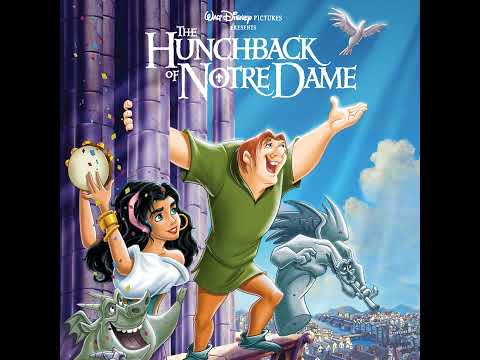
The Hunchback of Notre Dame (1996) - film soundtrack - not. Quasimodo remains in the bell tower while Paris moves below, and the number lands just before the carnival energy of the next sequence. Its narrative job is simple: it makes the stakes personal. Not politics, not law, not sermon. One person asking for one day of being treated as ordinary.
As a piece of craft, the song pulls off a neat trick. It begins as a controlled, almost conversational setup, then gradually turns the room into a cathedral of sound. Menken builds the melody like steps on a spiral staircase: each phrase climbs, rests, then climbs again, daring the singer to go further without forcing the tone. When it hits the big wish, it is not a random high note. It is pressure finally escaping.
I have always heard two theatrical instincts wrestling here. One is pure show tune uplift, the kind that makes an audience sit up straighter. The other is caution. Even at its most soaring, the harmony keeps a shadow nearby. That shadow is the world outside, which may be beautiful, but may also be cruel. The song lets both truths live in the same breath.
Creation History
The songwriting team of Alan Menken and Stephen Schwartz shaped this number to act like a hinge between confinement and possibility, and the film recording pairs Quasimodo's dream with Frollo's warning so the desire and the threat share a single musical corridor. Later, when the story moved into stage form, the creators and adapters leaned into that architecture by expanding and separating sections, giving Frollo a fuller scene-setting vehicle while allowing Quasimodo's plea to stand more cleanly on its own. According to Playbill, the modern stage-era spotlight on the song was reinforced by a studio cast recording process that put lead performers back in the booth to preserve the musical's larger, choral scale.
Song Meaning and Annotations
Plot
Quasimodo watches Paris from above and aches to join it. He imagines ordinary life: walking streets, being noticed for something other than his appearance, and feeling sunlight without bars or bells between him and the day. The scene is not about romance or adventure first. It is about permission. To be seen, to belong, to exist in public without apology.
Song Meaning
The meaning is a study in distance. Quasimodo is physically close to the city and socially miles away. The song is his attempt to close that gap with imagination, then with resolve. It is also a quiet indictment of "protection" as a disguise for control. When the guardian voice intrudes, it frames the outside world as danger, yet the real danger is the cage that calls itself care.
Annotations
- Vertical symbolism: The tower is not just a location. It is a social ranking made literal. The melody keeps reaching downward and outward, like someone trying to climb out of a label.
- Rhythm as restraint: The early pacing stays measured, like the character is rehearsing courage. The longer the song runs, the more the tempo feel seems to open, as if the body finally believes its own wish.
- Chords as daylight: The harmony brightens at the dream peak, but it never fully erases the minor tension underneath. The music is saying: hope can be real without being naive.
- Stage split, story split: When adaptations separate the controlling passage into "Sanctuary," it clarifies the conflict: one character speaks fear as doctrine, the other speaks desire as humanity.
Safe behind these windows and these parapets of stone.
That word "safe" is doing double duty. It sounds comforting, yet it is also a trap. Safety becomes the excuse that keeps life at a distance.
Out there, among the millers and the weavers and their wives.
The detail matters: not heroes, not royalty, not myth. Working people. It is a fantasy of normalcy, which is often the hardest fantasy for an outcast to believe he deserves.
Just to live one day out there.
The limitation is the heartbreak. He is not asking for a new identity, just a temporary suspension of stigma. One day, one chance, one breath of being unremarkable.
Driving rhythm and vocal arc
The rhythm supports a classic build: speech-like setup to sustained, ringing lines. The singer has to sell wonder without turning the tone syrupy. The best performances keep the center of the voice clear, then let the climactic phrase bloom as a result of thought turning into action.
Key phrases and imagery
The language leans on everyday trades, sunlight, streets, and crowds. It is not abstract freedom, it is tactile life. The metaphors are plain because the character has been denied plain things. When the song goes big, it does so by insisting that the ordinary is worth singing about.
Technical Information
- Artist: Tom Hulce and Tony Jay
- Featured: Film voice cast ensemble context
- Composer: Alan Menken
- Producer: Soundtrack production credits vary by release; core album issued by Walt Disney Records
- Release Date: May 28, 1996
- Genre: Film soundtrack; musical theater ballad
- Instruments: Orchestra; choral textures; percussion supporting a gradual build
- Label: Walt Disney Records
- Mood: Yearning; aspirational; wary
- Length: 4:25
- Track #: 2 (soundtrack sequence)
- Language: English
- Album: The Hunchback of Notre Dame: An Original Walt Disney Records Soundtrack
- Music style: Broadway-leaning ballad with cinematic orchestration
- Poetic meter: Mixed iambic tendencies with theater-style phrasing and held vowels on climactic lines
Questions and Answers
- Why does the song feel like it keeps getting bigger?
- The melody and orchestration are designed as a staircase: each section adds height, then the climax releases the stored tension.
- Is it a solo or a duet?
- In soundtrack form it functions as a combined scene: Quasimodo leads the yearning, while the guardian voice is threaded in to frame the rules and fear around him.
- What is the main conflict inside the number?
- Desire versus doctrine. One voice imagines belonging, the other insists that belonging is not allowed.
- Why are the references to trades and everyday people so important?
- They show the character is not dreaming of status. He is dreaming of normal life, which makes the longing sharper.
- How did the stage version reshape the material?
- Adaptations expand and separate the controlling passage into "Sanctuary," giving the power dynamic more space while keeping the central yearning intact.
- Is there a notable modern cast recording connection?
- Yes. The stage-era studio cast recording highlighted the song with performers who approached it as legit musical-theater repertoire, not just animation playback.
- What should a singer prioritize: notes or character?
- Character first. The notes land better when they sound like a thought becoming braver in real time.
- What is the most common performance mistake?
- Going big too early. If the early lines are already "final chorus" volume, the song has nowhere left to climb.
- Does the song demand belting?
- Not necessarily. Many singers treat it as legit with a supported, ringing top rather than a pushed belt.
Awards and Chart Positions
The track itself was not marketed as a chart single, but it sits inside a music package that drew industry attention. As stated in the Academy Awards ceremony database for the 69th awards, the film received a nomination for Music (Original Musical or Comedy Score). The soundtrack also showed real commercial weight, reaching a peak position of 11 on the Billboard 200 during its 1996 run.
| Item | Recognition | Year | Detail |
|---|---|---|---|
| The Hunchback of Notre Dame (film) | Academy Awards nomination | 1997 | Music (Original Musical or Comedy Score) - Alan Menken, Stephen Schwartz |
| Soundtrack album | Chart peak | 1996 | Billboard 200 - peak position 11 |
How to Sing Out There
Different databases disagree on key and tempo because they measure different recordings or count the pulse differently. A practical approach is to treat the song as a slow build with an internal double-time option: you can rehearse the phrase flow around the 98 to 106 BPM feel, then check the faster 142 BPM count to keep articulation clean. Many audition references list a working range around E3 up to A-flat 4 for a typical male cut, while some full-song trackers display wider ranges depending on version and chorus content.
- Tempo: Start at a comfortable pulse where you can speak every consonant clearly. If your words blur, your tempo is too fast for your current control.
- Diction: Keep the "t" and "d" sounds crisp without snapping them. The text wants clarity, not aggression.
- Breathing: Plan breaths by meaning, not by bar line. The long phrases need silent, early inhales so the climactic line does not sound grabbed.
- Flow and rhythm: Speak the entire lyric in rhythm first. Then sing it on a neutral vowel to stabilize pitch. Then restore words without losing legato.
- Dynamic ladder: Mark three levels - contained, hopeful, soaring. Do not use level three until the final lift, or the song loses its architecture.
- Vowel strategy: On the highest sustained notes, slightly round the vowel to avoid a spread, shouty sound. Let resonance do the work.
- Character focus: Keep the early lines intimate, like you are confessing to the stone walls. Make the climax feel like the walls finally stop answering.
- Pitfalls: Pushing volume early, swallowing consonants, and turning the final phrase into a belt contest instead of a release of hope.
Additional Info
The song has a second life because it is structurally adaptable. In the stage musical, the creators could expand the controlling material into its own number, then let Quasimodo's wish stand alone as the emotional center of an act. The studio cast recording era made that point even clearer, with performers treating the piece as legit repertoire rather than animated soundtrack utility, and Playbill documented the recording timeline and cast spotlight that helped circulate the stage reading of the score.
For collectors, the 2021 Legacy Collection release is a rabbit hole worth falling into. It includes multiple demos of this song, plus a German-language theatrical track title often presented in romanized form as "Draussen." That kind of archival release shows how early drafts can tilt the scene toward different emphases before the final film edit locks the balance between fear and yearning.
Key Contributors
| Entity | Type | Relation (S-V-O) |
|---|---|---|
| Alan Menken | Person | Alan Menken composed the music for the song. |
| Stephen Schwartz | Person | Stephen Schwartz wrote the lyrics for the song. |
| Tom Hulce | Person | Tom Hulce performed Quasimodo on the soundtrack track. |
| Tony Jay | Person | Tony Jay performed the guardian voice passages associated with the combined structure. |
| Walt Disney Records | Organization | Walt Disney Records released the soundtrack containing the track. |
| Academy of Motion Picture Arts and Sciences | Organization | The Academy recognized the film with a score nomination tied to the music team. |
| Ghostlight Records | Organization | Ghostlight Records released the stage-era studio cast recording that re-featured the song. |
| Playbill | Organization | Playbill reported on the studio cast recording session and release plan. |
Sources: VGMdb album entry for the 1996 soundtrack, Apple Music album track list, Oscars ceremony database (69th awards), Tunebat track analytics page, Songstats track analytics page, Singing Carrots song range listing, StageAgent audition-song entry, Playbill report on the studio cast recording session, Disney Music Emporium Legacy Collection track list
Music video
Disney: 60 Years of Musical Magic Lyrics: Song List
- Volume One
- A Whole New World (Aladdin)
- Circle of Life (Lion King)
- Beauty and the Beast (Beauty and the Beast)
- Under the Sea (The Little Mermaid)
- Hakuna Matata (Lion King)
- Kiss the Girl (The Little Mermaid)
- I Just Can't Wait to Be King (Lion King)
- Poor Unfortunate Souls (The Little Mermaid)
- Chim Chim Cher-ee (Mary Poppins)
- Jolly Holiday (Mary Poppins)
- A Spoonful of Sugar (Mary Poppins)
- Let's Get Together (The Parent Trap)
- The Monkey's Uncle (The Monkey's Uncle)
- The Ugly Bug Ball (Summer Magic)
- The Spectrum Song (Walt Disney's Wonderful World of Color)
- Colonel Hathi's March (The Jungle Book)
- A Whale of a Tale (20,000 Leagues Under the Sea)
- You Can Fly! You Can Fly! You Can Fly! (Peter Pan)
- The Work Song (Cinderella)
- A Dream is a Wish Your Heart Makes (Cinderella)
- Zip-A-Dee-Doo-Dah (Song of the South)
- Dance of the Reed Flutes (Fantasia)
- Love Is a Song (Bembi)
- Someday My Prince Will Come (Snow White and the Seven Dwarfs)
- Minnie's Yoo Hoo! (Mickey's Follies)
- Volume Two
- Be Our Guest (Beauty & The Beast)
- Can You Feel the Love Tonight (The Lion King)
- Part of Your World (The Little Mermaid)
- One Jump Ahead (Alladin)
- Gaston (Beauty And the Beast)
- Something There (Beauty And the Beast)
- Supercalifragilisticexpialidocious (Mary Poppins)
- Candle on the Water (Pete's Dragon)
- Main Street Electrical Parade (Disneyland)
- The Age of Not Believing (Bedknobs and Broomsticks)
- The Bare Necessities (The Jungle Book)
- Feed the Birds (Mary Poppins)
- Best of Friends (The Fox and the Hound)
- Let's Go Fly a Kite (Mary Poppins)
- It's a Small World (Disneyland)
- The Tiki, Tiki, Tiki Room (Disneyland)
- Mickey Mouse Club March (Mickey Mouse Club)
- On the Front Porch (Summer Magic)
- The Second Star to the Right (Peter Pan)
- Ev'rybody Has a Laughing Place (Song of the South)
- Bibbidi-Bobbidi-Boo (Cinderella)
- So This is Love (Cinderella)
- When You Wish Upon a Star (Pinocchio)
- Heigh-Ho (Snowwhite & the 7 Dwarfs)
- Who's Afraid of the Big Bad Wolf (The 3 Little Pigs)
- Volume Three
- Colors of the Wind (Pocahontas)
- You've Got a Friend in Me (Toy Story)
- Be Prepared (The Lion King)
- Out There (The Hunchback of Notre Dame)
- Family (James & The Giant Peach)
- Les Poissons (The Little Mermaid)
- Mine, Mine, Mine (Pocahontas)
- Jack's Lament (The Nightmare Before Christmas)
- My Name Is James (Jame & The Giant Peach)
- Heffalumps and Woozles (Winnie the Pooh and the Blustery Day)
- The Mob Song (Beauty & The Beast)
- Portobello Road (Bedknobs and Broomsticks)
- Stay Awake (Mary Poppins)
- I Wan'na Be Like You (The Jungle Book)
- Oo-De-Lally (Robin Hood)
- Are We Dancing (The Happiest Millionaire)
- Once Upon a Dream (Sleeping Beauty)
- Bella Notte (Lady and the Tramp)
- Following the Leader (Peter Pan)
- Trust in Me (The Jungle Book)
- The Ballad of Davy Crockett (Davy Crockett)
- I'm Professor Ludwig Von Drake (Walt Disney's Wonderful World of Color)
- Pink Elephants on Parade (Dumbo)
- Little April Shower (Bambi)
- The Silly Song (Snow White & the 7 Dwarfs)
- Volume Four
- One Last Hope (Hercules)
- A Guy Like You (The Hunchback of Norte Dame)
- On the Open Road (A Goofy Movie)
- Just Around the Riverbend (Pocahontas)
- Home (Beauty & the Beast (Broadway Musical))
- Fantasmic! (Disneyland)
- Oogie Boogie's Song (The Nightmare Before Christmas)
- I Will Go Sailing No More (Toy Story)
- Substitutiary Locomotion (Bedknobs and Broomsticks)
- Stop, Look, and Listen/I'm No Fool (Mickey Mouse Club)
- Love (Robin Hood)
- Thomas O'Malley Cat (The Aristocats)
- That's What Friends Are For (The Jungle Book)
- Winnie the Pooh
- Femininity (Summer Magic)
- Ten Feet Off the Ground (The One and Only, Genuine, Original Family Band)
- The Siamese Cat Song (Lady and the Tramp)
- Enjoy It! (In Search of the Castaways (film))
- Give a Little Whistle (Pinocchio)
- Oh, Sing Sweet Nightingale (Cinderella)
- I Wonder (Sleeping Beauty)
- Looking for Romance / I Bring You A Song (Bambi)
- Baby Mine (Dumbo)
- I'm Wishing/One Song (Snow White & the 7 Dwarfs)
- Volume Five
- I'll Make a Man Out of You (Mulan)
- I Won't Say / I'm in Love (Hercules)
- God Help the Outcasts (The Hunchback of Notre Dame)
- If I Can't Love Her (Beauty and the Beast)
- Steady As The Beating Drum (Pocahontas)
- Belle (Beauty & the Beast)
- Strange Things (Toy Story)
- Cruella De Vil (101 Dalmatians)
- Eating the Peach (James and the Giant Peach)
- Seize the Day (Newsies)
- What's This? (The Nightmare Before Christmas)
- Lavender Blue / Dilly Dilly (So Dear to My Heart)
- The Rain Rain Rain Came Down Down Down (Winnie the Pooh and the Blustery Day)
- A Step in the Right Direction (Bedknobs and Broomsticks)
- Boo Bop Bopbop Bop (Pete's Dragon)
- Yo Ho / A Pirate's Life for Me (Disneyland)
- My Own Home (The Jungle Book)
- Ev'rybody Wants to Be a Cat (The Aristocats)
- In a World of My Own (Alice in Wonderland)
- You Belong to My Heart (The 3 Caballeros)
- Humphrey Hop (In the Bag)
- He's a Tramp (Lady and the Tramp)
- How Do You Do? (Song of the South)
- When I See an Elephant Fly (Dumbo)
- I've Got No Strings (Pinocchio)