Feed the Birds (Mary Poppins) Lyrics — Disney: 60 Years of Musical Magic
Feed the Birds (Mary Poppins) Lyrics
The little old bird woman comes.
In her own special way to the people she calls,
"Come, buy my bags full of crumbs.
Come feed the little birds, show them you care
And you'll be glad if you do.
Their young ones are hungry,
Their nests are so bare;
All it takes is tuppence from you."
Feed the birds, tuppence a bag,
Tuppence, tuppence, tuppence a bag.
"Feed the birds," that's what she cries,
While overhead, her birds fill the skies.
All around the cathedral the saints and apostles
Look down as she sells her wares.
Although you can't see it, you know they are smiling
Each time someone shows that he cares.
Though her words are simple and few,
Listen, listen, she's calling to you:
"Feed the birds, tuppence a bag,
Tuppence, tuppence, tuppence a bag."
Song Overview
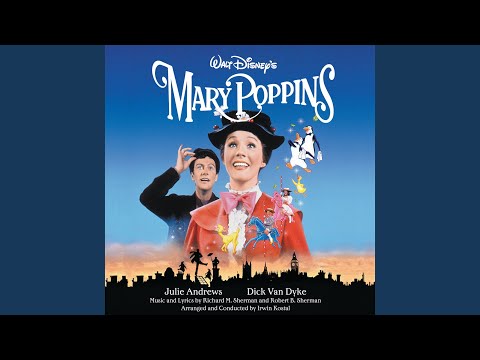
Review and Highlights
Quick summary
- Where it lives: A centerpiece ballad from the 1964 film Mary Poppins, performed on the soundtrack by Julie Andrews.
- Dramatic job: A lullaby that quietly sets up the bank sequence and later returns as an orchestral reprise tied to Mr. Banks.
- Why it stands out: It slows the film's pace on purpose, letting stillness do the heavy lifting.
- Stage-life note: In the stage musical, it is commonly re-shaped into a duet with the Bird Woman, shifting its focus from bedtime hush to street-level witness.
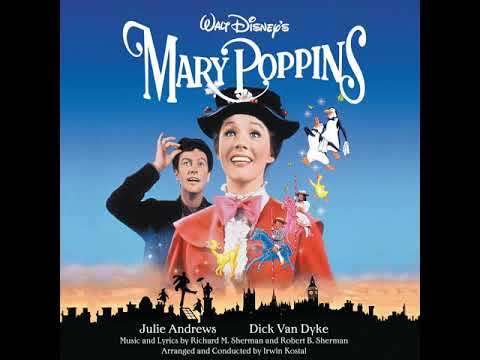
Mary Poppins (1964) - film soundtrack - not diegetic. Mary sings it as a nursery lullaby while the children watch the St Paul's snow globe, approx 1:10:00. The later orchestral and choral reprise underlines Mr. Banks' solitary night walk toward the bank, approx 1:48:00. It matters because the melody becomes the film's moral compass: small mercy, big consequence.
If you grew up on the big showstoppers, this one can feel like the movie has stepped into a side chapel. That is the trick. The Shermans write a tune that barely pushes forward, then let it bloom in small waves: a gentle rise, a held note, and the refrain that comes back like a street call you cannot unhear. The arrangement favors sustained lines and soft choral shading, so the listener is invited to lean in. As stated by The Walt Disney Family Museum, the song was conceived early in the writing process and sat near the heart of the film's idea of kindness as action.
Key takeaways
- Melody as memory: The refrain is shaped like a repeated call, which makes it stick the way a lullaby sticks.
- Harmony as argument: The chord moves do not show off, they persuade.
- Orchestration as character: The later reprise turns the same theme into Mr. Banks' private reckoning.
Creation History
The music and words come from Richard M. Sherman and Robert B. Sherman, with the film soundtrack adapted and conducted by Irwin Kostal. The Walt Disney Family Museum recounts how Walt Disney repeatedly asked to hear the Bird Woman song again, and the brothers treated those requests as proof that the tune carried the message he wanted at the center of the film. In practical terms, the number also gave the score a spine: once you have a theme that can be whispered, then later expanded into orchestral weight, you have a cinematic lever that can move a character without a speech.
Song Meaning and Annotations
Plot
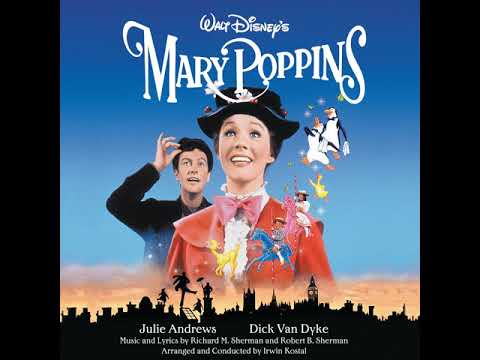
Mary Poppins introduces Jane and Michael to the Bird Woman at the steps of St Paul's Cathedral, selling small bags of crumbs for two pennies. The children want to spend their coins on the birds. Their father would rather they invest the money at the bank. The tug-of-war over that tiny coin becomes the fuse that later lights the bank panic, which then forces Mr. Banks to confront what he values when the neat systems of his world stop cooperating.
Song Meaning
The plain message is kindness that costs almost nothing. The deeper one is sharper: charity is not only for the receiver, it rewires the giver. The song sets up a moral experiment using pocket change. When the film later turns the same melody into Mr. Banks' nocturnal walk, it is saying, quietly but firmly, that the smallest choice can echo through a whole household. The style is a slow lullaby-ballad with a gentle, almost hymn-like flow, standing apart from the score's music-hall sparkle.
Annotations
"tuppence a bag"
That phrase is not just a hook - it is a street cry. Repetition turns commerce into ritual, and ritual into conscience.
"saints and apostles"
In a Disney score full of jokes and patter, this is a sudden lift into sacred imagery. The lyric frames generosity as something witnessed, not applauded.
"though her words are simple and few"
This line is the Shermans tipping their hand: the number is built to sound like a folk refrain, direct and unadorned, because the point is not cleverness, it is attention.
Driving rhythm and the slow burn
The pulse often feels like a waltz-lilt, even when arrangements vary. That gentle sway matters because it keeps the song from sounding like a sermon. It rocks you first, then slips the moral in sideways. A lot of listeners remember it as a moment where the movie exhales.
Symbol and setting
St Paul's is not scenery, it is an argument in stone. The bird feed is humble, but the backdrop is monumental, and that mismatch is the point: ordinary mercy can live under grand architecture and still be the more important thing happening on the steps. The snow globe version of the cathedral doubles the idea - the whole moral universe can be held in a child's hands, shaken, and watched.
Intertext and cultural touchpoints
The Bird Woman chapter in P. L. Travers' book supplies the seed, but the film turns it into a thematic refrain. Later artists have treated the melody as a kind of Disney prayer, which is why it fits so easily into tribute contexts: it can be played straight, or re-harmonized, without losing its plainspoken center.
Technical Information
- Artist: Julie Andrews
- Featured: Disney Studio Chorus (soundtrack credit varies by release)
- Composer: Richard M. Sherman; Robert B. Sherman
- Producer: Jimmy Johnson (soundtrack album production credit)
- Release Date: August 27, 1964
- Genre: Film soundtrack; show tune; lullaby-ballad
- Instruments: Voice; orchestra; choir (reprise)
- Label: Disneyland Records (original soundtrack release)
- Mood: Gentle; reflective; devotional
- Length: 3:51
- Track #: 12 on the 1964 original soundtrack program
- Language: English
- Album: Mary Poppins (Original Soundtrack)
- Music style: Lullaby with choral-cinematic reprise potential
- Poetic meter: Mostly iambic lines with a refrain built for repeated street-call cadence
Questions and Answers
- Who is the Bird Woman supposed to be?
- She is a street seller at St Paul's, a human test of whether passers-by will notice the small needs right in front of them.
- Why does the song repeat the refrain so much?
- Because it is built like a street call. The repetition makes the phrase feel public and unavoidable, like a moral knock at the door.
- What does the snow globe add to the scene?
- It miniaturizes the cathedral and turns the setting into a child's object, suggesting that big ideas can be carried in small hands.
- How does it connect to the bank sequence?
- The conflict over two pennies becomes a plot lever. The song plants the value of the coin, and the bank later tries to redefine it as investment capital.
- Why does the reprise hit harder than the lullaby for some viewers?
- The reprise removes the comfort of Mary Poppins' voice and leaves only the theme, now stretched across the city as Mr. Banks walks alone.
- Is it a religious song?
- Not in a doctrinal sense. It borrows sacred imagery and a hymn-like calm to frame compassion as a daily practice rather than a rulebook.
- Did Walt Disney really single this one out?
- Yes. Multiple accounts, including The Walt Disney Family Museum, describe him asking to hear it repeatedly and treating it as a statement of what the film was about.
- How is the stage musical version different?
- Many productions re-stage it as a duet with the Bird Woman, which shifts the spotlight from bedtime comfort to a direct encounter on the cathedral steps.
- What is the song's strongest lyrical device?
- Contrast. Grand statues and humble crumbs share the same frame, so the lyric can argue that small care is the real monument.
- Why do so many covers play it instrumentally?
- The melody carries its meaning even without words, which is why tribute projects can reharmonize it and still keep the core intact.
Awards and Chart Positions
The song itself was not the Academy Award winner from Mary Poppins (that honor went to another number), but it has earned a reputation that behaves like an award in practice: people keep singling it out as the film's quiet center. According to Variety, it landed on their short list of top Disney songs, a rare placement for a slow lullaby in a catalog famous for big choruses.
| Milestone | What it shows | Date |
|---|---|---|
| Soundtrack album reached No. 1 on Billboard 200 and stayed for 14 non-consecutive weeks | The film's songs, including this ballad, were part of a mass-market hit album | Peak week March 13, 1965 |
| Variety ranked it among top Disney songs | Critical-pop consensus recognition beyond the film's release era | November 23, 2016 |
| Lang Lang recording reached No. 1 for multiple weeks on a classical streaming chart | Late-career cover life in a different genre lane | Reported September 2022 |
How to Sing Feed the Birds
Tempo and key can look inconsistent across music databases and published arrangements. Many metadata listings tag the soundtrack track in a slow 3/4 feel around the high 80s BPM with a bright key center, while vocal anthologies and stage materials often transpose to suit the singer. Treat the numbers as starting points, not handcuffs.
- Tempo first: Set a metronome around 86-90 BPM in 3/4 and practice speaking the lyric on the beat. Keep it like a rocking chair, not a march.
- Diction: Aim for clean consonants on "tuppence" and "apostles" without over-pronouncing. The song wants clarity, not caricature.
- Breathing: Mark the long phrases that climb into the refrain. Inhale quietly before the lift, then ration the air so the final word does not thin out.
- Flow and rhythm: Let the refrain feel like a call that returns. Do not push the volume up to prove a point. The power is in steadiness.
- Accents: Lightly emphasize the moral verbs ("feed," "show," "care") and soften the scenery words, so meaning leads the ear.
- Ensemble and doubles: If you have chorus support, ask for a hushed, blended vowel. Think church stone, not Broadway brass.
- Mic technique: Stay close and let the mic catch the intimacy. Back off only on the highest sustained notes so the tone stays round.
- Pitfalls: The common mistake is turning it into a power ballad. Another is rushing the waltz feel when nerves hit.
Range guidance: In stage contexts, the Bird Woman is often cast with a working range roughly Gb3 to C5, which hints at where the duet lines may sit. If you are singing the film-style lullaby, choose a key where the refrain lands comfortably without forcing the top notes.
Practice materials: Work with a piano reduction, then rehearse the refrain a cappella to confirm intonation. Finally, add a soft sustained drone note under your practice to keep the pitch centered during the long held phrases.
Additional Info
There is a certain kind of Disney song that survives by being useful. Not useful as a party trick, but useful as a compass. This one has that quality, which is why it keeps reappearing in tributes and memorial contexts. The Guardian, in reflecting on Richard M. Sherman, described how the Shermans' Mary Poppins work ranged from exuberant tongue-twisters to slower, more reflective numbers, and this ballad is often the example people reach for when they want to talk about the score's quieter wisdom.
Two cover-life snapshots show how flexible the melody is. In 1988, producer Hal Willner folded it into his vintage-Disney tribute project Stay Awake, giving space for an instrumental interpretation that leans into atmosphere. Decades later, pianist Lang Lang brought the tune into the classical-pop crossover world, and the track's streaming performance was reported as unusually strong for a lullaby-like piece. Different audiences, same spell: the melody invites restraint, then rewards it.
Key Contributors
| Entity | Type | Relationship |
|---|---|---|
| Richard M. Sherman | Person | Wrote music and lyrics for the song. |
| Robert B. Sherman | Person | Wrote music and lyrics for the song. |
| Julie Andrews | Person | Performed the film soundtrack vocal. |
| Irwin Kostal | Person | Adapted the music and conducted the film soundtrack program. |
| Walt Disney | Person | Championed the song and requested repeated performances, per institutional accounts. |
| Mary Poppins (1964 film) | Work | Introduces the lullaby scene and the later orchestral reprise tied to Mr. Banks. |
| Mary Poppins (stage musical) | Work | Often re-stages the number as a duet with the Bird Woman. |
| St Paul's Cathedral | Location | Central setting and symbol for the Bird Woman scene. |
| Hal Willner | Person | Produced the 1988 tribute album featuring a notable instrumental cover. |
| Garth Hudson | Person | Recorded a featured interpretation on Stay Awake. |
| Lang Lang | Person | Recorded a modern cover that found traction on classical streaming charts. |
Sources: The Walt Disney Family Museum, Variety, The Guardian, Apple Music, Wikipedia, Discogs, uDiscoverMusic, MTI Shows
Music video
Disney: 60 Years of Musical Magic Lyrics: Song List
- Volume One
- A Whole New World (Aladdin)
- Circle of Life (Lion King)
- Beauty and the Beast (Beauty and the Beast)
- Under the Sea (The Little Mermaid)
- Hakuna Matata (Lion King)
- Kiss the Girl (The Little Mermaid)
- I Just Can't Wait to Be King (Lion King)
- Poor Unfortunate Souls (The Little Mermaid)
- Chim Chim Cher-ee (Mary Poppins)
- Jolly Holiday (Mary Poppins)
- A Spoonful of Sugar (Mary Poppins)
- Let's Get Together (The Parent Trap)
- The Monkey's Uncle (The Monkey's Uncle)
- The Ugly Bug Ball (Summer Magic)
- The Spectrum Song (Walt Disney's Wonderful World of Color)
- Colonel Hathi's March (The Jungle Book)
- A Whale of a Tale (20,000 Leagues Under the Sea)
- You Can Fly! You Can Fly! You Can Fly! (Peter Pan)
- The Work Song (Cinderella)
- A Dream is a Wish Your Heart Makes (Cinderella)
- Zip-A-Dee-Doo-Dah (Song of the South)
- Dance of the Reed Flutes (Fantasia)
- Love Is a Song (Bembi)
- Someday My Prince Will Come (Snow White and the Seven Dwarfs)
- Minnie's Yoo Hoo! (Mickey's Follies)
- Volume Two
- Be Our Guest (Beauty & The Beast)
- Can You Feel the Love Tonight (The Lion King)
- Part of Your World (The Little Mermaid)
- One Jump Ahead (Alladin)
- Gaston (Beauty And the Beast)
- Something There (Beauty And the Beast)
- Supercalifragilisticexpialidocious (Mary Poppins)
- Candle on the Water (Pete's Dragon)
- Main Street Electrical Parade (Disneyland)
- The Age of Not Believing (Bedknobs and Broomsticks)
- The Bare Necessities (The Jungle Book)
- Feed the Birds (Mary Poppins)
- Best of Friends (The Fox and the Hound)
- Let's Go Fly a Kite (Mary Poppins)
- It's a Small World (Disneyland)
- The Tiki, Tiki, Tiki Room (Disneyland)
- Mickey Mouse Club March (Mickey Mouse Club)
- On the Front Porch (Summer Magic)
- The Second Star to the Right (Peter Pan)
- Ev'rybody Has a Laughing Place (Song of the South)
- Bibbidi-Bobbidi-Boo (Cinderella)
- So This is Love (Cinderella)
- When You Wish Upon a Star (Pinocchio)
- Heigh-Ho (Snowwhite & the 7 Dwarfs)
- Who's Afraid of the Big Bad Wolf (The 3 Little Pigs)
- Volume Three
- Colors of the Wind (Pocahontas)
- You've Got a Friend in Me (Toy Story)
- Be Prepared (The Lion King)
- Out There (The Hunchback of Notre Dame)
- Family (James & The Giant Peach)
- Les Poissons (The Little Mermaid)
- Mine, Mine, Mine (Pocahontas)
- Jack's Lament (The Nightmare Before Christmas)
- My Name Is James (Jame & The Giant Peach)
- Heffalumps and Woozles (Winnie the Pooh and the Blustery Day)
- The Mob Song (Beauty & The Beast)
- Portobello Road (Bedknobs and Broomsticks)
- Stay Awake (Mary Poppins)
- I Wan'na Be Like You (The Jungle Book)
- Oo-De-Lally (Robin Hood)
- Are We Dancing (The Happiest Millionaire)
- Once Upon a Dream (Sleeping Beauty)
- Bella Notte (Lady and the Tramp)
- Following the Leader (Peter Pan)
- Trust in Me (The Jungle Book)
- The Ballad of Davy Crockett (Davy Crockett)
- I'm Professor Ludwig Von Drake (Walt Disney's Wonderful World of Color)
- Pink Elephants on Parade (Dumbo)
- Little April Shower (Bambi)
- The Silly Song (Snow White & the 7 Dwarfs)
- Volume Four
- One Last Hope (Hercules)
- A Guy Like You (The Hunchback of Norte Dame)
- On the Open Road (A Goofy Movie)
- Just Around the Riverbend (Pocahontas)
- Home (Beauty & the Beast (Broadway Musical))
- Fantasmic! (Disneyland)
- Oogie Boogie's Song (The Nightmare Before Christmas)
- I Will Go Sailing No More (Toy Story)
- Substitutiary Locomotion (Bedknobs and Broomsticks)
- Stop, Look, and Listen/I'm No Fool (Mickey Mouse Club)
- Love (Robin Hood)
- Thomas O'Malley Cat (The Aristocats)
- That's What Friends Are For (The Jungle Book)
- Winnie the Pooh
- Femininity (Summer Magic)
- Ten Feet Off the Ground (The One and Only, Genuine, Original Family Band)
- The Siamese Cat Song (Lady and the Tramp)
- Enjoy It! (In Search of the Castaways (film))
- Give a Little Whistle (Pinocchio)
- Oh, Sing Sweet Nightingale (Cinderella)
- I Wonder (Sleeping Beauty)
- Looking for Romance / I Bring You A Song (Bambi)
- Baby Mine (Dumbo)
- I'm Wishing/One Song (Snow White & the 7 Dwarfs)
- Volume Five
- I'll Make a Man Out of You (Mulan)
- I Won't Say / I'm in Love (Hercules)
- God Help the Outcasts (The Hunchback of Notre Dame)
- If I Can't Love Her (Beauty and the Beast)
- Steady As The Beating Drum (Pocahontas)
- Belle (Beauty & the Beast)
- Strange Things (Toy Story)
- Cruella De Vil (101 Dalmatians)
- Eating the Peach (James and the Giant Peach)
- Seize the Day (Newsies)
- What's This? (The Nightmare Before Christmas)
- Lavender Blue / Dilly Dilly (So Dear to My Heart)
- The Rain Rain Rain Came Down Down Down (Winnie the Pooh and the Blustery Day)
- A Step in the Right Direction (Bedknobs and Broomsticks)
- Boo Bop Bopbop Bop (Pete's Dragon)
- Yo Ho / A Pirate's Life for Me (Disneyland)
- My Own Home (The Jungle Book)
- Ev'rybody Wants to Be a Cat (The Aristocats)
- In a World of My Own (Alice in Wonderland)
- You Belong to My Heart (The 3 Caballeros)
- Humphrey Hop (In the Bag)
- He's a Tramp (Lady and the Tramp)
- How Do You Do? (Song of the South)
- When I See an Elephant Fly (Dumbo)
- I've Got No Strings (Pinocchio)