Heigh-Ho (Snowwhite & the 7 Dwarfs) Lyrics — Disney: 60 Years of Musical Magic
Heigh-Ho (Snowwhite & the 7 Dwarfs) Lyrics
To dig dig dig dig dig dig dig is what we like to do
It ain't no trick
To get rich quick
If you dig dig dig
With a shovel or a pick
In a mine (In a mine)
In a mine (In a mine)
Where a million diamonds
Shine
We dig dig dig dig dig dig dig from early morn to night
We dig dig dig dig dig dig dig up everything in sight
We dig up diamonds
By the score
A thousand rubies
Sometimes more
We don't know what we dig them for
We dig dig digga dig dig
(musical intro)
Hi ho!
Hi ho!
Hi ho! Hi ho! Hi ho!
Hi ho, Hi ho
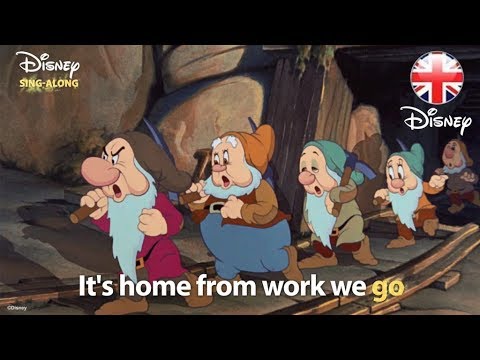
It's home from work we go
(whistles)
Hi ho, Hi ho, Hi ho
Hi ho, Hi ho
It's home from work we go
(whistles)
Hi ho, Hi ho
(more whistles)
Hi ho, Hi ho
Hi ho, Hi ho
Hi ho, Hi ho
Hi ho, Hum
Hi ho, Hi ho
It's home from work we go
(whistles)
Hi ho, hi ho, hi ho, hi ho
Song Overview
Review and Highlights
Quick summary
- First heard as a work-song march for the mine sequence and the homeward walk, built for group voices and a clean, stomping pulse.
- Music by Frank Churchill with lyrics by Larry Morey, shaped to fit character movement as much as melody.
- Built around call-and-response, whistling, and repeated hook lines that stay legible even under animation noise and clatter.
- A rare Disney number that feels like a folk chant dressed in studio orchestration, more factory floor than fairy-tale ballroom.
Snow White and the Seven Dwarfs (1937) - animated film - diegetic-adjacent. The dwarfs sing while working in the mine and while marching as a unit. Why it matters: it turns labor into choreography, and it makes the group feel like one character with seven faces.
If you want to understand why this song never goes away, watch how it behaves like a machine. The melody is compact, the rhythm is blunt, and the hook is designed to be shouted without finesse. The lyric keeps returning to the same small set of verbs - dig, march, go - and that repetition is the point. It is not a diary entry. It is a tool.
That tool-like design is what gives the number its charm. It does not try to charm you with romance or virtuoso vocal color. It charms by keeping time. Each phrase lands like a boot heel, and the whistling acts like a safety valve - a little humor that softens the grind.
Creation History
The tune arrived in the period when Disney features were still teaching audiences how animated music could work: not just as an interruption, but as structure. Churchill and Morey wrote a march that could carry action beats, while the studio sound team and orchestra colored it with bright brass, chugging low strings, and plenty of rhythmic punctuation. The original sheet music publication in 1937 helped it travel beyond theaters, giving home pianists the same sturdy hook the film used for motion and morale.
Song Meaning and Annotations
Plot
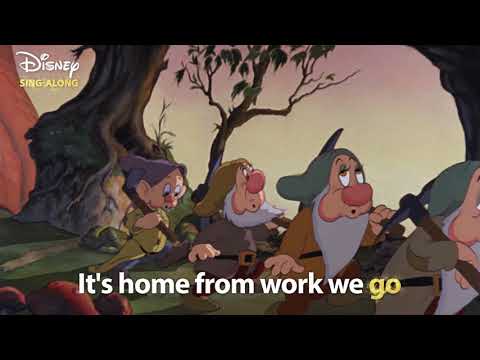
The dwarfs move between two worlds - the mine and the cottage - and the song is the bridge. In the mine, it is work discipline with a wink. On the road, it is a marching banner that keeps the group together. The lyric keeps the task simple, the mood buoyant, and the pace steady so the visuals can do the storytelling.
Song Meaning
At heart, the song is a public coping strategy: keep moving, keep singing, keep the load from feeling heavy. The hook is a little ritual of momentum, and the whistling is not decoration - it is the sound of a crew choosing cheer as a method. The message is plain: routine can be bearable when you share it, and when you give it rhythm.
Annotations
We dig, dig, dig in our mine the whole day through.
That line is not just description; it is a percussive engine. The repeated verb works like a drum pattern, letting animation cut on syllables and letting the orchestra lean into a marching groove.
It aint no trick to get rich quick if you dig, dig, dig.
The joke is that they are surrounded by gems yet treat riches as secondary to the job itself. It frames the dwarfs as workers first, treasure-hunters second, which gives them a funny dignity.
Just keep on singing all day long.
This is the thesis in one sentence. The number sells singing as a practical habit, not a grand confession. It is closer to a sea shanty mentality than a stage soliloquy.

Style and driving rhythm
Musically, the piece sits in that sweet spot between a march, a music-hall chorus, and a work chant. The beat stays upfront and uncomplicated so the ensemble can lock together. The melody rarely wanders far, which makes it ideal for group singing, call-and-response, and quick reprise.
Arc and tone
The arc is kinetic rather than confessional: start moving, stay in step, finish together. The tone is brisk and communal. Even when the lyric gestures toward weariness, it is quickly turned into motion again. That is the song: a small defiance against fatigue.
Cultural touchpoints
Work songs have long been used to synchronize bodies and lighten load. This one borrows the same logic, but puts it inside studio polish. According to Entertainment Weekly magazine, the 2025 live-action remake treats classic numbers like this as material to be reshaped for a new audience, which underlines how durable the core idea is: rhythm as teamwork.
Technical Information
TLDR
- Form: ensemble march with repeated hook and whistling breaks.
- Function: timekeeping for movement and group identity.
- Hook design: short phrases built for chant clarity.
- Common performance feel: bright, percussive, communal.
- Modern afterlife: covers, theme-park use, and soundtrack cameos.
- Artist: The Dwarf Chorus (ensemble voices from the film cast)
- Featured: None
- Composer: Frank Churchill
- Producer: Walt Disney Productions (film production); later soundtrack releases vary by edition
- Release Date: January 1938 (soundtrack era); film general release February 4, 1938
- Genre: film song; march; traditional pop influence
- Instruments: male chorus; whistling; brass; strings; percussion
- Label: early soundtrack issues associated with Victor records; sheet music published by Irving Berlin, Inc.
- Mood: brisk; communal; workmanlike
- Length: about 2:49 for the common soundtrack version
- Track #: varies by release configuration
- Language: English
- Album (if any): Snow White and the Seven Dwarfs (soundtrack)
- Music style: march chorus with call-and-response phrasing
- Poetic meter: mostly trochaic-feeling phrases, tailored to marching accents
Questions and Answers
- Why does the hook feel so easy to remember?
- Because it is built like a chant: short phrases, repeated cadence, and a melody that stays close to home so the rhythm does the heavy lifting.
- Is the song meant to be funny or serious?
- Both. The lyric treats work as routine, while the whistling and call-and-response add a comic lift that keeps the march from turning grim.
- Why is whistling so central to the arrangement?
- Whistling reads clearly over bustling sound effects, and it signals ease: a crew confident enough to keep time with breath rather than instruments.
- Does the number change meaning between the mine and the road?
- In the mine it is coordination, on the road it becomes a banner. Same hook, different job: inside it drives labor, outside it drives unity.
- What is the key musical trick behind the march feel?
- Strong downbeats and tight phrase lengths. Even when the orchestra colors the harmony, the pulse stays blunt and reliable.
- Is it a solo song in disguise?
- No. Its personality comes from many voices moving as one. A single singer can perform it, but the music is designed for a group.
- Why do so many cover versions work in other styles?
- The core is sturdy: a simple hook and a marching engine. Change the surface - blues, rock, jazz quartet - and the skeleton still stands.
- What is the cleanest way to stage it in a live show?
- Give the chorus something physical to do on the beat: steps, tools, claps, or shoulder hits. The movement is part of the melody.
- How does the lyric handle fatigue without dragging?
- It acknowledges the grind, then flips it into momentum. The refrain is basically a reset button.
- Why does the song still show up in modern Disney projects?
- It is brand shorthand for industrious, upbeat teamwork. Once a hook becomes a cultural signal, it keeps getting re-used.
Awards and Chart Positions
The film entered awards history through a special honorary Oscar presentation in 1939, but the song itself did not appear among the Music (Song) nominees listed for the 1938 Oscars ceremony on the Academy site. In plain terms: beloved by audiences, not treated as an awards-season contender at the time - a reminder of how the category boundaries were still settling.
Where the song did travel fast was popular performance. A well-known early cover by Horace Heidt and His Brigadiers was issued on Brunswick (catalog number 8074) in 1938, part of the quick migration from screen to bandstand.
| Measure | Version | Result | Notes |
|---|---|---|---|
| Radio popularity | Horace Heidt and His Brigadiers (1938) | Your Hit Parade peak reported at No. 4 (April 1938) | Often cited as a major early non-film recording of the tune. |
| Soundtrack milestone | Snow White and the Seven Dwarfs soundtrack era | Among the best-known cuts from an early commercially issued film soundtrack program | Released in multiple configurations and reissues over decades. |
How to Sing Heigh-Ho
Performance metrics depend on edition and key choice, but modern analyses commonly put the tempo around 103 BPM. Many singers treat it as an ensemble march rather than a showcase aria, which is why clarity and pulse beat power and vibrato.
- Tempo: about 103 BPM
- Key: commonly listed in C major for the soundtrack version; many vocal sheets transpose into brighter singable keys such as G major
- Vocal range: a practical melody span reported around D4 to C5 for one common reference track
- Style target: forward diction, light bounce, and tight rhythmic unity
Step-by-step
- Tempo first: Set a metronome near 103 BPM and speak the lyric in time before singing. If the consonants do not land, the song will drag.
- Diction: Make the repeated verbs crisp. Clean Ds and Gs create the percussive feel that the orchestra normally supplies.
- Breath: Treat each short phrase like a marching call. Quick breaths between lines are part of the groove, not a weakness.
- Flow and rhythm: Keep vowels short and marching. Long held vowels blur the work-song character.
- Accents: Lean into downbeats on the hook phrase. It should feel like stepping onto a stair, not floating across a ballroom.
- Ensemble doubles: If you are recording, layer a second voice on the hook and whistle breaks to mimic a crew sound.
- Mic technique: Step back a touch for the loud hook so plosives do not pop. Move closer for spoken or lighter lines.
- Pitfalls: Over-singing is the classic error. The charm is blunt cheer, not polished virtuosity.
Additional Info
The song has a long second life because it fits anywhere a director wants instant motion. It turns up in theme-park spaces as a gentle nudge to keep crowds moving, and it has been adapted with special exit lyrics at the finale of Walt Disney's Enchanted Tiki Room, a clever bit of musical recycling that treats a march hook as crowd choreography.
Cover versions tell you what musicians hear inside it: a chassis strong enough to rebuild. Tom Waits recorded a famously gravelly take for a vintage Disney interpretations compilation in 1988, while Los Lobos opened their Disney covers project with a Spanish-language, percussion-heavy rework that plays like folk rock street theater. The tune also shows up as a jazz cameo on the Saving Mr. Banks soundtrack, credited to The Dave Brubeck Quartet - a neat reminder that a march can swing if you tilt the accents.
In 2025, the live-action Snow White film returns to the classic songbook and pairs the familiar material with new writing, keeping the hook recognizable while updating the surrounding musical world. According to the Disney production notes for that film, the story revisits the core characters and musical identity of the 1937 feature while presenting it as a modern live-action musical.
Key Contributors
| Entity | Type | Relation (S-V-O) |
|---|---|---|
| Frank Churchill | Person | Churchill composed the music for the song. |
| Larry Morey | Person | Morey wrote the lyrics for the song. |
| Walt Disney Productions | Organization | Walt Disney Productions produced the film that introduced the song. |
| Snow White and the Seven Dwarfs | Work | The film features the song in mine and marching sequences. |
| Horace Heidt and His Brigadiers | Organization | Heidt issued an early popular recording of the tune on Brunswick in 1938. |
| Los Lobos | Organization | Los Lobos released a Spanish-language cover on a Disney covers album. |
| The Dave Brubeck Quartet | Organization | Brubeck Quartet performed the song on the Saving Mr. Banks soundtrack. |
| Walt Disney's Enchanted Tiki Room | Venue/Attraction | The attraction uses an adapted exit version of the song. |
| Seven Dwarfs Mine Train | Venue/Attraction | The ride features the song as part of its in-ride atmosphere. |
Sources: AFI Catalog entry for Snow White and the Seven Dwarfs, Oscars ceremony page for 1938, Disney production notes PDF for Snow White (2025), Official Disney UK lyric video, Cartoon Research (Enchanted Tiki Room exit music), Walt Disney World attraction page (Seven Dwarfs Mine Train), Apple Music listings for Stay Awake and Saving Mr. Banks soundtrack, San Antonio Express-News review of Los Lobos Goes Disney, Irving Berlin, Inc. 1937 sheet music scan
Music video
Disney: 60 Years of Musical Magic Lyrics: Song List
- Volume One
- A Whole New World (Aladdin)
- Circle of Life (Lion King)
- Beauty and the Beast (Beauty and the Beast)
- Under the Sea (The Little Mermaid)
- Hakuna Matata (Lion King)
- Kiss the Girl (The Little Mermaid)
- I Just Can't Wait to Be King (Lion King)
- Poor Unfortunate Souls (The Little Mermaid)
- Chim Chim Cher-ee (Mary Poppins)
- Jolly Holiday (Mary Poppins)
- A Spoonful of Sugar (Mary Poppins)
- Let's Get Together (The Parent Trap)
- The Monkey's Uncle (The Monkey's Uncle)
- The Ugly Bug Ball (Summer Magic)
- The Spectrum Song (Walt Disney's Wonderful World of Color)
- Colonel Hathi's March (The Jungle Book)
- A Whale of a Tale (20,000 Leagues Under the Sea)
- You Can Fly! You Can Fly! You Can Fly! (Peter Pan)
- The Work Song (Cinderella)
- A Dream is a Wish Your Heart Makes (Cinderella)
- Zip-A-Dee-Doo-Dah (Song of the South)
- Dance of the Reed Flutes (Fantasia)
- Love Is a Song (Bembi)
- Someday My Prince Will Come (Snow White and the Seven Dwarfs)
- Minnie's Yoo Hoo! (Mickey's Follies)
- Volume Two
- Be Our Guest (Beauty & The Beast)
- Can You Feel the Love Tonight (The Lion King)
- Part of Your World (The Little Mermaid)
- One Jump Ahead (Alladin)
- Gaston (Beauty And the Beast)
- Something There (Beauty And the Beast)
- Supercalifragilisticexpialidocious (Mary Poppins)
- Candle on the Water (Pete's Dragon)
- Main Street Electrical Parade (Disneyland)
- The Age of Not Believing (Bedknobs and Broomsticks)
- The Bare Necessities (The Jungle Book)
- Feed the Birds (Mary Poppins)
- Best of Friends (The Fox and the Hound)
- Let's Go Fly a Kite (Mary Poppins)
- It's a Small World (Disneyland)
- The Tiki, Tiki, Tiki Room (Disneyland)
- Mickey Mouse Club March (Mickey Mouse Club)
- On the Front Porch (Summer Magic)
- The Second Star to the Right (Peter Pan)
- Ev'rybody Has a Laughing Place (Song of the South)
- Bibbidi-Bobbidi-Boo (Cinderella)
- So This is Love (Cinderella)
- When You Wish Upon a Star (Pinocchio)
- Heigh-Ho (Snowwhite & the 7 Dwarfs)
- Who's Afraid of the Big Bad Wolf (The 3 Little Pigs)
- Volume Three
- Colors of the Wind (Pocahontas)
- You've Got a Friend in Me (Toy Story)
- Be Prepared (The Lion King)
- Out There (The Hunchback of Notre Dame)
- Family (James & The Giant Peach)
- Les Poissons (The Little Mermaid)
- Mine, Mine, Mine (Pocahontas)
- Jack's Lament (The Nightmare Before Christmas)
- My Name Is James (Jame & The Giant Peach)
- Heffalumps and Woozles (Winnie the Pooh and the Blustery Day)
- The Mob Song (Beauty & The Beast)
- Portobello Road (Bedknobs and Broomsticks)
- Stay Awake (Mary Poppins)
- I Wan'na Be Like You (The Jungle Book)
- Oo-De-Lally (Robin Hood)
- Are We Dancing (The Happiest Millionaire)
- Once Upon a Dream (Sleeping Beauty)
- Bella Notte (Lady and the Tramp)
- Following the Leader (Peter Pan)
- Trust in Me (The Jungle Book)
- The Ballad of Davy Crockett (Davy Crockett)
- I'm Professor Ludwig Von Drake (Walt Disney's Wonderful World of Color)
- Pink Elephants on Parade (Dumbo)
- Little April Shower (Bambi)
- The Silly Song (Snow White & the 7 Dwarfs)
- Volume Four
- One Last Hope (Hercules)
- A Guy Like You (The Hunchback of Norte Dame)
- On the Open Road (A Goofy Movie)
- Just Around the Riverbend (Pocahontas)
- Home (Beauty & the Beast (Broadway Musical))
- Fantasmic! (Disneyland)
- Oogie Boogie's Song (The Nightmare Before Christmas)
- I Will Go Sailing No More (Toy Story)
- Substitutiary Locomotion (Bedknobs and Broomsticks)
- Stop, Look, and Listen/I'm No Fool (Mickey Mouse Club)
- Love (Robin Hood)
- Thomas O'Malley Cat (The Aristocats)
- That's What Friends Are For (The Jungle Book)
- Winnie the Pooh
- Femininity (Summer Magic)
- Ten Feet Off the Ground (The One and Only, Genuine, Original Family Band)
- The Siamese Cat Song (Lady and the Tramp)
- Enjoy It! (In Search of the Castaways (film))
- Give a Little Whistle (Pinocchio)
- Oh, Sing Sweet Nightingale (Cinderella)
- I Wonder (Sleeping Beauty)
- Looking for Romance / I Bring You A Song (Bambi)
- Baby Mine (Dumbo)
- I'm Wishing/One Song (Snow White & the 7 Dwarfs)
- Volume Five
- I'll Make a Man Out of You (Mulan)
- I Won't Say / I'm in Love (Hercules)
- God Help the Outcasts (The Hunchback of Notre Dame)
- If I Can't Love Her (Beauty and the Beast)
- Steady As The Beating Drum (Pocahontas)
- Belle (Beauty & the Beast)
- Strange Things (Toy Story)
- Cruella De Vil (101 Dalmatians)
- Eating the Peach (James and the Giant Peach)
- Seize the Day (Newsies)
- What's This? (The Nightmare Before Christmas)
- Lavender Blue / Dilly Dilly (So Dear to My Heart)
- The Rain Rain Rain Came Down Down Down (Winnie the Pooh and the Blustery Day)
- A Step in the Right Direction (Bedknobs and Broomsticks)
- Boo Bop Bopbop Bop (Pete's Dragon)
- Yo Ho / A Pirate's Life for Me (Disneyland)
- My Own Home (The Jungle Book)
- Ev'rybody Wants to Be a Cat (The Aristocats)
- In a World of My Own (Alice in Wonderland)
- You Belong to My Heart (The 3 Caballeros)
- Humphrey Hop (In the Bag)
- He's a Tramp (Lady and the Tramp)
- How Do You Do? (Song of the South)
- When I See an Elephant Fly (Dumbo)
- I've Got No Strings (Pinocchio)