The Spectrum Song (Walt Disney's Wonderful World of Color) Lyrics — Disney: 60 Years of Musical Magic
The Spectrum Song (Walt Disney's Wonderful World of Color) Lyrics
Red, purple, green, yellow, orange, red red
Red, yellow, green, red, blue blue blue
Red, purple, green, yellow, orange, red red
Blend them up and what do you get?
Ceries, chartous, and aqua
Mauve, beige, and ultra marine, and every colour in between
Hazo ka li ka no cha lum bum
Colour has it's harmony and just like I have said
Red, yellow, green, red, blue blue blue
Red, purple, green, yellow, orange, red red
Blend them all and what do you get?
Ceries, chartous, and aqua
Mauve, beige, and ultra marine, and every colour in between
Ing za ri ka fo zi brun brun
Colour has it's harmony and just as I have said
Red, yellow, green, red, blue, pink, grey
And white, and plaid and blue, green, white, yellow and toodinz 'n' and and and
right and and strips with blue and a black and Plaid and a....a
oo and ...vut vut, vait a second, vut vut's going on wid all da colours?
Blue, red, green, green, white, white, black....
vut ever happened to just plain old lavender blue dilly dilly dilly dilly.......dilly
....silly
Song Overview
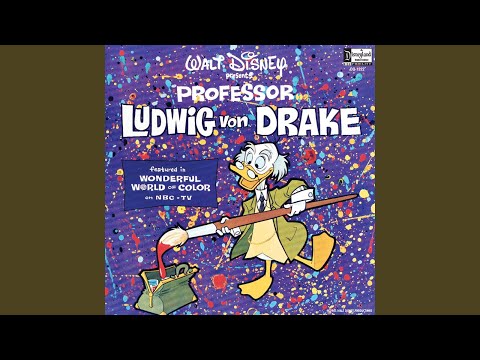
Review and Highlights
Quick summary
- Where it appears: Introduced on September 24, 1961 in the NBC premiere episode "An Adventure in Color/Mathmagicland" for Walt Disney's Wonderful World of Color.
- Who performs it: Paul Frees as Professor Ludwig von Drake, the shows new resident "expert on everything."
- What it does: Sells color television with a wink, using a kids science lesson as a musical comedy sketch.
- Release trail: A 1961 Disneyland Records EP (DBR-34) includes a recorded version, with later reissues and streaming placements.
- Modern echo: A newly arranged instrumental interpretation appeared on the 2023 Disneyland background-music release tied to Mickey's Toontown.
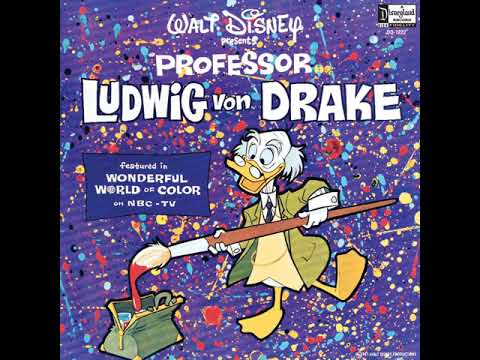
An Adventure in Color/Mathmagicland (1961) - television episode segment - not diegetic. The number plays inside an animated lecture, framed as Von Drake teaching viewers about hues, mixing, and the sheer insanity of naming things. Its job is not to advance a plot, but to launch a brand-new era: Disney on NBC, with color as the headline.
Here is what I admire: the tune is part nursery exercise, part stand-up routine. It starts with blunt color names that feel like toy-xylophone training, then swerves into showbiz wordplay and deliberately "too much information." The performance has that Paul Frees snap: crisp diction, a confident patter, and a professor persona that can pivot from helpful to frazzled in the span of a bar. The song behaves like a demonstration in a lab that keeps catching fire, and that is why kids remember it.
It is also a stealth mission statement for the Sherman Brothers. They were already fluent in melody that sticks, but here they sharpen a different tool: the comic escalation. A normal list becomes an avalanche. A simple lesson becomes a carnival. According to The Guardian, Disney approved the brothers early TV work with his famously minimal encouragement, and you can hear why the studio kept calling them back.
Creation History
The writers were Richard M. Sherman and Robert B. Sherman, commissioned in 1961 to help define the newly introduced character and the programs fresh identity in color. The episode itself was constructed as a showcase for the move to NBC and the new color format, and the song fits that intent without ever sounding like an advertisement. Later, Disneyland Records issued a version on the EP release tied to Professor Ludwig von Drake (DBR-34). A small but telling wrinkle: reporting and collector notes point out that the TV performance and the record take are not identical, including a joke that references "Lavender Blue" in at least one recording.
Song Meaning and Annotations
Plot
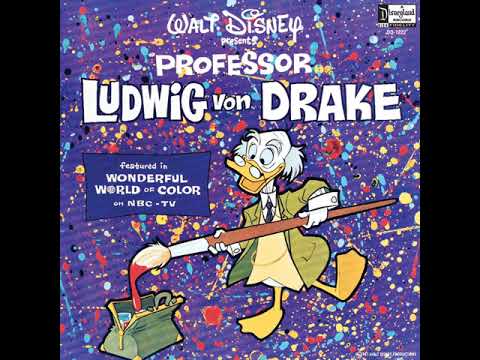
The "story" is a lecture that keeps escaping its own outline. Von Drake begins with basic colors, links them to musical harmony, and tries to sound orderly. Then the vocabulary expands, the combinations multiply, and the professor finds himself buried under the wonderful problem of too many choices. In the frame of the episode, that confusion is the punchline and the pitch: color is dazzling, and now television can finally show it.
Song Meaning
The meaning is cheerful instruction with a second agenda. On the surface, it is a primer on spectrum colors and mixing. Under the hood, it is a celebration of abundance: more shades, more names, more possibility. The professors escalating excitement, then overwhelm, is a human reaction dressed up as a cartoon gag. There is also a sly cultural nod: the performance treats education like entertainment, a very Disney promise for Sunday night TV in that era.
Annotations
-
"Red, yellow, green, red, blue"
This opening works like a classroom drill, but it is also musical architecture. The repeated pattern feels like a chord exercise, which sets up the later line about harmony without stopping to explain itself.
-
"Cerise, chartreuse, ultramarine"
The joke is escalation by specificity. These words are vivid, slightly fancy, and fun to pronounce. The professor sounds proud of knowing them, which is how the song makes knowledge feel cool instead of dutiful.
-
"Whatever happened to Lavender Blue"
Depending on version, the routine tips its hat to an older Disney standard. It is a comic sigh from a character drowning in modern options, and it also connects the new TV era to earlier studio songcraft.
-
"Color has its harmony"
This is the thesis in plain language: color and music share structure. The song teaches that idea by demonstration, not by lecture notes.
Style fusion and the driving rhythm
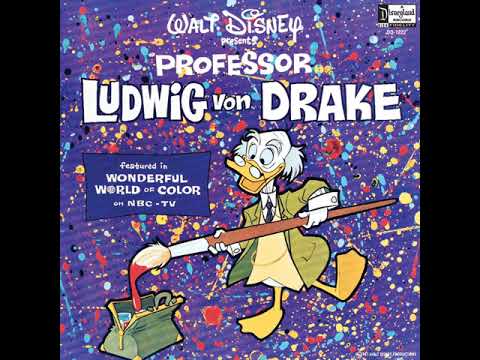
It is part sing-along, part patter, with a bounce that keeps the professor moving forward even when the lyric starts tripping over itself. The rhythm is the steering wheel: whenever the language gets too crowded, the beat snaps the routine back into line. That is classic TV songwriting discipline, and it keeps the piece from turning into a spoken list.
Symbols and key phrases
The spectrum becomes a metaphor for modern life: choice can be thrilling and exhausting. The professor is not just teaching color, he is acting out a tiny existential moment for anyone who has ever stood in front of a wall of paint samples and felt their brain short-circuit. That little panic is the human hook.
Technical Information
- Artist: Paul Frees (as Professor Ludwig von Drake)
- Featured: none credited (character performance focus)
- Composer: Richard M. Sherman; Robert B. Sherman
- Producer: Not consistently credited across public listings for the 1961 recordings
- Release Date: September 24, 1961 (television premiere); 1961 (Disneyland Records EP appearance)
- Genre: Disney television song; children's comedy; educational patter
- Instruments: studio orchestra and rhythm support; voice-forward arrangement
- Label: Disneyland Records (DBR-34 EP); later Walt Disney Records reissues and streaming metadata
- Mood: bright, instructive, mischievous
- Length: about 1:33 (common streaming timing)
- Track #: varies by compilation and release context
- Language: English
- Album (if any): Professor Ludwig Von Drake (Disneyland Records EP, DBR-34); later compilations and reissues
- Music style: patter-pop with singalong hooks
- Poetic meter: mixed, with speech-like stress patterns designed for fast articulation
Questions and Answers
- Who is the professor voice behind the performance?
- Paul Frees, a Disney regular, performing as Professor Ludwig von Drake with a rapid, lecture-style delivery.
- Why did Disney introduce this song on television instead of in a feature film?
- The program was rebranding around color, and the number functions like a playful demonstration built for a living-room audience.
- Is the piece mainly educational or mainly comedy?
- Both, with comedy doing the heavy lifting. The lesson sticks because the vocabulary escalates like a routine.
- What is the musical trick in the opening?
- It behaves like a scale or chord drill, linking color names to a simple melodic pattern before the lyric goes wild.
- Are the TV version and the record version the same?
- Collectors and commentary note differences between versions, including a reference to "Lavender Blue" in at least one recording.
- What is the songs real theme, beyond naming colors?
- Abundance: more shades, more choices, and the giddy overwhelm that comes with it.
- Why does it still get reissued?
- It is short, character-driven, and tightly constructed, making it an easy fit for compilations and educational uses.
- Did it ever become a chart hit?
- No reliable chart history is commonly documented for the original 1961 releases.
- Where does the modern Disneyland connection come in?
- A newly arranged instrumental interpretation appears on the 2023 album of Mickey's Toontown background music.
How to Sing The Spectrum Song
Reference metrics: audio-analysis listings commonly tag the track around 99 BPM in G major, with a compact runtime around 1:33. Treat the tempo as a clarity tool: it is fast enough to feel like a lecture, slow enough to keep consonants sharp.
- Tempo: Start at 80 BPM speaking the text in rhythm, then climb toward 99 BPM. Do not race the words before you can land them cleanly.
- Diction: Practice the rare color names as tongue-twisters. Say them on a steady beat, then add pitch. If the audience cannot hear the syllables, the joke vanishes.
- Breathing: Use short "sip" breaths. Mark them after punchlines, not mid-term. The routine works when it sounds effortless.
- Flow and rhythm: Keep the opening like a childrens drill, then gradually loosen into patter. The contrast sells the escalation.
- Accents: Stress the first syllable of color words and the ends of joke phrases. Avoid over-accenting every word, or it becomes a list instead of a routine.
- Character voice: Choose your professor stance: confident lecturer or excited showman. The original leans both ways, but it stays "in character" the whole time.
- Mic technique: Stay close for the quiet, fast lines, then back off slightly on the loudest bursts. The number has sudden peaks.
- Pitfalls: The big one is flattening the comedy by singing too prettily. This is a performance, not a recital.
Additional Info
Two details give this number its long tail. First, it is tied to a very specific moment in TV history: Disneys shift to NBC and the programs color-era debut. Second, it is anchored by a character who was effectively invented to host and explain, which makes the song feel less like a random insert and more like a credential.
The recording history adds a collectors twist. Commentary notes that not every version includes the same joke tag, and that the record issue differs from the televised performance. That kind of variation is catnip for Disney discography hunters: you get the same premise, but the cadence and the ending can change the aftertaste.
Then comes the theme-park afterlife. In 2023, Disneyland rolled out refreshed Mickey's Toontown music on streaming services, and an instrumental arrangement of the tune appears in that track list. As stated in the Apple Music release details, the album is presented under Walt Disney Records as a 2023 soundtrack-style drop, a modern wrapper around older melodic DNA.
Key Contributors
| Entity | Type | Relationship statement |
|---|---|---|
| Paul Frees | Person | Paul Frees - performs - the character vocal as Professor Ludwig von Drake |
| Professor Ludwig von Drake | Work | Professor Ludwig von Drake - introduces - the concept of color through the song routine |
| Richard M. Sherman | Person | Richard M. Sherman - co-wrote - music and words |
| Robert B. Sherman | Person | Robert B. Sherman - co-wrote - music and words |
| Walt Disney | Person | Walt Disney - commissioned - signature material for the new TV character and color-era launch |
| NBC | Organization | NBC - broadcast - the September 24, 1961 color-era premiere episode |
| Disneyland Records | Organization | Disneyland Records - released - the 1961 EP DBR-34 containing the recorded version |
| Walt Disney Records | Organization | Walt Disney Records - issued - later reissues and the 2023 streaming release tied to Disneyland background music |
| Mickey's Toontown | Venue | Mickey's Toontown - reused - an instrumental arrangement as part of its 2023 background music set |
Sources: Wikipedia (The Spectrum Song; An Adventure in Color/Mathmagicland; Paul Frees), The Guardian (Richard Sherman obituary), Discogs (Disneyland Records DBR-34 release), Cartoon Research (version notes), Tunebat (tempo and key listing), Apple Music (Music from Mickey's Toontown release details), LaughingPlace (album announcement), Disney Wiki (track list context)
Music video
Disney: 60 Years of Musical Magic Lyrics: Song List
- Volume One
- A Whole New World (Aladdin)
- Circle of Life (Lion King)
- Beauty and the Beast (Beauty and the Beast)
- Under the Sea (The Little Mermaid)
- Hakuna Matata (Lion King)
- Kiss the Girl (The Little Mermaid)
- I Just Can't Wait to Be King (Lion King)
- Poor Unfortunate Souls (The Little Mermaid)
- Chim Chim Cher-ee (Mary Poppins)
- Jolly Holiday (Mary Poppins)
- A Spoonful of Sugar (Mary Poppins)
- Let's Get Together (The Parent Trap)
- The Monkey's Uncle (The Monkey's Uncle)
- The Ugly Bug Ball (Summer Magic)
- The Spectrum Song (Walt Disney's Wonderful World of Color)
- Colonel Hathi's March (The Jungle Book)
- A Whale of a Tale (20,000 Leagues Under the Sea)
- You Can Fly! You Can Fly! You Can Fly! (Peter Pan)
- The Work Song (Cinderella)
- A Dream is a Wish Your Heart Makes (Cinderella)
- Zip-A-Dee-Doo-Dah (Song of the South)
- Dance of the Reed Flutes (Fantasia)
- Love Is a Song (Bembi)
- Someday My Prince Will Come (Snow White and the Seven Dwarfs)
- Minnie's Yoo Hoo! (Mickey's Follies)
- Volume Two
- Be Our Guest (Beauty & The Beast)
- Can You Feel the Love Tonight (The Lion King)
- Part of Your World (The Little Mermaid)
- One Jump Ahead (Alladin)
- Gaston (Beauty And the Beast)
- Something There (Beauty And the Beast)
- Supercalifragilisticexpialidocious (Mary Poppins)
- Candle on the Water (Pete's Dragon)
- Main Street Electrical Parade (Disneyland)
- The Age of Not Believing (Bedknobs and Broomsticks)
- The Bare Necessities (The Jungle Book)
- Feed the Birds (Mary Poppins)
- Best of Friends (The Fox and the Hound)
- Let's Go Fly a Kite (Mary Poppins)
- It's a Small World (Disneyland)
- The Tiki, Tiki, Tiki Room (Disneyland)
- Mickey Mouse Club March (Mickey Mouse Club)
- On the Front Porch (Summer Magic)
- The Second Star to the Right (Peter Pan)
- Ev'rybody Has a Laughing Place (Song of the South)
- Bibbidi-Bobbidi-Boo (Cinderella)
- So This is Love (Cinderella)
- When You Wish Upon a Star (Pinocchio)
- Heigh-Ho (Snowwhite & the 7 Dwarfs)
- Who's Afraid of the Big Bad Wolf (The 3 Little Pigs)
- Volume Three
- Colors of the Wind (Pocahontas)
- You've Got a Friend in Me (Toy Story)
- Be Prepared (The Lion King)
- Out There (The Hunchback of Notre Dame)
- Family (James & The Giant Peach)
- Les Poissons (The Little Mermaid)
- Mine, Mine, Mine (Pocahontas)
- Jack's Lament (The Nightmare Before Christmas)
- My Name Is James (Jame & The Giant Peach)
- Heffalumps and Woozles (Winnie the Pooh and the Blustery Day)
- The Mob Song (Beauty & The Beast)
- Portobello Road (Bedknobs and Broomsticks)
- Stay Awake (Mary Poppins)
- I Wan'na Be Like You (The Jungle Book)
- Oo-De-Lally (Robin Hood)
- Are We Dancing (The Happiest Millionaire)
- Once Upon a Dream (Sleeping Beauty)
- Bella Notte (Lady and the Tramp)
- Following the Leader (Peter Pan)
- Trust in Me (The Jungle Book)
- The Ballad of Davy Crockett (Davy Crockett)
- I'm Professor Ludwig Von Drake (Walt Disney's Wonderful World of Color)
- Pink Elephants on Parade (Dumbo)
- Little April Shower (Bambi)
- The Silly Song (Snow White & the 7 Dwarfs)
- Volume Four
- One Last Hope (Hercules)
- A Guy Like You (The Hunchback of Norte Dame)
- On the Open Road (A Goofy Movie)
- Just Around the Riverbend (Pocahontas)
- Home (Beauty & the Beast (Broadway Musical))
- Fantasmic! (Disneyland)
- Oogie Boogie's Song (The Nightmare Before Christmas)
- I Will Go Sailing No More (Toy Story)
- Substitutiary Locomotion (Bedknobs and Broomsticks)
- Stop, Look, and Listen/I'm No Fool (Mickey Mouse Club)
- Love (Robin Hood)
- Thomas O'Malley Cat (The Aristocats)
- That's What Friends Are For (The Jungle Book)
- Winnie the Pooh
- Femininity (Summer Magic)
- Ten Feet Off the Ground (The One and Only, Genuine, Original Family Band)
- The Siamese Cat Song (Lady and the Tramp)
- Enjoy It! (In Search of the Castaways (film))
- Give a Little Whistle (Pinocchio)
- Oh, Sing Sweet Nightingale (Cinderella)
- I Wonder (Sleeping Beauty)
- Looking for Romance / I Bring You A Song (Bambi)
- Baby Mine (Dumbo)
- I'm Wishing/One Song (Snow White & the 7 Dwarfs)
- Volume Five
- I'll Make a Man Out of You (Mulan)
- I Won't Say / I'm in Love (Hercules)
- God Help the Outcasts (The Hunchback of Notre Dame)
- If I Can't Love Her (Beauty and the Beast)
- Steady As The Beating Drum (Pocahontas)
- Belle (Beauty & the Beast)
- Strange Things (Toy Story)
- Cruella De Vil (101 Dalmatians)
- Eating the Peach (James and the Giant Peach)
- Seize the Day (Newsies)
- What's This? (The Nightmare Before Christmas)
- Lavender Blue / Dilly Dilly (So Dear to My Heart)
- The Rain Rain Rain Came Down Down Down (Winnie the Pooh and the Blustery Day)
- A Step in the Right Direction (Bedknobs and Broomsticks)
- Boo Bop Bopbop Bop (Pete's Dragon)
- Yo Ho / A Pirate's Life for Me (Disneyland)
- My Own Home (The Jungle Book)
- Ev'rybody Wants to Be a Cat (The Aristocats)
- In a World of My Own (Alice in Wonderland)
- You Belong to My Heart (The 3 Caballeros)
- Humphrey Hop (In the Bag)
- He's a Tramp (Lady and the Tramp)
- How Do You Do? (Song of the South)
- When I See an Elephant Fly (Dumbo)
- I've Got No Strings (Pinocchio)