
Seeing is Believing Lyrics
Seeing is Believing
ALEXSeeing is believing,
And in my arms I see her:
She's here,
Really here,
Really mine now --
She seems at home here...
Seeing is believing,
I dreamt that it would be her:
At last
Life is full,
Life is find now...
Whatever happens,
One thing is certain:
Each time I see
A train go by,
I'll think of us,
The night, the sky
Forever...
ROSE
He's young,
Very young,
But appealing --
I feel I know him...
Seeing is believing
And I like what I see here.
I like
Where I am,
What I'm feeling...
What are we doing?
Can you believe it?
A starving actress and
A star-struck boy --
Oh well, I might
As well enjoy
This moment...
ALEX
Can you believe it?
BOTH
Seeing is believing!
I never thought I'd be here
Is this
Really me?
Am I dreaming?
No way of knowing
Where this is leading...
It's fun forgetting
Who we are...
Who cares?
When now the world is far
Behind us...
Seeing is believing!
My life is just beginning!
We touched,
And my head
Won't stop spinning,
From winning
Your love!
Song Overview
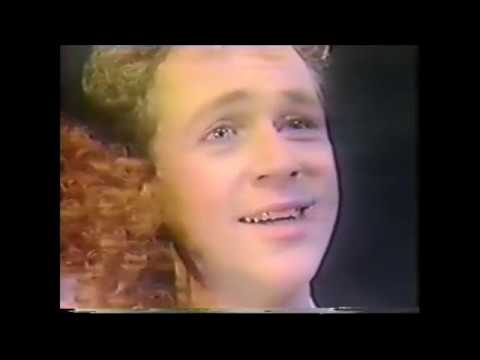
Review and Highlights
Quick summary
- What it is: An Act One duet from Aspects of Love (1989) that captures Alex and Rose crossing the line from chase to contact.
- Who sings it in-story: Alex Dillingham and Rose Vibert, during their first private rush together.
- Where it sits: Right after the Montpellier build-up, before the plot widens and consequences start arriving on schedule.
- Why it matters: The show stops hinting and commits - desire becomes an event, not a vibe.
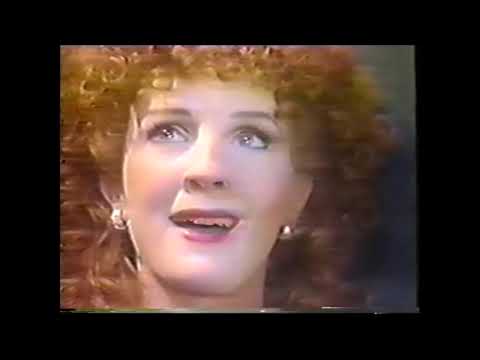
Aspects of Love (1989) - stage musical - non-diegetic. Early Act One: Alex and Rose have their first tryst at George's villa in Pau. Its placement matters because it turns Alex's intensity into action and shows Rose choosing the thrill, even when she knows better.
This duet feels like the lights dim and the air changes. The earlier Montpellier scenes are all noise and proximity: cafe chatter, backstage stress, public awkwardness. Then this track arrives and suddenly everything narrows to the simplest idea - I have you, you are here, this is real. It is not written as a victory lap. It is written as disbelief, which is funnier and riskier. You can hear two people trying to persuade themselves that what they are doing is solid, not just fast.
- Key takeaways: intimate pacing, close harmonies, and a chorus built around reassurance rather than fireworks.
- Best detail: the lyric keeps returning to proof - sight, touch, presence - like the characters are collecting receipts.
- Why it lasts: it plays like a private secret you overhear, not a public anthem.
Creation History
Andrew Lloyd Webber wrote the music with lyrics by Don Black and Charles Hart. In production lists for both the original London staging (1989) and Broadway (1990), the number is consistently assigned to Alex and Rose, confirming its job as their early defining duet. A later remastered cast edition also groups the Montpellier and train sequence material into longer location-style tracks, but this duet remains the emotional hinge: the first time the relationship stops being theoretical.
Song Meaning and Annotations

Plot
Alex, seventeen, has been orbiting Rose with the stubborn focus of someone who has not yet learned the difference between longing and entitlement. Rose, a working actress, is older and used to managing men who want a piece of her time. In Pau, away from the cafe noise, they finally meet in private and the flirtation becomes physical. The duet is the sound of them testing the moment, checking if it holds, and leaning into it when it does.
Song Meaning
The meaning is about proof and surrender. Alex wants confirmation that he is not dreaming, and Rose wants the brief permission to stop being the adult in the room. The title phrase works as self-hypnosis: if I can say it, I can believe it. The music supports that by moving at a steady, almost walking tempo - not frantic, not grand - like the scene is trying to feel normal even while it changes everything.
Annotations
"Seeing is believing"
A simple line that carries two agendas. For Alex it is triumph, for Rose it is a temporary truce with reality. The same words, different stakes.
"In my arms"
This is the duet quietly admitting the power imbalance. Alex frames closeness as possession. Rose has to decide whether the phrase is romantic or a warning sign, and the show lets that ambiguity sit there.
"Really here"
The repetition is the tell. Nobody repeats a fact unless they are scared it might vanish. That is the emotional engine: the fear that the morning will cancel the night.
Style and rhythm
It is classic Lloyd Webber intimacy: a clear melodic line, harmony that supports rather than competes, and phrasing that favors legato. The rhythm stays grounded, which makes the lyric feel like a conversation that happens to sing. According to Musicnotes arrangement data, a common published tempo marking is Andante con moto with a metronome around quarter note equals 104, which fits the scene: steady steps, no sprinting.
Symbols and subtext
The show uses places like props. Montpellier is public. Pau is private. When the duet arrives at the villa, the story is telling you that secrecy is part of the appeal. That detail matters later, when the same secrecy becomes a burden rather than a thrill.
Technical Information (Quick Facts)
- Song: Seeing Is Believing
- Artist: Original London Cast of Aspects of Love
- Featured: Alex Dillingham and Rose Vibert (duet)
- Composer: Andrew Lloyd Webber
- Producer: Andrew Lloyd Webber (cast recording credits vary by edition listings)
- Release Date: 1989 (cast recording era)
- Genre: Musical theatre duet
- Instruments: Two voices, piano-led orchestra arrangement
- Label: Really Useful Records (cast release listings vary by territory)
- Mood: Intimate, urgent, slightly unreal
- Length: Release listings vary by edition
- Track #: Often listed in Act One, after the Montpellier station scene
- Language: English
- Album (if any): Aspects of Love (Original London Cast Recording and later remastered editions)
- Music style: Legato duet with close harmony writing
- Poetic meter: Mixed stresses (sung speech with flexible emphasis)
Frequently Asked Questions
- Who sings this duet in the musical?
- It is written for Alex and Rose, and production number lists for London (1989) and Broadway (1990) keep that assignment consistent.
- Where does the scene happen?
- In Act One at George's villa in Pau, France, during Alex and Rose's first private encounter.
- Is this a big belting number?
- No. It is shaped for close, sustained phrasing and intimacy, with the emotional lift coming from certainty returning line by line.
- Why does the title focus on "seeing"?
- Because the characters are trying to prove the moment is real. The lyric keeps returning to evidence: presence, touch, and the shock of getting what you wanted.
- Is it commonly performed outside the show?
- Yes, especially in concert settings that highlight Lloyd Webber duets, though it lands best when staged as a private scene rather than a public declaration.
- What is a typical published tempo?
- One widely used sheet-music listing marks it Andante con moto with a metronome around quarter note equals 104.
- What key is often associated with published arrangements?
- G major appears as the original published key on common piano-vocal listings.
- How does it connect to the rest of Act One?
- It is the pivot where Alex and Rose become a fact, which then pulls George into the triangle and changes the tone of everything that follows.
Additional Info
In a 2023 West End revival promo clip, the duet was presented as a clean two-hander moment, which is a smart reminder of what the number really is: not a crowd-pleaser, a pressure chamber. It is also one of the score's neat structural tricks. You hear it after scenes full of public noise, so the silence around it feels like a door closing. When the plot later gets loud again, you remember this quiet as the point of no return.
Key Contributors
| Entity | Type | Relationship (S-V-O) |
|---|---|---|
| Andrew Lloyd Webber | Person | Andrew Lloyd Webber composed the music for the musical. |
| Don Black | Person | Don Black co-wrote the lyrics for the musical. |
| Charles Hart | Person | Charles Hart co-wrote the lyrics for the musical. |
| Aspects of Love | Work | Aspects of Love places the duet at George's villa in Pau in Act One. |
| Ovationtix Overtur production listing | Organization | Overtur lists the musical numbers and assigns this duet to Alex and Rose. |
How to Sing Seeing Is Believing
Most arrangements treat this as a mid-tempo legato duet in G major, with an Andante con moto marking and a metronome around quarter note equals 104. That tempo is your friend: it gives you time to shape phrases, but it also exposes any breathy shortcuts.
- Tempo: Set a metronome to 104. Sing the melody on a hum first, so the line stays connected before you add consonants.
- Diction: Keep the vowels round and simple. Over-articulation can make the duet sound like an argument rather than a confession.
- Breath: Plan breaths at thought endings, not at bar lines. The scene reads as one long exhale.
- Blend: If you are singing with a partner, match vowel color on shared words. Unmatched vowels make close harmony feel tense for the wrong reason.
- Dynamics: Start smaller than you think. Let the volume grow with the certainty of the lyric, not with the size of the room.
- Rubato: Use tiny elastic moments at the ends of key phrases, but return to the pulse quickly. The song needs steadiness to sell the "real" feeling.
- Mic: In amplified settings, step back slightly on sustained notes so you can keep a relaxed mouth shape without pushing.
- Pitfalls: Do not rush into big sound early. Do not turn the title phrase into a punchline. Keep it private, even when you are loud.
Sources
Sources: Musicnotes sheet music listing, Overtur production listing (Original London 1989), Overtur production listing (Broadway 1990), Wikipedia show synopsis and song list, West End Theatre revival video post, YouTube performance upload