
Yacht Club Swing Lyrics
Yacht Club Swing
From high atop the wonderful hotel in downtown ClevelandThe NBC Blue Network is proud to introduce
The very adorable
The very talented
The very gifted
Miss Charlayne Woodard!
Ahh! Thank you! Thank you! I love you! I love you! Oh!
(Sung)
Step touch, step touch, step touch, step touch
Step touch, step touch, five, six, seven, eight
Hoist your anchor, pull in the plank, hands on deck
Strap your lifebelt, ready, captain, check, double check
I want some seafood, baby
I want some seafood, daddy
There?s magic in a slow soothing ripple
That makes you dance even though you're a cripple
You can?t resist, get aboard that Yacht Club Swing
The skies are gray, never mind stormy weather
You're gonna feel just as light as a feather
Look what you missed, let them play that Yacht Club Swing
Yacht Club Swing
Don't go starboard, keep on moving ?round the raft
And don?t go portside, keep on grooving fore and aft
Love is the thing, but swing is in power
Go get your partner, don't mind the hour
You can?t resist, get aboard that Yacht Club Swing
Hit it, boys
Swing, swing, swing
Song Overview
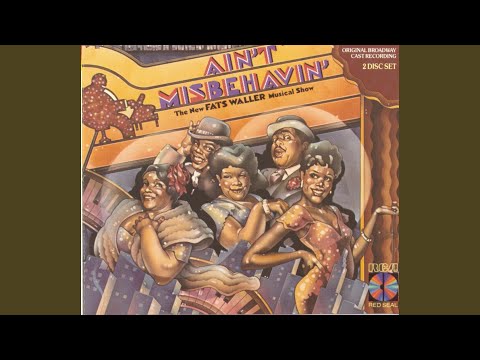
Review and Highlights
Quick summary
- What it is: A 1938 swing number credited to Thomas "Fats" Waller and Herman Autrey (music) with words by J. C. Johnson, repurposed as a compact vocal feature in the 1978 Broadway revue.
- Where it appears: Disc 1, track 9 on a common 2-CD track list, placed between "The Ladies Who Sing with the Band" and "When the Nylons Bloom Again."
- Who fronts it: Charlaine Woodard on the cast recording, with the Ain't Misbehavin band under Luther Henderson.
- What it does onstage: A quick flash of society satire, delivered like a club singer telling you a secret about the room she is standing in.
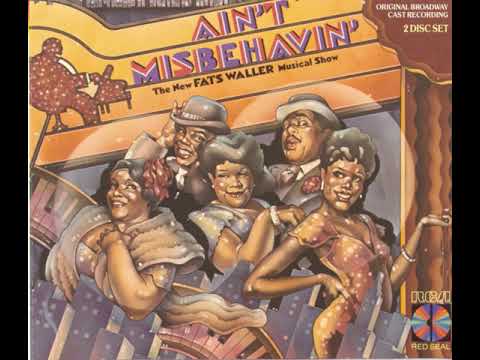
Ain't Misbehavin (1978) - stage revue - non-diegetic (presented as nightclub performance). In the Act 1 run, this one functions like a sly side-step: we have been in Harlem heat and piano sparkle, and now the lyric points its chin toward a more buttoned-up scene. The joke is not a punch line. The joke is the contrast.
Woodard has the right tool for it: a clean, elegant line that can turn sharply without raising its voice. The number is short on the cast album, which is exactly why it works. It drops in, sets a picture, and gets out, like a comic cameo. According to Masterworks Broadway, the show was conceived as a revue with staged musical numbers rather than book scenes, and this song shows the advantage: you can pivot social worlds with one chorus and a look.
Key takeaways:
- Let the lyric do the class commentary: aim for dry amusement, not snickering.
- Keep the groove bright: it reads as polish, not distance.
- Exit cleanly: a number this brief needs a decisive button, not a fade.
Creation History
Work listings credit Waller and Autrey on music with Johnson on lyric, and SecondHandSongs dates the first recording to 1938 by "Fats" Waller and His Rhythm. That year marker matters: this is late-swing era writing, when the music can wink while still dancing. In the revue, it becomes a curated gem, part of the show’s larger habit of turning catalog material into stage situations.
Song Meaning and Annotations
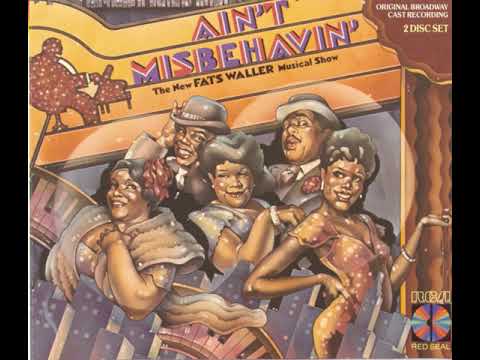
Plot
No plot machinery, just a setting and a point of view: a singer observes a polished social environment and turns it into swing. In a revue, that is plot enough. The number plays like a quick scene change where the band stays put and the lyric moves the walls.
Song Meaning
The meaning is social, not psychological. It sketches a world of leisure and status, then treats that world as dance fuel. In Ain't Misbehavin, the selection also works as a reminder that Waller’s orbit was never only one neighborhood. The music could travel, and the revue lets it travel.
Annotations
The song is credited to Waller and Autrey on music with Johnson on lyric, and is dated to 1938 in work databases.
That credit trio signals the song’s intent: stage-ready swing with a lyric built for pointed observation.
SecondHandSongs lists the first recording and release as "Fats" Waller and His Rhythm in 1938, and notes a chart placement shown as 78th for that year.
Even a modest chart footprint gives directors permission to treat the tune as a period hit, not a deep-cut dare.
Legacy Recordings places the cast album track as Disc 1, track 9, and Discogs lists the LP cut at 1:50.
A minute-fifty is a discipline: establish the room, land the attitude, and leave before the premise thins.
A traditional-jazz big band arrangement catalog lists a concert key of B flat major for an arranged version and dates the composition to 1938.
That is useful for singers: the tune is often treated as bright major-key swing in performance, even when recordings and arrangements vary.
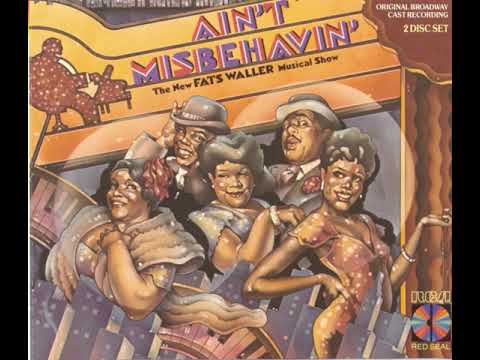
Rhythm, style, and the arc
The number rides straight-ahead swing. The arc is simple: polite entrance, sharper observations, a clean exit. The best performances keep the body relaxed and the consonants precise, like a well-dressed jab.
Technical Information (Quick Facts)
- Song: Yacht Club Swing
- Artist: Original Broadway Cast of Ain't Misbehavin
- Featured: Charlaine Woodard
- Composer: Thomas "Fats" Waller; Herman Autrey
- Lyricist: J. C. Johnson
- Producer: Thomas Z. Shepard (cast recording producer credit in common discographies)
- Release Date: 1978 (cast recording era; later reissues exist)
- Genre: Swing; jazz standard in revue setting
- Instruments: Voice; piano; reeds; brass; bass; drums
- Label: Legacy Recordings (2-CD edition track list); Masterworks Broadway (catalog context)
- Mood: Stylish; amused; brisk
- Length: 1:50 (LP listing); 1:59 (some catalog listings)
- Track #: Disc 1, track 9 (Legacy 2-CD track list)
- Language: English
- Album: Ain't Misbehavin (Original Broadway Cast Recording)
- Music style: Straight swing with pointed lyric delivery
- Poetic meter: Accentual, speech-led stresses aligned to swing phrasing
Frequently Asked Questions
- Who sings it on the cast recording?
- Charlaine Woodard is the featured vocalist on the cast album track.
- Who wrote it?
- Work listings credit music to Thomas "Fats" Waller and Herman Autrey, with lyric by J. C. Johnson.
- Is it long enough to stage as a full scene?
- It is brief on the cast album. Treat it as a quick vignette with one clear point of view.
- Where is it placed in the Act 1 run?
- On a common 2-CD track list, it follows "The Ladies Who Sing with the Band" and precedes "When the Nylons Bloom Again."
- What is the main acting objective?
- Invite the audience into the joke with restraint. You are observing a world, not begging it to laugh.
- Is it a standard outside the theatre?
- Yes. Work databases document an original 1938 recording by "Fats" Waller and His Rhythm.
- What is the easiest musical mistake?
- Overplaying irony. If you push the wink too hard, the swing loses its ease.
- Does the key stay fixed across versions?
- No. Arrangements vary; a traditional-jazz big band catalog lists an arranged concert key of B flat major for one version.
Awards and Chart Positions
The tune itself is not typically tracked through modern chart narratives in cast-album context. The marquee accolades belong to the revue framing it: Ain't Misbehavin won the 1978 Tony Award for Best Musical, which is the larger reason this cast recording became a reference point for Waller-era material onstage.
| Item | Year | Result |
|---|---|---|
| Tony Awards | 1978 | Best Musical (Ain't Misbehavin) - Won |
| Song chart note (work database) | 1938 | Listed as 78th for the year in one cataloged chart note |
How to Sing Yacht Club Swing
Here we have enough practical metrics to be useful, even if the exact cast-album tempo is not consistently published as an official value. A song-metrics site lists a tempo of 170 BPM and a key of F with a minor-mode tag for a Fats Waller recording, and a traditional-jazz big band arrangement catalog lists a concert key of B flat major for an arranged version. Treat these as rehearsal anchors, then match your music director’s chart.
- Tempo: Start fast. Rehearse around 170 BPM, then adjust. The lyric reads as wit when the time has a little shine on it.
- Diction: Keep consonants neat, not percussive. This is elegance with teeth.
- Breathing: Use quick, quiet inhales at phrase tops. Long dramatic breaths turn satire into melodrama.
- Flow and rhythm: Stay in the pocket and let the band carry propulsion. If you push the beat, the polish cracks.
- Key handling: If your arrangement sits in B flat major (common for bands), keep vowels tall and bright. If it sits in a darker minor key, keep tone light so the lyric still smiles.
- Accents: Punch only the cleanest targets: names, places, status words. The rest should glide.
- Mic: If amplified, keep it close and conversational. The joke is better when it feels overheard.
- Pitfalls: Avoid mugging. A small eyebrow does more than a big laugh.
Additional Info
One practical reason the song keeps showing up in later band books is that it adapts neatly to different forces. A sheet-music listing credits the same writers and presents it for piano-vocal-chords, while a traditional-jazz band catalog offers a separate arranged treatment with vocal lead and harmony embedded. That flexibility is a quiet part of its longevity: it can be a band feature, a singer cameo, or a quick theatre vignette with a costume change.
Key Contributors
| Entity | Type | Relationship (S-V-O) |
|---|---|---|
| Thomas "Fats" Waller | Person | Waller co-composed the music and recorded an early 1938 version with his group. |
| Herman Autrey | Person | Autrey co-composed the music credited for the work. |
| J. C. Johnson | Person | Johnson wrote the credited lyric. |
| Charlaine Woodard | Person | Woodard performs the featured cast recording track. |
| Luther Henderson | Person | Henderson supervises and supports the revue sound with piano and arrangements. |
| Legacy Recordings | Organization | Legacy publishes the 2-CD track list that documents Act 1 placement. |
Sources
Sources: Legacy Recordings 2-CD track list, Masterworks Broadway album page, YouTube (Masterworks Broadway upload), Discogs release listing, Presto Music cast recording personnel credits, SecondHandSongs work entry, SongBPM tempo and key listing, BSCJB arrangements catalog entry