
Fat And Greasy Lyrics
Fat And Greasy
Watch Him while he's Sitting ThereChunks Of Fat Hanging Over His Chair
Oil Just Oozing From his Hair
Fat And Greasy as a Grizzly Bear
They Say That Sweet Perfumes Are Made From Fat
But Not The Kind That comes From This Greasy Cat
There's Fragrance In His Clothes
Seems Like Nothing you Ever smelled in a Rose
Man That Fool Is Fat and Greasy
Hot or Cool He's Fat And Greasy
Here To Here He's Fat and Greasy
Oh A Big Fat Greasy Fool
He's Got Big fat Liver Lips
Shakes like Jelly 'Round His Hips
He's a Waddlin' Wiggling Shame
And his Big Fat Whats It's Name
Ha Ha ! Look at That Guy Up There in the Spotlight
Look Who's Calling Names
When she Got Through Dancing with This Fool
Man She Didn't Smell The Same
Song Overview
Review and Highlights
Quick summary
- What it is: A comic jazz-era song credited to Porter Grainger and Charlie Johnson, later associated with performances by Fats Waller.
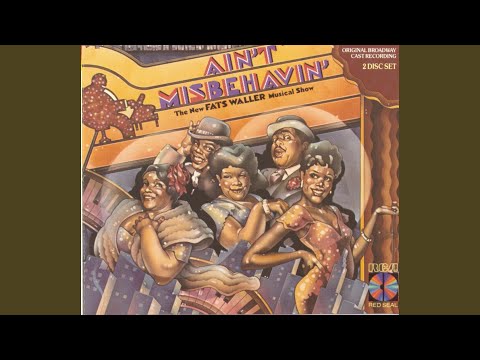
- How it functions in the musical: In Ain't Misbehavin', it is one of the "songs by others which Fats Waller made hits," staged as a two-hander that lets the show get rowdy on purpose.
- Typical staging: The number is often played as a competitive duet - two performers riffing like horn players, with gestures timed to the vamp.
- Why it lands: The lyric is built on repetition and escalation, so the joke is not "what happens" but "how far they push it."
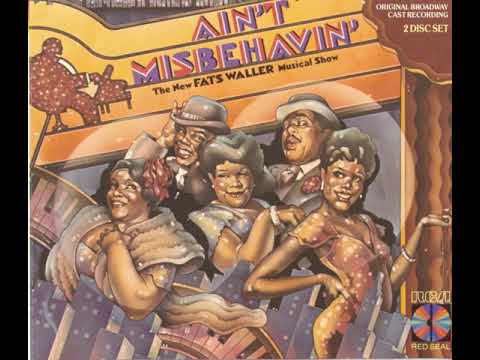
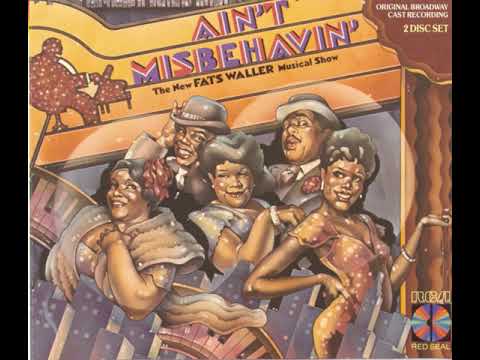
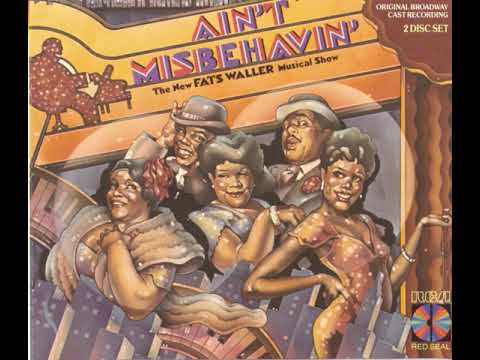
Ain't Misbehavin' (1978) - stage revue - not diegetic. Placed in Act II as a jolt of vaudeville energy: the plot-free revue suddenly behaves like a nightclub sketch, with rhythm as the punchline. As stated on Masterworks Broadway's track listing, the original cast recording features the song as a duet (André DeShields and Ken Page), which telegraphs the staging logic - this one is about chemistry and timing, not confession.
Listen to the architecture: short phrases, repeated hooks, and a chorus that begs for audience buy-in. Onstage, directors tend to treat it as controlled chaos - the performers are allowed to clown, but the beat stays locked. That discipline keeps the joke from turning sloppy, and it also keeps the number from feeling like a detour. In a songbook show, detours are the whole point, but they still have to arrive on time.
- Key takeaways: It is a comic duet driven by rhythmic precision, built to invite crowd response.
- Best onstage trick: Set a "game" early (one singer leads, the other tops), then swap roles mid-chorus.
- What audiences remember: The refrain, the call-and-response feel, and the way the band seems to laugh along.
Creation History
The tune is credited to Porter Grainger and Charlie Johnson and is frequently dated to the mid-1930s in theater and band arrangement notes, while Waller's recorded association comes from later sessions that helped circulate it widely. Ain't Misbehavin' folds it into a curated portrait of the era, where authorship matters less than impact: the show repeatedly reminds you that Waller was not only a writer, but also a performer who could transform other people's material into a signature.
Song Meaning and Annotations
Plot
Two singers describe a "cat" who is, repeatedly and emphatically, "fat and greasy." The lyric cycles through the description, adds little narrative asides (a party, a dance, a smell), and returns to the refrain as if the refrain were the only reliable truth in the room.
Song Meaning
The song is comedy by accumulation. "Fat" is the image, "greasy" is the attitude, and the repeated refrain is the engine. In performance, it is less about mocking a single person than about savoring the sound of the words and the communal pleasure of exaggeration. In Ain't Misbehavin', that matters because the revue is always negotiating tone: you can go from flirtation to social commentary in one scene change, so you need a number that says, "We are allowed to be silly, and we can do it with craft."
Annotations
Oh man that fool is fat and greasy, hot or cool he's fat and greasy.
Repetition is the joke, but it is also staging instruction. The phrase wants a physical pattern: a point, a lean, a shared look to the band. If you vary the delivery each time, the words stay fresh without changing the words.
Head to heel he's fat and greasy, a big fat greasy fool.
This is where the lyric becomes a drum fill. Treat "head to heel" like a rhythmic setup, then land the final phrase squarely on the groove. The audience laughs because the performers make the timing inevitable.
But when she got through dancin' with this cat, oh man she didn't smell the same.
A little vaudeville punchline tucked inside a chant. In a revue, that is gold: it lets the performers step out of the refrain, tell a mini-story, then snap back into the chorus like nothing happened.
Style and rhythm
This is jump-era comedy with a swing backbone: short lines, bright accents, and a refrain that feels like it was designed for clapping. The rhythm does the heavy lifting, so the smartest performances keep the vocal line crisp and let the band provide the bounce.
Technical Information (Quick Facts)
- Song: Fat and Greasy
- Artist: Fats Waller (noted performer association)
- Featured: André DeShields; Ken Page (original Broadway cast duet)
- Composer: Porter Grainger; Charlie Johnson
- Producer: Varies by recording and release
- Release Date: Credited mid-1930s for composition in several production and arrangement references; Waller-associated recordings appear later
- Genre: Swing-era novelty, jazz standard-adjacent
- Instruments: Voice; piano; small jazz ensemble (common practice)
- Label: Masterworks Broadway (cast recording release)
- Mood: Comic, brash
- Length: 2:49 on the original Broadway cast recording track listing
- Track #: Act II sequence (cast album sequencing varies by edition)
- Language: English
- Album (if any): Ain't Misbehavin' (Original Broadway Cast Recording)
- Music style: Chant-like refrain with swing phrasing and call-and-response potential
- Poetic meter: Conversational accents shaped for swing subdivisions
Frequently Asked Questions
- Is it a Fats Waller composition?
- In the musical, it is presented as a number Waller popularized, but authorship is widely credited to Porter Grainger and Charlie Johnson.
- Where does it appear in Ain't Misbehavin'?
- It is part of the Act II run that leads into the show's later set pieces, often played as a featured duet.
- Why is it staged as a duet so often?
- The lyric is repetitive by design, and two performers can keep it alive by trading variations, reactions, and little competitive riffs.
- What is the main comedic device?
- Escalation through repetition: the refrain returns with new emphasis, new physical business, and sharper timing.
- Is it meant to be mean-spirited?
- It can be, but the most effective versions play it as tall-tale silliness, with the audience invited to enjoy the rhythm and the exaggeration.
- Does the cast recording credit specific performers?
- Yes. The original Broadway cast recording track listing credits André DeShields and Ken Page on this number.
- What makes it feel "period" without becoming a museum piece?
- The swing feel and the chant-like chorus do the period work. Modern performers can keep it fresh by staying truthful in timing and not forcing the jokes.
- Are there alternate spellings or titles?
- The title is usually stable, but recordings can vary in subtitles or parenthetical notes depending on the release.
Awards and Chart Positions
As a vintage stage-and-band number, its legacy is not chart-driven. Its Broadway vehicle is the headline: Ain't Misbehavin' won the 1978 Tony Award for Best Musical, a major institutional stamp for a revue and a big reason these catalog songs stayed in the repertoire.
| Work | Year | Award | Result |
|---|---|---|---|
| Ain't Misbehavin' | 1978 | Tony Award - Best Musical | Won |
How to Sing Fat and Greasy
Concrete performance metrics vary by arrangement. One published band arrangement notes a concert key of Ab major, which suits the song's bright, brassy personality and keeps the refrain sitting comfortably in a crowd-pleasing register.
- Tempo choice: Keep it on the lively side, but never faster than your consonants. The joke is in clarity.
- Diction: Pop the "t" in "fat" and the "gr" in "greasy" without over-hitting. Crisp, not harsh.
- Breath: Take quick, low breaths between refrain fragments. Long theatrical inhales kill the momentum.
- Rhythm: Treat the refrain like a drum pattern. Lock it, then vary emphasis to keep it from turning mechanical.
- Character: Decide what you want from the audience: are you recruiting them to chant, or are you showing off for them?
- Duet craft: Assign roles (leader, topper) and trade them. One voice sets, the other riffs.
- Mic and projection: Aim for speech-forward singing. Let volume come from placement, not force.
- Pitfalls: Do not drag the last word of each line. Save any stretch for a single planned moment, then snap back to time.
Additional Info
The fun detail is that the show treats the number as part of a larger Broadway idea: Waller as interpreter, not only author. That framing fits the revue's finale concept, where the production acknowledges "songs by others which Fats Waller made hits." In other words, the musical is not shy about musical borrowing; it builds a portrait of the era's ecosystem, where a great performer could turn a tune into a calling card.
Key Contributors
| Entity | Type | Relationship (S-V-O) |
|---|---|---|
| Porter Grainger | Person | Grainger co-wrote "Fat and Greasy". |
| Charlie Johnson | Person | Johnson co-wrote "Fat and Greasy". |
| Fats Waller | Person | Waller popularized the song through performance and recordings. |
| Ain't Misbehavin' | CreativeWork | The revue features the song as an Act II duet number. |
| André DeShields | Person | DeShields performs the song on the original Broadway cast recording. |
| Ken Page | Person | Page performs the song on the original Broadway cast recording. |
| Masterworks Broadway | Organization | Masterworks Broadway released the cast recording with the track listing. |
| Tony Awards | Organization | The Tony Awards honored Ain't Misbehavin' with Best Musical (1978). |
Sources
Sources: Masterworks Broadway (cast recording track listing), Legacy Recordings (track list edition), PCS Theater (song list credits), StageAgent (song placement), Discogs (track timing), Tony Awards (1978 winners list), Dickinson College Archives PDF (song credit list), BSCJB arrangements note (concert key)