
Jitterbug Waltz Lyrics
Jitterbug Waltz
The night is getting onThe band is getting slow
The crowd is almost gone
But here we are still dancing
Nothing to do, but waltz
Our feet can barely move
My legs are yelling "Whoa"
But we're in such a groove
And love is still advancing
Nothing to do, but waltz
You can't suggest that we could go on jitterbugging
No bugging
We've nothing left for moves more strenuous than hugging
Just hugging
But we don't need much room to gently cut-a-rug in, we two
We're dead on our feet
And the sauce is repeatin'
But what can you do?
I tried another juice
And get from head to toe
My body's feeling loose
And warm and kind of supple
Nothing to do, but waltz
My man would slip away
My arms just won't let go
I think I'd like to stay
Till we're the only couple
Nothing to do, but waltz
You never know how far this sort of thing can get you
One never knows, one never, never knows
We're not as tired as we would like to think, I bet you
You stay up half the night with me, if I would let you
Yes
So come, let the waltz play again
Song Overview
Review and Highlights
Quick summary
- What it is: A 1942 Fats Waller jazz waltz, later given stage lyrics for Ain't Misbehavin by Richard Maltby Jr.
- What makes it theatrical: The 3/4 swing feel lets the show pivot from hot stride sparkle to a gliding, candlelit sway.
- How it appears in the revue: Listed as a musical number in the Broadway production, with Maltby credited for lyrics.
- Why it stands out: It is a rare moment in the score where the room seems to rotate rather than bounce.
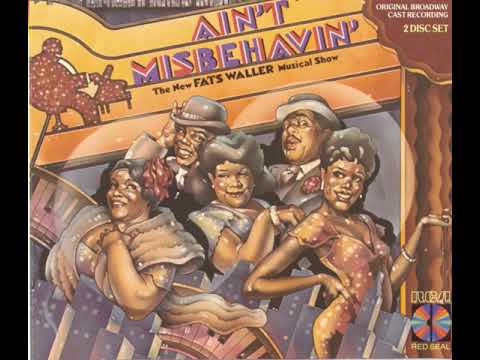
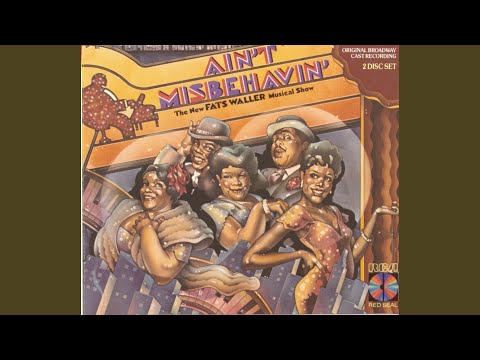
Ain't Misbehavin (1978) - stage revue - non-diegetic (presented as nightclub performance). The number is credited on the production song list with stage lyrics by Richard Maltby Jr., turning what began as an instrumental into a sung scenelet.
Every revue needs a change of temperature. This is that pivot. Where so many Waller staples strut in four, this one sways in three, like the band has quietly moved the furniture and invited you closer. Onstage, that change can read as romance, nostalgia, or just a sly bit of variety - but it has to be played straight. If performers wink too hard, the waltz collapses into a skit. The smart approach is to treat it like a real dance floor moment inside a Harlem room: bodies softening, jokes pausing, the night briefly taking itself seriously.
Key takeaways:
- Rhythm as staging: the triple meter suggests turns, dips, and spirals instead of straight-line kicks.
- Text must float: when the lyric sits lightly, the audience hears the harmony, not just the joke.
- Contrast is the point: in a show built on bounce, the waltz becomes a spotlight without shouting.
Creation History
Waller wrote and recorded the piece in 1942, and it quickly became a calling card for musicians who liked their swing with a twist: a jazz waltz that still knows how to swing. Decades later, Ain't Misbehavin re-framed it for theatre by adding lyrics credited to Richard Maltby Jr., letting the tune function as a performed moment rather than a band feature. According to the Tony Awards site, the 1978 revue landed as a major Broadway success, and part of that craft was how its creators shaped standards into numbers that behave like scenes.
Song Meaning and Annotations
Plot
This is not plot-driven material, but it still tells a story onstage: the club slows, a couple (or a whole room) finds a new groove, and the show lets the audience watch people move differently. In a revue, that kind of shift is dramaturgy by other means. It says: the night has more than one speed.
Song Meaning
At its core, the number is about swing learning a new step. The waltz meter can feel old-world, but Waller makes it city-smart. In the revue version, the added lyric helps the audience read the moment as more than "pretty music" - it becomes an invitation to dance, remember, and linger. The mood is tender without getting syrupy, and the theatre trick is to keep it intimate while still playing to the balcony.
Annotations
The melody sits in a jazz waltz feel: 3/4 time, but phrased with swing instincts.
That matters for performance. Singers should think "one long arc" across the bar, not three separate beats. Dancers can lean into turns and traveling patterns that feel natural in three.
The Broadway revue credits a lyric adaptation by Richard Maltby Jr.
This is the key theatrical move. It turns the tune from a band showcase into a character moment, and it gives directors permission to stage relationships, not just choreography.
The piece is commonly described in E flat major in reference sources.
For rehearsals, that is a useful home base. In practice, productions may transpose, but the harmonic warmth of that neighborhood helps the waltz feel plush rather than brittle.
Production and instrumentation notes
Because the revue leans on orchestrations that read clearly in a theatre, the waltz often gets a smooth, centered accompaniment rather than a loose jam feel. If the pianist (or pit) lets the left hand get too heavy, the dance quality turns into a stomp. The goal is buoyancy: a gently turning pulse, with enough space for the lyric to land like conversation.
Technical Information (Quick Facts)
- Song: Jitterbug Waltz
- Artist: Original Broadway Cast of Ain't Misbehavin
- Featured: Ensemble (commonly credited on cast-album listings with principal cast names)
- Composer: Thomas "Fats" Waller
- Lyricist: Richard Maltby Jr. (stage lyric adaptation)
- Arranger: Luther Henderson (revue context)
- Release Date: June 1978 (cast recording sessions listed for the original Broadway cast recording)
- Genre: Jazz; swing; jazz waltz; musical theatre revue
- Instruments: Voice; piano; ensemble band
- Label: RCA Victor (original cast recording release context)
- Mood: Warm; gliding; late-night dance-floor calm
- Length: About 5:49 (track timing listed on common release metadata)
- Track #: Disc 1, track 7 (commonly listed on reissue tracklists)
- Language: English
- Album: Ain't Misbehavin - Original Broadway Cast Recording
- Music style: Jazz waltz phrased with swing inflection
- Poetic meter: Accentual lyric phrasing over triple meter
Frequently Asked Questions
- Was this originally an instrumental?
- Yes. The piece began as a Waller composition, and the revue later added a lyric adaptation credited to Richard Maltby Jr.
- Why does a jazz waltz feel different on a Broadway stage?
- Because the room starts to rotate. Triple meter invites turns and traveling patterns, and it shifts the audience's sense of time.
- Is it really in 3/4, or is it swung into something else?
- It is in 3/4, but performers often phrase it with swing instincts so it feels supple rather than rigid.
- What is the safest way to stage it in a revue?
- Play it as a genuine dance-floor interlude: less comedy, more intimacy, with the nightclub frame doing the heavy lifting.
- Who is credited for the stage lyric?
- The Broadway production song list credits Richard Maltby Jr. with lyrics for the revue version.
- Where is it listed on common cast-album tracklists?
- Many release listings place it as Disc 1, track 7 on the reissue track order.
- Does the number connect to the Tony-winning reputation of the show?
- Indirectly. The revue won major awards, and part of that success was the craft of shaping standards into varied stage moments, including quieter, gliding numbers like this one.
- What makes it hard for singers?
- Keeping the text floating over three without chopping phrases into three equal chunks.
- What makes it hard for dancers?
- Not over-spinning. The best movement looks effortless, like the band is turning the air, not the dancers forcing turns.
Awards and Chart Positions
This title is best understood through the revue's honors rather than pop chart history. The 1978 Broadway production of Ain't Misbehavin won the Tony Award for Best Musical, with additional Tony wins including Direction of a Musical (Richard Maltby Jr.) and Featured Actress in a Musical (Nell Carter). That awards haul helps explain why the show can afford a slow-turn waltz amid the jump numbers: Broadway rewarded its variety, not just its flash.
| Award | Year | Category | Result (selected) |
|---|---|---|---|
| Tony Awards | 1978 | Best Musical | Won |
| Tony Awards | 1978 | Best Direction of a Musical (Richard Maltby Jr.) | Won |
| Tony Awards | 1978 | Best Featured Actress in a Musical (Nell Carter) | Won |
How to Sing Jitterbug Waltz
Because this number lives in 3/4, the main challenge is phrasing, not power. Reference descriptions commonly place the original composition in E flat major, but stage keys can shift to fit a cast and an arrangement.
- Tempo: Choose a moderate waltz pulse that can still swing. If it drags, the number turns sentimental. If it rushes, it loses its glide.
- Diction: Light consonants. You want clarity without percussive clipping. Let vowels carry the turn.
- Breathing: Breathe on musical corners, not on every bar line. Think in long ribbons across two bars.
- Flow and rhythm: Avoid counting "one two three" in your face. Aim for "one - and - a" feel, so the line can float.
- Accents: In three, singers often over-accent beat one. Keep beat one present but gentle, and let beats two and three breathe.
- Ensemble coordination: If harmonies enter, agree on cutoffs and releases. The waltz sounds richest when endings are unified.
- Mic and staging: If amplified, stay conversational. If not, send the phrase forward with breath support rather than louder attack.
- Pitfalls: Do not turn it into a lullaby. It is still a jazz number, and jazz needs a little edge in the pocket.
Additional Info
One detail I always clock in production is who "owns" the waltz moment. Some stagings make it a brief couple spotlight, others let the whole company rotate like a human chandelier. Either can work, but the best versions keep the nightclub logic intact: it should feel like something that could happen after midnight, when even the loudest room occasionally chooses to breathe.
Key Contributors
| Entity | Type | Relationship (S-V-O) |
|---|---|---|
| Thomas "Fats" Waller | Person | Waller composed and recorded Jitterbug Waltz in 1942. |
| Richard Maltby Jr. | Person | Maltby wrote the stage lyric adaptation credited in Ain't Misbehavin. |
| Luther Henderson | Person | Henderson provided music supervision and arrangements for the revue. |
| RCA Victor | Organization | RCA Victor released the original Broadway cast recording in common discography listings. |
| Longacre Theatre | Venue | The Broadway production opened at the Longacre Theatre in 1978. |
Sources
Sources: IBDB production record, Discogs cast recording listing, Legacy Recordings track list, Masterworks Broadway album page, Tony Awards winners archive, JazzStandards.com composition note, Wikipedia entry for Jitterbug Waltz