
I've Got My Fingers Crossed Lyrics
I've Got My Fingers Crossed
I've got my fingers crossed,Not that I'm superstitious,
I'm afraid it's too good to be true.
I've got my fingers crossed,
No wonder I'm suspicious,
I'm so gay, and skies are much too blue.
Don't want no trouble,
with old man trouble,
and that goes double on account of because I'm in love, yes!
I've got my fingers crossed,
this love is so delicious,
I'm afraid it's too good to be true
Want no trouble with old man trouble
and that goes double on account of because
(because because)
On account of because
(because because)
I've got my fingers crossed,
this love is so delicious,
I'm afraid it's too good to be true.
Yes!
Song Overview
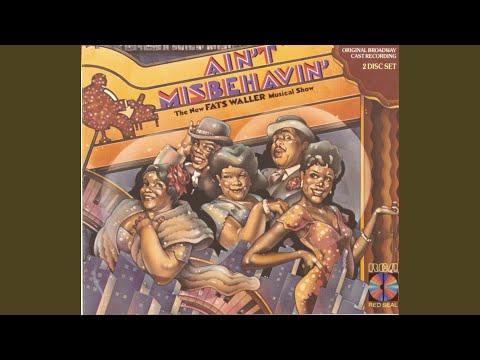
Review and Highlights
Quick summary
- What it is: A 1935 standard credited to Jimmy McHugh (music) and Ted Koehler (words), with some catalogs also listing Charles Wilmott as an additional lyric credit.
- How it appears in Ain't Misbehavin': Not a stand-alone scene. It shows up inside the finale medley, one of the borrowed-song moments the revue uses to show Waller's performing reach.
- How the revue plays it: A compact charm offensive. The hook arrives quickly, makes its point, then yields the floor to the next tune.
- Why it works onstage: The premise is instantly readable: hope presented as a gesture, a little superstition worn like a boutonniere.
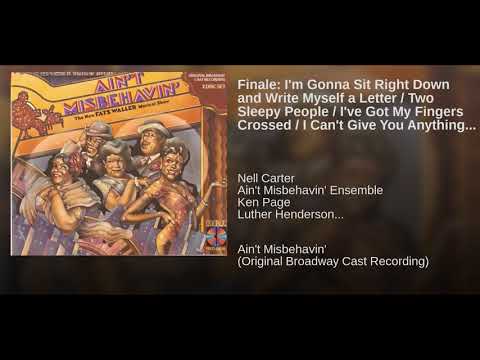
Ain't Misbehavin' (1978) - stage revue - not diegetic. A good revue does not pretend every song is a full chapter. Sometimes it offers postcards. This one is a postcard: a bright, quick dose of anticipation that lets the performer flirt without getting stuck in sincerity. The Masterworks Broadway listing makes the finale concept plain: these are songs written by others that Fats Waller made into hits. That framing changes the audience's listening. You are not waiting for plot. You are watching style travel from one set of authors to one irresistible performer and then into a Broadway evening.
The medley placement is also a director's friend. You can stage it as a sly step toward someone, a glance to the band, a tiny ritual of crossed fingers, and you are done. The number rewards precision. The joke is in the timing. The confidence is in not overplaying the superstition. Let it be casual, like good gossip: specific, quick, and delivered as if everyone already agrees.
- Key takeaways: A premise you can stage with one gesture, a hook built for direct address, and a medley format that favors clean diction.
- Highlight to listen for: The moment the lyric shifts from reporting to betting. That is where the scene lives.
- Performance note: Keep it brisk and conversational. In a medley, any extra lingering reads like traffic.
Creation History
Standard references date the song to 1935 and credit McHugh with the music and Koehler with the words. SecondHandSongs ties the song to the 1936 film King of Burlesque, and its performance history pages show how quickly it moved through band and vocal settings. By late 1935, Waller and His Rhythm had recorded it, and discography-style sources even specify the New York studio date. The revue borrows that history and turns it into dramaturgy: not authorship worship, but the way a performer can make a tune feel like house repertoire.
Song Meaning and Annotations
Plot
A speaker admits they are hoping for love to go their way and uses the crossed-fingers gesture as both charm and confession. The lyric is a small wager: if the feeling is real, the gesture is a joke; if the feeling is risky, the gesture becomes a shield.
Song Meaning
The meaning is romantic optimism with a wink. The speaker is not promising certainty. They are acknowledging risk and still stepping forward. That is why the song fits so neatly in a finale medley: it can establish a whole attitude in a few lines. The emotional arc is quick and theatrical: hope, play, a flash of nerves, then the band carries you onward.
Annotations
Finale medley placement in the revue track listing.
This is the staging instruction hidden in plain sight. You do not build a slow scene. You land a clean action, then get out. Think of it as a one-minute play in swing time.
Credited to Jimmy McHugh (music) and Ted Koehler (words), dated 1935.
That credit matters in a Waller-centered show. It proves the finale is curated, not purely autobiographical. The revue is mapping influence and repertoire, not just composer credits.
Connected to King of Burlesque in catalog notes.
That film link helps performers choose period flavor. You can keep it vaudeville-adjacent: direct address, crisp phrasing, and an awareness of the audience as partner.
Style and rhythm
It sits comfortably in swing-era pop writing: a clean melodic line, a lyric built for punchy delivery, and a rhythm that rewards careful placement more than sheer volume. The drive comes from how the singer articulates the premise, then relaxes into the groove as if the band has already agreed to take the bet.
Technical Information (Quick Facts)
- Song: I've Got My Fingers Crossed
- Artist: Ain't Misbehavin' Original Broadway Cast (finale medley segment)
- Featured: Principal cast with ensemble in the finale track
- Composer: Jimmy McHugh
- Producer: Thomas Z. Shepard (cast recording release metadata)
- Release Date: 1935
- Genre: Standard; jazz; traditional pop
- Instruments: Voice; piano; small jazz ensemble
- Label: Masterworks Broadway (cast recording catalog branding)
- Mood: Hopeful, sly, danceable
- Length: Presented as a segment within the cast recording finale medley
- Track #: Part of the "Finale" track on major cast recording listings
- Language: English
- Album (if any): Ain't Misbehavin' (Original Broadway Cast Recording)
- Music style: Swing phrasing with direct-address delivery
- Poetic meter: Conversational accents shaped for swing subdivision
Frequently Asked Questions
- Is this a Fats Waller composition?
- No. Standard references credit Jimmy McHugh (music) and Ted Koehler (words), with some listings also adding Charles Wilmott as a lyric credit.
- So why does it appear in a Waller-centered revue?
- The finale is curated as songs written by others that Waller made into hits, according to the Masterworks Broadway track listing notes.
- Is it a stand-alone number in the show?
- On the cast recording listings, it appears inside the finale medley rather than as its own track.
- What is the main acting action while singing it?
- Place a bet. You are not declaring forever. You are stepping forward with hope and a bit of practiced nerve.
- Does it have a film connection?
- Yes. Catalog notes connect it with the 1936 film King of Burlesque.
- What published key and range are common for practice?
- A widely used digital edition lists F major with a vocal range of D4 to E5.
- What tempo does that edition suggest?
- It is marked "Moderately" with a metronome of half note equals 72.
- What is the most common performance mistake?
- Playing the superstition too hard. The gesture is a spice, not the meal. Let the charm stay casual.
- How do you make it read in a medley?
- Commit to the premise in the first line, then exit cleanly. If you hesitate, the next tune arrives before the audience has understood the scene.
Awards and Chart Positions
This song's life is repertory: recorded often, staged often, and rarely treated as a charts headline. In this context, the award marker belongs to the vehicle that keeps it in circulation. According to the Tony Awards site, Ain't Misbehavin' won the 1978 Tony Award for Best Musical, a rare top-category win for a revue that helped the whole catalog stay visible.
| Work | Year | Award | Result |
|---|---|---|---|
| Ain't Misbehavin' | 1978 | Tony Award - Best Musical | Won |
How to Sing I've Got My Fingers Crossed
A practical published baseline from a widely used digital edition: F major, vocal range D4 to E5, tempo marked "Moderately" with half note equals 72. Use the numbers as guardrails, then let the lyric read like speech in rhythm.
- Tempo: Start slightly under the printed pace until your diction is clean, then settle into the moderate pulse.
- Diction: Treat the setup lines like quick gossip. Crisp consonants make the premise readable at once.
- Breathing: Breathe at thought breaks. If you breathe mid-premise, it sounds like uncertainty.
- Rhythm: Keep the swing placement steady and resist rushing the hook. Confidence reads as relaxed timing.
- Range: D4 to E5 is manageable for many voices. Keep the top light so the song stays playful.
- Intention: Play hope, not desperation. The crossed-fingers idea should feel like flirtation, not panic.
- Medley craft: If performed as a finale segment, commit in the first line and exit cleanly. Do not try to turn it into a full scene.
- Pitfalls: Avoid mugging. A small gesture reads louder than a big one when the band is already swinging.
Additional Info
The finale medley has a quiet dramaturgical point: it widens the lens. Earlier, the revue sells you Waller the writer. Late in the evening, it sells you Waller the phenomenon. The borrowed standards are not apologies, they are proof. One useful reminder comes from a Syncopated Times essay about composer crediting: audiences routinely assign songs to the star who performed them best, even when the byline belongs elsewhere. That habit is part of what the show is dramatizing, whether it means to or not.
There is also an archival footprint worth noting. A Johns Hopkins sheet-music catalog entry in the Lester S. Levy collection lists the chorus first line and credits McHugh and Koehler, which is the kind of plain documentation theater people love when they are trying to keep program notes honest.
Key Contributors
| Entity | Type | Relationship (S-V-O) |
|---|---|---|
| Jimmy McHugh | Person | McHugh composed the music for the 1935 song. |
| Ted Koehler | Person | Koehler wrote the lyric credited in standard references and archives. |
| Charles Wilmott | Person | Wilmott is listed as an additional lyric credit in a widely used digital edition metadata. |
| Thomas "Fats" Waller | Person | Waller recorded the song in 1935 and is the performer anchor for the revue that frames it as a hit-making artifact. |
| Masterworks Broadway | Organization | Masterworks Broadway documents the finale medley track listing that includes the song. |
| Tony Awards | Organization | The Tony Awards recognized Ain't Misbehavin' as Best Musical in 1978. |
| Lester S. Levy Sheet Music Collection (Johns Hopkins) | Organization | The collection catalogs a period sheet-music item crediting McHugh and Koehler for the song. |
Sources
Sources: Masterworks Broadway album page, Musicnotes digital sheet music metadata, SecondHandSongs work and performance pages, Syncopated Times essay on composer crediting, Johns Hopkins Lester S. Levy Sheet Music Collection entry, Tony Awards winners list, Ovrtur cast recording track list