
Spreadin' Rhythm Around Lyrics
Spreadin' Rhythm Around
Music everywhere, feet are pattin'Puttin' tempo in old manhattan
Everybody is (spoken) out hi' hattin
Spreadin' rhythm around
Everywhere you go trumpets blarin'
Drums and saxaphones rippin' and tearin'
Everybody you meet is rarin'
Spreadin' rhythm around
Up in Harlem flats, all of the cats give it that thing
Which when your in step
All of the hep people call swing
Those who can't afford silk or satin
Dames with gigolos who are latin
Come from Yonkers, the Bronx, or Staten
Spreadin' rhythm around
Song Overview
Review and Highlights
Quick summary
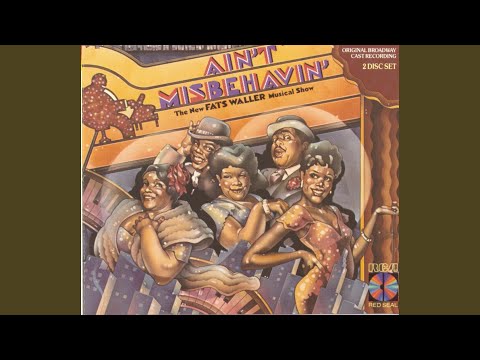
- What it is: A 1935 jazz standard (credited to Jimmy McHugh and Ted Koehler) later folded into the 1978 Broadway revue Ain't Misbehavin.
- Where it lands in the show: Post-intermission territory on the original Broadway cast recording - a reset button that snaps the room back to attention.
- What the revue does to it: Luther Henderson's stage-forward treatment leans into ensemble snap and nightclub polish rather than record-studio intimacy.
- Why it plays so well in theatre: The lyric is a travel poster for swing-era Manhattan - easy to stage, easier to sell with bodies in motion.
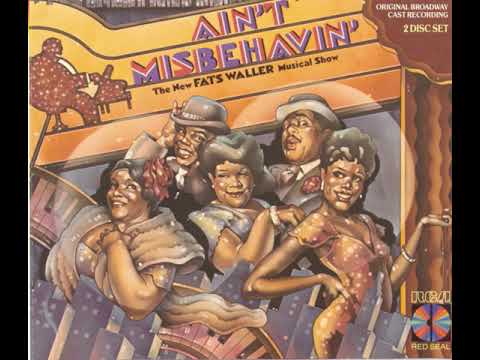
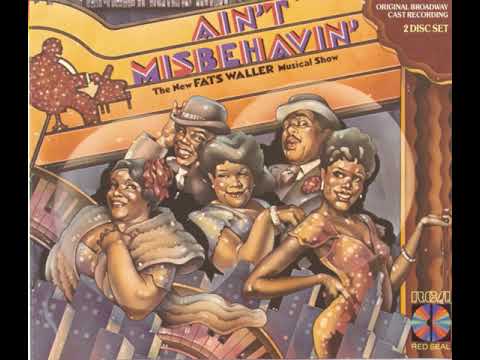
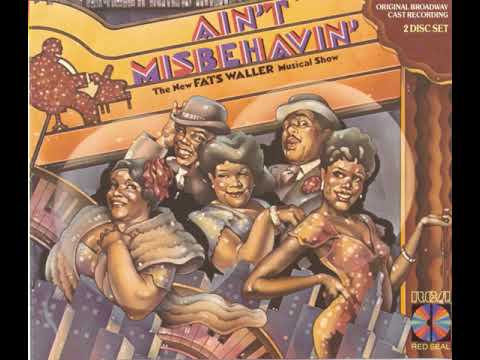
Ain't Misbehavin (1978) - stage revue - non-diegetic (presented as nightclub performance). In the cast album sequence it arrives right after the entr'acte, functioning like a bright marquee that says: we are back, and the band is not here to whisper.
As theatre material, this song is a choreographer's friend. The hook does not brood - it struts. The lyric is built from street-level images (feet, tempo, town-wide commotion), which gives performers playable actions instead of abstract feelings. That is the trick: the tune is a celebration, but the words are also a map. If your staging is smart, the audience learns the geography through bodies - crossovers, handoffs, little competitive flourishes. If your staging is lazy, it turns into a footlight parade. The best productions keep the number brisk, with a sense of "nightlife logistics" - people arriving, clocking the room, joining the orbit.
Key takeaways:
- Rhythm-first writing: The text keeps pointing to motion, and the music rewards crisp diction.
- Ensemble advantage: Call-and-response moments sell the idea of a whole city joining the beat.
- Harlem-cabaret framing: In Ain't Misbehavin it reads as a nightclub headline, not a private confession.
Creation History
On paper, the publishing credit story places the song with the McHugh-Koehler catalog in 1935, and sheet-music listings keep it there. In performance history, it has a second life inside Ain't Misbehavin, where the creators built a revue around the Fats Waller world and let Henderson's arrangements do the heavy lifting - the kind of musical carpentry that makes a standard behave like a scene. That is why it can feel newly minted in the theatre even when the tune is decades older: the revue treats repertoire as dramaturgy, not museum display. As stated in The New York Times' early coverage of the revue's arrival, its momentum depended on sparkle and pace rather than plot.
Song Meaning and Annotations
Plot
There is no narrative twist to track here - it is a picture number. The singer describes a city in motion, with music spilling out into streets and venues until the whole place seems to pulse. In the revue, that "citywide" premise becomes a stage event: five performers, one room, and the illusion that Manhattan is dancing just offstage.
Song Meaning
The point is not romance or regret - it is contagion, in the best sense. The lyric frames rhythm as public infrastructure. Everyone is "out" and the beat is the reason. In Ain't Misbehavin, that idea doubles as a thesis statement: the revue is saying that this music did not merely soundtrack a time, it organized it - socially, physically, nightly.
Annotations
Music ev'ry where, feet are pattin', puttin' tempo in old Manhattan.
This is not just scene-setting; it is choreography in sentence form. You can stage "feet are pattin'" as taps, shuffles, soft-shoe, even just coordinated walking. The lyric gives you permission to make movement the message.
Everybody is out high hattin'.
A neat period marker that matters in theatre: hats are props, props become business, and business becomes character. A director can paint class, swagger, and flirtation with a single brim.
Style and rhythm
Even when played "moderately" in vocal-jazz arrangements, the feel wants bounce: a lightly accented four, a conversational swing, and room for ensemble punctuation. In revue form, you often hear the band articulate the groove more cleanly than a looser jam would - because choreography loves consistent time. That does not make it stiff; it makes it legible from the back row.
Cultural touchpoints
The song's Manhattan postcard pairs naturally with the revue's Harlem nightclub frame. You are watching a stage version of nightlife that was both glamour and hustle - an entertainment economy where performers learned to win the room quickly. That context explains why this number works so well after intermission: it is written like a re-entry strategy.
Technical Information (Quick Facts)
- Song: Spreadin' Rhythm Around
- Artist: Ain't Misbehavin (Original Broadway Cast - featured ensemble)
- Featured: Nell Carter, Andre DeShields, Armelia McQueen, Ken Page, Charlayne Woodard
- Composer: Jimmy McHugh
- Lyricist: Ted Koehler
- Producer: Thomas Z. Shepard (cast recording producer credit commonly listed for this album release context)
- Release Date: July 11, 1978 (first LP release of the original Broadway cast recording)
- Genre: Jazz; vocal jazz; Broadway revue
- Instruments: Voice; piano; band (stage pit and onstage pianist tradition)
- Label: RCA Victor (original cast recording release)
- Mood: Brisk; celebratory; nightclub forward
- Length: About 2:15 (cast album track listing)
- Track #: Disc 2, track 2 (common reissue sequencing)
- Language: English
- Album: Ain't Misbehavin - Original Broadway Cast Recording
- Music style: Swing-era standard presented as ensemble cabaret
- Poetic meter: Accentual, conversational phrasing aligned to swing stress
Frequently Asked Questions
- Is this song originally from the Broadway revue?
- No. It predates the revue and is credited as a 1935 standard; the show repackages it through stage arrangement and performance framing.
- Why does it work so well right after intermission?
- It behaves like a curtain-raiser inside the second act: quick images, rhythmic language, and an easy excuse for the ensemble to take the room back.
- What is the song really about, beyond the travelogue vibe?
- It treats rhythm as something communal - a social force that reorganizes a city night.
- Do productions treat it as a dance feature?
- Often, yes. The lyric practically requests movement, and the structure supports call-and-response staging.
- Which key is common for singers learning it from published materials?
- A widely circulated vocal-jazz sheet-music listing places it in F major, though theatre productions may transpose to suit casting.
- What vocal range should I expect in that published setting?
- One common sheet-music listing gives D4 to E5, which sits comfortably for many mezzo-sopranos and baritenors depending on placement.
- Is the revue version closer to a jazz club jam or a musical number?
- It is closer to a musical number: clean time, coordinated accents, and a shape that reads from the balcony.
- Does it have a famous recorded history outside theatre?
- Yes - it appears in swing and vocal-jazz discographies, including mid-1930s recording lineages tied to the era's band-and-singer format.
- Is there a single "official" arrangement?
- No. The standard has many charts; the revue's sound is strongly associated with Henderson's Broadway arranging tradition.
- What is the easiest acting choice for a performer singing it?
- Play the assignment: you are the host selling the city as a dance floor, one image at a time.
Awards and Chart Positions
For this title, the big trophies belong to the revue rather than to any single number. The original Broadway production of Ain't Misbehavin won the Tony Award for Best Musical, with additional major honors for featured performances and direction. It also collected Drama Desk recognition and other New York theatre awards that signaled how strongly the revue landed as a piece of Broadway craft, not just a jukebox evening.
| Award | Year | Category | Result (selected) |
|---|---|---|---|
| Tony Awards | 1978 | Best Musical | Won |
| Tony Awards | 1978 | Featured Actress in a Musical (Nell Carter) | Won |
| Tony Awards | 1978 | Direction of a Musical (Richard Maltby Jr.) | Won |
| Drama Desk Awards | 1978 | Outstanding Musical | Won |
How to Sing Spreadin' Rhythm Around
Published vocal-jazz materials list an original key of F major, a "Moderately" tempo marking, and a printed range of D4 to E5. That is a practical starting point for singers who want a version that sits cleanly on the staff before they start adding theatre bite.
- Tempo first: Set a moderate pulse and keep the swing light. Do not rush consonants - let the beat carry you.
- Diction: The lyric is packed with quick images. Clean the internal consonants (t and p sounds) so the city picture reads.
- Breathing plan: Mark breaths at phrase corners, not mid-image. The line wants forward motion, like walking briskly through a crowded block.
- Rhythm and placement: Aim for conversational attack, not operatic weight. Think "cabaret mic," even if you are unamplified.
- Accents: Pop key words (tempo, Manhattan, everywhere) with a touch of dynamic lift rather than forcing volume.
- Ensemble awareness: If sung in a group, stagger breaths and agree on cutoffs. The number wins when it sounds like one engine.
- Style notes: Save vibrato for spice. Most of the time, a clean tone sells the rhythmic language better.
- Pitfalls: Over-swinging can smear the text; under-swinging makes it march. Keep it buoyant.
Additional Info
One fun theatre detail: reviewers and audience members often describe this number as the moment the second half stops being "after intermission" and starts being "the show again." That makes sense. The lyric is publicity, the groove is a handshake, and the staging can turn five performers into a whole nightlife district in under three minutes.
Key Contributors
| Entity | Type | Relationship (S-V-O) |
|---|---|---|
| Jimmy McHugh | Person | McHugh composed the credited music for the 1935 standard. |
| Ted Koehler | Person | Koehler wrote the credited lyric for the 1935 standard. |
| Luther Henderson | Person | Henderson arranged and orchestrated the revue's musical material. |
| Richard Maltby Jr. | Person | Maltby co-wrote the book and directed the Broadway revue. |
| Murray Horwitz | Person | Horwitz co-wrote the book for the revue concept. |
| Ain't Misbehavin | Work | The revue presents the number as a staged nightclub performance. |
| RCA Victor | Organization | RCA Victor released the original Broadway cast recording (first LP release in 1978). |
| Longacre Theatre (Broadway) | Venue | The revue opened on Broadway at the Longacre Theatre in 1978. |
Sources
Sources: IBDB production record, Masterworks Broadway album notes, Musicnotes sheet-music listing, Discogs cast recording tracklist, Wikipedia (Ain't Misbehavin page)