
Black And Blue Lyrics
Black And Blue
Cold, empty bed,Springs hard as lead,
Pains in my head,
Feel like old Ned.
What did I do
To be so black and blue?
No joys for me,
No company,
Even the mouse
Ran from my house,
All my life through
I've been so
Black and blue.
I'm so forlorn,
Life's just a thorn,
My heart is torn,
Why was I born?
What did I do to be so
Black and blue?
I'm white inside,
But that don't help my case.
'Cause I can't hide
What is on my face,
Oh!
[Alternative lyrics
for the last verse]
I'm sad inside,
But it don't help my case
'Cause I can't hide
All the sorrow
That's on my face.
Song Overview
Review and Highlights
Quick summary
- What it is: A 1929 standard (often titled "(What Did I Do to Be So) Black and Blue") composed by Thomas "Fats" Waller and Harry Brooks, with lyrics by Andy Razaf.
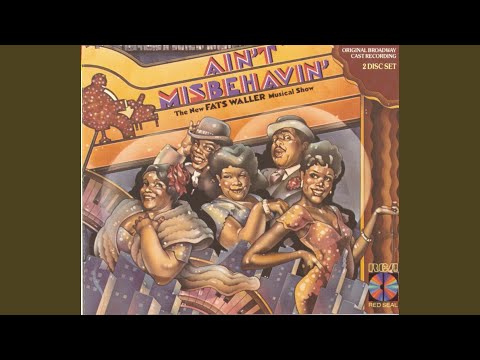
- Where it lives theatrically: First introduced in the 1929 Broadway revue Hot Chocolates, then later staged in the 1978 Waller songbook musical Ain't Misbehavin'.
- What the revue version does: It shifts the song from nightclub lament to spotlight-number, often spreading lines across the company so the pain lands as shared testimony.
- Why it hits: The melody keeps its poise while the lyric refuses comfort. You get elegance and accusation in the same breath.
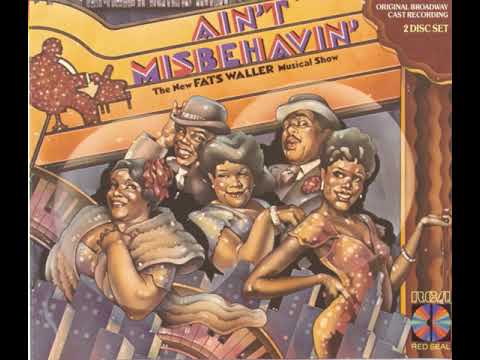
Ain't Misbehavin' (1978) - stage revue - not diegetic. In Act II, the number frequently works as the evening's hard stop: the party pauses, the lights narrow, and the performer is allowed to speak plainly. The placement matters: after a run of comic swagger, the show makes space for a lyric that is not trying to charm you.
Musically, it is a lesson in restraint. The harmony stays classic and singable, the phrasing can sit back, and the band is asked to accompany rather than compete. That calm surface is the trick. It frames the words like a framed photograph: you cannot look away, and you cannot pretend you missed what you saw.
- Key takeaways: A protest lyric that never raises its voice, a melody that keeps dignity under pressure, and a theatrical arrangement that turns personal hurt into ensemble statement.
- Staging idea that pays off: Share lines among singers, then let one voice take the final question alone.
- Performance note: Sing it like speech with pitch, not like an aria with sorrow varnish.
Creation History
The song was written for the 1929 revue Hot Chocolates and quickly became associated with performances that treated popular song as social commentary. Later, Ain't Misbehavin' re-contextualized it inside a Broadway celebration of Waller's catalog. The show does not rewrite the lyric; it reframes the listening. According to The New York Times (in reporting connected to Razaf's career), the song sits among the hits that proved how sharp a lyric could be while still selling tickets.
Song Meaning and Annotations
Plot
A speaker lists symptoms of exhaustion and despair, then arrives at the central question: why must their life be marked by injury and color-based punishment? The lyric moves from bodily detail to moral indictment, without a detour into self-pity.
Song Meaning
This is a protest song that wears formal evening clothes. The message is not subtle: the singer is bruised by a world that reads skin as guilt. Yet the delivery can be quiet, which makes it more unsettling. In Ain't Misbehavin', the meaning gains a second edge: we have spent an evening watching performers summon joy through swing craft, and then the show asks what that joy costs, and who was made to pay it.
Annotations
Nothin' seems right, no appetite, can't sleep at night, no hope in sight.
A curtain-raiser of symptoms, almost like stage directions. It gives performers a practical entry: play the body first, then let the mind catch up. In a revue, that is smart writing because it tells the audience how to watch.
What did I do to be so black and blue?
The line is both a question and a verdict. "Black" names race; "blue" names bruising. Put them together and the lyric becomes a single image you cannot soften. If you rush it, you lose the weight. If you let it hang, you risk melodrama. The sweet spot is plain speech over steady time.
I'm white inside, but that don't help my case.
The song turns assimilation into tragedy, not aspiration. The idea is cruelly theatrical: a performer can deliver it with a brittle smile, then let the smile collapse. The lyric is pointing at the rules, not the speaker's supposed shortcomings.
Style and rhythm
Although Waller is often remembered for sparkle, this number leans into blues-inflected ballad writing. It can be swung lightly, but it does not need swing to function. The driving rhythm is the pulse of the lyric itself: short phrases, clipped lists, then that long, searching question.
Cultural touchpoints
The lyric's afterlife is not only musical theater. Ralph Ellison used the line in Invisible Man, tying the song to a literary meditation on visibility and racial identity. That matters for performance: it reminds singers they are handling a piece of cultural memory, not just a "sad song" slot in a set list.
Technical Information (Quick Facts)
- Song: (What Did I Do to Be So) Black and Blue
- Artist: Fats Waller (original composer attribution)
- Featured: Harry Brooks (co-composer), Andy Razaf (lyricist)
- Composer: Thomas "Fats" Waller; Harry Brooks
- Producer: Varies by recording; cast album production varies by release
- Release Date: 1929 (published; debuted on Broadway the same year)
- Genre: Jazz standard; blues-leaning ballad
- Instruments: Voice; piano; small jazz ensemble (common practice)
- Label: Varies by recording; the 1978 original cast album was released on RCA Victor (per production discographies)
- Mood: Lament; direct address
- Length: Varies; the 1978 cast recording track runs about 5:00
- Track #: Varies by edition; appears late in the Act II sequence
- Language: English
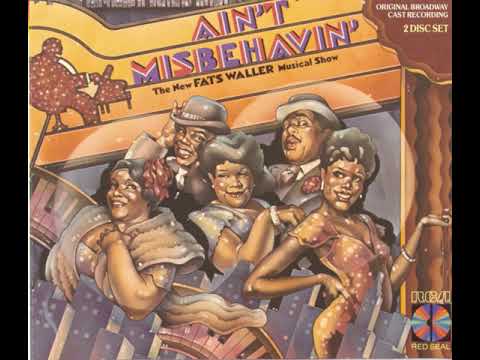
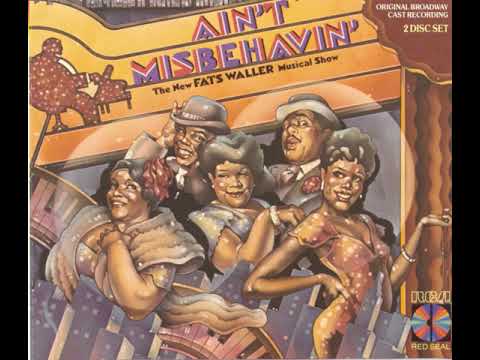
- Album (if any): Ain't Misbehavin' (Original Broadway Cast Recording) includes "Black and Blue"
- Music style: Ballad phrasing with blues color and standard-form harmony
- Poetic meter: Conversational accent patterns, shaped for blues phrasing
Frequently Asked Questions
- Is this the same song as "(What Did I Do to Be So) Black and Blue"?
- Yes. "Black and Blue" is the short title commonly used on recordings and in show programs.
- Was it written for Ain't Misbehavin'?
- No. It debuted in 1929 in the Broadway revue Hot Chocolates, decades before the 1978 Waller tribute show.
- Who wrote it?
- Thomas "Fats" Waller and Harry Brooks composed it, and Andy Razaf wrote the lyric.
- Why does it feel different from Waller's comic hits?
- The harmonic language still sits in standard territory, but the lyric aims at social injury rather than romantic trouble or party life.
- How is it usually staged in a revue?
- Often as a spotlight ballad with minimal movement, sometimes with the ensemble sharing phrases so the pain reads as communal rather than solitary.
- Is it a blues?
- It borrows blues phrasing and sensibility, but it is typically treated as a jazz standard ballad rather than a strict 12-bar form.
- What is the central dramatic action for the singer?
- To ask a question that is not rhetorical. The singer demands an answer from the room, even if the room cannot give one.
- What is a reliable early performance context?
- It was sung by Edith Wilson in Hot Chocolates and recorded early on by Louis Armstrong, anchoring it in both Broadway and jazz history.
- Why is the lyric quoted in discussions of Invisible Man?
- Ralph Ellison used the line in his novel's opening, linking the song to themes of visibility, identity, and racialized experience.
- Does the cast recording version have a set duration?
- One common listing for the 1978 original cast recording places the track at about five minutes, though stage tempos vary by production.
Awards and Chart Positions
The song predates the modern chart ecosystem, so its public life is better tracked through repertory and revival. The Broadway vehicle that re-popularized it, Ain't Misbehavin', won the 1978 Tony Award for Best Musical, a rare honor for a revue and a major amplifier for Waller and Razaf in the theater canon.
| Work | Year | Award | Result |
|---|---|---|---|
| Ain't Misbehavin' | 1978 | Tony Award - Best Musical | Won |
| Ain't Misbehavin' | 1978 | Tony Award - Best Direction of a Musical (Richard Maltby, Jr.) | Won |
| Ain't Misbehavin' | 1978 | Tony Award - Featured Actress in a Musical (Nell Carter) | Won |
How to Sing Black and Blue
Because the song circulates in many arrangements, technical stats vary by edition. One published educational jazz arrangement lists a tempo around 82 BPM, while widely used lead sheets often appear in minor keys (for example, an A minor lead sheet and an Ab minor piano-vocal edition are both sold commercially). Treat these as reference points, not law.
- Tempo choice: Start slower than you think. You want space between phrases so the question can register.
- Diction: Keep the opening list crisp. Short words, clean consonants, no swallowed endings. The lyric is doing dramatic work.
- Breath map: Mark breaths after complete thoughts, not after measures. The first line is a string of symptoms, and it should feel relentless.
- Line weighting: Underplay early lines so you can grow into the title question. If you peak too soon, the center collapses.
- Vowel color: Darken on "blue" without pushing volume. A slight shift in placement reads like bruising without melodrama.
- Rhythm: If you swing it, keep swing gentle. If you sing straight, keep pulse present. Either way, do not let time turn sentimental.
- Ensemble use: In a revue, let the band speak between lines. React, but do not decorate. Silence is also staging.
- Pitfalls: Avoid sobbing tone, avoid constant vibrato, and avoid stretching every cadence. Choose your holds like you choose your words.
Additional Info
The lyric has lived a double life: Broadway origin, jazz afterlife. Hot Chocolates is also notable for bringing Louis Armstrong into a Broadway pit and ensemble context, and the song traveled with him onto record, giving it a second platform beyond theater. In later decades, it resurfaced repeatedly as a reference point for American racial history in art, including its quoted presence in Ellison's Invisible Man. That is not trivia; it is a performance clue. When a song becomes shorthand in literature, it means the words have entered public language.
Key Contributors
| Entity | Type | Relationship (S-V-O) |
|---|---|---|
| Thomas "Fats" Waller | Person | Waller composed the music for "(What Did I Do to Be So) Black and Blue". |
| Harry Brooks | Person | Brooks co-composed "(What Did I Do to Be So) Black and Blue". |
| Andy Razaf | Person | Razaf wrote lyrics for "(What Did I Do to Be So) Black and Blue". |
| Hot Chocolates | CreativeWork | The 1929 revue introduced the song on Broadway. |
| Edith Wilson | Person | Wilson introduced the song in Hot Chocolates. |
| Ain't Misbehavin' | CreativeWork | The 1978 revue stages the song as part of its Act II song list. |
| Richard Maltby, Jr. | Person | Maltby conceived and directed Ain't Misbehavin'. |
| Luther Henderson | Person | Henderson adapted and supervised music for Ain't Misbehavin'. |
| Tony Awards | Organization | The Tony Awards honored Ain't Misbehavin' with Best Musical (1978). |
| Ralph Ellison | Person | Ellison referenced the song's central line in Invisible Man. |
Sources
Sources: Tony Awards (1978 winners list), Music Theatre International show notes, Ain't Misbehavin' song list and production history references, Hot Chocolates production background, Presto Music cast-recording track listing, Musicnotes lead-sheet metadata, Sheet Music Plus arrangement notes