
The Joint Is Jumpin' Lyrics
The Joint Is Jumpin'
They have a new expression,along ol' Harlem way.
That tells you when a party
is ten times more than gay
To say that things are jumpin'
leaves not a single doubt.
That everything is in full swing
when you hear someone shout Here 'tis:
This joint is jumpin',
It's really jumpin',
Come in cats an' check your hats,
I mean this joint is jumpin'.
The piano's thumpin',
The dancers bumpin'.
This here spot is more than hot,
In fact the joint is jumpin',
Check your weapons at the door,
Be sure to pay your quarter.
Burn your leather on the floor,
Grab anybody's daughter.
The roof is rockin',
The neighbor's knockin'.
We're all bums when the wagon comes.
I mean this joint is jumpin'.
[Spoken]
Let it be! Yas!
Burn this joint, boy!
Yas!
Oh, my! Yas!
Don't you hit that chick, that's my broad!
Where'd you get that stuff at?
Why, I'll knock you to your knees!
What?
Put this cat out of here!
What?
Get rid of that pistol! Get rid of that pistol! Yeah! Get rid of it, yas!
Yeah!
That's what I'm talkin' about! Ha, ha! Yas!
Now it's really ready!
No, baby, not now, I can't come over there right now.
Yeah, let's do it!
[Party noises and shouting]
The joint is jumpin',
It's really jumpin',
Ev'ry mose is on his toes,
I mean this joint is jumpin'.
No time for talkin',
It's tim for walkin'
(Yes!)
Grab a jug an' cut the rug,
I mean this joint is jumpin'.
Get your pig feet, beer an' gin,
There's plenty in the kitchen.
Who is that that just came in?
Just look at the way he's switchin'.
Don't mind the hour,
'Cause I'm in power.
I got bail if we go to jail.
I mean this joint is jumpin'.
This joint is jumpin',
It's really jumpin',
We're all bums when the wagon comes.
I mean this joint is jumpin'.
Don't give your right name.
No, no, no!
[Thanks to Kayla for lyrics]
[Thanks to Wilsha for corrections]
Song Overview
Review and Highlights
Quick summary
- What it is: A Harlem party-report in swing form, credited to Thomas "Fats" Waller (music) with lyrics by Andy Razaf and J. C. Johnson, first released in 1937.
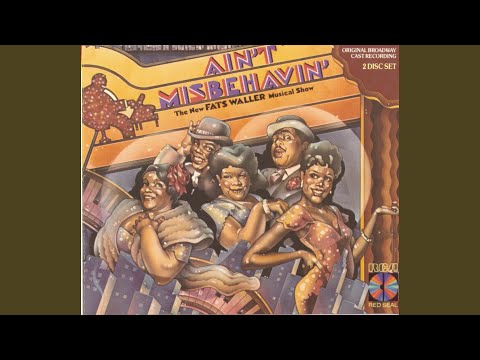
- What it does in the musical: Ain't Misbehavin' uses it as a room-lifter, the moment the revue stops teasing and starts throwing its weight into the dance floor.
- How it differs from a jazz-club take: The revue version tends to punch up the ensemble hits and cadence tags so the lyric reads like stage patter, not background atmosphere.
- Core thrill: The chorus is a headline you can sing, and the verse is a guided tour of a party that keeps getting louder.
Ain't Misbehavin' (1978) - stage revue - not diegetic. This number is the show doing what songbook theater does best: converting a standard into a stage event. The lyric is a series of announcements, and announcements are inherently theatrical. You can see the blocking before anyone moves: entrances on punchlines, glances on internal rhymes, the band cued like an onstage character with excellent timing.
The song is also a lesson in how Waller material survives under lights. The harmony is friendly, the hook is blunt, and the groove has a grin. A performer who tries to "act" every word will slow it down. A performer who trusts the swing will make the audience feel included, like they were waved in at the door. According to Musicnotes, one widely used vocal edition sits in Bb major with a compact range, which helps explain why the song welcomes so many voices without losing its snap.
- Key takeaways: Fast reportorial lyric, chorus built for ensemble unison, and a rhythmic engine that rewards clean diction more than extra volume.
- Staging idea that pays off: Treat the verse as a guided walk through the room, then let the chorus freeze into a company tableau that hits like a cymbal crash.
- Performance note: Land the title phrase like a fact, not a boast. The band can do the boasting for you.
Creation History
Credited to Waller, Razaf, and J. C. Johnson and first released in 1937, the song came out of an era when records and stage turns fed each other nightly. According to SecondHandSongs, the first release was by "Fats" Waller and His Rhythm, and that provenance matters: it is written to sound like a bandstand, with punchy riffs and a chorus that feels like a shout from the piano bench. Ain't Misbehavin' later adopts it as Broadway proof that a good shout can also be a scene.
Song Meaning and Annotations
Plot
The singer narrates a party as if filing a hot report from the street. We hear the slangy headline, then a cascade of details: who is there, what they are doing, and how the energy keeps rising. The story is not "will it happen" but "how big will it get."
Song Meaning
The meaning is celebration with an edge of showmanship. The speaker is not merely attending, they are hosting the listener's imagination. In the revue, that meaning doubles as a statement of style: Harlem nightlife is presented as craft, community, and quick wit, not as wallpaper. The emotional arc is straightforward but effective: curiosity at the start, certainty by the chorus, then a closing that feels like the party is still going after the curtain line.
Annotations
They have a new expression along old Harlem way.
That opening is a stage curtain in one sentence. It places geography, time, and attitude, then invites the performer to play tour guide. Deliver it too carefully and it sounds like a lecture. Deliver it like gossip and the number is already dancing.
The joint is jumpin'.
This is not a metaphor. It is a diagnosis. In performance, you want the phrase to hit on the beat like a stamped hand at a club door: approved, admitted, next.
Talk about your harlem, talk about your town.
The lyric keeps widening the frame. It is no longer one party, it is a bragging rights contest between neighborhoods. Onstage, this is where an ensemble can lean in, because the lyric is already calling for a crowd.
Style and rhythm
It is swing with newsroom speed. The driving rhythm comes from consonants and clipped phrases, with the band supplying sharp responses. Keep the line moving, and the joke stays alive. Let it sag, and it becomes a list instead of a party.
Technical Information (Quick Facts)
- Song: The Joint Is Jumpin'
- Artist: Ain't Misbehavin' Original Broadway Cast (cast recording release)
- Featured: Ensemble performance (varies by staging and recording)
- Composer: Thomas "Fats" Waller
- Producer: Varies by release and reissue
- Release Date: 1937 (first release)
- Genre: Swing, jazz standard
- Instruments: Voice; piano; small jazz ensemble
- Label: Masterworks Broadway (digital distribution credit for the cast recording upload)
- Mood: High-spirited, social
- Length: Varies by recording and production
- Track #: Varies by album edition
- Language: English
- Album (if any): Ain't Misbehavin' (Original Broadway Cast Recording)
- Music style: Call-and-response swing with ensemble-friendly chorus hits
- Poetic meter: Conversational accents shaped for swing subdivision
Frequently Asked Questions
- Is this a Fats Waller original?
- Yes. Music is credited to Thomas "Fats" Waller, with lyrics credited to Andy Razaf and J. C. Johnson.
- What year is it from?
- Reference catalogs list the first release in 1937 by "Fats" Waller and His Rhythm.
- Why does it feel so theatrical without plot?
- The lyric is made of announcements and observations, which play like stage narration. The chorus is a built-in cue for ensemble pictures.
- Is it better as an ensemble number or a solo?
- Both work, but the chorus is designed for group impact. Many productions keep the verse with a lead voice, then open the chorus to the company.
- What is the main performance risk?
- Turning it into shouting. Swing needs bite and clarity, not raw volume.
- What key is common in published vocal editions?
- One widely used piano-vocal edition is published in Bb major and lists a vocal range from Eb4 to Db5.
- Is there a standard tempo?
- It varies by arrangement. Practice tracks and modern recordings often land in a brisk swing zone; one common rehearsal backing track labels 155 BPM in Bb as a workable baseline.
- Does the show that features it have major awards?
- Yes. According to the Tony Awards site, Ain't Misbehavin' won Best Musical in 1978.
Awards and Chart Positions
This song is a standard, so the bigger public milestone is its Broadway platform. According to the Tony Awards site, Ain't Misbehavin' won Best Musical in 1978, with its producers credited in the official winners listing. The show is also frequently noted for a historic detail: as stated by Music Theatre International, it was the first revue to win that top Tony category.
| Work | Year | Award | Result |
|---|---|---|---|
| Ain't Misbehavin' | 1978 | Tony Award - Best Musical | Won |
How to Sing The Joint Is Jumpin'
Published stats give helpful anchors. A common piano-vocal edition lists Bb major as the original published key and a notated vocal range from Eb4 to Db5. Tempo depends on arrangement, but brisk swing is typical; one rehearsal backing track labels 155 BPM in Bb, which can serve as a practice target if you want the number to crackle.
- Tempo first: Start a little under your target (for example, 140), get the diction clean, then inch toward a brighter swing pace.
- Diction: Treat consonants like percussion. "Joint" and "jumpin'" need crisp attacks without barking.
- Breath plan: Breathe after complete images, not after every bar. The verse is a running report and should feel uninterrupted.
- Rhythm and lift: Keep swing subdivision consistent. Shorten the ends of some phrases so the groove keeps moving forward.
- Range strategy: If Eb4 to Db5 sits high or tight, transpose. The song should sound conversational, not strained.
- Ensemble coordination: Decide where the company joins the chorus. Clean entrances matter more than extra ad-libs.
- Mic and projection: Aim for speech-forward placement. Let the band create size; you supply clarity.
- Pitfalls: Avoid dragging the chorus. If the chorus slows down, the party deflates.
Additional Info
The number is sometimes treated as mere "big closer energy," but it is also period journalism. The lyric catalogs a neighborhood mood, and that cataloging is why it stages so well. In a revue, information equals action: each new detail can motivate a new gesture, a new partner, a new bit of choreography that looks spontaneous while staying tightly counted.
There are multiple cast-recording contexts beyond 1978. Later tour and anniversary recordings include their own takes, often tightening the arrangement for faster pacing. That variety is useful for performers: you can borrow the speed from one version, the articulation from another, and still keep the piece readable as theater.
Key Contributors
| Entity | Type | Relationship (S-V-O) |
|---|---|---|
| Thomas "Fats" Waller | Person | Waller composed "The Joint Is Jumpin'". |
| Andy Razaf | Person | Razaf wrote lyrics for "The Joint Is Jumpin'". |
| J. C. Johnson | Person | Johnson co-wrote lyrics for "The Joint Is Jumpin'". |
| Fats Waller and His Rhythm | MusicGroup | The group first released the song in 1937. |
| Ain't Misbehavin' | CreativeWork | The revue features the song as an ensemble showpiece. |
| Masterworks Broadway | Organization | Masterworks Broadway distributed the cast recording track upload. |
| Tony Awards | Organization | The Tony Awards honored Ain't Misbehavin' with Best Musical (1978). |
Sources
Sources: Masterworks Broadway (track upload metadata), SecondHandSongs (work credits and first release), Musicnotes (published key and vocal range), Tony Awards (official winners list), Music Theatre International (show history note)