
While My Guitar Gently Weeps Lyrics
While My Guitar Gently Weeps
I look at you all see the love there that's sleepingWhile my guitar gently weeps
I look at the floor and I see it need sweeping
Still my guitar gently weeps
I don't know why nobody told you
how to unfold your love
I don't know how someone controlled you
they bought and sold you
I look at the world and I notice it's turning
While my guitar gently weeps
With every mistake we must surely be learning
Still my guitar gently weeps
I don't know how you were diverted
you were perverted too
I don't know how you were inverted
no one alerted you
I look at you all Oh..
Still my guitar gently weeps
Oh, oh, oh
oh oh oh oh oh oh oh
oh oh, oh oh, oh oh
Yeah yeah yeah yeah
yeah yeah yeah yeah
Song Overview
Review and Highlights
Quick summary
- Across the Universe (2007) assigns the song to Jojo, with Jude folded into the moment as the scene turns from performance to fallout.
- The film places it after the activist-office confrontation, while the story pivots toward rupture, grief, and the era's public shock.
- The soundtrack cut is credited to Martin Luther McCoy, while film credits also note Jim Sturgess as part of the performance credit.
- Staging is intimate: a bar-room setting that reads like a confession you overhear, not a stadium showcase.
Across the Universe (2007) - film - diegetic with narrative underscoring. Jojo performs in a bar as the film absorbs the day's political horror and the characters process their own fractures. It matters because the number acts like a pressure valve: instead of another slogan, the film gives us a human voice trying to stay upright.
This is one of Julie Taymor's smartest uses of scale. Earlier set pieces sell the decade with crowds and choreography. Here, the camera sits close enough to hear the grain in a line. The vocal approach is soul-leaning, but not ornamental. It is restraint under stress, the kind of singing that implies the body is doing more work than the melody lets on.
The scene also carries a theatrical trick I like: the song is allowed to spill beyond itself. The film's own notes on extended musical numbers point out that dialogue and story underscoring continue after this cue, which is a stage technique in cinema clothing. You do not clap because the argument is not finished.
Creation History
George Harrison wrote the original in 1968, framing it as a moral inventory in pop form. Later retellings often center the famous guest-guitar legend, but Across the Universe goes for a different kind of virtuosity: actor-singer storytelling. According to Entertainment Weekly, the film uses this performance as a key emotional hinge, and the choice of an intimate setting is the whole point, a counterweight to the film's louder spectacle.
Song Meaning and Annotations
Plot
By the time this cue arrives, the romance has been ground down by politics, ego, and exhaustion. Jude has already detonated a conflict at Lucy's activist office. The film then shifts into a darker register, linking private breakup damage to public catastrophe. The bar performance gives the story a place to breathe, but it is the kind of breathing you do after running, not the kind you do before sleep.
Song Meaning
In this film, the lyric becomes a report from the aftermath. The narrator is not pleading for a lover to return, not exactly. He is taking stock of a world where love is visible but dormant, and where every mistake feels like a lesson delivered with a bruise. The number reads as sorrow without surrender: the melody keeps moving, even when the scene suggests the characters have stopped trusting forward motion.
Annotations
I look at you all, see the love there that's sleeping.
On stage this would be a direct address. On film it plays like diagnosis. The line lands after the couple's fractures, and it points the finger outward and inward at the same time: the movement, the relationship, the decade's noise, and the small personal failures that hide inside big causes.
With every mistake, we must surely be learning.
The film places this thought in a moment where learning feels slow and punishment feels fast. It is not self-help. It is a grim vow to keep going, because the alternative is to let the damage define the next choice.
I don't know why nobody told you how to unfold your love.
Taymor treats this as a quiet accusation aimed at no single person. That is what makes it sting. The line becomes a chorus of missed chances: friends, lovers, institutions, the culture itself.
Rhythm, tone, and staging logic
The performance sits in a steady rock-soul pocket that avoids showy flourish. The vocal bends and rasp are used as punctuation, not fireworks. In narrative terms, the groove behaves like a heartbeat: consistent, stubborn, hard to silence.
Cultural and historical touchpoints
The film explicitly ties this section of the story to the era's headline trauma, using the shock as a tonal turn. That connection is not subtle, and it is not meant to be. The number becomes a lament that can hold both a breakup and a country breaking itself, which is a very 1960s kind of ambition.
Technical Information (Quick Facts)
- Artist: Martin Luther McCoy (soundtrack performance)
- Featured: Film credit also lists Jim Sturgess in the performance credit
- Composer: George Harrison
- Producer: soundtrack compilation producers include T Bone Burnett, Elliot Goldenthal, and Matthias Gohl
- Release Date: October 2, 2007 (deluxe edition soundtrack)
- Genre: film soundtrack; rock-soul cover
- Instruments: lead vocal; guitar-forward band arrangement
- Label: Interscope
- Mood: reflective; bruised; determined
- Length: 4:02
- Track #: Disc 2, Track 21 (deluxe physical listing)
- Language: English
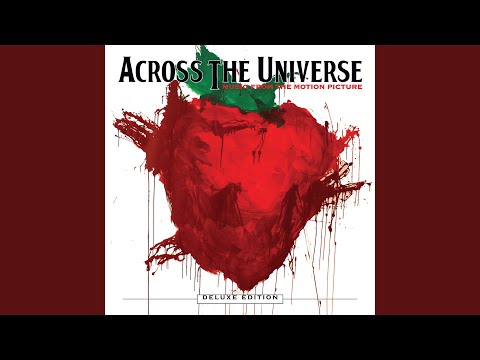
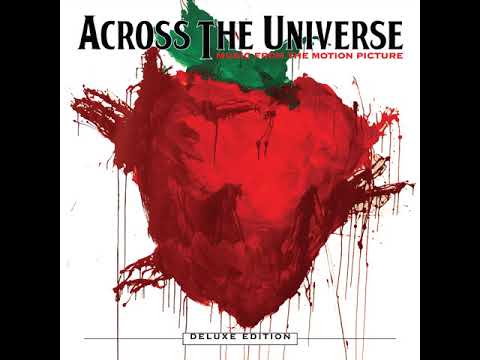
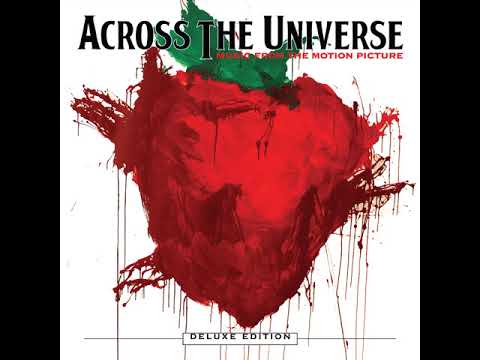
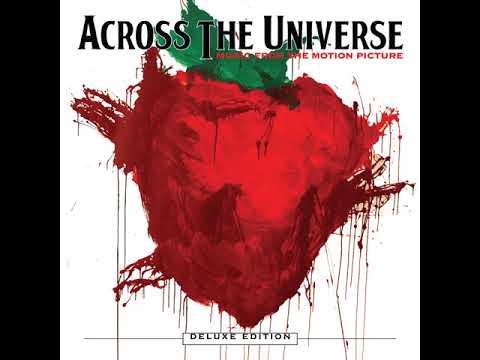
- Album (if any): Across the Universe (Music from the Motion Picture) - Deluxe Edition
- Music style: actor-forward rock-soul phrasing with close-set dynamics
- Poetic meter: mixed pop prosody with speech-led stress patterns
Frequently Asked Questions
- Who performs the song in the film?
- The film assigns it to Jojo, with credits noting Martin Luther McCoy and also Jim Sturgess in the performance credit line.
- Is it diegetic?
- Yes, it is staged as an in-scene bar performance, and the film also lets underscoring and dialogue extend beyond the cue.
- Where does it sit in the film's sequence of songs?
- It follows the activist-office blowup and lands as the story shifts into breakup and public grief.
- Why does the scene feel smaller than the big ensemble numbers?
- Because it is designed as a close-up. The film uses scale changes like stagecraft: spectacle, then intimacy, so the plot wound can show.
- Why does the song work as a breakup-adjacent moment?
- The lyric keeps returning to sleeping love and missed instruction, which fits a relationship where the problem is not lack of feeling but inability to hold it well.
- Is this track on the standard soundtrack?
- The best-known soundtrack version appears on the deluxe edition track listing with the full runtime.
- What key and tempo are commonly listed for the soundtrack cut?
- Music-metric databases often index it in E minor around 110 BPM, which suits the scene's steady pulse and controlled intensity.
- Does the film connect this moment to a specific historical event?
- Yes, the film ties the tonal shift around this part of the story to a major headline tragedy of the era, using that shock as a narrative pivot.
- How does it differ from the Beatles recording?
- The original is studio-tight and iconic for its guitar mythology, while the film version leans into voice-first storytelling and bar-room vulnerability.
Awards and Chart Positions
The track itself is a scene piece, but the soundtrack around it had real awards and chart traction. As stated on Grammy.com, the album was nominated in the compilation soundtrack category at the 50th Grammy Awards cycle, and it lost to Love. The soundtrack also peaked on the Billboard 200 and Billboard's Top Soundtracks chart, and later received a United States Platinum certification.
| Item | Result | Notes |
|---|---|---|
| Grammy nomination | Nominee | Compilation soundtrack category (50th Grammy Awards cycle) |
| Soundtrack - US Billboard 200 peak | 36 | Weekly chart peak during 2007 |
| Soundtrack - US Top Soundtracks peak | 12 | Billboard soundtrack chart peak |
| Soundtrack - US Soundtrack Albums year-end (2008) | 22 | Year-end placement for the main release cycle |
| Certification | United States - Platinum | RIAA certification listed in soundtrack documentation |
Additional Info
Outside the film, the song's cover life is almost a genre unto itself. The best-known modern spectacle is the 2004 Rock and Roll Hall of Fame tribute performance that climaxes with Prince taking the solo into the rafters, a reminder that this title has become a rite of passage for guitar heroes. Yet Across the Universe makes a case for another kind of heroism: singing the song as if the room is small and the consequences are immediate.
The film also uses the number as a tonal hinge between two kinds of violence: interpersonal and historical. That pairing can feel blunt, but it is not careless. It is Taymor insisting that private lives do not float above the times that shape them.
Key Contributors
| Entity | Type | Relationship (S-V-O) |
|---|---|---|
| George Harrison | Person | Harrison - wrote - the original composition. |
| Martin Luther McCoy | Person | McCoy - performs - the soundtrack recording. |
| Jim Sturgess | Person | Sturgess - is credited in film performance credits - for the cue. |
| Julie Taymor | Person | Taymor - directed - Across the Universe and staged the bar performance. |
| Elliot Goldenthal | Person | Goldenthal - composed - the film score and served as a soundtrack producer. |
| T Bone Burnett | Person | Burnett - served as compilation producer - for the soundtrack. |
| Matthias Gohl | Person | Gohl - served as compilation producer - for the soundtrack. |
| Interscope Records | Organization | Interscope Records - released - the soundtrack editions in 2007. |
| Recording Academy | Organization | Recording Academy - listed - the soundtrack nomination in the compilation category. |
| Billboard | Organization | Billboard - charted - the soundtrack on Billboard 200 and Top Soundtracks. |
Sources
Sources: IMDb soundtrack credits for Across the Universe, Wikipedia: Across the Universe (soundtrack) track listing and charts, Wikipedia: Across the Universe (film) extended musical numbers note, Grammy.com video page for the 50th Grammy Awards compilation soundtrack category, TheaterMania nominations report, U2.com nominations note, Entertainment Weekly retrospective on the film's songs, Tunebat key and BPM metadata for the track, Wikipedia: While My Guitar Gently Weeps background and cover history