
Revolution Lyrics
Revolution
You say you want a revolutionWell ya know
We all wanna change the world
You tell me that it's evolution
Well ya know
We all wanna change the world
But when you talk about destruction
Don?t cha know that you can count me out
Don't cha know it's gonna be alright
Ya know it's gonna be alright
Ya know it's gonna be alright
You say you?ll change the Constitution
Well ya know
We all wanna change your head
You tell me it's the institution
Well ya know
You better free your mind instead
But if you go carrying pictures of Chairman Mao
You ain't gonna make it with anyone anyhow
Don?t cha know it's gonna be alright
Ya know it's gonna be alright
Ya know it?s gonna be alright
Alright, alright, alright, alright, alright, alright
It's alright
Song Overview
Review and Highlights
Quick summary
- In Across the Universe (2007), the song is assigned to Jude (performed by Jim Sturgess) as a confrontation, not a rallying cry.
- It appears at Lucy's anti-war office, with Paco and the group as the immediate audience, and Lucy as the real target.
- Compared with the Beatles recording, the film take reads more like a street-corner argument: brisk, direct, and deliberately unglamorous.
- The scene functions as a plot lever: Jude forces the hypocrisy question, then pays for it in public.
Across the Universe (2007) - film - diegetic. Jude barges into Lucy's activist headquarters and sings while calling out the movement's posturing; he is thrown out and the confrontation turns physical, escalating the fracture between Jude and Lucy. Placement: mid-to-late film, around 01:30.
This is where Julie Taymor stops flirting with the period and makes it bite. The number is staged like a bad meeting that will not end: too many people in a room, too much certainty, and not enough listening. Jude's delivery lands as a provocation. It is less "let us debate strategy" and more "I am tired of your costumes." The direction frames the song as action, not commentary: the vocal line is a shove, the chorus is a shove again, and the room shoves back.
Musically, the performance benefits from its plainness. Taymor does not hide Jude inside a montage or a dream ballet. She keeps the camera close to bodies, doorways, and exits, the practical architecture of conflict. The result is a rare jukebox-musical moment where the familiar tune does not soothe. It exposes.
Creation History
The Beatles released the original as a late-1960s political-adjacent single, built on a stripped, declarative rock frame. Across the Universe reassigns the voice to Jude and uses the song to dramatize internal movement arguments, not just generational mood. The soundtrack producers compiled cast recordings into a cohesive album release, while the film uses staging and performance to give each borrowed lyric a new dramatic job.
Song Meaning and Annotations
Plot
Lucy is immersed in activist work, Paco has influence in her circle, and Jude feels increasingly sidelined and suspicious of what the group is becoming. He storms into their office, turning a political meeting into a relationship reckoning. The song functions as his attempt to force clarity: about violence, about righteousness, and about whether Lucy is seeing the people in front of her or only the cause behind them.
Song Meaning
In this film setting, the lyric is not a poster on a dorm wall. It is a pressure test. Jude is asking what happens when words about peace are paired with coercion, and what happens when a movement begins to resemble the control it claims to oppose. The scene does not let him be purely correct, either. His timing is terrible, his tact worse, and the number shows how moral certainty can become a blunt instrument.
Annotations
"You say you want a revolution."
As a hook, it is famous. Here it lands like a finger jab at the room, aimed at Paco's crowd but also at Lucy's choices. The line becomes personal, which is why the scene heats up so quickly.
"But when you talk about destruction."
In a rock context, this can sound like a hard boundary. Taymor stages it as an accusation: Jude is not theorizing about tactics, he is pointing at the posture of menace in the room and saying it out loud.
"Don't you know it's gonna be all right."
The phrase usually reads as reassurance. In the film, it has a sour edge. Jude is trying to stabilize the argument with a singable refrain, but the staging shows the opposite: nothing in the room is all right, and the song cannot make it so.
Genre and rhythmic drive
The performance leans into a straight-ahead rock pulse, tightening the phrasing so the lyric feels like speech delivered at speed. That rhythmic insistence is the dramatic engine: no one is listening carefully, so the song keeps pushing, as if volume and momentum might substitute for understanding.
Emotional arc
It begins as controlled anger, swings into contempt, and ends with consequence. The emotional curve is not catharsis. It is fallout. The film does not allow the singer to "win" the argument through musical charisma, which is a smart refusal in a genre that often rewards the loudest voice.
Technical Information (Quick Facts)
- Artist: Jim Sturgess
- Featured: none
- Composer: John Lennon; Paul McCartney
- Producer: soundtrack compilation producers include T Bone Burnett, Elliot Goldenthal, and Matthias Gohl
- Release Date: October 2, 2007 (deluxe edition soundtrack)
- Genre: film soundtrack; rock cover
- Instruments: lead vocal; rock band arrangement (guitar-led)
- Label: Interscope
- Mood: confrontational; urgent
- Length: 2:18
- Track #: Disc 2, Track 20 (deluxe physical edition)
- Language: English
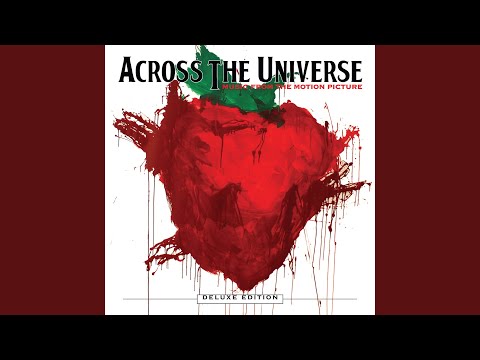
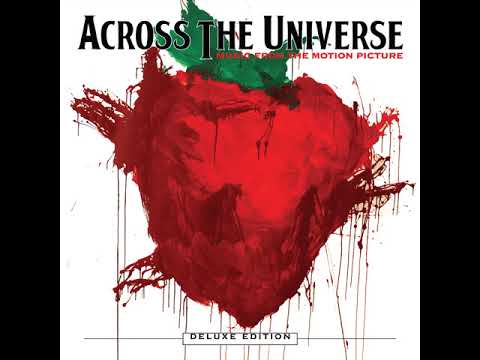
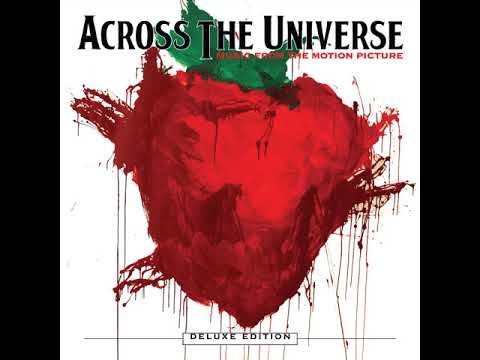
- Album (if any): Across the Universe (Music from the Motion Picture) - Deluxe Edition
- Music style: tight rock delivery built for narrative confrontation
- Poetic meter: mixed pop prosody, speech-forward stress
Frequently Asked Questions
- Who performs the song in the film?
- The film assigns it to Jude, performed by Jim Sturgess, with the original credited to Lennon and McCartney.
- Is the number staged as a live performance?
- Yes, in-scene. It plays as Jude singing inside Lucy's activist workspace, with the group reacting in real time.
- What does the song do for the plot?
- It detonates the relationship conflict and crystallizes Jude's distrust of Paco's influence, directly setting up the next rupture between Jude and Lucy.
- Why does it feel harsher than a typical protest-song moment?
- Because the scene is not a march. It is an argument. Taymor frames the lyric as accusation, not community bonding.
- Does the soundtrack include this recording?
- Yes, it appears on the deluxe soundtrack configuration, with a shorter runtime than some other film cues.
- What is the most important staging detail?
- The exit. The scene is built around who gets pushed out of the room, and the song becomes the vehicle for that expulsion.
- Is there a direct sequel moment after this number?
- Yes. The film's chain of cues places an emotional and musical response soon after, as the story shifts into breakup and loss.
- How does this relate to the Beatles original?
- The film keeps the recognizable structure but repurposes the tone: less public statement, more interpersonal confrontation.
Awards and Chart Positions
The recording lives inside a soundtrack that functioned as a major commercial release. The album was nominated for Best Compilation Soundtrack Album in the 50th Grammy Awards cycle, and it charted on the Billboard 200 and the Top Soundtracks chart. It later received a United States Platinum certification via the RIAA program.
| Item | Result | Notes |
|---|---|---|
| Soundtrack - Billboard 200 peak | 36 | Weekly peak during the 2007 chart run. |
| Soundtrack - Top Soundtracks peak | 12 | Billboard soundtrack chart peak. |
| Grammy nomination | Nominee | Best Compilation Soundtrack Album (50th Grammy Awards cycle). |
| RIAA certification | Platinum | United States certification listed for the album. |
Additional Info
There is a neat irony in how Taymor deploys this number: the film sells a fantasy of the 1960s as color and music, then uses this scene to show how quickly rhetoric becomes policing. Jude is not delivering a thesis. He is demanding honesty from a room that has turned slogans into armor. That is why the song lands so well here: the lyric already contains suspicion of easy answers, and the film makes that suspicion concrete.
One small detail from the surrounding dialogue helps: the movie explicitly frames the outburst as an event Lucy has to clean up after, not as a heroic stand. According to IMDb's published quotes for the scene, the aftermath is described in terms of Jude making a scene, striking Paco, and getting thrown out. That framing keeps the moment morally messy, which is where Taymor often does her best work.
Key Contributors
| Entity | Type | Relationship (S-V-O) |
|---|---|---|
| Jim Sturgess | Person | Sturgess performs the film version as Jude. |
| Julie Taymor | Person | Taymor directs and stages the confrontation as a diegetic number. |
| John Lennon | Person | Lennon co-writes the original song. |
| Paul McCartney | Person | McCartney co-writes the original song. |
| Elliot Goldenthal | Person | Goldenthal composes the score and helps shape soundtrack arrangements. |
| T Bone Burnett | Person | Burnett is credited as a producer of the soundtrack compilation. |
| Matthias Gohl | Person | Gohl is credited as a producer of the soundtrack compilation. |
| Interscope Records | Organization | Interscope releases the soundtrack album editions in 2007. |
| Across the Universe (2007 film) | Work | The film places the song at Lucy's activist office as a turning-point conflict scene. |
Sources
Sources: IMDb soundtrack listing for Across the Universe, Wikipedia: Across the Universe (film) musical numbers, Wikipedia: Across the Universe (soundtrack) track listing and charts, Billboard chart references (as cited in soundtrack documentation), RIAA album certification listing (as cited in soundtrack documentation), Grammy Awards 50th ceremony nominee listing, IMDb quotes page for the scene, Tunebat key and BPM metadata for the track, YouTube official "Provided to YouTube by Universal Music Group" upload