
Oh, Darling Lyrics
Oh, Darling
(Sadie)Oh! Darling, please belive me
I'll never do you no harm
Belive me when I tell you
I'll never do you no harm
(Sadie)
Oh! Darling
(JoJo)
Oh! Darling
(Sadie)
If you leave me
(JoJo)
If you leave me
(Sadie)
I'll never make it alone
(JoJo)
I doubt that
(Sadie)
Oh belive me when I beg you
(JoJo)
Beg you? Beg you?
(Sadie)
Don't ever leave me alone
(JoJo)
All alone
(Sadie)
Oh Yeah
When you told me
(JoJo - talking)
Told me? Told me what?
(Sadie)
You didn't need me anymore
(JoJo - talking under Sadie's singing)
Is this Sadie? It's shady. I didn't need you? What?
(Sadie)
Well you know I nearly broke down and cryed
(JoJo - talking under Sadie's singing)
There she goes. About to break down and cry. I don't believe this
(Sadie)
When you told me
(JoJo)
When you told me
(Sadie)
Oh You didn't need me
(JoJo)
That you didn't need me
(Sadie and JoJo)
Anymore
Well you know I nearly fell down and died
(Sadie)
Oh! Darling, if you leave me
Oh You know I'll never make it alone
Belive me when I tell you
I'll never, never do you no harm
(JoJo)
When you told me, you didn't need me anymore
Well you know I nearly broke down and cried
When you told me, you didn't need me anymore
Well you know I nearly broke down and died
Oh! darling, please believe me
I'll never let you down, believe me when I tell you,
I'll never do you no harm
Song Overview
Review and Highlights
Quick summary
- Across the Universe (2007) reframes the Beatles song as a public gig that turns into a private rupture.
- Sadie fronts the number, with Jojo on guitar, and the performance becomes a fight you can dance to.
- Unlike the Abbey Road original, the film version pushes toward raw soul-rock attack and stage heat.
- The scene sits right after the film's quieter "Something," so the jolt is deliberate: tenderness, then combustion.
Across the Universe (2007) - film - diegetic. Sadie and her band play a large-venue gig; Jojo sabotages the opening and the romance fractures in real time. The placement matters because Julie Taymor makes the song do double duty: it sells the crowd a show while forcing the characters to admit they are no longer in the same band, musically or emotionally.
This is one of those jukebox-musical moments where you can feel the director thinking like a stage manager: put the blowup where the audience cannot look away. The arrangement is compact and fast, with a forward drive that keeps the lyric from sounding like a plea and turns it into a dare. Sadie's vocal is all grain and bite, less "please stay" and more "do not test me." Jojo, meanwhile, is not just accompanying - he is undercutting, and the gesture reads like sabotage in a spotlight. That is the trick: the music is the argument.
Key takeaways: The film leans into performance as conflict. The groove stays steady so the drama can wobble. And by staging it as a gig, Taymor lets the crowd become a silent chorus - the kind that cheers while a relationship breaks.
Creation History
Paul McCartney wrote the song for the Beatles' Abbey Road sessions, drawing on doo-wop and older pop vocal theatrics, then the band recorded and released it in 1969. Across the Universe reassigns the voice and the stakes: the film version is sung by Dana Fuchs with Martin Luther McCoy, and it is presented not as a studio confession but as a stage event with consequences. According to The Conversation, Taymor treats Beatles material as a shared language for character psychology, and this number is a clean example: the lyric becomes a dramatic action, not a reference.
Song Meaning and Annotations
Plot
By the time the song arrives, the band has become a pressure cooker. Sadie is moving toward a solo path, management is circling, and Jojo feels both replaceable and trapped. The gig puts them in front of an audience at the exact moment they need privacy, which is why the scene lands like a bruise: the show must continue, but the relationship cannot.
Song Meaning
On paper, the lyric is devotion with a knife behind it: "I will never do you no harm" carries the threat that harm is close at hand. In the film, that tension becomes the point. Sadie sings it like a promise she no longer trusts herself to keep, and Jojo answers with musical misbehavior. The meaning shifts from romantic pleading to a struggle over control: who gets to lead, who gets heard, and who gets to leave without being made small.
Annotations
"Jojo purposefully ruins her opening song." IMDb plot summary
That single plot beat explains why the number hits harder than a standard breakup duet. It is not only two lovers splitting - it is two collaborators weaponizing the performance space, the one place they are supposed to be aligned.
"Taymor uses The Beatles as a recognisable language." The Conversation (via soundtrack commentary)
Here the "language" is not nostalgia; it is behavior. The song gives Sadie a vocabulary for rage dressed as affection, and it gives Jojo a place to answer without speaking.
Style fusion and rhythm
The soundtrack cut is tagged with a brisk tempo, and that speed changes the dramatic temperature. You can hear a soul-rock edge in the phrasing: clipped consonants, fast recoveries after high notes, and a band feel that pushes forward rather than luxuriating. In other words, the arrangement refuses to beg.
Images, symbols, and key lines
The lyric keeps returning to the word "darling," a term of endearment that can turn into a weapon if the speaker is cornered. In the film, the word functions like a spotlight cue: each repetition is another attempt to hold the other person in place. The deeper irony is that the song is about staying, while the staging is about leaving - not in a slogan way, but in the practical sense that a band can break up mid-set.
Technical Information (Quick Facts)
- Artist: Dana Fuchs and Martin Luther McCoy (as Sadie and Jojo)
- Featured: None
- Composer: John Lennon; Paul McCartney
- Producer: T Bone Burnett; Elliot Goldenthal; Matthias Gohl (soundtrack compilation producers)
- Release Date: September 14, 2007 (soundtrack standard edition); October 2, 2007 (deluxe edition)
- Genre: Rock ballad (recast as soul-rock for film)
- Instruments: Lead vocal; electric guitar; rhythm section; stage-band arrangement
- Label: Interscope
- Mood: Combustible, confrontational, performance-forward
- Length: 2:30
- Track #: Standard edition Track 9 (common listing)
- Language: English
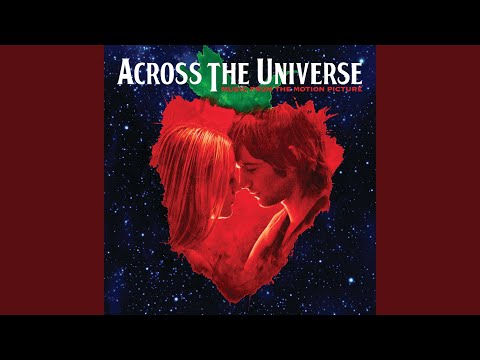
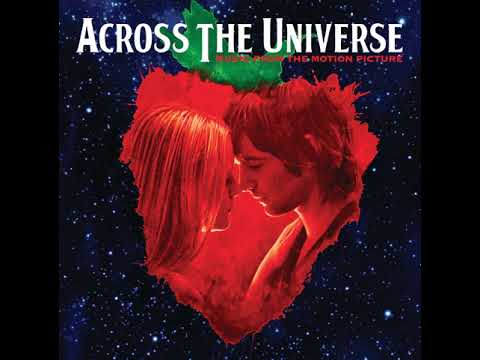
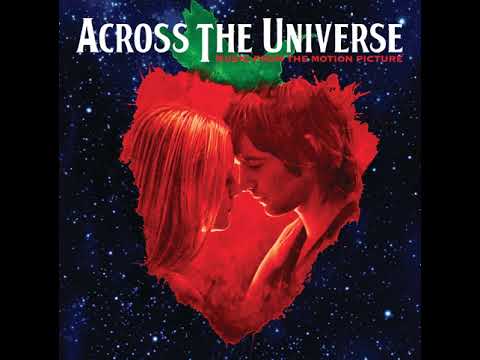
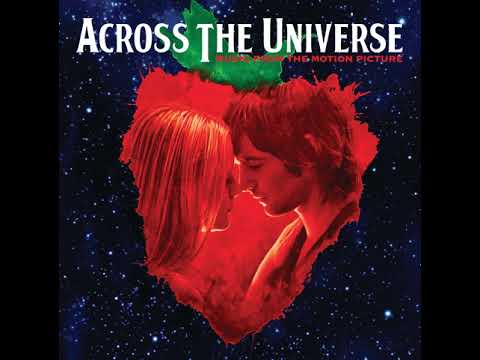
- Album: Across the Universe (Music from the Motion Picture)
- Music style: Soul-rock attack with theatrical staging logic
- Poetic meter: Pop prosody with iambic-leaning conversational stress
Frequently Asked Questions
- Who performs the song in the film?
- The film assigns it to Sadie and Jojo, performed on the soundtrack by Dana Fuchs and Martin Luther McCoy.
- Is the performance diegetic?
- Yes. It is staged as a live gig inside the story world, with the audience present.
- What is happening dramatically during the number?
- The relationship and the band partnership crack at the same time, with Jojo deliberately disrupting the performance.
- Why does the number feel harsher than the Beatles original?
- The film pushes it into soul-rock grit and a faster, less patient delivery, so the plea turns into confrontation.
- Where does it fall in the film's musical sequence?
- It comes directly after the quieter "Something" in the film's ordered list of musical cues, which makes the shift in tone feel intentional.
- Does the soundtrack include an extended version?
- Home video editions include a set of extended musical performances that feature this number among others, restoring material trimmed for the theatrical cut.
- Is it on the standard soundtrack release?
- Yes, it appears on the standard 2007 soundtrack tracklist and is also present on deluxe configurations.
- How does the scene use the lyric "I will never do you no harm"?
- As a line that tries to stabilize the relationship while the staging proves the opposite. The promise is sung while trust is collapsing.
- Is the song originally credited to Lennon and McCartney?
- Yes. The Beatles released it in 1969 on Abbey Road with Lennon-McCartney authorship credit.
Awards and Chart Positions
The track itself is a scene piece, not a chart single, but it lives inside a soundtrack that performed like a real pop release. According to Grammy.com listings, the compilation producers for the album received a Grammy nomination in the compilation soundtrack category. The soundtrack also reached the upper tier of the Billboard 200 and Billboard's soundtrack chart, and later earned a US platinum certification through the RIAA program.
| Item | Result | Notes |
|---|---|---|
| Soundtrack - US Billboard 200 peak | 36 | Weekly peak for the soundtrack release window. |
| Soundtrack - US Top Soundtracks peak | 12 | Billboard soundtrack chart peak. |
| Soundtrack - US Soundtrack Albums year-end (2008) | 22 | Year-end placement for the standard edition. |
| Grammy nomination | Nominee | Compilation soundtrack category (producers credited). |
| RIAA certification | Platinum | US certification listed for the soundtrack album. |
Additional Info
If you collect cover history, this song has a surprisingly busy second life. A famous example comes from the 1978 Sgt. Pepper's Lonely Hearts Club Band soundtrack, where Robin Gibb records a straight-ahead version that sits closer to classic pop than Taymor's rougher staging. Databases that track reinterpretations also list dozens of other covers across jazz, rock, and tribute circuits, which suggests the appeal is structural: a simple promise, a high vocal ceiling, and a chorus that begs performers to show their teeth.
For film collectors, there is another wrinkle: several home video releases include "extended musical performances," and this number is specifically listed among those longer sequences. That is not trivia for completists only. The extra runtime changes how the conflict reads, because a longer performance gives the sabotage and the recovery more room to register.
Key Contributors
| Entity | Type | Relationship (S-V-O) |
|---|---|---|
| Paul McCartney | Person | Paul McCartney - co-wrote - Oh! Darling. |
| John Lennon | Person | John Lennon - co-wrote - Oh! Darling. |
| The Beatles | Organization | The Beatles - recorded - Oh! Darling for Abbey Road (1969). |
| Julie Taymor | Person | Julie Taymor - directed - Across the Universe (2007). |
| Dana Fuchs | Person | Dana Fuchs - performs - Oh! Darling as Sadie. |
| Martin Luther McCoy | Person | Martin Luther McCoy - performs - Oh! Darling as Jojo. |
| T Bone Burnett | Person | T Bone Burnett - produced - the soundtrack compilation. |
| Elliot Goldenthal | Person | Elliot Goldenthal - arranged and produced - soundtrack material and score elements. |
| Matthias Gohl | Person | Matthias Gohl - produced - the soundtrack compilation. |
| Interscope Records | Organization | Interscope Records - released - Across the Universe soundtrack editions (2007). |
| Abbey Road | Work | Abbey Road - includes - the 1969 Beatles recording of Oh! Darling. |
| Across the Universe | Work | Across the Universe - stages - Oh! Darling as a diegetic gig breakup sequence. |
Sources
Sources: IMDb soundtrack credits for Across the Universe, Wikipedia pages for Across the Universe (film) and Across the Universe (soundtrack), Billboard chart listings cited in the soundtrack discography, Grammy category listing for compilation soundtracks, RIAA certification listing cited in soundtrack documentation, High-Def Digest Blu-ray review notes on extended musical performances, Wikipedia track listing for Sgt. Pepper's Lonely Hearts Club Band (soundtrack), WhoSampled cover index for the song